
Guides / Shrubs
Shrubs
Multi-stemmed woody plants, including the Proteaceae family.
A
Alpenrose
Rhododendron ferrugineum
How to grow alpenrose, Rhododendron ferrugineum. Why humid summer heat threatens it more than alpine winter cold, the rust-coloured scales under the leaves that identify it, and why every part is dangerously toxic if eaten.
American Beautyberry
Callicarpa americana
How to grow American beautyberry, Callicarpa americana. A hard frost that kills the stems to the ground costs it nothing since it flowers on new wood, crushed leaves are a USDA-confirmed mosquito repellent, and the berries are cooked into jelly rather than eaten raw.
Austral Grass Tree
Xanthorrhoea australis
How to grow Austral grass tree, Xanthorrhoea australis. Why its trunk thickens by about a centimetre a year, the phosphorus feed that can kill it outright, and the sharp drainage it needs far more than protection from frost.
B
Box Honeysuckle
Lonicera nitida
How to grow box honeysuckle, Lonicera nitida. Why it stands in for box hedging without the blight or caterpillar risk, the trade-off of clipping it two or three times a season to keep pace with its speed, and its mildly toxic berries.
Bridal Wreath
Spiraea prunifolia
How to grow bridal wreath, Spiraea prunifolia. Why pruning at the wrong time of year strips away next spring's flowers, the double white blooms that give each branch its lace-like look, and how to tell it apart from other shrubs sharing its name.
C
Camellia
Camellia japonica
How to grow camellias, Camellia japonica. Why an east-facing wall ruins the flowers, what causes bud drop, keeping the soil acid, and treating petal blight.
Cape Honeysuckle
Tecoma capensis
How to grow Cape honeysuckle, Tecoma capensis. Why it is not a honeysuckle at all despite the name, deciding early whether to train it as a shrub or a climber, and why a plant cut to the ground by frost usually is not dead.
Carolina Allspice
Calycanthus floridus
How to grow Carolina allspice, Calycanthus floridus. Why seedlings vary so much in scent that a named cultivar is the safer bet, its habit of suckering into a wide colony left unchecked, and the strychnine-like toxin hidden in its seed pods.
Cherry laurel
Prunus laurocerasus
How to grow Prunus laurocerasus. Pruning with secateurs rather than shears, treating shot hole, disposing of clippings safely, and why it must never be confused with bay.
Chilean Fire Bush
Embothrium coccineum
How to grow Chilean fire bush, Embothrium coccineum. Why alkaline soil kills it however mild the winter, why it resents being moved once planted, and the root suckers that spread a single specimen into a thicket if left alone.
Common rhododendron
Rhododendron ponticum
How to recognise Rhododendron ponticum, why it sterilises woodland, telling it from garden rhododendrons, removing it, and the honey that poisoned an army.
F
Flame Azalea
Rhododendron calendulaceum
How to grow flame azalea, Rhododendron calendulaceum. Why every part, including the nectar and the honey made from it, carries a toxin severe enough to need medical care, and why hot, humid summers trouble this mountain species more than winter cold does.
Flowering Currant
Ribes sanguineum
How to grow flowering currant, Ribes sanguineum. Why the berries taste nothing like blackcurrants, pruning straight after flowering rather than in winter, and reviving a leggy shrub with renovation pruning.
Forsythia
Forsythia intermedia
How to grow forsythia, Forsythia x intermedia. Pruning straight after flowering, renewing a leggy bush, stopping bullfinches stripping the buds, and taking free cuttings.
G
Golden Wattle
Acacia pycnantha
How to grow golden wattle, Acacia pycnantha. Why wet roots in winter kill it faster than frost does, why a high-phosphorus feed can do the same, and living just fifteen to thirty years even in ideal conditions despite its fast growth.
Guelder rose
Viburnum opulus
How to grow guelder rose, Viburnum opulus. Lacecap flowers in May, translucent red berries in autumn, and why it thrives in the wet ground that kills other shrubs.
J
Japanese Barberry
Berberis thunbergii
Practical guidance for growing Japanese barberry, Berberis thunbergii, including its spiny stems, autumn colour, invasive spread in parts of North America, wheat-rust resistance, and mild toxicity.
Japanese box
Buxus microphylla
How to grow Buxus microphylla. The blight-resistant box, clipping without spreading disease, spotting box tree caterpillar, and the alternatives worth considering.
Japanese holly
Ilex crenata
How to grow Japanese holly, Ilex crenata. The box substitute that resists box blight and box tree moth, how to clip it, and why it needs acid soil.
Japanese quince
Chaenomeles speciosa
How to grow Japanese quince, Chaenomeles speciosa. Flowers on bare wood in February, hard aromatic fruit in autumn, and the wall training that suits it.
Japanese Spiraea
Spiraea japonica
How to grow Japanese spiraea, Spiraea japonica. Why it needs a hard cut back in late winter rather than after flowering, the coppery new growth that colours cultivars like 'Goldflame', and why deadheading matters where it self-seeds into wild ground.
Japanese Spurge
Pachysandra terminalis
How to grow Japanese spurge, Pachysandra terminalis, a dense evergreen for deep shade under trees that spreads by rhizome and suppresses most weeds.
Juneberry
Amelanchier lamarckii
How to grow juneberry, Amelanchier lamarckii. Blossom in April, sweet almond-flavoured fruit in June, and the netting you will need to keep any of it.
K
King Protea
Protea cynaroides
Practical guidance for growing king protea, Protea cynaroides, including fynbos origin, proteoid roots, sharp drainage, low-phosphorus feeding, and fire-adapted resprouting.
Kohuhu
Pittosporum tenuifolium
How to grow kohuhu, Pittosporum tenuifolium. Why the tiny, near-black flowers are easier to smell than see, the wavy-edged leaves on near-black stems, and why it copes with coastal salt spray far better than a hard inland frost.
L
Laurustinus
Viburnum tinus
How to grow laurustinus, Viburnum tinus. Winter flowering, clipping it as a hedge, dealing with viburnum beetle, and the blue-black berries that follow.
Lesser Periwinkle
Vinca minor
How to grow lesser periwinkle, Vinca minor, the trailing evergreen that roots at every leaf node and covers a bank in blue-violet flower each spring.
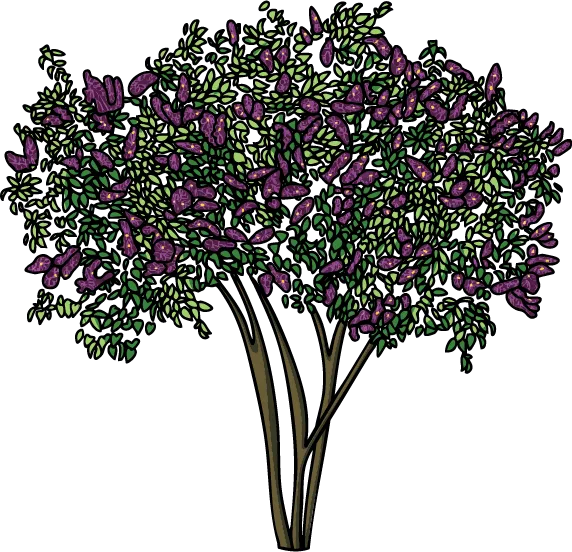
Lilac
Syringa vulgaris
How to grow lilac, Syringa vulgaris. Deadheading straight after flowering, why a shaded lilac never blooms, dealing with suckers, and renovating an old leggy bush.
Lilac Daphne
Daphne genkwa
How to grow lilac daphne, Daphne genkwa, a deciduous daphne with lilac flowers on bare spring stems. Every part of the plant is severely toxic.
M
Macadamia Nut
Macadamia tetraphylla
Practical guidance for growing macadamia nut, Macadamia tetraphylla, including its rough shell and whorled leaves that separate it from the smooth-shell species, frost sensitivity, Phytophthora risk, and its toxicity to dogs.
Mexican Orange Blossom
Choisya dumosa
How to grow Mexican orange blossom, Choisya dumosa. Why alkaline soil that its better-known relative Choisya ternata resents does not trouble this one, and the extra drought and cold tolerance that comes from its native desert limestone.
Mock Orange
Philadelphus coronarius
How to grow mock orange, Philadelphus coronarius. The scent, the one-in-three pruning cut that keeps it flowering, and why cutting it in winter removes every bloom.
P
Photinia
Photinia fraseri
How to grow Photinia x fraseri. Clipping to force the red flush, treating the leaf spot that defoliates it, why chalk turns it yellow, and disposing of the clippings safely.
Pincushion Hakea
Hakea laurina
How to grow pincushion hakea outdoors. Its fragrant pink pincushion flowers on bare wood, curved leaves, and the woody seed pods that split years later.
Pincushion Protea
Leucospermum cordifolium
How to grow pincushion protea outdoors. Its dome-shaped orange flower heads, why it needs wind and full sun, and its long cut-flower vase life.
R
Red Elder
Sambucus racemosa
How to grow red elder, Sambucus racemosa. Why the ripe berries are safe cooked but the raw fruit, leaves, bark and seeds all carry cyanide-releasing compounds, and telling it from black elder by its upright flower clusters.
Rose of Sharon
Hibiscus syriacus
Practical guidance for growing rose of Sharon, Hibiscus syriacus, including late-summer flowering on new wood, Japanese beetle, self-seeding, hardy pruning, and mild toxicity to pets.
Rosemary Grevillea
Grevillea rosmarinifolia
How to grow rosemary grevillea outdoors. Its needle-like foliage, red and cream spider flowers, and why it tolerates cold better than most Grevillea species.
S
Sasanqua Camellia
Camellia sasanqua
How to grow sasanqua camellia, Camellia sasanqua. Why flowering in autumn rather than spring means the buds miss the frost risk that comes with Camellia japonica's later season, and spotting petal blight before it browns a flush of open flowers.
Silk Tassel Bush
Garrya elliptica
Practical guidance for growing silk tassel bush, Garrya elliptica, including its winter catkins, male and female plants, coastal wind tolerance, pruning timing, and low toxicity.
Silky Oak
Grevillea robusta
Practical guidance for growing silky oak, Grevillea robusta, including fast growth, fern-like foliage, toothbrush flowers, skin-irritant sap, and cultivation well outside its native range.
Silver Tree
Leucadendron argenteum
How to grow silver tree outdoors in a mild, dry climate. Its shimmering silky leaves, short lifespan, and why it resists transplanting once established.
Smoke Bush
Cotinus coggygria
Practical guidance for growing smoke bush, Cotinus coggygria, including its hazy flower plumes, purple foliage colour, drought tolerance in poor soil, and verticillium wilt.
Spanish Broom
Spartium junceum
How to grow Spanish broom, Spartium junceum. Why its rush-like green stems, not its leaves, do most of the plant's photosynthesis, why overwatering an established plant is riskier than drought, and why the seed pods carry the highest concentration of its alkaloids.
Sweet Olive
Osmanthus fragrans
Practical guidance for growing sweet olive, Osmanthus fragrans, including its edible flowers, apricot scent, slow growth, frost tenderness, and non-toxic care.
T
Thorny Olive
Elaeagnus pungens
How to grow thorny olive, Elaeagnus pungens. Why it shares nothing with the true olive beyond a passing resemblance, the autumn flowers that make a mild early winter riskier than a hard freeze, and pruning it hard without losing next year's fruit.
Tree Rhododendron
Rhododendron arboreum
How to grow tree rhododendron, Rhododendron arboreum. Why seed provenance determines how much frost a plant can take, the felted leaf underside that identifies it, and why its nectar can turn into a dangerous "mad honey".
W
Wall Cotoneaster
Cotoneaster horizontalis
How to grow wall cotoneaster, Cotoneaster horizontalis. The herringbone branching that identifies it, training it flat against a wall, berries for birds and the law on planting it in the wild.
Waratah
Telopea speciosissima
Practical guidance for growing waratah, Telopea speciosissima, including sandstone heath origin, lignotuber resprouting after fire, phosphorus-sensitive roots, and cool-root, full-sun placement.
Winged Spindle
Euonymus alatus
How to grow winged spindle, Euonymus alatus. Why its corky-winged stems identify it even in winter, the cardiac glycosides that make every part of the plant toxic, and the invasive spread that has led several US states to restrict its sale.
Winter Daphne
Daphne odora
Practical guidance for growing winter daphne, Daphne odora, including its severe toxicity, sudden root rot collapse, planting depth, winter scent, and shade requirements.
Wintercreeper
Euonymus fortunei
How to grow wintercreeper, Euonymus fortunei, an evergreen that stays low as groundcover or climbs by aerial roots if it reaches a wall, in many variegated forms.
Witch hazel
Hamamelis mollis
How to grow witch hazel, Hamamelis mollis. Why the graft matters, spotting rootstock suckers before they take over, the soil it needs, and why the flowers survive frost.
Woody Pear
Xylomelum pyriforme
How to grow woody pear outdoors. Its stiff needle-like leaves, small cream flowers, and the rock-hard, pear-shaped seed pods that take years to open.
Nothing here matches.
Clear a filter, or search every guide from the hub. The plant you are after may be filed under another category.
Search all plant guides