
Outdoor plant
Kohuhu
Pittosporum tenuifolium
Also known as Tawhiwhi, Black Matipo
How to grow kohuhu, Pittosporum tenuifolium. Why the tiny, near-black flowers are easier to smell than see, the wavy-edged leaves on near-black stems, and why it copes with coastal salt spray far better than a hard inland frost.
At a glance
- Difficulty
- Easy
- Water
- Regularly while establishing, then only in extended dry spells
- Light
- Full sun to light shade
- Temperature
- Moderately hardy; damaged by a hard inland frost
- Hardiness
- USDA 9-10, RHS H3, hardy to -8 C
- Type
- Evergreen shrub or small tree
- Height
- 4-8 m in cultivation, less in dwarf cultivars
- Native to
- New Zealand
The zone number covers an established plant on a favourable site more than it covers a young one or an exposed inland garden. Kohuhu takes coastal wind and salt spray far better than it takes a hard, still frost, and mild coastal districts routinely grow it as reliable year-round hedging in conditions that would damage or kill the same plant a short distance inland. Give it shelter from the coldest wind in a marginal climate, and expect a young plant to need more protection than an established one.
Hardiness zones describe winter cold alone. Summer heat, humidity, rainfall and the length of the growing season decide as much, so treat the range as the outer limit rather than as a recommendation.
Harmful if eaten
- Do not eat
- Foliage and seeds, which carry the highest concentration of saponins
- Harm from
- Eating it
- Affects
- People, cats and dogs
Pittosporum tenuifolium is not listed on the RHS potentially harmful plants index, and the ASPCA does not carry a page for this particular species, though it rates a related species, Japanese pittosporum, as non-toxic to cats, dogs and horses. Kohuhu's own foliage and seeds contain saponins, a class of compound found in many food plants as well as ornamental ones, generally poorly absorbed by the body and more likely to cause mild stomach upset, drooling or vomiting than any serious harm if a pet or child chews or swallows a quantity. Treat it as a low-risk plant worth keeping out of reach of a child prone to putting things in their mouth, rather than as a seriously dangerous one.
Sources: RHS potentially harmful garden plants, ASPCA (Japanese Pittosporum)
About
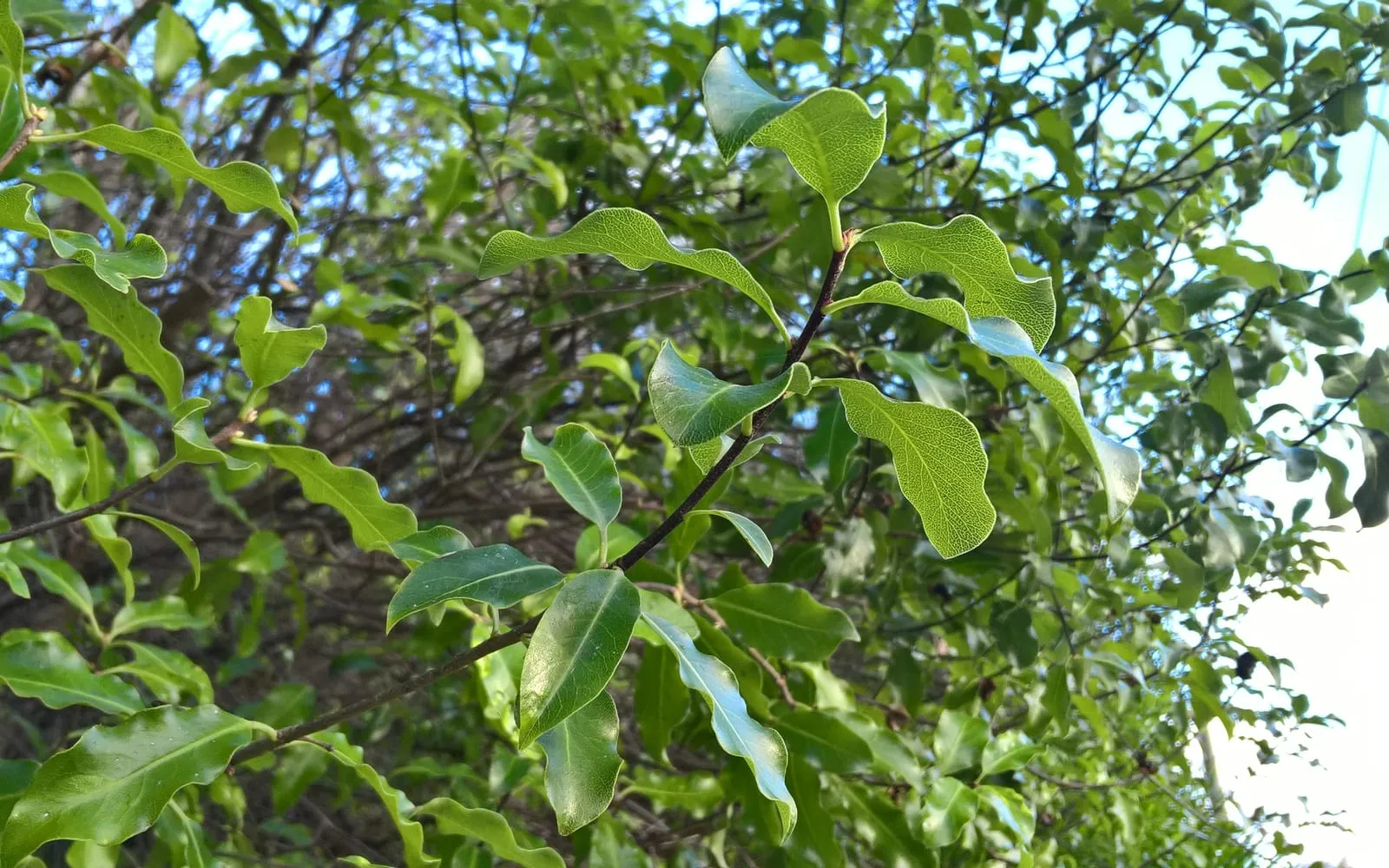
Kohuhu is grown as much for its stems and leaf outline as for anything that could be called a flower. Small, glossy, pale to mid-green leaves with a distinctive wavy, crinkled margin are carried on near-black twigs, a colour contrast that gives the whole plant an unusually crisp, graphic quality other evergreen shrubs rarely match.
The flowers, when you find them, are tiny, dark maroon-purple, almost black, tucked into the leaf axils in spring and easy to miss by sight entirely. What gives them away is scent: a strong, sweet fragrance, often compared to chocolate or honey, that intensifies toward evening and carries well beyond the plant itself.
Pittosporum tenuifolium is a plant of two very different worlds. In New Zealand it forms shelter hedging and screening across gardens and farms; worldwide, its cut foliage is a staple of the florist’s trade, sold under the plant’s own genus name to fill and frame arrangements built around other flowers entirely.
Appearance and character
Leaves are 2 to 6 cm long, oval, glossy and pale to mid-green with a noticeably paler midrib, and their edge undulates in a gentle wave rather than lying flat, a texture that catches light differently from almost any other evergreen foliage in general cultivation.
Stems and young twigs are a dark, near-black colour, a striking contrast against the pale foliage that many gardeners grow the plant for on its own merits.
Flowers open in the leaf axils in spring, small, bell to star-shaped and a deep maroon-purple so dark it reads as black from any distance, carrying a strong sweet fragrance that peaks in the evening.
Numerous cultivars have been selected from the wild species, ranging from dwarf, dark-leaved mounds under a metre high to variegated forms with cream or silver leaf margins, and from strongly upright hedging plants to low, spreading groundcover forms.
Growth is fast for a woody evergreen, which is a large part of why it is planted so widely for quick screening and shelter.
Where it is from
Pittosporum tenuifolium is native to New Zealand, growing across both the North and South Islands at forest margins, in scrub and along coastlines, from lowland sites up into montane forest.
Its Maori name, kohuhu, and the alternative tawhiwhi are both still in everyday use alongside the English common names, and the species has long been valued in New Zealand for shelterbelts and hedging, particularly in exposed coastal farmland where few other woody plants establish so readily.
It reached gardens well beyond New Zealand through two separate routes. Ornamental cultivars, bred for leaf colour and habit, spread through mild coastal gardens in Britain, Ireland, California and similar climates, and separately the plain species and a handful of named forms became, and remain, one of the most widely grown foliage crops in the international cut-flower trade.
How it grows
Plant in ordinary, well-drained soil in full sun to light shade, choosing a position with some shelter from the harshest winter wind in a marginal climate.
Growth is fast, and a young hedging plant fills its space within a few seasons given reasonable conditions. Clip once or twice a year to keep a formal hedge dense, ideally in late spring after the main flush of new growth and again in late summer if a crisper finish is wanted.
It tolerates hard pruning into old wood reasonably well if renovation is needed, though a severely cut-back plant takes a season or two to fill out again.
In a marginal climate, give a young plant some frost protection through its first couple of winters, since an established plant develops noticeably better cold tolerance than a newly planted one.
Through the seasons
Spring brings the small, intensely fragrant dark flowers, easy to miss by eye and unmistakable by scent toward evening, alongside the year’s main flush of new growth.
Summer is steady growth and the best time for a formal hedge’s main clip, once new growth has hardened.
Autumn is a good planting season in a mild climate, giving roots time to establish before the following winter.
Winter tests hardiness directly. An established plant on a sheltered site rides out a moderate frost with little damage; a young or exposed plant can be cut back hard by a hard, sustained cold spell.
Care difficulty
Easy on a favourable site, and considerably less forgiving where winters bring a hard, still frost. Kohuhu grows fast, clips well and tolerates coastal wind and salt spray with little complaint, which is most of what a gardener needs from it.
The one real limit is cold. A plant killed or badly cut back by frost is usually a plant sited without enough shelter, and choosing a warmer microclimate or accepting some winter dieback in a marginal area matters more here than any amount of routine care.
Watering
Water regularly through the first year or two after planting while the root system establishes, giving a deep soak rather than frequent light watering.
Once established, it copes with dry spells reasonably well and needs supplemental watering only in an extended drought, particularly on light, free-draining soil.
Warning signs, diseases and pests
Aphids cluster on soft new growth in spring, distorting shoot tips and coating them in sticky honeydew. A strong jet of water or an insecticidal soap controls a light infestation.
Scale insects settle along the stems, especially in a sheltered, still spot with poor airflow, sapping the plant and leaving a sticky residue behind. Sooty mould, a black fungal growth, follows on that residue and coats affected foliage, more disfiguring than dangerous.
Leaf spot appears as brown blotches on the foliage in a consistently wet climate, usually cosmetic on an otherwise healthy plant. Improving airflow by thinning congested growth reduces the risk.
Frost damage shows as blackened, scorched foliage and dieback after a hard winter, worse on a young or exposed plant. Wait until new growth appears in spring before cutting away damaged wood, since some apparently dead stems often resprout.
Growing environment
Full sun to light shade suits it well, and the darkest-leaved cultivars generally colour best with good light.
Ordinary, well-drained soil is all it needs, and it tolerates coastal wind, salt spray and a fair amount of drought well once established.
Shelter from the coldest winter wind meaningfully improves its chances in a marginal climate, and a position against a warm wall or among other planting offers real protection that an exposed open site does not.
It works well as a clipped formal hedge, an informal windbreak, or a foliage specimen valued as much for leaf and stem colour as for flower.
Feeding
Apply a balanced, general-purpose fertiliser once in spring, following the product’s guidance for an evergreen shrub.
An annual mulch of garden compost around the root zone supports steady growth through the season without the need for heavier feeding.
Avoid feeding late in the growing season in a marginal climate, since soft, late growth is the most vulnerable to the first hard frost.
Troubleshooting
Why can I smell my kohuhu but not see any flowers? The flowers are tiny and almost black, tucked into the leaf axils, and easy to overlook by sight even in full bloom. The strong sweet scent, strongest toward evening, is usually the first sign they have opened.
My plant was badly scorched by frost. Will it recover? Often, yes. Wait until new growth appears in spring before cutting away anything that looks dead, since stems that seem lost frequently resprout from lower down once the weather warms.
Can I grow it somewhere with regular hard frost inland? With difficulty, and only with real shelter. This species takes coastal wind and salt far better than it takes a cold, still inland winter, and a sheltered microclimate matters more than the general zone rating suggests.
Is it safe around pets? Broadly, yes. It is not listed as toxic by the RHS, and its saponin content is more likely to cause mild stomach upset than serious harm if chewed or eaten in a small quantity.
How hard can I prune an overgrown plant? Reasonably hard. It tolerates cutting back into old wood better than many evergreens, though a severely renovated plant takes a season or two to fill out and look tidy again.