
Outdoor plant
Japanese Spiraea
Spiraea japonica
Also known as Japanese Meadowsweet, Korean Spiraea
How to grow Japanese spiraea, Spiraea japonica. Why it needs a hard cut back in late winter rather than after flowering, the coppery new growth that colours cultivars like 'Goldflame', and why deadheading matters where it self-seeds into wild ground.
At a glance
- Difficulty
- Easy
- Water
- Regularly while establishing, then only in extended dry spells
- Light
- Full sun for the strongest flower colour and, in coloured-leaf cultivars, the strongest foliage colour
- Temperature
- Fully hardy
- Hardiness
- USDA 4-8, RHS H6, hardy to -25 C
- Type
- Deciduous shrub, spreading gently with age
- Height
- 1-2 m, and considerably less in dwarf cultivars
- Native to
- Japan, China, Korea
The zone range says this shrub takes a proper winter without harm, and that is nearly the whole story where cold is concerned. The main caveat is ecological: in parts of its introduced range with a similarly mild, moist climate to its native one, seedlings escape cultivation into roadsides and woodland edges, so a garden well inside its hardiness range is also often one where it can spread beyond the border it was planted in.
Hardiness zones describe winter cold alone. Summer heat, humidity, rainfall and the length of the growing season decide as much, so treat the range as the outer limit rather than as a recommendation.
Not known to be toxic
Spiraea japonica is not documented as toxic to people, cats, dogs or horses on any reputable poisoning list, and no part of the plant is known to cause more than mild digestive upset if a large quantity of tough leaf material is eaten. It is a genus generally regarded as safe around pets and children, and this species is no exception.
Sources: ASPCA toxic and non-toxic plants, RHS potentially harmful garden plants
About
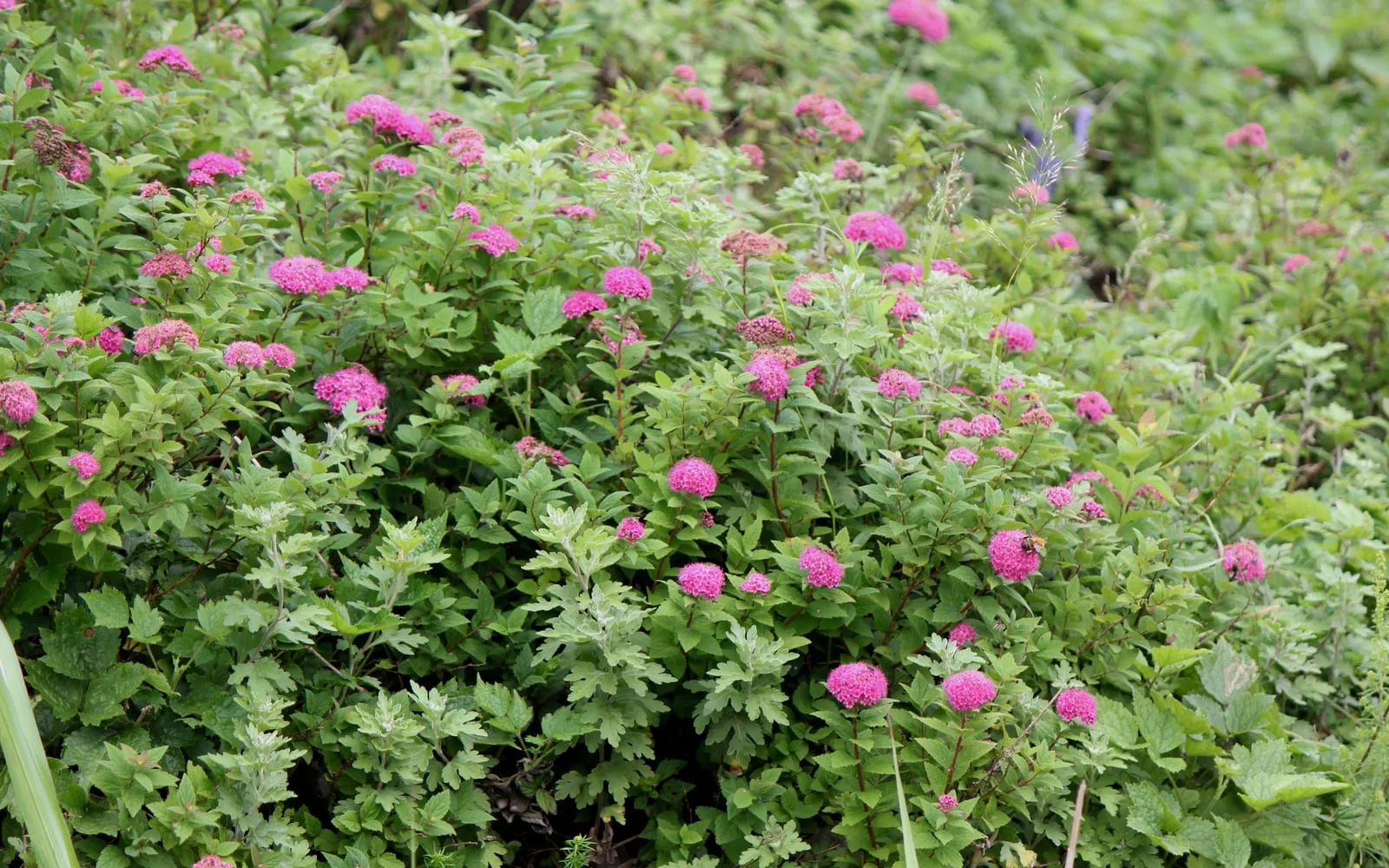
Japanese spiraea flowers in summer rather than spring, in flat clusters of small pink to deep rose-red blooms carried on the current year’s growth rather than on old wood. That single difference sets its entire care routine apart from a spring-blooming spiraea: prune it hard while it is still dormant, not after it flowers.
Modern gardens grow it as much for foliage as for flower. Cultivars such as ‘Goldflame’ and ‘Gold Mound’ were selected for leaves that emerge bronze-orange and mature to yellow-green or gold, giving months of colour either side of the relatively brief flowering period.
It self-seeds readily in a climate close to its own, and in parts of the introduced range it has spread from gardens into disturbed woodland and roadside ground. Deadhead spent flowers before seed sets as routine care rather than only as tidiness.
Appearance and character
A compact, rounded shrub of many upright, densely branched stems, usually under 1.5 m and considerably shorter in the dwarf cultivars bred for smaller gardens.
Flowers open from early to late summer in flat-topped clusters, called corymbs, of many small blooms in shades from soft pink to a deep, almost crimson rose, held above the foliage rather than along bare wood.
Leaves are lance-shaped with a sharply toothed edge, plain green in the species but selected for strong colour in most garden cultivars: coppery orange on emergence in ‘Goldflame’, bright gold through summer in ‘Gold Mound’, sometimes with a second flush of orange-red new growth after a midsummer trim.
Seed heads follow the flowers if left uncut, small and dry, and a shrub allowed to seed freely produces seedlings around its base and, given the right conditions, considerably further afield.
Where it is from
Spiraea japonica is native to Japan, China and Korea, growing on open hillsides, along stream banks and at woodland edges across a broad range of eastern Asian climates.
It reached Western gardens in the nineteenth century as a reliable, easy-flowering summer shrub, and breeding since then has focused heavily on foliage colour and compact habit rather than on the flowers themselves, which have changed relatively little from the wild form.
Its adaptability, the same trait that makes it easy to grow almost anywhere with a temperate climate, has let it naturalise beyond garden boundaries in parts of eastern North America, where it now turns up on disturbed ground, streamside thickets and woodland margins well away from any planting.
How it grows
Plant in ordinary, well-drained soil in full sun, which brings out both the strongest flower colour and, in a coloured-leaf cultivar, the brightest foliage.
Prune hard in late winter or very early spring, before growth starts, cutting the whole plant back by a third to a half. Flowers form on the current season’s growth, so this timing encourages strong new stems that flower well the same summer, the opposite approach from a spring-blooming spiraea pruned after flowering.
Deadhead spent flower clusters once the main display fades, both to tidy the plant and to reduce self-seeding. This matters most in a climate mild and moist enough to match its native range.
It establishes quickly and tolerates being moved even at a reasonable size, provided the move happens while the plant is dormant.
Through the seasons
Spring is the hard prune, done before growth resumes, followed by a flush of new stems and, in coloured-leaf cultivars, brightly tinted young foliage.
Summer brings the main flowering, flat clusters of pink to rose-red blooms held above the leaves from early to late in the season.
Autumn is quiet, with foliage colour fading gradually rather than turning dramatically. Remove any remaining seed heads before they shed.
Winter shows the bare stem framework, ready for the following spring’s hard cut-back.
Care difficulty
Easy, and about as forgiving as a flowering shrub gets. Japanese spiraea tolerates poor soil, a hard annual prune, and a good deal of neglect between that one prune and the following year’s.
The only real skill is remembering that this species flowers on new growth, so the hard cut happens in late winter rather than after flowering. Getting that backwards leaves a leggy, sparsely flowering shrub rather than the compact, floriferous mound it is bred to be.
Its self-seeding habit is the other thing worth staying on top of, particularly in a mild, damp climate where seedlings establish easily in disturbed ground nearby.
Watering
Water regularly through the first year after planting while the root system establishes, giving a deep soak rather than frequent light watering.
Once established, it needs supplemental watering only in an extended dry spell, and it recovers well from missed watering thanks to a fairly extensive fibrous root system for a shrub of its size.
Warning signs, diseases and pests
Aphids target the soft new growth that follows the hard spring prune, distorting shoot tips and coating them in sticky honeydew. A strong jet of water or an insecticidal soap controls a light infestation.
Powdery mildew coats leaves in a pale film during humid, still summer weather, more unsightly than seriously damaging. Thinning congested growth improves airflow and reduces the risk.
Leaf spot causes brown blotches in a wet season, usually cosmetic. Clearing fallen leaves in autumn reduces the fungus carrying over.
Spider mite thrives in hot, dry conditions, particularly against a sun-baked wall, showing as fine pale speckling on the leaves. Watering during a heatwave and improving humidity around the plant helps prevent it building up.
Growing environment
Full sun brings the best flower and foliage colour, though the shrub tolerates a little shade at the cost of a looser habit and paler colour.
Ordinary, well-drained garden soil suits it, including poor ground where richer plants would struggle, and it is not fussy about soil pH.
It works well as a low informal hedge, a foliage accent in a mixed border, or massed for summer colour, and the dwarf cultivars suit a smaller garden or a large container.
Deadhead before seed sets if the garden sits in a climate where the species is known to spread into wild ground nearby, or choose a named cultivar less inclined to self-seed.
Feeding
Apply a balanced, general-purpose fertiliser once in early spring, timed with the hard prune, following the product’s guidance for a flowering shrub.
An annual mulch of garden compost around the root zone supplies most of the additional fertility this shrub needs.
Avoid heavy nitrogen feeding, which produces excess soft growth at the expense of flowering and makes the plant more attractive to aphids.
Troubleshooting
When should I prune it? Late winter or very early spring, before growth starts, cutting the whole plant back hard by a third to a half. It flowers on new growth, so this timing sets up the summer display.
Why has my plant become leggy with few flowers? Almost always a missed or too-light prune. Without a hard annual cut-back in late winter, stems age, lose vigour and flower less freely each year.
Should I deadhead it? Yes, once the main flush fades. It tidies the plant and reduces self-seeding, particularly in a climate where this species is known to spread beyond gardens.
Why do the leaves look bronze or orange instead of green? Normal in a coloured-leaf cultivar such as ‘Goldflame’, where new growth emerges copper-orange and matures to gold or yellow-green through the season.
Is it invasive where I live? Possibly. In parts of its introduced range, including areas of eastern North America, it has spread from gardens into disturbed woodland and stream margins, so it is worth checking local guidance and deadheading before seed sets.