
Outdoor plant
Woody Pear
Xylomelum pyriforme
Also known as Native pear
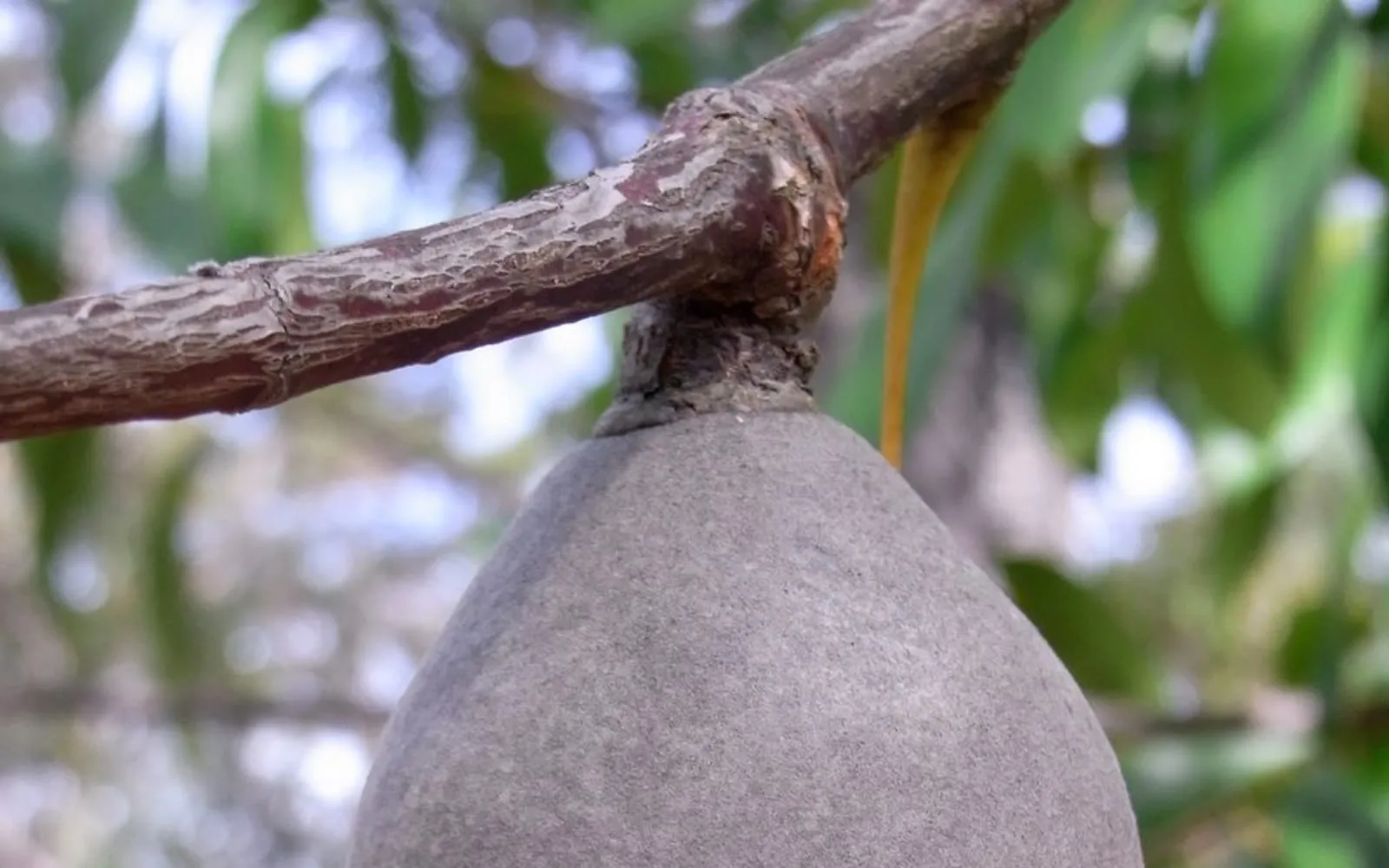
How to grow woody pear outdoors. Its stiff needle-like leaves, small cream flowers, and the rock-hard, pear-shaped seed pods that take years to open.
At a glance
- Difficulty
- Difficult
- Water
- Regular watering while establishing, drought-tolerant once mature
- Light
- Full sun to light shade
- Hardiness
- USDA 9-10, RHS H3, hardy to -3 C
- Type
- Evergreen shrub or small tree
- Height
- 3-8 m
- Native to
- Eastern Australia
Adapted to a mild, coastal to near-coastal Australian climate with poor sandy soil, tolerating only a light frost once established. As with several relatives, poor drainage and rich soil are a greater practical threat in cultivation than an occasional light frost, and this species is considered one of the more difficult members of its family to establish reliably outside its native range.
Hardiness zones describe winter cold alone. Summer heat, humidity, rainfall and the length of the growing season decide as much, so treat the range as the outer limit rather than as a recommendation.
Not known to be toxic
Woody pear has no toxicity listing from the RHS or the ASPCA and is considered safe around pets and children. There is no documented history of poisoning associated with this species. The seed pods are extremely hard and are a mechanical rather than toxic hazard if stepped on or handled carelessly.
Source: RHS
About
Woody pear takes its common name from its remarkable seed pod, a hard and woody, pear-shaped capsule that can take several years to mature and, once formed, often persists unopened on the plant for years more, splitting eventually to release winged seed only once conditions, frequently the heat of fire, trigger it to do so. The plant’s flowers are modest by comparison, small and cream-coloured, produced in dense spikes that give little hint of the woody structure that follows once pollination is complete.
It is considered one of the more challenging members of the wider protea family to establish successfully outside its native range, and a gardener attempting it is generally already experienced with growing other, more forgiving Proteaceae first.
Appearance and character
Stiff, narrow, leathery leaves clothe an upright shrub or small tree, tougher and less immediately striking than the foliage of some showier relatives. Small, cream to pale yellow flowers open in dense, brush-like spikes, much less colourful than the blooms of many other Proteaceae grown for ornamental display, and are followed, where pollination succeeds, by the plant’s real feature: a hard, woody, distinctly pear-shaped seed pod that can take a year or more just to reach full size.
The pods themselves are remarkably tough, requiring real force to break open by hand, and their persistence on the plant, sometimes for many years without splitting, is a real adaptation to the plant’s fire-dependent native ecosystem rather than any failure to mature.
Where it is from
Sandstone plateau country north and south of Sydney, growing on thin, acidic soil directly over rock outcrops rather than the deeper sandy heath several relatives favour, in a habitat that burns periodically and has shaped almost every aspect of the plant’s unusual biology.
Growing over shallow sandstone rather than deep sand has left this species with a shallower, more spreading root system than some of its deeper-rooted relatives, a detail worth bearing in mind when choosing a planting site, since a shallow root run copes poorly with either prolonged drying out or a heavy, waterlogged soil pressing down on it.
How it grows
Height gain is slow for the first several years, with most of a young plant’s energy apparently going into establishing roots rather than visible top growth, before growth rates pick up somewhat once a plant is settled. The pear-shaped pods, once a flower has been pollinated, take roughly a full year just to reach their mature size, independent of how long they then sit closed on the plant afterward, sometimes for a decade or more.
A specimen grown from seed can take the better part of a decade to flower for the first time, which is worth weighing against a container-grown plant bought already close to flowering size if a quicker result matters more than raising one from scratch.
Through the seasons
Spring: New growth appears, modest in scale even on an established plant compared with a typical fast-growing shrub.
Summer any flower spikes present usually open during the warmer months, small and cream against the stiff, leathery foliage.
Autumn pods already forming continue their slow year-long swell toward full size, unaffected by the change of season around them.
Winter mature plants sit through wet, mild winter weather without trouble provided their shallow roots are not left standing in saturated ground for long.
Care difficulty
Difficult. Few gardeners set out to grow this species without already having succeeded with something easier in the same family first, given the combination of a shallow, sandstone-adapted root system, painfully slow early growth, and a general unforgiving attitude to anything but the specific poor, acidic, sharply draining conditions it evolved for.
Watering
Water regularly through the first year or two while the shallow root system establishes, then step back. An established plant’s thin spread of roots dries out faster than a deeper root system would in real drought, yet still rots readily if the same shallow zone stays wet for any length of time, which is a narrower balance to strike than with a deeper-rooted relative.
Warning signs, diseases and pests
Root rot from soil that is too rich, wet or poorly drained is the most significant risk, and prevention through correct siting and minimal watering matters far more than any treatment once it has taken hold. Few significant pests trouble this species in a climate and site that suits it.
A plant that shows little growth over several years is not necessarily unhealthy, given how slowly this species develops naturally, though it is still worth checking soil drainage and fertility against the species’ specific needs if growth appears to have stalled entirely rather than progressing slowly on its own terms.
Growing environment
Full sun to light shade both work, and poor, sandy, sharply free- draining, acidic soil matters more than almost any other single factor. Avoid rich garden soil, heavy clay, or any spot prone to standing water, all of which work against this species regardless of how mild the overall climate is.
Feeding
None to minimal, and any fertiliser used should be low in phosphorus, in keeping with the wider Proteaceae family’s sensitivity to phosphorus levels that are unremarkable for most other garden plants.
Troubleshooting
Growth seems extremely slow even after several years. This is largely normal for the species, which develops slowly at every stage from establishment through to flowering and fruiting. Consistent, appropriate care over a long period is the right approach rather than expecting quick results.
Seed pods remain closed and never split open. This is expected under ordinary garden conditions, since the pods are adapted to remain closed for years and typically need the heat of fire to open reliably.
Leaves have yellowed after feeding with a general garden fertiliser. Suspect phosphorus sensitivity, common across this plant family. Avoid feeding, or use only a fertiliser specifically formulated as low-phosphorus for proteas and their relatives.
A pod has been found and you want to try opening it for seed. Given how tough these pods are, controlled application of direct heat, such as a domestic oven at a carefully monitored temperature, is the usual method growers use to encourage a stubborn pod to split, mirroring the fire trigger it would experience in the wild.