
Outdoor plant
Pincushion Hakea
Hakea laurina
Also known as Sea urchin hakea
How to grow pincushion hakea outdoors. Its fragrant pink pincushion flowers on bare wood, curved leaves, and the woody seed pods that split years later.
At a glance
- Difficulty
- Moderate
- Water
- Regular watering while establishing, drought-tolerant once mature
- Light
- Full sun
- Hardiness
- USDA 9-10, RHS H3, hardy to -5 C
- Type
- Evergreen large shrub or small tree
- Height
- 4-6 m
- Native to
- Southwestern Australia
Reasonably tolerant of a range of soil types for a member of the wider protea family, and hardier to wind and salt exposure than many relatives, making it a workable choice for an exposed coastal garden. It tolerates a light frost once established but not a hard freeze, and while it prefers poor soil, it is somewhat more forgiving of moderate fertility than several of its more particular relatives.
Hardiness zones describe winter cold alone. Summer heat, humidity, rainfall and the length of the growing season decide as much, so treat the range as the outer limit rather than as a recommendation.
Not known to be toxic
Pincushion hakea has no toxicity listing from the RHS or the ASPCA and is considered safe around pets and children. There is no documented history of poisoning associated with this species.
Source: RHS
About
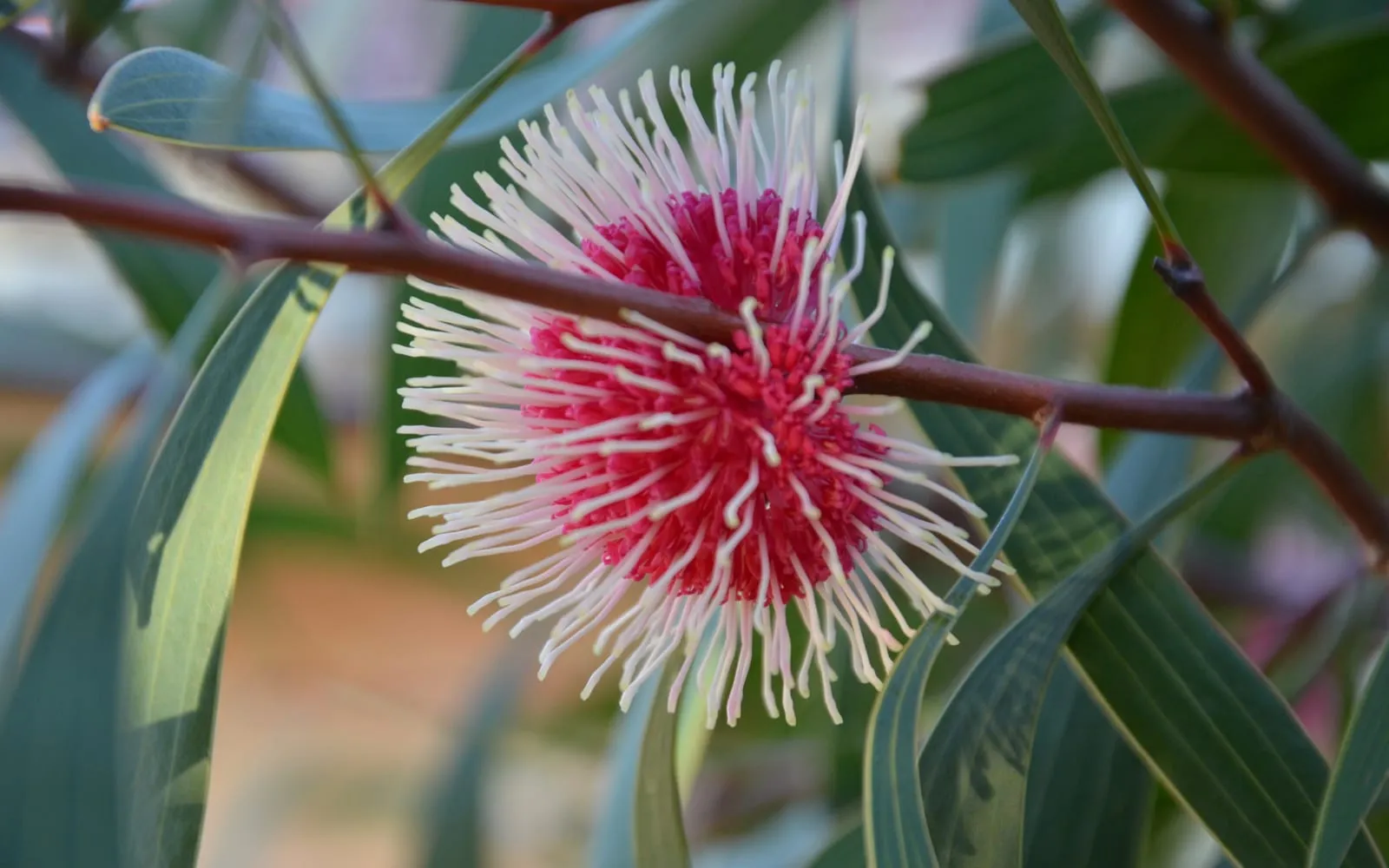
Pincushion hakea produces one of the more recognisable flowers in the wider protea family: a dense, spherical head of deep pink to crimson styles surrounding a paler centre, closely resembling a small pincushion or a sea urchin, and holding a strong, sweet fragrance that draws nectar-feeding birds and insects from some distance. Flowers appear directly on bare older wood along the branches instead of at the growth tips, an unusual habit that covers the older branch framework with flowers.
It is somewhat more tolerant of wind, salt spray and a broader range of soil types than several of its Proteaceae relatives, which has made it a popular choice for an exposed coastal garden where more particular family members would struggle.
Appearance and character
Stiff, curved, grey-green leaves, often described as boomerang- or sickle-shaped, clothe an upright, somewhat open shrub or small tree. Round, pincushion-like flower heads, densely packed with long styles in shades of deep pink through to crimson, open directly along older, woody stems in winter and spring, standing out clearly against the grey-green foliage.
Following flowering, woody seed pods develop along the same stems, and like several other members of this family, they can remain closed for years, only splitting to release seed after fire or, in cultivation, once the wood itself has aged and dried sufficiently, whichever comes first.
Where it is from
Sandy, well-drained coastal and near-coastal country in southwestern Australia, in a Mediterranean-type climate with dry summers and mild, wet winters, tolerant of the wind and salt exposure typical of its native coastal range.
That coastal tolerance sets this species apart from several relatives adapted to more sheltered inland fynbos or heath, and it is the main reason this particular hakea has become a popular, relatively forgiving choice for an exposed seaside garden where wind and salt spray rule out many other flowering shrubs.
How it grows
An evergreen shrub or small tree building an upright, somewhat open framework over several years, with flowers forming directly on older wood not only on the current season’s growth. Growth is moderate, and a young plant takes a few years to develop enough mature, woody stems to flower as heavily as an established specimen.
Because flowers and subsequent seed pods form along older stems, hard pruning that removes a large proportion of this mature wood can significantly reduce flowering for a season or more, and light, selective pruning to shape the plant is generally preferable to a heavy cutback.
Through the seasons
Spring flowering often continues from winter, with pink pincushion heads studding the older wood along the branches.
Summer growth continues given adequate establishment; established plants tolerate drought and coastal exposure well.
Autumn growth slows as temperatures drop and the wetter season approaches in a Mediterranean-type climate.
Winter is typically the main flowering period, with the fragrant pink flower heads opening along bare stems, a valuable source of colour and scent when little else is in bloom.
Care difficulty
Moderate. This is one of the more forgiving members of its family for an exposed or coastal position, tolerating wind, salt and a somewhat broader range of soil than several relatives, though it still needs sharp drainage and dislikes rich, waterlogged ground.
Watering
Regular watering supports establishment in the first year or two. Once settled, this species tolerates real drought well, and deep, infrequent watering suits it far better than frequent light watering.
Warning signs, diseases and pests
Root rot from soil that is too rich, wet or poorly drained is the main serious risk, and prevention through correct siting and minimal watering once established matters far more than treatment after the fact. Few significant pests trouble this species in a climate and site that suits it.
Reduced flowering after a hard prune usually reflects the removal of the older wood flowers form on, instead of any disease, and is addressed by favouring light, selective pruning over a heavy cutback in future.
Growing environment
Full sun suits it best, and while it tolerates a somewhat broader range of soil than several relatives, sharp drainage remains important regardless of overall fertility. Its tolerance of wind and salt spray makes it an especially useful choice for an exposed coastal position where many other flowering shrubs would struggle.
Feeding
None to minimal, and any fertiliser used should be low in phosphorus, in keeping with the wider Proteaceae family’s sensitivity to phosphorus levels that are unremarkable for most other garden plants.
Troubleshooting
Flowering has dropped off after a hard prune. This reflects the loss of older wood, where this species flowers most heavily. Favour light, shaping cuts over a heavy cutback in future to preserve flowering wood.
Leaves have yellowed after feeding with a general garden fertiliser. Suspect phosphorus sensitivity, common across this plant family. Switch to a low-phosphorus native plant feed, or stop feeding altogether.
A plant in an exposed coastal position looks less healthy than expected. This species tolerates wind and salt reasonably well, so check drainage and soil richness first, since these are more likely causes of decline than the exposure itself, particularly if nearby ground has been improved or fertilised for other coastal planting.
Seed pods remain closed and never seem to release seed. This is normal, since pods in this genus can remain closed for a long time, often opening only once the wood has aged and dried or after exposure to fire; this is not a sign of a problem with the plant.
You want to use the pincushion flowers for cutting. Cut stems once the flower heads have opened fully, and expect a good vase life along with the strong fragrance that also draws pollinators outdoors. Taking some older, bare-wood stems for cutting also acts as a light shaping prune if you remove them selectively.
You want to raise new plants from seed. Collect the woody pods once they open and sow the winged seed in a free-draining, low-phosphorus mix, where it germinates readily without special treatment. Seedlings are the usual way to increase this species, since cuttings are slower and less reliable than for many shrubs.
You are choosing a plant for an informal screen or windbreak. Its dense, wind-tolerant growth and salt tolerance suit it well to a loose hedge or shelter planting in a warm, frost-free climate. Space plants so the canopies just meet at maturity, and shape them with light tip-pruning after flowering rather than a hard cut, so you keep the flowering wood that feeds nectar-seeking birds.