
Outdoor plant
Box Honeysuckle
Lonicera nitida
Also known as Boxleaf Honeysuckle, Wilson's Honeysuckle
How to grow box honeysuckle, Lonicera nitida. Why it stands in for box hedging without the blight or caterpillar risk, the trade-off of clipping it two or three times a season to keep pace with its speed, and its mildly toxic berries.
At a glance
- Difficulty
- Easy
- Water
- Regularly while establishing, then only in prolonged drought
- Light
- Full sun to partial shade
- Temperature
- Fully hardy in most of the range it is grown
- Hardiness
- USDA 6-9, RHS H5, hardy to -15 C
- Type
- Evergreen shrub, dense and fast growing when young
- Height
- 1.5-3 m unclipped; kept to any lower height as a hedge
- Native to
- China
A zone rating of 6 tells you the wood survives a cold winter, but the small evergreen leaves can scorch brown in a hard frost combined with dry wind, a cosmetic injury the plant grows out of by the following spring rather than a sign it has died. It shows no particular sensitivity to summer heat or to a dry season, which is a large part of why it has become the default hedge for gardeners who found true box too fussy.
Hardiness zones describe winter cold alone. Summer heat, humidity, rainfall and the length of the growing season decide as much, so treat the range as the outer limit rather than as a recommendation.
Harmful if eaten
- Do not eat
- The small berries
- Harm from
- Eating it
- Affects
- People
Box honeysuckle produces small, semi-translucent purple berries that follow its inconspicuous cream flowers, though a plant clipped regularly as a hedge rarely flowers or fruits at all, since both are cut away before they form. Where berries do appear on an unclipped specimen, the RHS lists Lonicera among plants that are harmful if eaten, and species in the genus typically cause vomiting, abdominal pain and diarrhoea if eaten in quantity rather than anything more serious. The scale of risk in practice is low: the berries are small, not especially appealing to eat, and mostly absent from a plant kept in hedge form. No toxin specific to Lonicera nitida is separately documented, and the general caution for the genus is the reasonable one to follow.
Sources: RHS potentially harmful garden plants, ASPCA toxic and non-toxic plants
About
Box honeysuckle earns its common name from a resemblance rather than any close relationship. Its tiny, glossy, oval leaves look enough like box, Buxus sempervirens, to fool a passer-by, and gardeners have used it for decades as a stand-in hedge and topiary plant wherever box blight or box tree caterpillar has made growing the real thing too much trouble.
It grows several times faster than box, tolerates hard clipping without complaint, and holds a crisp outline through most of the year. What it gives up for that speed is longevity of the very finest, tightest topiary detail, since a plant that grows this fast needs clipping more often to keep an edge as sharp as slow-growing box can hold with less attention.
Left unclipped it becomes something else entirely: a loose, twiggy, arching shrub that few gardeners choose to grow that way, since almost everyone who plants it does so for the hedge or the shape rather than for the plant’s natural habit.
Appearance and character
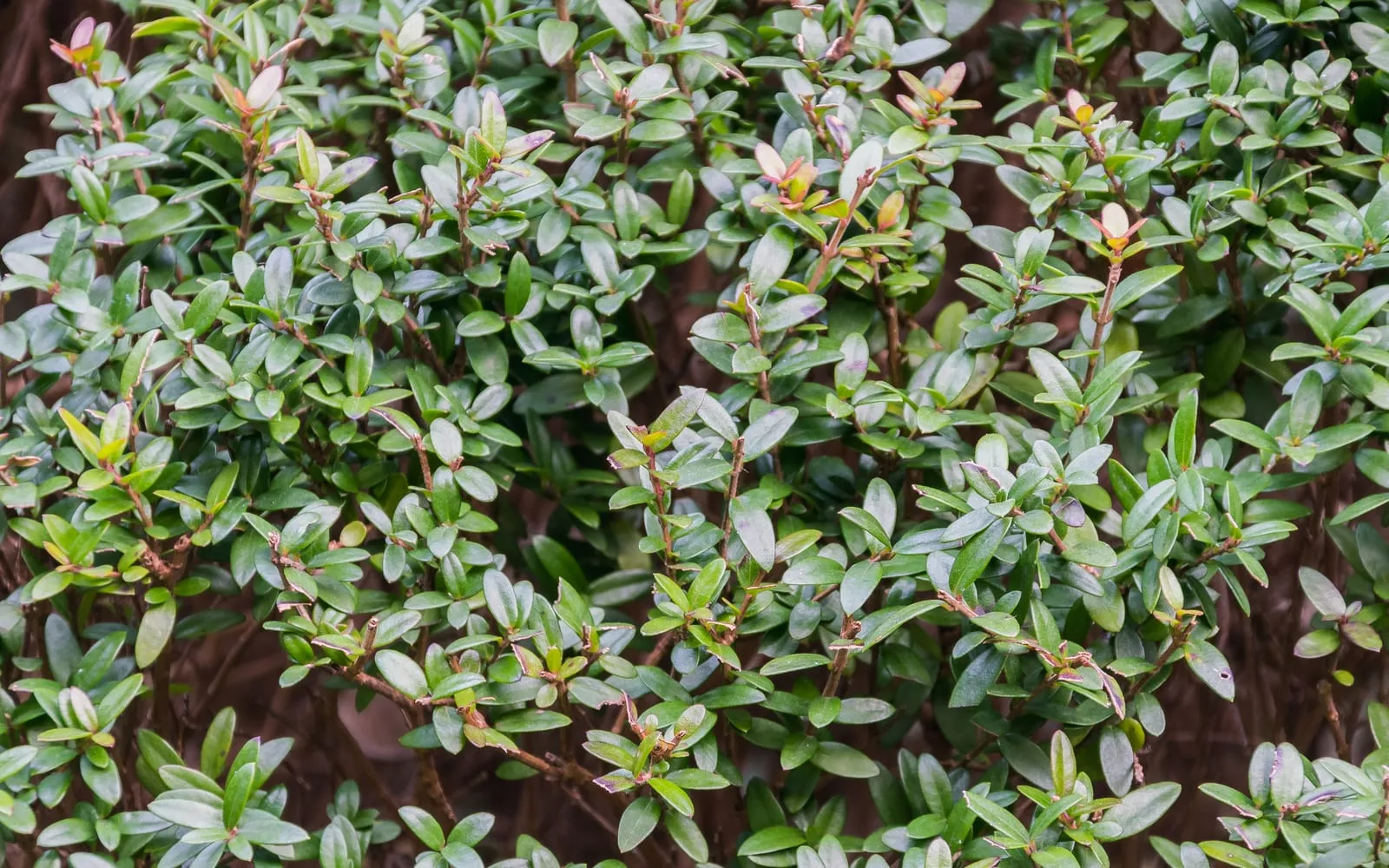
Small, oval, glossy dark green leaves no more than about 1.5 cm long, carried in opposite pairs along slender, densely branching twiggy stems. The foliage is what the plant is grown for, and it holds its colour through winter far better than most evergreens of similar scale.
Flowers are tiny, cream to pale yellow and easy to miss, produced in spring mostly on wood that has not been clipped since the previous season. Small purple berries can follow on unclipped growth, though a regularly trimmed hedge shows neither flower nor fruit in any quantity.
Left unpruned, the plant arches and sprawls into a loose mound two to three metres across, quite unlike the tight geometric shapes it is usually grown into. Clipped regularly, it holds crisp lines as a low hedge, a ball, a cone or any other simple topiary form, and it responds to cutting back into old wood far more readily than true box does.
Where it is from
Lonicera nitida is native to the mountains of western China, in Yunnan and Sichuan, where it grows as a shrub in woodland margins and scrub at moderate to high elevation.
British plant collector Ernest Wilson, working for the Veitch nurseries in the early twentieth century, introduced it to Western gardens, and it was quickly taken up for its dense, small-leaved habit rather than for any flower or fruit display, which its wild relatives can offer and this species largely cannot.
Its natural vigour and tolerance of a wide range of soils and light levels, evolved for a competitive mountain scrub environment, is what makes it forgiving of the hard, repeated clipping gardeners give it far from where it originates.
How it grows
Plant in any reasonable garden soil, including chalk and heavier clay, provided it does not sit permanently waterlogged. It tolerates a wider range of soil conditions than true box, which is one of the main reasons gardeners reach for it as a substitute.
Choose full sun for the densest, most compact growth, though it also copes well with partial shade, growing slightly looser and less densely foliaged in lower light.
Space plants intended as a hedge at around 30 to 45 cm apart, closer for a quicker-forming low edge and slightly wider for a taller informal screen, and water well while the roots establish through the first season.
Clip two or three times through the growing season to hold a crisp shape, starting once new growth has hardened slightly in late spring and finishing by late summer so that any regrowth has time to harden off before winter. A hedge left unclipped for a full season becomes loose and takes real effort to bring back into shape.
It tolerates hard renovation pruning into old wood better than most evergreen hedging plants, so an overgrown or gappy hedge can be cut back hard in spring and will usually recover within a season or two.
Through the seasons
Spring brings the main flush of new growth. Start the season’s clipping once that growth has firmed up.
Summer brings further growth flushes needing one or two more clips, with the last cut timed to leave enough of the season for regrowth to harden before cold weather arrives.
Autumn is a good time to plant new hedging and to apply a mulch around the base of an established one.
Winter is largely dormant. The evergreen foliage can scorch brown in a hard frost paired with drying wind, a cosmetic injury the plant recovers from with fresh growth the following spring.
Care difficulty
Easy, and one of the most forgiving hedging shrubs available for a gardener who wants a box-like effect without box’s susceptibility to blight and caterpillar damage. It tolerates most soils, most light levels and repeated hard clipping without serious setback, and it grows back readily even from an overgrown or neglected state.
The trade-off for that ease is upkeep frequency. Its fast growth means a hedge or topiary shape needs clipping two or three times a season to stay crisp, more often than the slower-growing plants it is chosen to replace, and a gardener who wants minimal maintenance may find that adds up over a full growing season.
Watering
Water regularly through the first growing season after planting, while the root system is still establishing and cannot yet draw on much reserve moisture from the surrounding soil.
Once established, an in-ground hedge rarely needs supplementary watering except in prolonged drought, when a deep, thorough soak at the base is more useful than frequent light sprinkling.
A plant grown in a container for topiary needs more consistent attention, since the free-draining compost typical of a pot dries out considerably faster than open ground.
Warning signs, diseases and pests
Aphids often appear on the soft new growth that follows a fresh clip, distorting the youngest leaves and leaving a sticky residue behind them. A strong jet of water dislodges a light infestation, and the next scheduled clip usually removes the affected tips entirely.
Powdery mildew shows as a white coating on leaves in a hedge that has become congested and short of airflow, particularly in a shaded or sheltered position. Thin out old wood during a renovation prune to improve air movement through the plant.
Brown leaf spot appears in similarly humid, poorly ventilated conditions. Improving airflow and avoiding overhead watering in the evening both help reduce it.
Scale insects can build up unnoticed on older woody stems inside a dense, regularly clipped hedge, appearing as small, flat, brownish bumps that sap the plant’s vigour over time. A hard renovation cut that opens up the centre of the hedge exposes them to treatment and to better air movement afterwards.
Growing environment
Full sun gives the densest growth and the crispest shape for a clipped hedge or topiary specimen, though the plant also tolerates part shade reasonably well.
Almost any reasonable soil suits it, including chalk, clay and poor soil that would trouble many other hedging plants, provided drainage is adequate and the roots are not sitting in standing water.
It tolerates coastal exposure and urban pollution better than many evergreen hedging shrubs, which is part of why it turns up so often along roadsides and in car park plantings as well as in gardens.
Shelter from the harshest, driest winter wind reduces the scorching the foliage can otherwise show after a hard frost.
Feeding
A general-purpose fertiliser applied once in spring is usually enough for a hedge growing in reasonable soil, particularly one that is also mulched with garden compost.
A hedge or topiary specimen clipped hard and often benefits from a slightly more generous feeding routine than one left to grow more naturally, since regular clipping removes a meaningful amount of the plant’s leafy growth each season.
Avoid heavy nitrogen feeding on a plant already growing vigorously, which pushes soft growth that needs clipping back even sooner and is more prone to aphid damage.
Troubleshooting
My hedge has gone loose and gappy. A season or more without clipping is the likely cause. Cut back hard in spring, even into old wood, and resume a regular clipping schedule through the following growing season to bring it back into shape.
The leaves have scorched brown after a cold snap. Winter scorch from a hard frost combined with drying wind. It is cosmetic rather than fatal, and fresh growth in spring covers it within a few weeks.
How often do I need to clip it? Two or three times through the growing season, starting once spring growth has firmed up and finishing by late summer so any regrowth hardens before winter.
Can I cut an overgrown hedge back hard? Yes, more readily than true box. It tolerates renovation into old bare wood and typically recovers within one or two growing seasons.
Why has my hedge never flowered? Regular clipping removes the wood that would otherwise carry flowers the following spring, so a frequently trimmed hedge rarely shows either flowers or the small berries that follow them.