
Outdoor plant
Cherry laurel
Prunus laurocerasus
Also known as Common laurel, English laurel
How to grow Prunus laurocerasus. Pruning with secateurs rather than shears, treating shot hole, disposing of clippings safely, and why it must never be confused with bay.
At a glance
- Difficulty
- Easy
- Water
- Rarely once established
- Light
- Full sun to deep shade
- Temperature
- Hardy to about -15 deg C
- Hardiness
- USDA 6-9, RHS H5, hardy to -15 C
- Type
- Evergreen shrub or small tree, fast-growing and long-lived
- Height
- 3-8 m, and kept at 1.5-3 m as a hedge
- Native to
- The Balkans, Turkey, the Caucasus and the Black Sea coast
- Best month
- September in the Northern Hemisphere, March in the Southern Hemisphere
Deep shade and dry root competition are both taken, which is what makes it so useful and so dangerous. Birds carry the seed into woodland, the seedlings tolerate shade that stops natives, and clearance programmes run across Britain, Ireland, Belgium, the Netherlands and the American Pacific north-west and mid-Atlantic. Switzerland banned its sale in 2024. Check the status where you live before planting a hedge of it.
Hardiness zones describe winter cold alone. Summer heat, humidity, rainfall and the length of the growing season decide as much, so treat the range as the outer limit rather than as a recommendation.
Every month named in this guide is for the temperate Northern Hemisphere. If you garden in the Southern Hemisphere, shift each one by six months, so September becomes March. Closer to the equator the wet and dry seasons matter more than the calendar, and the shift stops being a useful guide.
Poisonous if eaten
- Do not eat
- Leaves, stems, seeds and the kernels inside the fruit
- Harm from
- Eating it
- Affects
- People, cats, dogs and horses
Cherry laurel releases hydrogen cyanide, and this is the plant behind the warning about laurel hedge clippings in a car. The leaves and seeds contain prunasin, a cyanogenic glycoside, and when the tissue is crushed or wilted an enzyme converts it and cyanide is given off. A crushed leaf smells distinctly of marzipan or almonds, which is the smell of the reaction happening. Entomologists once used jars of crushed laurel leaves to kill insect specimens, which gives a fair sense of the concentration. Never transport fresh clippings in an enclosed vehicle or store them in a sealed container or a closed shed, because the gas accumulates and cases of headache, dizziness and collapse are recorded. Move them in an open trailer or bagged loosely with the windows down, and take them to green waste promptly. Eating the leaves or the kernels causes vomiting, dizziness, breathing difficulty and, in quantity, collapse. Livestock and horses are poisoned by browsing a hedge or by eating clippings thrown over a fence, which is a genuinely common way for animals to die. The flesh of the ripe black fruit is not itself dangerous, and the stone inside it is, so the fruit is best treated as inedible. The most important point is one of naming. Cherry laurel is not bay. Bay laurel, Laurus nobilis, is the culinary herb and is a different plant in a different family. Bay leaves are narrower, matt and savoury, while cherry laurel leaves are broad, very glossy and smell of marzipan. Never cook with a leaf taken from a hedge.
Sources: RHS potentially harmful garden plants, ASPCA toxic and non-toxic plants
About
Cherry laurel is the fastest way to a solid evergreen screen in any temperate climate. It puts on 30 to 60 cm a year, it grows in shade that defeats most hedging, and it makes a barrier thick enough to stop noise as well as sight.
Those same qualities are why it has become a problem outside gardens. Birds spread the seed into woodland, where the dense evergreen canopy shades out bluebells and everything else on the woodland floor, and it is now a serious invasive across Britain, Ireland, western Europe and the American Pacific north-west.
The name causes a more immediate hazard. This plant has nothing to do with the bay laurel used in cooking, and its leaves release cyanide. Anyone who reaches into a hedge for a leaf to put in a stew needs to know which shrub they are standing in front of.
Appearance and character
A vigorous evergreen shrub or small tree, reaching 3 to 8 m if left alone and usually clipped to between 1.5 and 3 m.
Leaves are the distinguishing feature. Large, 10 to 20 cm long, oblong, thick and leathery, and very glossy dark green above with a paler underside. Crushing one releases a clear smell of marzipan.
Flowers open in April and May in upright spikes 8 to 12 cm long, small, creamy white and honey-scented, standing above the foliage.
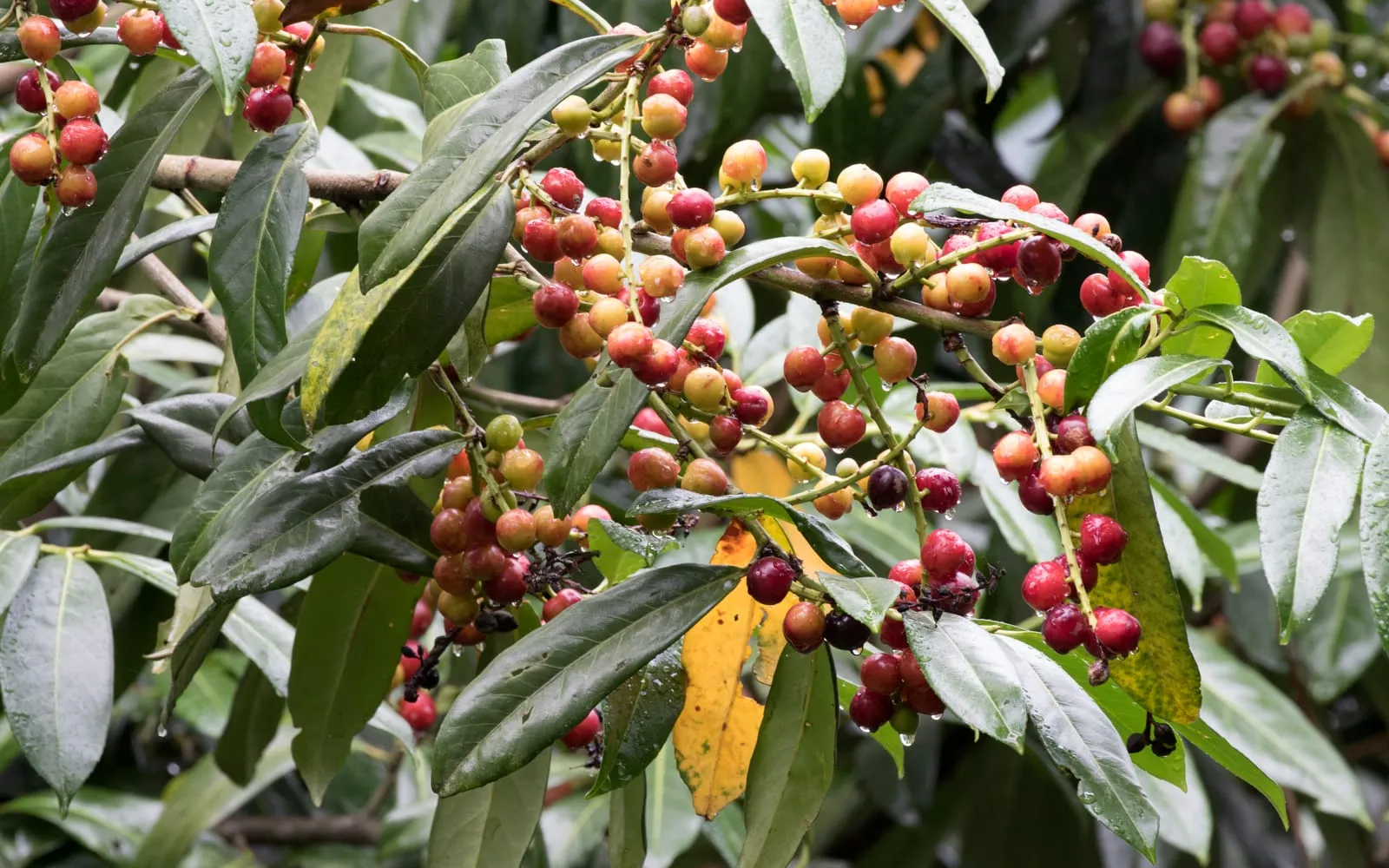
Fruit follows through late summer, small cherries carried on the same upright spikes, ripening through green and red to glossy black.
Growth is dense and spreading, breaking readily from old wood, which is why it takes hard renovation so well.
Bark is smooth and dark grey.
Varieties differ in size and habit. ‘Rotundifolia’ is the standard fast hedging form, ‘Otto Luyken’ stays at 1 m with narrower leaves, and ‘Zabeliana’ is low and spreading for ground cover.
Where it is from
The Balkans, Turkey, the Caucasus and the southern coast of the Black Sea, where it grows as an understorey shrub in damp mountain forest, often beneath beech.
That understorey origin explains the shade tolerance. A plant adapted to growing under a closed canopy will grow almost anywhere in a temperate garden.
It reached western Europe in the late sixteenth century by way of Constantinople and was widely planted in Victorian shrubberies, where a great many of the oldest specimens still stand.
Its invasiveness follows from a combination of shade tolerance, bird-dispersed fruit and dense evergreen cover. Once established in woodland it forms a canopy that little else survives under, and clearance programmes run in woodlands across Britain, Ireland, Belgium and the Pacific north-west of the United States.
Turkish laurel, Prunus lusitanica, is a related and better-behaved alternative, with smaller darker leaves, red leaf stalks and considerably less vigour.
How it grows
Plant bare-root or root-balled stock between October and March, or container-grown at any time of year.
Space plants 60 to 90 cm apart for a hedge, and give a specimen shrub 3 m each way.
Prune with secateurs rather than shears. Shears slice through the large leaves and leave brown-edged halves all over the hedge, which stay looking bad for months. Cutting each shoot individually just above a leaf takes longer and looks incomparably better.
Prune in spring after the frosts, around April, or in late summer. Avoid cutting in autumn, which pushes out soft growth that frost damages.
Renovate an overgrown plant by cutting it back hard into old wood in spring. It reshoots freely from bare stems, and a hedge can be taken back to a metre and allowed to regrow.
Dispose of clippings promptly and safely. Never carry fresh cuttings in a closed car boot or store them in a sealed bag in a shed, and never throw them over a fence where livestock or horses could reach them.
Remove seedlings around the base as they appear, and think about whether the plant should be there at all if your garden backs onto woodland.
Water through the first two summers after planting.
Through the seasons
Winter is dormant and mostly untroubled. Hard frost browns the foliage in cold gardens and it recovers in spring.
Spring brings the flower spikes in April and May and the main pruning. Cut after the frosts, feed, and mulch.
Summer is the growing season. Watch for shot hole and mildew, and trim again in late summer if needed.
Autumn ripens the fruit to black. Clear up seedlings, avoid pruning, and plant new stock from October.
Care difficulty
Easy, and it takes considerably more effort to restrain than to grow.
Pruning technique is the main thing to get right. Shears ruin the look of a laurel hedge and secateurs take three times as long.
Shot hole disease is near-universal on cherry laurel and looks far worse than it is.
The disposal of clippings is a genuine safety matter rather than a difficulty.
Its vigour and its invasiveness are the reasons to think before planting, more than any question of care.
Watering
Water new plants through their first two summers while they establish.
Established plants need no watering, and cherry laurel is notably drought-tolerant once its roots are down.
Mulch a new hedge in spring to suppress grass, which competes far more than drought does.
Avoid waterlogged ground, which it tolerates poorly.
Container plants need regular summer watering and are better suited to the compact varieties such as ‘Otto Luyken’.
Warning signs, diseases and pests
Shot hole is the condition every cherry laurel owner asks about. Small brown spots appear on the leaves, the dead tissue falls out, and the leaf is left riddled with round holes as though peppered with shot. It is caused by a bacterium or a fungus depending on the season, and it is encouraged by wet weather, dry roots and stress after clipping. The plant is not seriously harmed. Improve the growing conditions, mulch, avoid overhead watering, clear fallen leaves, and prune with secateurs to reduce the wounding.
Powdery mildew coats new growth in white, particularly on soft regrowth after pruning.
Vine weevil adults notch the leaf margins in neat semicircular bites, which is cosmetic. The grubs matter only in containers.
Yellow leaves with green veins mean chlorosis on shallow chalk soil. Cherry laurel dislikes thin limy ground, and sequestered iron is a treatment rather than a cure.
Brown scorched foliage after a hard winter is frost damage. Cut back to live wood in spring.
Seedlings appearing under and around the plant show that birds are spreading it, which matters most where a garden adjoins woodland.
Honey fungus kills cherry laurel and is fatal.
Growing environment
Full sun to deep shade. Very few evergreens tolerate as wide a range, which is the main reason it is planted.
Any reasonable soil that drains. It performs badly on shallow chalk, where the leaves yellow.
Shelter improves it in cold inland gardens, and it stands coastal exposure reasonably well.
Allow 1 m of width for a trimmed hedge and considerably more if it is left to grow.
Think about the neighbours before planting. A laurel hedge left untrimmed reaches 6 m and casts heavy year-round shade.
Consider Portuguese laurel, Prunus lusitanica, as an alternative. It is slower, neater, has smaller leaves that take shears better, and is far less invasive.
Avoid planting it where a garden adjoins native woodland.
Feeding
Cherry laurel needs little feeding on reasonable soil.
Apply a general-purpose fertiliser in spring where growth is weak or the plant is yellowing.
Mulch a new hedge with compost or bark in its first two springs.
Sequestered iron helps a chlorotic plant on chalky soil, and moving it is the better answer.
Avoid heavy nitrogen, which produces soft growth prone to mildew and frost.
Troubleshooting
The leaves are full of round holes. Shot hole. It is very common on cherry laurel and looks worse than it is. Improve the growing conditions, mulch, clear fallen leaves, and prune with secateurs.
The hedge is covered in brown-edged half leaves. It was cut with shears, which slice through the large leaves. Use secateurs and cut each shoot above a leaf.
Is this the same as the bay used in cooking? No, and the difference matters. Bay laurel, Laurus nobilis, is the herb. Cherry laurel leaves release cyanide, are broad and very glossy, and smell of marzipan when crushed.
Can I put the clippings in the car? No. Fresh laurel clippings release hydrogen cyanide in an enclosed space. Use an open trailer or leave the windows down, and take them to green waste promptly.
Can I cut an overgrown one right back? Yes. Cherry laurel reshoots freely from old wood. Cut hard in spring and let it regrow.
Yellow leaves with green veins. Chlorosis on shallow chalk soil. Sequestered iron helps, and the plant will never be happy on thin limy ground.
Seedlings are coming up everywhere. Birds spread the fruit. Pull them out, and think hard about the plant if your garden backs onto woodland, where it is a serious invasive.
Is it safe with horses? Only if they cannot reach it. Browsing a laurel hedge or eating clippings thrown over a fence poisons horses and livestock, and it happens regularly.