
Outdoor plant
Waratah
Telopea speciosissima
Also known as New South Wales Waratah
Practical guidance for growing waratah, Telopea speciosissima, including sandstone heath origin, lignotuber resprouting after fire, phosphorus-sensitive roots, and cool-root, full-sun placement.
At a glance
- Difficulty
- Difficult
- Water
- Regular deep watering while establishing, then a steady, moderate supply rather than either extreme
- Light
- Full sun on the crown, with a cool, shaded root run
- Temperature
- Tolerates light, brief frost once established; young growth is more tender
- Hardiness
- USDA 9-10, RHS H3, hardy to -5 C
- Type
- Evergreen shrub, resprouting from a woody lignotuber after fire or damage
- Height
- 3-4 m
- Native to
- eastern Australia
A light frost does little harm to an established plant, but frost tolerance is not the limiting factor here. Waratah comes from a sandstone heath that burns periodically and drains fast, and a garden that keeps its roots cool and its crown in full sun, the combination the species needs, will succeed in climates well outside this zone range, while one that gets the balance wrong fails inside it.
Hardiness zones describe winter cold alone. Summer heat, humidity, rainfall and the length of the growing season decide as much, so treat the range as the outer limit rather than as a recommendation.
Not known to be toxic
Waratah does not appear on the RHS potentially harmful plants index or the ASPCA toxic plant database, and no toxic compound is documented in its leaves, flowers or nectar. The flower is rich in nectar and attracts birds and insects to feed directly from it in the wild, which is a further point against any hidden toxin, and cut stems are handled and displayed indoors without any recorded harm to pets or children.
Sources: ASPCA toxic and non-toxic plants, RHS potentially harmful garden plants
About
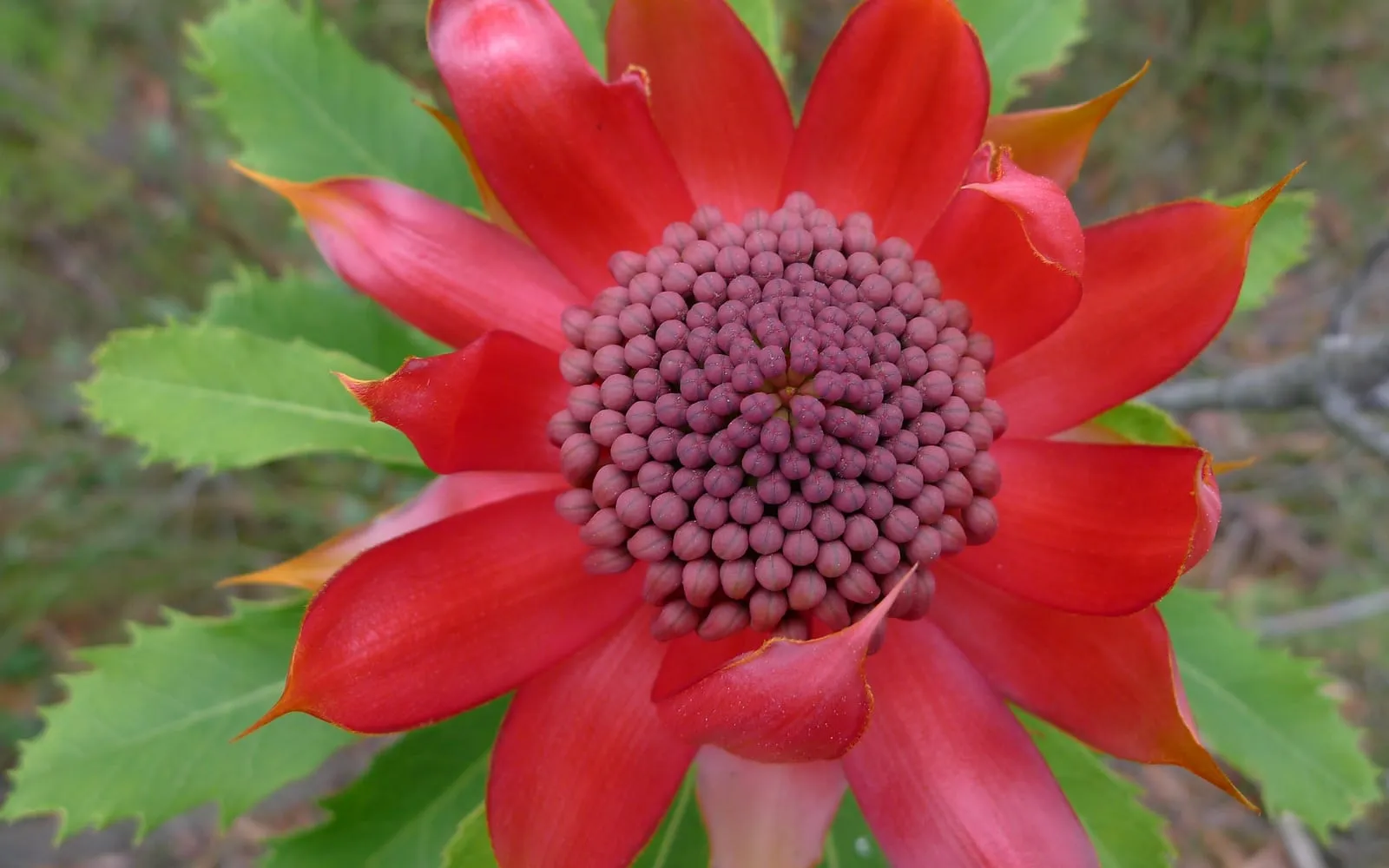
Waratah is grown for one of the most striking flower heads in cultivation, a dense crimson dome up to 15 cm across, ringed by pointed red bracts and held above dark, leathery foliage in spring. It is the floral emblem of New South Wales and a demanding plant to grow well outside the sandstone country it comes from.
Waratah needs full, hot sun on the crown and cool, damp soil around the roots. Use heavy mulch and careful siting to meet both needs. Without that balance, the plant is more likely to fail from root disease within a season or two.
Appearance and character
The leaves are stiff, dark green, coarsely toothed and arranged alternately on upright stems, tough enough to handle heat, wind and poor soil without wilting.
The flower head is a compound structure of many small, tubular true flowers packed into a dome and ringed by bright red bracts, opening from a pointed bud through spring. A single bush of any size can carry a dozen or more heads at once, each lasting several weeks and drawing honeyeaters and other nectar-feeding birds to feed directly from it.
Below ground, a woody swelling called a lignotuber sits at or just below soil level, storing energy and dormant buds that let the plant resprout after fire or after the top growth is cut or burned back hard.
Where it is from
Telopea speciosissima is native to the sandstone heath and open forest of the Sydney basin in eastern Australia, growing on some of the most nutrient-poor soil in the region, shallow, acidic and derived from weathered sandstone with almost no available phosphorus.
That country burns periodically, and waratah regrows after fire. The lignotuber survives underground while the top growth is destroyed. A population can flower more heavily than usual in the seasons after a fire clears competing vegetation and returns nutrients to the soil as ash.
How it grows
Plant in full sun on the crown with the root zone kept cool, most easily achieved with a thick organic mulch or by underplanting with low, dense ground cover that shades the soil surface without competing hard for water.
Soil must be acidic and sharply drained; a raised bed or a naturally sloping site helps where the garden soil is heavier than the sand the species evolved on. Avoid phosphorus-rich fertiliser and manure, which scorch the fine roots the way they do in other Proteaceae.
Stake young plants loosely if the site is windy, since a single-stemmed young waratah can rock at the base before the root system is large enough to anchor it. Once established, cut spent flower stems back hard after flowering to encourage a bushier shape and a stronger show the following year.
Through the seasons
Spring is the main flowering season, when the crimson flower heads open over several weeks.
Summer is a season for steady, moderate watering rather than either drought or waterlogging, with the root zone kept cool under mulch.
Autumn suits planting in a mild climate, giving the roots a season to settle before the following summer’s heat arrives.
Winter is quiet growth. Light frost does little harm to an established plant, though young growth benefits from some shelter on the coldest nights.
Care difficulty
Difficult because the site has to meet two opposing needs. Waratah needs full sun for flowering and a cool, evenly moist root run at the same time. Most garden beds need deliberate mulching or underplanting to provide both.
Once that balance is achieved, ongoing care is comparatively light. A light feed, an annual mulch top-up and pruning after flowering carry it through most years without further intervention.
Watering
Water regularly and deeply while the plant establishes, keeping the root zone evenly moist without ever letting it become waterlogged.
Once settled, aim for a steady, moderate water supply rather than a drought-and-deluge pattern. Consistent watering paired with sharp drainage suits it far better than either constant dryness or a soil that holds standing water after rain.
Warning signs, diseases and pests
Phytophthora root rot is the single greatest risk to a garden waratah, and heavy or poorly drained soil is almost always the underlying cause. There is no cure once it has taken hold, so drainage at planting time matters more than any treatment applied afterwards.
Aphids, sometimes called waratah aphid, cluster on soft new growth and distort it as they feed. A strong jet of water or an insecticidal soap controls a light infestation.
Scale insects appear as small, flat bumps along the stems, sapping vigour over time. Treat with horticultural oil during the dormant season.
Waratah looper caterpillars chew ragged holes in leaves and can damage developing flower buds. Handpick where practical, since the population rarely grows large enough to justify a broader treatment.
Growing environment
Give the flower-bearing crown full sun, and keep the root zone cool, shaded and evenly moist. Most gardens need mulch or low ground cover to provide both.
Acidic, sharply drained soil, low in phosphorus, is essential. A raised bed with sandy, gritty material worked through it comes closest to the sandstone heath the species grows on naturally.
Shelter young plants from strong wind until the root system and, later, the lignotuber are established enough to anchor them securely.
Feeding
Feed lightly, if at all, with a low-phosphorus native or proteaceae fertiliser in spring. In soil that already resembles its native sandstone heath, no feeding is usually necessary.
Avoid manure, bonemeal and any general garden fertiliser with a notable phosphorus content, which can scorch the fine root system the way it does in other members of the Proteaceae family.
Troubleshooting
The plant collapsed without warning after a wet spell. Phytophthora root rot is the likely cause. There is no cure once it takes hold; improve drainage before replanting and choose a raised, sharply drained site next time.
It flowered once and then never again. Hard pruning of spent flower stems straight after flowering encourages the strongest repeat display. A plant left unpruned, or one growing in too much shade on the crown, often flowers only lightly or skips a year.
New growth is curled and sticky. Aphids are the likely cause, clustering on soft new shoots. Wash them off with a strong jet of water or treat with an insecticidal soap.
The top growth died back completely after a fire or hard cutting back. This is often not fatal. The underground lignotuber commonly resprouts new stems from soil level over the following season, provided the root system itself was not also damaged.
Can I grow it in a pot? It is possible in a large container of gritty, acidic, free-draining mix, but the combination of full sun on the crown and a cool, evenly moist root zone is harder to manage in a pot than in open ground, and most gardeners find it easier to succeed in a bed.