
Outdoor plant
Bridal Wreath
Spiraea prunifolia
Also known as Bridalwreath Spiraea, Plum-Leaf Spiraea
How to grow bridal wreath, Spiraea prunifolia. Why pruning at the wrong time of year strips away next spring's flowers, the double white blooms that give each branch its lace-like look, and how to tell it apart from other shrubs sharing its name.
At a glance
- Difficulty
- Easy
- Water
- Regularly while establishing, then only in extended dry spells
- Light
- Full sun for the heaviest flowering, tolerating light shade
- Temperature
- Fully hardy
- Hardiness
- USDA 4-8, RHS H6, hardy to -25 C
- Type
- Deciduous shrub, long-lived with age
- Height
- 1.8-2.4 m
- Native to
- eastern Asia
Cold is not a limiting factor for this shrub anywhere in its usual range, and the zone number mostly confirms that. What it does need is a winter cold enough to trigger proper dormancy before the following spring's flower buds break, so a very mild, largely frost-free climate gives a thinner, less synchronised display than a garden with a real winter chill.
Hardiness zones describe winter cold alone. Summer heat, humidity, rainfall and the length of the growing season decide as much, so treat the range as the outer limit rather than as a recommendation.
Not known to be toxic
Spiraea species, including this one, are not documented as toxic to people, cats, dogs or horses on any reputable poisoning list, and ordinary contact with the foliage or flowers carries no known risk. A dog or cat that chews a mouthful of leaves may vomit from the sheer bulk of plant fibre, the same as with any tough garden foliage eaten in quantity, rather than from any toxin. This is a shrub you can plant without factoring pets or small children into the decision.
Sources: ASPCA toxic and non-toxic plants, RHS potentially harmful garden plants
About
Bridal wreath earns its name honestly. In mid-spring, before the leaves are fully out, every arching branch carries small white flowers packed tightly enough along its length to look like a garland, and a well-grown plant in full bloom resembles a shrub wrapped in lace.
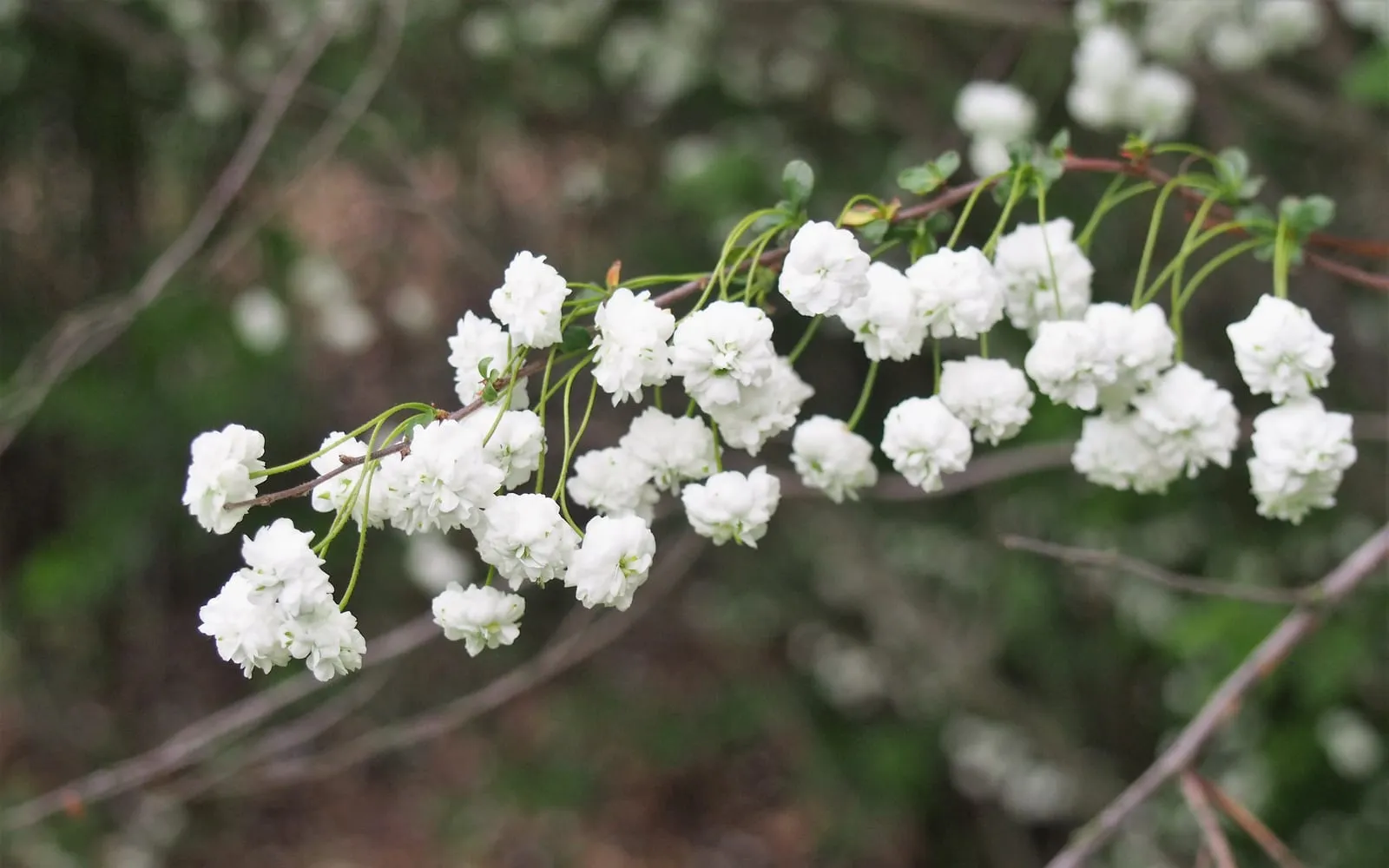
Most of what is sold and grown under this name is the double-flowered form, each bloom a tiny white pompom rather than a simple five-petalled flower, held in small clusters directly against the bare wood of the previous year’s growth. It flowers earlier than most other spiraeas and on older wood, which sets both its pruning timing and its garden role apart from summer-flowering relatives.
The name “bridal wreath” is used loosely for more than one spiraea in cultivation, including the hybrid Spiraea x vanhouttei. This is the true plum-leaf spiraea, named for foliage shaped like a plum or cherry leaf rather than for anything about the flowers.
Appearance and character
Branches are slender, arching and densely twiggy, building up over years into a dense, fountain-shaped mound wider than it is tall.
Flowers open in mid-spring in small clusters of three to six along the previous year’s stems, each individual bloom under 1 cm across and, in the double form most widely grown, packed with extra petals into a small white rosette. A mature plant in full flower can carry so many blooms that the stems themselves nearly disappear.
Leaves are ovate to lance-shaped with a finely toothed edge, resembling a plum or cherry leaf closely enough to have given the species its Latin name, prunifolia. They emerge after flowering begins and turn a reliable orange to reddish-purple in autumn, better colour than many spiraeas manage.
Bark on older stems turns a warm brown and peels in thin strips with age, adding some winter interest to a plant that otherwise disappears into the background once its leaves drop.
Where it is from
Spiraea prunifolia is native to China, Korea and Taiwan, and it has been grown in gardens across eastern Asia, including long cultivation in Japan, for far longer than Western botany knew where it originally came from.
The double-flowered form reached Europe from Chinese gardens in the early nineteenth century and was grown and named there for years before anyone outside China had seen the shrub growing wild. The single-flowered wild form, var. simpliciflora, was only found and described from populations in central China considerably later, an unusual case of an ornamental plant becoming garden-famous before its native origin was properly documented.
It reached North American and European gardens as a reliable, trouble-free spring shrub and has stayed in cultivation for that reason more than for any showy novelty.
How it grows
Plant in ordinary, well-drained garden soil in full sun for the heaviest flowering, though it tolerates a good deal of shade without dying, flowering more sparsely there instead.
Because flowers form on the previous year’s wood, prune immediately after flowering finishes in spring rather than in winter or early spring as with a summer-blooming spiraea. Pruning at the wrong time removes the coming year’s flower buds along with the cut growth.
Renovate an old, congested plant by removing a third of the oldest stems at ground level each year for three years, which keeps a constant supply of young, free-flowering wood coming through without a total cut-back.
It transplants and establishes easily and needs little beyond that first season or two of regular watering.
Through the seasons
Spring is the main event, with the double white flowers opening along bare branches before or just as the leaves unfurl, followed immediately by the only pruning window this shrub needs.
Summer is quiet leafy growth, with the plum-shaped foliage providing a plain green backdrop once the flowers are long over.
Autumn brings the best colour of the year, as the leaves turn orange to reddish-purple before falling.
Winter shows the bare, arching branch structure and the peeling brown bark on older stems, modest but not without interest against snow or a dark hedge behind it.
Care difficulty
Easy, and one of the more forgiving spring-flowering shrubs available. Bridal wreath tolerates poor soil, some shade and irregular watering once established, and one well-timed prune a year is enough to keep flowering well.
The only real way to reduce its display is to prune at the wrong time of year, cutting away the following spring’s flower buds along with whatever growth is removed. Getting that timing right is the entire skill involved in growing it.
Watering
Water regularly through the first year or two after planting while the root system establishes, giving a deep soak rather than frequent light watering.
Once established, it copes with dry spells better than many flowering shrubs and needs supplemental watering only in an extended drought, particularly on light, free-draining soil.
Warning signs, diseases and pests
Aphids cluster on soft new shoot tips in spring, distorting young growth and coating it in sticky honeydew. A strong jet of water or an insecticidal soap deals with a light infestation, and natural predators usually manage the rest.
Powdery mildew coats leaves in a pale grey-white film in humid, still conditions, more unsightly than seriously damaging. Improving airflow by thinning congested growth after flowering helps prevent it recurring.
Leaf spot causes brown blotches on the foliage in a wet summer, usually cosmetic on an established plant. Clearing fallen leaves in autumn reduces the fungus carrying over to the following year.
Fireblight occasionally scorches shoot tips and blackens flower clusters, since Spiraea belongs to the rose family alongside the trees where the disease is best known. Cut out and destroy affected wood well below the visible damage, disinfecting tools between cuts.
Growing environment
Full sun brings the heaviest flowering, though bridal wreath tolerates partial shade well, flowering a little less densely there.
Ordinary, well-drained garden soil suits it, and it tolerates poor ground well, unlike many flowering shrubs that sulk without rich conditions.
It works well as an informal flowering hedge, a specimen shrub given room to arch, or massed at the back of a mixed border where its plain green summer foliage recedes and its spring flowers and autumn colour do the work.
Good air circulation around the plant reduces the risk of powdery mildew and leaf spot in a humid summer.
Feeding
Apply a balanced, general-purpose fertiliser once in early spring, before growth resumes, following the product’s guidance for a flowering shrub.
An annual mulch of garden compost around the root zone in spring supplies most of the ongoing fertility this shrub needs beyond that single application.
Avoid heavy nitrogen feeding, which pushes soft leafy growth at the expense of flower bud formation and makes the plant more attractive to aphids.
Troubleshooting
When should I prune it? Immediately after flowering finishes in spring, never in winter or early spring. Flowers form on the previous year’s wood, so pruning at the wrong time cuts away the coming display.
Why did my plant hardly flower this year? The commonest cause is pruning at the wrong time of year, removing the flower buds along with whatever growth was cut. Too much shade is the other common reason for a sparse display.
Is this the same shrub as other plants called “bridal wreath”? Not necessarily. The name is used loosely for more than one spiraea, including the hybrid Spiraea x vanhouttei. This is specifically Spiraea prunifolia, identified by its plum-shaped leaves and flowers on old wood in mid-spring.
Can I renovate an old, overgrown plant? Yes. Remove about a third of the oldest stems at ground level each spring after flowering, for three years running, rather than cutting the whole plant back at once.
Does it need feeding every year? A single application of balanced fertiliser in spring, plus an annual compost mulch, is enough. It grows reasonably well even on poor soil with no feeding at all, just somewhat less vigorously.