
Outdoor plant
Smoke Bush
Cotinus coggygria
Also known as Smoke Tree, European Smoketree
Practical guidance for growing smoke bush, Cotinus coggygria, including its hazy flower plumes, purple foliage colour, drought tolerance in poor soil, and verticillium wilt.
At a glance
- Difficulty
- Easy
- Water
- Regularly while establishing, then rarely needed once settled
- Light
- Full sun for the strongest purple leaf colour and the best autumn display
- Temperature
- Fully hardy
- Hardiness
- USDA 4-8, RHS H7, hardy to -30 C
- Type
- Deciduous shrub, occasionally grown as a small multi-stemmed tree
- Height
- 3-5 m, sometimes more if left unpruned
- Native to
- southern Europe to central Asia
Exceptionally hardy across a native range running from the warm Mediterranean fringe of southern Europe through the dry continental steppe of central Asia, so the winter minimum is rarely the limiting factor in cultivation. What the zone number leaves out is soil: this species colours and flowers best in soil too poor and dry to suit most other shrubs, and a rich, well-fed border produces soft, leggy growth with duller foliage colour rather than a better plant.
Hardiness zones describe winter cold alone. Summer heat, humidity, rainfall and the length of the growing season decide as much, so treat the range as the outer limit rather than as a recommendation.
Not known to be toxic
Smoke bush does not appear on the RHS potentially harmful plants index or the ASPCA toxic plant database, and no toxic compound is documented in its leaves, flowers or the fine hairs of its smoky seed heads. It is grown in gardens with children and pets around it without any recorded incident, and the plumes that give the plant its name are handled freely for cut-flower arrangements with no reported skin or ingestion problems.
Sources: RHS potentially harmful garden plants, ASPCA toxic and non-toxic plants
About
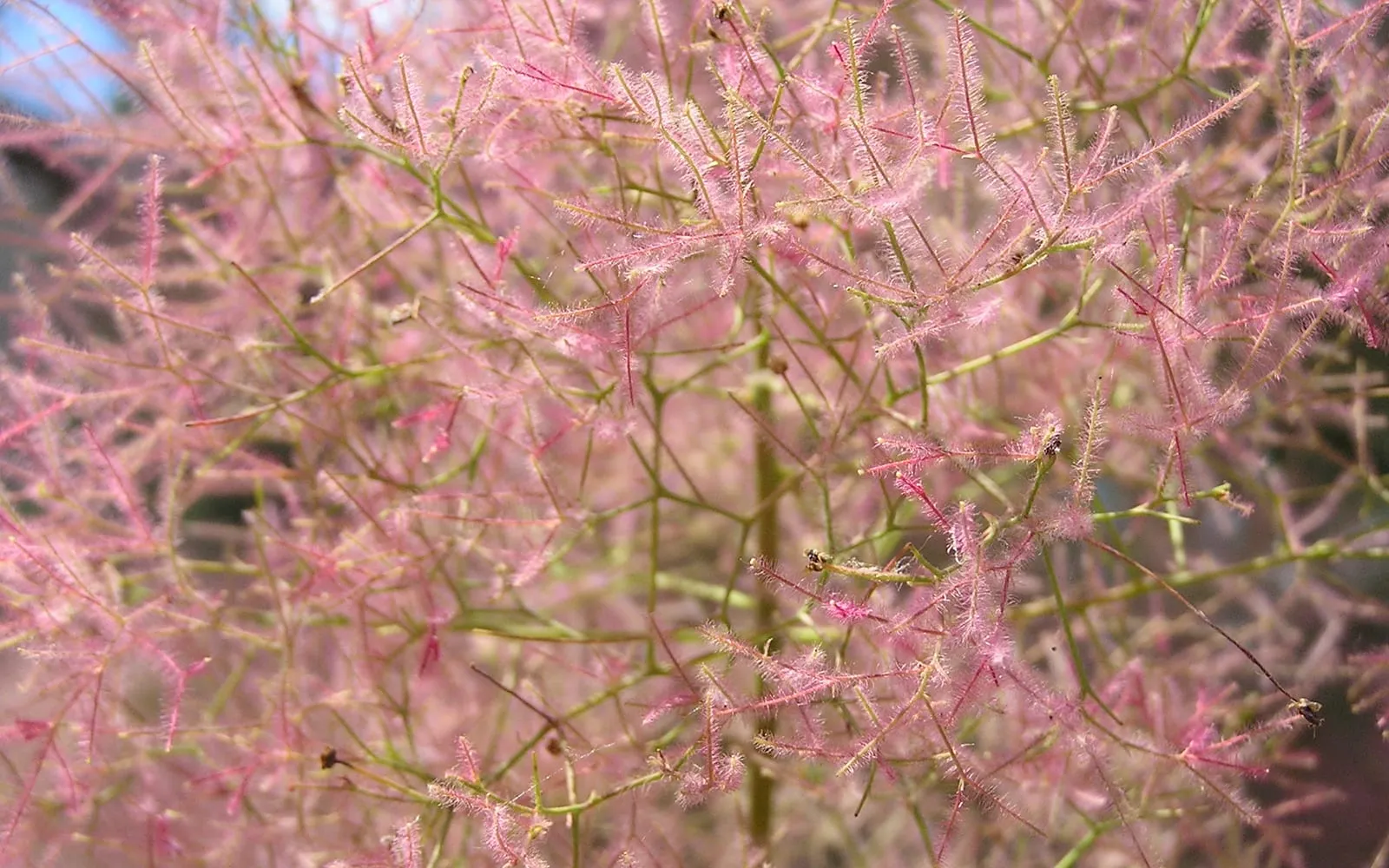
Smoke bush earns its name from the huge, airy plumes left behind after flowering, formed not by the small true flowers themselves but by the fine, hairy stalks of the many flowers that never set seed, which elongate and catch the light in a haze that can cover a mature plant for weeks in summer.
It is grown as much for its foliage as for that display. Purple-leaved cultivars in particular colour most strongly in poor, dry soil and full sun, which makes this an unusually forgiving shrub for a difficult site that defeats richer, hungrier plants.
Appearance and character
The leaves are oval, smooth-edged and carried on slender stalks, ranging from soft green through smoky blue-purple to near-black depending on the cultivar, and turning brilliant shades of orange, red and purple in autumn before they drop.
The flower plumes appear in early to midsummer, tiny true flowers borne in loose sprays, most of which are sterile and extend instead into long, feathery, pinkish-grey hairs that give the whole shrub its trademark smoky, cloud-like haze from a distance.
Left unpruned, the shrub develops a broad, many-stemmed, somewhat loose habit; regular hard pruning instead produces fewer but larger, more strongly coloured leaves at the expense of the flower plumes, since flowering happens on older wood that a hard annual cut removes.
Where it is from
Cotinus coggygria is native across a wide belt running from southern Europe through the Caucasus and the Middle East into the dry steppe and mountains of central Asia and the Himalayan foothills, growing on rocky, often chalky slopes in full sun.
That range covers real climate extremes, hot Mediterranean summers at one end and cold continental winters at the other, which explains both its exceptional cold hardiness and its comfort in the poor, free-draining soil typical of the rocky ground it grows on in the wild.
How it grows
Plant in full sun in any well-drained soil, including poor, stony or chalky ground that many other flowering shrubs find inhospitable. Rich, moisture-retentive soil is the one condition that works against it, producing lush but weak growth with less intense leaf colour.
Prune according to what matters most in a given garden. Leaving the shrub largely unpruned, with only the removal of dead or crossing wood, gives the best flower plumes, since flowering happens on wood from the previous year. Cutting hard back close to the base each spring instead produces a smaller shrub with fewer flowers but noticeably larger, richer-coloured leaves, a technique sometimes used for the darkest purple cultivars grown mainly for foliage.
Little staking or ongoing structural work is needed beyond that annual decision, since the shrub is naturally self-supporting even at a considerable size.
Through the seasons
Spring brings new leaf growth, in purple, green or a mix depending on the cultivar, and is the time for any hard structural pruning.
Summer is the flowering season, with the smoky plumes developing from the small true flowers and lasting for weeks.
Autumn brings the strongest foliage colour of the year before the leaves drop.
Winter is fully dormant, with only the bare branch structure and, on an unpruned plant, faded remnants of the summer’s plumes for interest.
Care difficulty
Easy, and one of the more forgiving shrubs for a difficult, dry or poor site. It needs no feeding in most soils, tolerates drought once established, and needs only one clear pruning decision each year rather than ongoing attention through the growing season.
The one serious risk is verticillium wilt, a soil-borne disease this genus is particularly susceptible to and which has no cure once established, making prevention and prompt removal of infected wood the only real management available.
Watering
Water regularly through the first one to two growing seasons while the root system establishes in its new position.
Once settled, an established plant rarely needs supplementary watering outside a severe or prolonged drought, and it copes with dry soil considerably better than with a permanently damp root run.
Warning signs, diseases and pests
Verticillium wilt is the most serious threat to smoke bush, a soil-borne fungus that blocks the plant’s water-conducting tissue and causes sudden wilting and dieback, often on one side of the plant first, sometimes with dark staining visible in the wood when a stem is cut. There is no cure; prune out and destroy affected branches promptly and avoid replanting another susceptible species in badly infected soil.
Coral spot appears as small, raised, coral-pink or orange pustules on dead or damaged wood, spreading into living tissue from wounds or dead stubs left by careless pruning. Cut back to healthy wood well below any visible infection and always make clean pruning cuts.
Aphids cluster on soft new growth in spring, distorting young leaves as they feed. A strong jet of water or an insecticidal soap controls a light infestation.
Scale insects form small bumps on older stems, sapping vigour gradually over time. Horticultural oil applied during dormancy controls a light infestation.
Growing environment
Full sun brings the strongest leaf colour, particularly in the purple and near-black cultivars, and the best autumn display. Shade produces noticeably duller, greener foliage even on a cultivar bred for purple leaves.
Poor, dry or chalky soil suits it as well as, or better than, rich garden loam, and good drainage matters more than fertility. Waterlogged or permanently damp ground is a real risk, both for general vigour and for verticillium wilt susceptibility.
It tolerates wind, urban pollution and general exposure well, and needs no particular shelter once established.
Feeding
Feeding is rarely necessary and can work against the plant. Rich soil or heavy fertiliser use tends to produce soft, fast growth with paler leaf colour and weaker resistance to wind damage, the opposite of what most gardeners want from this shrub.
In real poverty of soil, a light application of a balanced fertiliser in spring is reasonable, but established plants in average garden soil generally need nothing at all.
Troubleshooting
Half the plant wilted and died back suddenly. Verticillium wilt is the most likely cause, particularly if the dieback is one-sided or the wood shows dark staining when cut. There is no cure; remove and destroy affected wood promptly, and avoid replanting a susceptible species in the same spot.
The leaves are green rather than the purple I expected from the label. Insufficient sun is the most common cause. Purple and dark cultivars need full sun to develop and hold their intended colour, and even light shade noticeably dulls it.
It has barely flowered this year. Hard pruning the previous spring removes the older wood that flowers form on. If plumes are the priority, prune only lightly, taking out dead or crossing growth rather than cutting the whole shrub back hard.
Orange, cushion-like growths have appeared on a dead branch. This is coral spot, spreading from dead or damaged wood. Cut back into clean, healthy wood well below the visible infection and dispose of the prunings rather than composting them.
Can I keep it small with regular hard pruning? Yes, and many gardeners do exactly this for the larger leaves and richer colour it produces. Hard pruning means fewer or no flower plumes. Prune in early spring before growth begins.