
Outdoor plant
Lilac
Syringa vulgaris
Also known as Common lilac, French lilac
How to grow lilac, Syringa vulgaris. Deadheading straight after flowering, why a shaded lilac never blooms, dealing with suckers, and renovating an old leggy bush.
At a glance
- Difficulty
- Easy
- Water
- Rarely once established
- Light
- Full sun. Anything less and it will not flower
- Temperature
- Very hardy, to -25 deg C, and it needs winter cold
- Hardiness
- USDA 3-7, RHS H6, hardy to -35 C
- Type
- Deciduous shrub or small tree, living fifty years or more
- Height
- 3-7 m
- Native to
- The Balkan Peninsula of south-eastern Europe
- Best month
- May in the Northern Hemisphere, November in the Southern Hemisphere
Cold is a requirement rather than a risk. Lilac needs a proper winter to set flower buds and it performs poorly where winters stay above about 5 C, so it fails through the American deep south, coastal California and most of Australia. Alkaline soil suits it and acid soil does not. Powdery mildew coats the leaves in late summer without harming the plant.
Hardiness zones describe winter cold alone. Summer heat, humidity, rainfall and the length of the growing season decide as much, so treat the range as the outer limit rather than as a recommendation.
Every month named in this guide is for the temperate Northern Hemisphere. If you garden in the Southern Hemisphere, shift each one by six months, so May becomes November. Closer to the equator the wet and dry seasons matter more than the calendar, and the shift stops being a useful guide.
Not known to be toxic
Non-toxic. The ASPCA does not list Syringa vulgaris among plants harmful to cats, dogs or horses, and the RHS does not include it in its list of potentially harmful garden plants. Leaves, flowers, bark and wood present no poisoning risk, and lilac flowers are occasionally used to flavour sugars and syrups, although the taste is bitter and disappointing next to the scent. Common lilac is a safe choice for a garden used by children and animals. One name causes real confusion and is worth separating out. Persian lilac is used for two entirely different plants. Syringa x persica is a true lilac and is harmless. Melia azedarach, also sold as Persian lilac, chinaberry or bead tree, belongs to the mahogany family and its yellow berries are seriously poisonous to people, dogs and livestock, causing vomiting, convulsions and death. The two look nothing alike, since Melia is a tree with divided fern-like leaves and hanging clusters of hard yellow fruit, and no reputable nursery sells it as a hardy lilac. Buy by botanical name and the ambiguity disappears.
Sources: ASPCA toxic and non-toxic plants, RHS potentially harmful garden plants
About
Lilac gives two extraordinary weeks in May and then eleven and a half quiet months. Anyone who plants one for a long season will be disappointed, and anyone who plants one for the scent through an open window in late spring will think it a bargain.
Most of the complaints about lilac come down to one of two mistakes. A bush in shade will not flower, however well it is fed, because lilac needs full sun to set buds. A bush pruned in winter will not flower either, because the buds for next May form within weeks of this May’s flowers fading.
Both are easy to avoid and almost impossible to correct after the fact, so the planting decision and the pruning calendar carry most of the weight.
Appearance and character
A deciduous shrub or small tree, upright and suckering, reaching 3 to 7 m and becoming bare and leggy at the base as it ages.
Leaves are heart-shaped, smooth, mid to grey-green, 5 to 12 cm long, carried in opposite pairs. They arrive early and offer nothing in autumn, falling green or dull yellow.
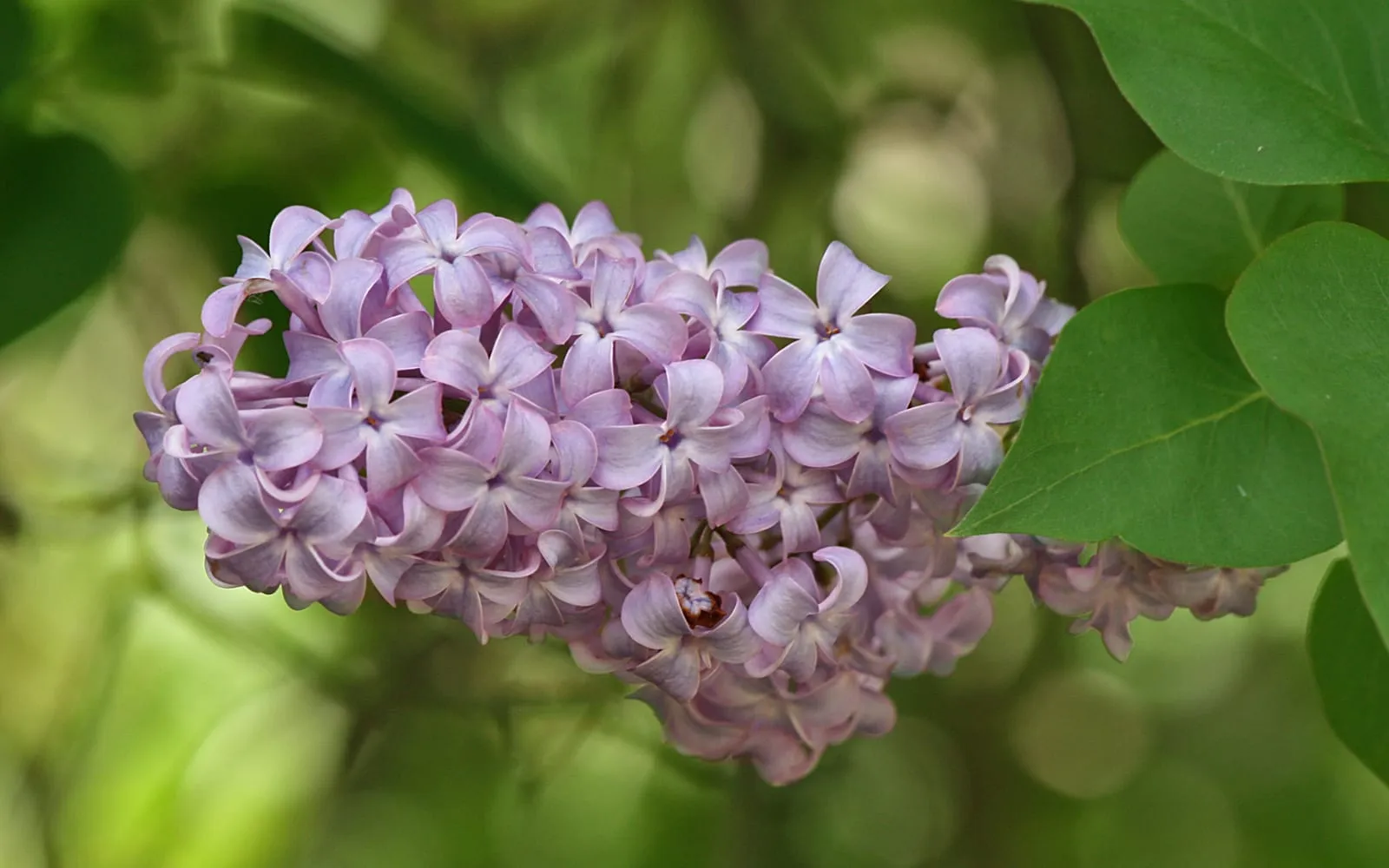
Flowers are the entire point. Dense conical panicles 10 to 20 cm long open in May, each made of hundreds of small four-lobed tubular florets, in the familiar mauve as well as white, deep purple, pink and pale primrose.
The scent is heavy, sweet and carrying, and it is strongest in the early evening.
Bark is grey-brown and shreds into strips on old stems.
Suckers rise from the base and, on a grafted plant, come from the rootstock rather than the variety you bought. Those flower differently or not at all.
Where it is from
The Balkan Peninsula, in Bulgaria, Serbia, North Macedonia and neighbouring countries, where it grows on dry rocky limestone hillsides in full exposure.
That origin explains everything about its preferences. Limestone gives the taste for alkaline soil, open hillsides give the need for full sun, and thin rocky ground gives the tolerance of poor conditions and the dislike of rich wet soil.
It reached western Europe through Ottoman Istanbul in the sixteenth century, arriving in Vienna and then travelling on to Britain by around 1600.
The great flowering was in nineteenth-century France, where the nursery of Victor Lemoine in Nancy bred hundreds of named varieties over sixty years. Most of the doubles still sold today came from that one family, which is why the common lilac is often called French lilac.
Lilac needs a cold winter to flower, so it thrives anywhere with a proper winter and performs badly where winters stay mild.
How it grows
Plant in autumn or early spring in full sun, into free-draining neutral or alkaline soil. Add garden lime on acid ground.
Give it room. A common lilac reaches several metres each way and resents being crowded.
Deadhead as soon as the flowers fade, cutting the spent panicle back to the first pair of leaves below it. Buds for next year form immediately afterwards, so this is the one job with a real deadline.
Prune, if at all, straight after flowering. Take out crossing, dead and weak growth and shorten anything badly placed. Never prune in winter, which removes the whole of next spring’s flower.
Remove suckers as they appear, pulling rather than cutting them where possible so the growth point comes away with them.
Expect little or nothing from a young plant. Lilacs commonly take three to five years from planting before flowering properly.
Renovate an old leggy bush over three years, cutting a third of the oldest stems to 30 cm from the ground each spring. Cutting the lot at once works and costs two or three years of flower.
Through the seasons
Winter is dormancy and the season to leave it alone. Any pruning now removes the flower buds.
Spring brings leaves and then the flowers, usually in the second half of May. Feed as growth starts, and mulch.
Early summer is the working fortnight. Deadhead immediately after flowering, carry out any pruning, and remove suckers.
Autumn is planting and mulching. Powdery mildew on the leaves at this point is cosmetic and can be ignored.
Care difficulty
Easy. Lilac is one of the toughest garden shrubs and will survive neglect, drought, cold and poor soil.
The difficulty is entirely in getting flowers rather than in keeping the plant alive, and both of the usual causes are avoidable.
Suckering is the ongoing chore on grafted plants, and plants grown on their own roots avoid it.
Legginess is the long-term issue. An old lilac becomes a thicket of bare stems with flowers only at the top, and renovation pruning corrects it.
Pests and diseases are minor and rarely threaten the plant.
Watering
Established lilacs need no watering except in a long drought.
Water new plantings through their first two summers while the roots establish.
Avoid waterlogged ground, which lilac tolerates poorly. On heavy clay, plant on a slight mound and add grit.
A spring mulch of compost conserves what moisture there is and does more than occasional watering.
Do not water heavily in late summer, which encourages soft growth rather than flower buds.
Warning signs, diseases and pests
No flowers is the problem people write about most. Work through the causes in order. Too much shade is the commonest, and lilac needs full sun. Pruning at the wrong time of year comes next, since the buds form in early summer and winter pruning cuts them off. Too much nitrogen produces leaves at the expense of flowers. A young plant may just need another two or three years. A very old congested bush needs renovating.
Suckers from below the graft union produce growth that flowers differently or not at all, and they gradually take over. Pull them off at the base as they appear, rather than cutting them at ground level, which encourages more.
Lilac blight, caused by the bacterium Pseudomonas syringae, blackens young shoots and leaves in wet spring weather and can kill whole branches. Cut back to healthy wood well below the damage, disinfect the secateurs, and destroy the prunings.
Powdery mildew coats the leaves in white in late summer. It looks bad and does almost nothing to the plant. Improve airflow and ignore it.
Lilac leaf miner tunnels inside the leaves and then rolls them up, browning the foliage from midsummer. Pick off affected leaves.
Honey fungus attacks lilac and is fatal, showing as sudden death of a branch or the whole plant with white fungal sheets under the bark.
Growing environment
Full sun, with at least six hours a day. This is the one requirement with no flexibility.
Neutral to alkaline soil, ideally over chalk or limestone. On acid ground, apply garden lime and repeat every few years.
Free-draining conditions. Lilac dislikes heavy wet clay and does noticeably better on poor dry ground than on rich wet ground.
Space to reach full size. A cramped lilac trained against a wall in shade is the classic non-flowering plant.
Shelter is unnecessary. Lilac stands wind, cold and exposure without complaint.
Consider a smaller species where space is short. Syringa meyeri ‘Palibin’ reaches 1.5 m, flowers reliably, and suits a container.
Buy a plant grown on its own roots rather than a grafted one where possible, which removes the suckering problem entirely.
Feeding
Feed once in early spring with a balanced or potassium-rich fertiliser.
Avoid high-nitrogen feeds and fresh manure, both of which produce vigorous leafy growth and few flowers.
Apply garden lime every three or four years on acid soil to keep the pH up.
Mulch with garden compost in spring, keeping it away from the stems.
Bone meal at planting helps a new bush establish.
Troubleshooting
It has never flowered. Check the sun first, since lilac needs at least six hours a day. Then check when it was last pruned, because winter pruning removes the buds. A young plant may need three to five years, and a heavily fed one makes leaves instead.
When should I prune it? Straight after flowering, and never later. The buds for next May form within weeks of the flowers fading.
Shoots keep coming up around the base. Suckers. On a grafted plant they come from the rootstock and will not flower as the variety you bought. Pull them away at the base rather than cutting them.
The young shoots turned black in spring. Lilac blight, a bacterial disease that spreads in wet weather. Cut well back into healthy wood and disinfect the secateurs between cuts.
White powder over the leaves in August. Powdery mildew. It is cosmetic and needs no treatment.
The bush is tall and bare at the bottom. Renovate over three years, taking a third of the oldest stems down to 30 cm each spring after flowering.
Can I grow it on acid soil? Yes, with garden lime applied at planting and every few years afterwards. It will never be as happy as it is on chalk.
Is there one for a small garden? Syringa meyeri ‘Palibin’ reaches about 1.5 m, flowers young and reliably, and grows well in a large pot.