
Outdoor plant
Red Elder
Sambucus racemosa
Also known as Red Elderberry
How to grow red elder, Sambucus racemosa. Why the ripe berries are safe cooked but the raw fruit, leaves, bark and seeds all carry cyanide-releasing compounds, and telling it from black elder by its upright flower clusters.
At a glance
- Difficulty
- Moderate
- Water
- Regularly while establishing, then during dry spells
- Light
- Full sun to part shade
- Temperature
- Fully hardy; prefers cooler summers than black elder
- Hardiness
- USDA 3-7, RHS H6, hardy to -30 C
- Type
- Deciduous shrub, living several decades
- Height
- 2-4 m
- Native to
- the temperate Northern Hemisphere
Extremely cold-hardy, native to some of the coldest forested regions in the Northern Hemisphere, but less tolerant of a hot, humid lowland summer than the more familiar black elder, Sambucus nigra. It naturally favours higher elevations and more northerly latitudes than its relative, and in a warm-summer garden it can look tired or stressed by late summer even where winter cold is well within its range.
Hardiness zones describe winter cold alone. Summer heat, humidity, rainfall and the length of the growing season decide as much, so treat the range as the outer limit rather than as a recommendation.
Toxic if eaten
- Safe to eat
- The flowers, and the ripe berries once cooked
- Do not eat
- The leaves, bark, roots, stems and seeds, and all unripe green fruit
- Harm from
- Eating it
- Affects
- People, cats, dogs and horses
Elder is a food plant and a poisonous one at the same time, and the line between them is cooking and ripeness. The flowers are used fresh for cordials and fritters and are safe to eat. The ripe berries make wine, syrup, jam and jelly, and are safe once cooked. Everything green, together with the bark, roots, stems, seeds and any unripe fruit, contains cyanogenic glycosides that release cyanide, and raw ripe berries retain enough of the compound to cause trouble if eaten in quantity. A well-documented case involved a group of people who drank juice pressed from berries gathered with leaves and stems included and left uncooked; they were hospitalised with nausea, violent vomiting, abdominal cramps, dizziness and weakness. Symptoms come on within half an hour to a few hours of eating or drinking the raw plant material. The practical rules are straightforward: strip berries from the green stalks rather than including them, avoid eating raw berries by the handful, and cook thoroughly before use in juice, wine or preserves. Children stripping and eating berries straight from a garden shrub are the most common exposure. Breathlessness or collapse needs emergency care; milder symptoms warrant medical advice rather than a wait-and-see approach.
Sources: RHS potentially harmful garden plants, ASPCA toxic and non-toxic plants
About
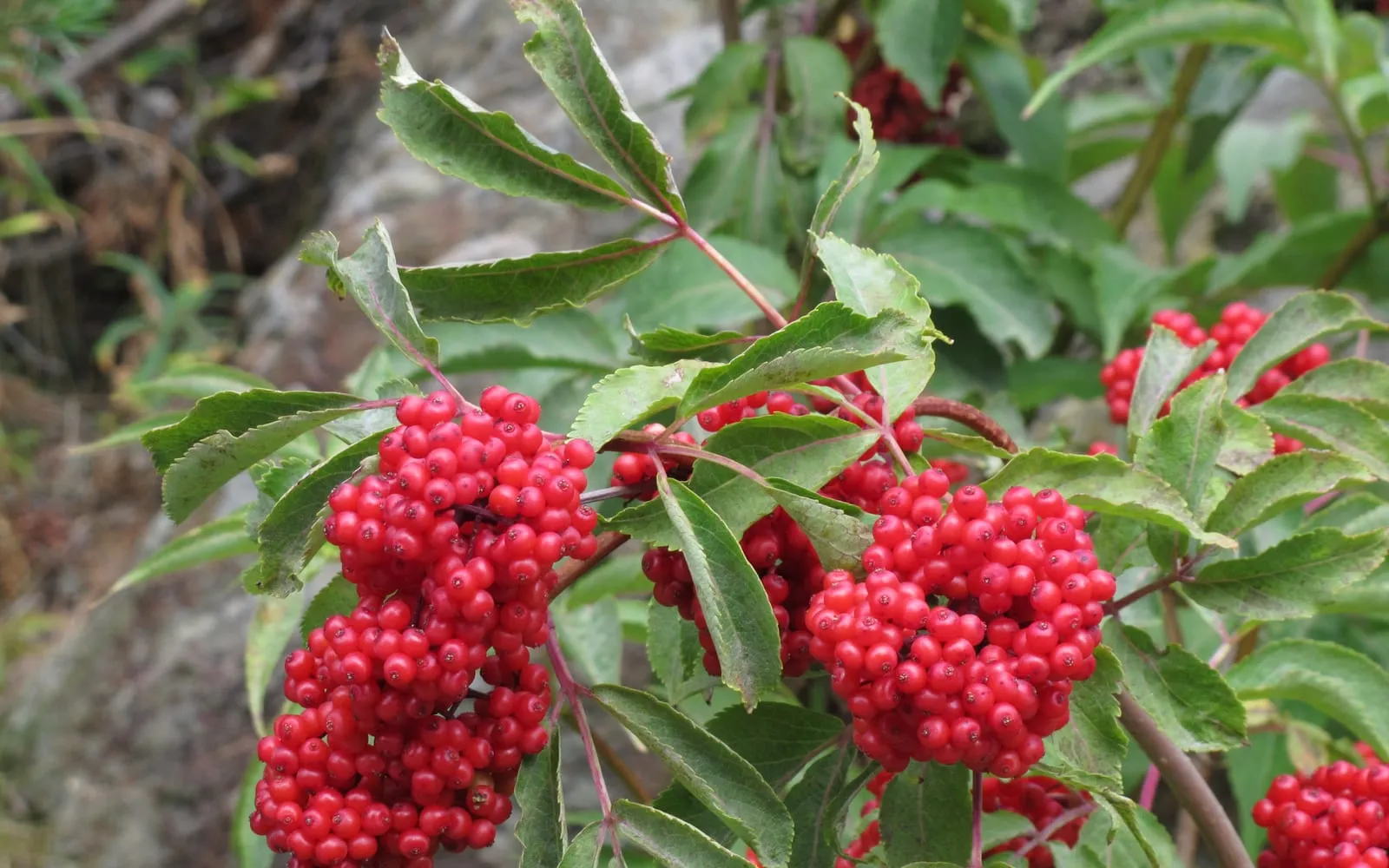
Red elder is a cool-climate shrub grown for spring flowers and bright red berries. It is related to black elder, but the berry clusters are smaller, more upright and ripen earlier.
The safety point is important. Leaves, bark, stems, seeds and unripe fruit contain cyanogenic compounds, and ripe berries should be cooked before being eaten in quantity. Grow it where children will not graze on the berries, and do not use raw plant material in food or drink.
Appearance and character
Leaves are pinnately compound with five sharply toothed, lance-shaped leaflets, a fresh, slightly yellowish green through the growing season.
Flowers open in dense, upright, oval to conical clusters rather than the flat, wide umbels of black elder, a useful feature for telling the two apart before either flowers or fruit are present, in a pale yellowish- cream through spring.
Berries follow quickly, ripening to a bright, glossy scarlet red by early summer, considerably earlier in the season than black elder’s dark purple-black fruit, and held in the same dense, upright clusters as the flowers that produced them.
Bark on older stems is grey-brown and distinctly warty, with numerous raised, pale lenticels giving it a rough, pimpled texture even on relatively young wood.
Where it is from
Sambucus racemosa is native across a wide circumboreal range through the temperate and cool regions of the Northern Hemisphere, including much of Europe, Asia and North America, generally favouring higher elevations and more northerly latitudes than the more familiar black elder.
That preference for cooler conditions is the main practical difference gardeners need to know when choosing between the two: red elder performs best where summers stay relatively mild, and can struggle with heat stress, including a higher incidence of powdery mildew, in a hot, humid lowland climate that black elder tolerates without much difficulty.
How it grows
Plant in moist, fertile, well-drained soil in full sun to part shade, choosing a position with reasonably cool summer conditions where possible, particularly in a warmer climate.
Prune after flowering or in late winter, removing a proportion of the oldest stems at the base each year to keep the shrub renewing itself with vigorous younger growth, since old wood becomes less productive over time.
Water consistently through summer, more so than many other hardy shrubs, since it dislikes prolonged drought and shows stress through scorched leaf margins and reduced vigour if allowed to dry out repeatedly.
Site it where fallen and dropped fruit will not be a concern for small children who might be tempted to eat it raw and unsupervised, given the toxicity of the raw fruit and other plant parts.
Through the seasons
Spring brings the dense, upright clusters of cream flowers, earlier than most other elder species.
Early summer brings the bright scarlet berries to ripeness, considerably earlier in the season than black elder’s fruit.
Summer is otherwise quiet growth. Water consistently, since this species tolerates drought less well than many hardy shrubs, and watch for powdery mildew in hot, still conditions.
Late winter is a suitable time for renovation pruning, removing a portion of the oldest stems to encourage fresh growth from the base.
Care difficulty
Moderate. The shrub itself is hardy and generally undemanding, but it needs more consistent summer moisture and cooler conditions than many equally hardy shrubs, and its toxicity, while manageable with sensible handling, is a genuine factor to weigh when deciding where in the garden to site it, particularly around small children.
Watering
Water regularly through the first two growing seasons while the root system establishes, and continue watering during dry spells once mature, since this species tolerates drought noticeably less well than many other hardy shrubs.
A deep soak during any extended dry period, particularly in a warmer climate where summer stress is more likely, helps maintain good growth and reduces the risk of powdery mildew developing on a drought-stressed plant.
Warning signs, diseases and pests
Aphids and elder shoot borer both target soft new growth, distorting shoot tips and, in the case of shoot borer, tunnelling into stems. Remove and destroy heavily affected shoots and treat aphids with a strong jet of water or insecticidal soap.
Powdery mildew shows as a white, dusty coating on the leaves, worse in hot, dry, still conditions, particularly in a climate warmer than the species prefers. Improve air circulation and ensure the plant is not short of water through summer.
Birds strip the bright red berries quickly once they ripen, which for a species valued partly for its wildlife appeal is generally welcomed rather than seen as a problem, though it does mean little fruit is usually left for anyone hoping to cook with it.
Growing environment
Full sun to part shade suits it well, with some afternoon shade helpful in a warmer climate where the species is more prone to summer stress.
Moist, fertile, well-drained soil produces the best growth. It dislikes both prolonged drought and waterlogged ground.
Cooler summer conditions suit it better than a hot, humid lowland climate, which is worth factoring in when choosing between this species and the more heat-tolerant black elder for a warmer garden.
Site it away from where unsupervised young children might graze directly on the fruit, given that raw berries and every other part of the plant carry cyanogenic compounds.
Feeding
Apply a balanced, general-purpose fertiliser once in spring as growth resumes, following the product’s guidance for a flowering and fruiting shrub.
A mulch of well-rotted compost applied at the same time supplies additional fertility and helps retain the consistent soil moisture this species needs through summer.
Troubleshooting
Someone has eaten raw berries from the garden. What should I do? Seek medical advice, particularly if a meaningful quantity was eaten or if leaves, stems or seeds were included. Watch for nausea, vomiting, cramps and dizziness, which typically appear within a few hours, and treat breathlessness or collapse as a medical emergency.
The leaves have scorched, brown margins by late summer. Usually drought stress, since this species tolerates dry conditions less well than many hardy shrubs. Water more consistently through summer in future seasons.
Can I eat the berries, given the warnings? Yes, once cooked. The flowers and fully cooked ripe berries are used in cordials, jams, syrups and wine; it is the raw fruit, and every other part of the plant, that carries the risk.
Why is my black elder thriving while this one looks stressed in the same bed? Likely summer heat. Red elder prefers cooler conditions than black elder and can struggle with the same hot, humid summer that a black elder tolerates, so consider whether the position offers enough shade or whether black elder is the better match for your climate.
Powdery mildew keeps appearing on the leaves. Most common in hot, dry, still conditions. Improve air circulation by thinning crowded growth and keep the plant consistently watered through summer, since drought stress makes the problem worse.