
Outdoor plant
Rose of Sharon
Hibiscus syriacus
Also known as Shrub Althea, Korean Rose
Practical guidance for growing rose of Sharon, Hibiscus syriacus, including late-summer flowering on new wood, Japanese beetle, self-seeding, hardy pruning, and mild toxicity to pets.
At a glance
- Difficulty
- Easy
- Water
- Regularly while establishing, then tolerant of normal garden conditions
- Light
- Full sun to light shade; full sun gives the heaviest flowering
- Temperature
- Fully hardy; flowers form on new wood, so a late frost costs little
- Hardiness
- USDA 5-9, RHS H6, hardy to -25 C
- Type
- Deciduous shrub, upright and multi-stemmed
- Height
- 2-4 m
- Native to
- eastern Asia
Fully hardy through a cold continental winter, and being deciduous helps: the plant drops its most vulnerable tissue before the coldest weather arrives rather than carrying it through winter the way an evergreen shrub does. The real limiting factor for a good display is summer heat rather than winter cold, since flower buds form on the current season's growth and a cool, short summer produces fewer of them.
Hardiness zones describe winter cold alone. Summer heat, humidity, rainfall and the length of the growing season decide as much, so treat the range as the outer limit rather than as a recommendation.
Harmful if eaten
- Do not eat
- Leaves and flowers, if eaten in quantity
- Harm from
- Eating it
- Affects
- People, cats and dogs
The ASPCA lists rose of Sharon by name as toxic to dogs and cats, causing vomiting, diarrhoea, depression and loss of appetite if a significant amount of foliage or flower is eaten. The reaction is generally mild and self-limiting rather than an emergency, in line with other members of the wider hibiscus and mallow family. People are not commonly affected: the flowers are edible in modest amounts in some culinary traditions, and the RHS does not list the species among plants of greater concern for humans, though eating a large quantity of any garden plant not grown as food is worth avoiding.
Sources: ASPCA (Rose of Sharon, Hibiscus syriacus), RHS potentially harmful garden plants
About
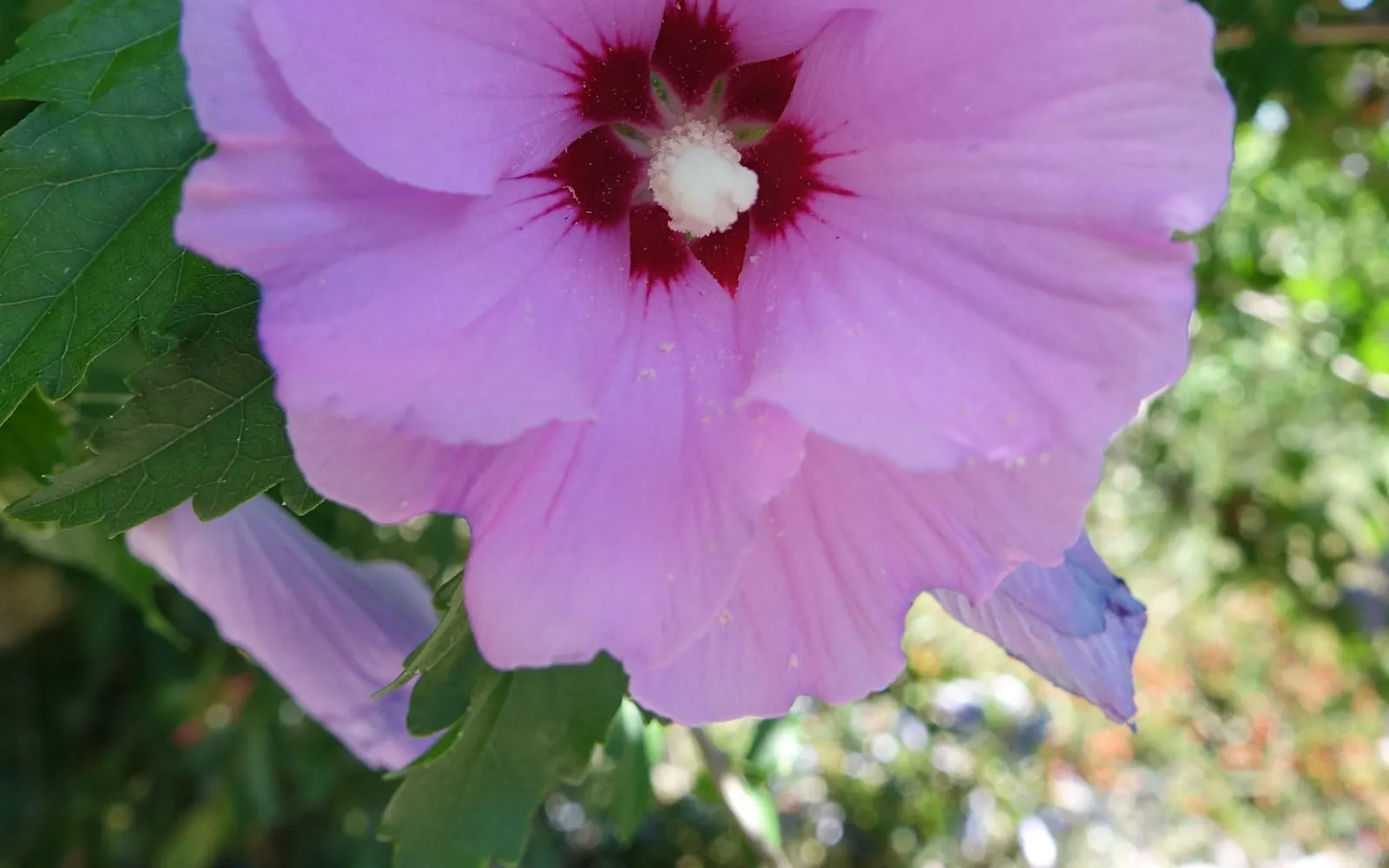
Rose of Sharon fills a real gap in the shrub border, flowering from midsummer into autumn when most other flowering shrubs have long finished. Each individual bloom, a wide funnel of five overlapping petals with a prominent central column of fused stamens, lasts only a day, but a well-grown plant produces a steady succession over many weeks.
It is the national flower of South Korea, where it is known as mugunghwa, and it has been cultivated in gardens across eastern Asia and beyond for centuries, valued for exactly the late-season flowering that makes it useful in a temperate garden now.
Appearance and character
The leaves are three-lobed, coarsely toothed and a dull mid-green, appearing relatively late in spring and giving no particular hint of the display to come later in the season.
Flowers open in shades of white, pink, red, blue-purple and lavender, often with a darker eye at the centre, and in single or double forms depending on the cultivar. They form only on the current season’s new growth, which determines when and how the plant should be pruned.
Left unpruned, an older specimen develops an open, multi-stemmed structure with bare lower stems, and it self-seeds readily in a warm climate, producing seedlings that vary in flower colour from the parent plant.
Where it is from
Hibiscus syriacus is native to south-central and eastern China, and possibly parts of northern India. It has been cultivated so long in Korea, where it is the national flower, that it is often assumed native there, but in Korea it is naturalised rather than wild. It grows in open, sunny sites with hot, humid summers and hard winter cold, a climate pattern reflected closely in its garden hardiness today.
It reached European gardens by the sixteenth century, valued from early on for a flowering season that filled the gap most shrubs leave between midsummer and the first frosts, and it remains one of the most reliable late-season flowering shrubs available in a cold-winter climate.
How it grows
Plant in full sun to light shade in any reasonable, well-drained garden soil; the species is tolerant of a wide pH range and average garden fertility rather than demanding on either count.
Since flowers form only on new growth, prune in late winter or very early spring before growth resumes, cutting back the previous year’s growth by up to a third to encourage a strong flush of new wood and, with it, more flowering wood for the coming season.
Deadhead spent flowers where seed set is not wanted, since a mature plant can self-seed prolifically in a warm climate and produce a spread of unwanted seedlings around the base. Where a sterile or low-seeding cultivar is available, it removes this task almost entirely.
Through the seasons
Spring brings leaves out relatively late and is the last window for any hard pruning before growth gets underway.
Summer is the main flowering season, running from midsummer through into early autumn.
Autumn continues flowering in a warm climate until the first real frost, after which the leaves drop.
Winter is fully dormant, and the bare, multi-stemmed structure is the only interest until pruning time returns.
Care difficulty
Easy. Rose of Sharon tolerates a wide range of soils, a reasonable amount of drought once established, and general neglect better than most shrubs prized for their flowers. Its two real requirements are straightforward: full sun for a strong display, and pruning at the right time of year so the plant is not accidentally cut back after it has already set the coming season’s flower buds.
Self-seeding is the main downside in a warm climate, turning an easy shrub into one that needs occasional weeding out of its own offspring.
Watering
Water regularly through the first one to two growing seasons while the root system establishes.
Once settled, an established plant tolerates normal garden conditions and short dry spells without much trouble, though a deep soak during a prolonged drought keeps the flowering display fuller and steadier.
Warning signs, diseases and pests
Japanese beetle is one of the most characteristic pests of the species in regions where the insect is established, skeletonising leaves and chewing ragged holes in the flowers through summer. Handpicking into soapy water controls a light infestation, and pheromone traps are best avoided near the plant itself, since they tend to draw in more beetles than they catch.
Aphids cluster on soft new growth and developing flower buds, distorting them as they feed. A strong jet of water or an insecticidal soap controls a light infestation.
Whitefly clusters on the undersides of leaves and flies up in a cloud when disturbed. Yellow sticky traps and an insecticidal soap both help bring numbers down.
Root rot follows soil that stays consistently waterlogged, showing as poor growth and dieback. Improving drainage is the only real fix, since the species otherwise tolerates most soil conditions well.
Growing environment
Full sun brings the heaviest and most reliable flowering; light shade is tolerated but reduces the display noticeably.
Any reasonable, well-drained garden soil suits it, and the species tolerates both acid and alkaline conditions. Prolonged waterlogging is the one condition to avoid.
It tolerates urban pollution and general garden exposure well, which is part of why it is such a common choice for a street-facing or courtyard border.
Feeding
Feed with a balanced, general-purpose shrub fertiliser once in spring as growth resumes.
Avoid heavy nitrogen feeding, which pushes leafy growth at the expense of flower bud formation and can leave the plant looking lush but under-flowered through summer.
Troubleshooting
The leaves and flowers were skeletonised almost overnight in summer. Japanese beetle is the near-certain cause where the insect is established locally. Handpick beetles into soapy water in the early morning when they are most sluggish, and check daily during the peak of the season.
It flowered poorly this year despite normal care. A cool or short summer is the most likely cause, since flower buds form on new growth through the warm months and a poor growing season produces fewer of them. Full sun and a spring prune both help maximise the display in a marginal climate.
Seedlings keep coming up around the base. Rose of Sharon self-seeds readily in a warm climate. Deadhead spent flowers before they set seed, or choose a sterile or low-seeding cultivar if this becomes a recurring nuisance.
My dog ate some leaves and flowers and is vomiting. This is consistent with the mild gastrointestinal reaction the ASPCA documents for this species in dogs and cats. Contact a vet if symptoms are severe or persist, though the reaction is usually mild and self-limiting.
Can I prune it hard without losing this year’s flowers? Yes, if it is done in late winter or very early spring before growth resumes, since flowers form only on the wood that grows afterward. Pruning later, once new growth is underway, removes flower buds already forming and reduces that year’s display.