
Outdoor plant
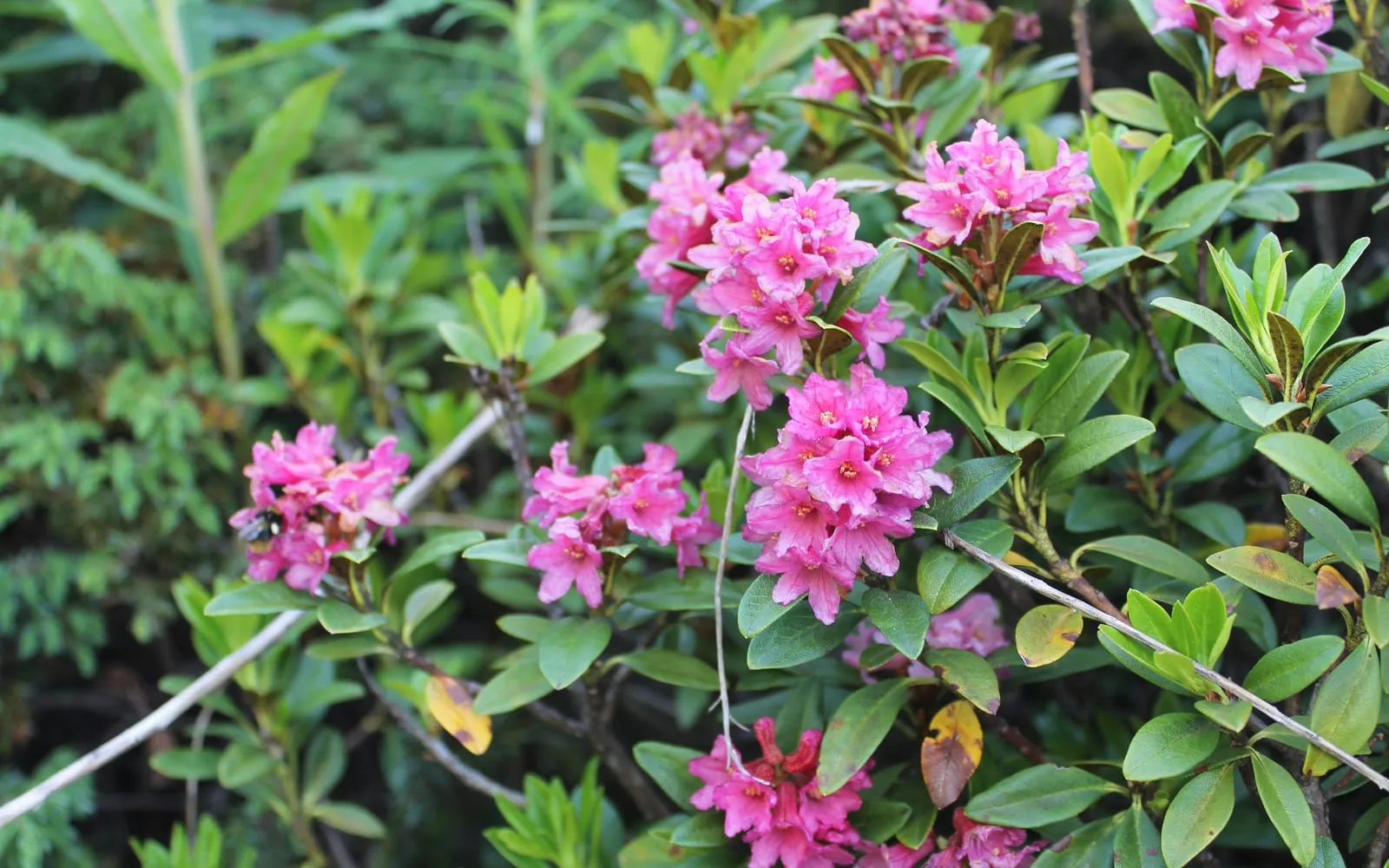
Alpenrose
Rhododendron ferrugineum
Also known as Rusty-leaved Rhododendron, Rusty Alpenrose
How to grow alpenrose, Rhododendron ferrugineum. Why humid summer heat threatens it more than alpine winter cold, the rust-coloured scales under the leaves that identify it, and why every part is dangerously toxic if eaten.
At a glance
- Difficulty
- Moderate
- Water
- Regularly through the growing season, never allowing the rootball to dry out completely
- Light
- Full sun to light shade, with shelter from strong afternoon sun in a hot lowland garden
- Temperature
- Very hardy, but resents heat and humidity more than cold
- Hardiness
- USDA 4-7, RHS H7, hardy to -25 C
- Type
- Evergreen woody shrub, slow growing and long lived
- Height
- 0.5-1 m
- Native to
- the mountains of central Europe
Winter cold at altitude is not the limiting factor for this species; heat is. In its native range it lies under snow for months and then grows through a short, cool, cloud-damp summer, so a zone rating of 4 tells you it survives a hard winter but says nothing about the still, humid heat of a lowland summer, which stresses the roots and invites fungal problems that snowmelt and mountain air never test it against.
Hardiness zones describe winter cold alone. Summer heat, humidity, rainfall and the length of the growing season decide as much, so treat the range as the outer limit rather than as a recommendation.
Poisonous if eaten
- Do not eat
- Every part, leaves and flowers included
- Harm from
- Eating it
- Affects
- People, cats, dogs and horses
Alpenrose belongs to a genus whose foliage and nectar carry grayanotoxins, compounds that interfere with sodium channels in nerve and muscle cells. A person, dog, cat or horse that eats a meaningful quantity of leaf or flower can develop drooling, vomiting, an irregular or slowed heartbeat, low blood pressure and, in a serious case, collapse. The ASPCA lists the genus Rhododendron as toxic to cats, dogs and horses, and the RHS includes it among plants that are harmful if eaten. Honey made predominantly from rhododendron nectar has caused documented poisoning outbreaks historically in parts of Europe and Asia, a reminder that the toxin travels beyond the plant itself. Alpenrose grows too high and too slowly to reach the scale of a garden hedge, which keeps the practical risk lower than for a large planted shrub, but any part eaten in quantity is a genuine medical emergency and should be treated as one.
Sources: ASPCA (Rhododendron), RHS potentially harmful garden plants
About
Alpenrose is the low, tough rhododendron of the high Alps, the shrub that forms a solid band of dark evergreen just below the treeline and turns bright pink for a few weeks in early summer. Unlike the large hybrid rhododendrons bred for lowland gardens, it stays compact and dense, closer in scale to heather than to a shrubbery specimen.
It carries its common name honestly. The undersides of the leaves are covered in fine rust-coloured scales, visible as soon as you turn one over, and this rusty felting is the surest way to tell it apart from its close relative Rhododendron hirsutum, which has hairy leaf margins instead.
Grown well outside its mountain habitat, it rewards a gardener willing to recreate acid soil and cool root conditions with a neat, long-lived shrub that needs very little routine attention once established.
Appearance and character
A low, dense, woody evergreen forming a spreading mound rather than an upright bush, with wiry stems that branch repeatedly close to the ground.
Leaves are small, leathery and dark glossy green above, oval to elliptic and no more than 3 to 5 cm long, curling slightly at the margin. The underside carries a dense covering of rusty brown scales, the feature that gives the species its Latin name and its common one.
Flowers open in early summer in small rounded clusters at the shoot tips, each bloom tubular to bell-shaped and around 2 cm long, in shades from deep rose-pink to red. A well-flowered plant on a mountainside can turn a whole slope pink for a fortnight, though a single garden specimen flowers more modestly.
Growth is slow and the habit stays low and dense with age, rarely exceeding a metre even after decades, which suits it to a rock garden or trough far better than to a border built around fast-growing shrubs.
Where it is from
Rhododendron ferrugineum grows through the mountains of central Europe, in the Alps, the Pyrenees and the Jura, typically between about 1,500 and 2,700 m, forming a dense shrub layer just below the treeline where conifer forest gives way to alpine meadow.
That belt of the mountain explains almost everything about how the plant lives. Snow cover is deep and reliable through winter, insulating the shrub from the worst of the cold air above it, and the growing season that follows is short, cool and often cloudy, with high humidity and steady moisture from snowmelt rather than a dry summer.
The soil under it is acid, derived from granite and other silica-rich rock rather than the limestone that caps many of the same ranges, which is why alpenrose forms dense stands on some slopes and is entirely absent from others only a short distance away.
How it grows
Plant in acid, humus-rich soil that holds moisture without becoming waterlogged, working in leaf mould, composted bark or another ericaceous soil improver at planting time. Where the native soil is neutral or alkaline, grow it in a raised bed or container filled with ericaceous compost instead of trying to acidify open ground, which rarely holds long term.
Choose a position with morning or dappled sun rather than baking afternoon heat, particularly in a lowland garden with warmer summers than the plant experiences in the wild. A cool, slightly shaded spot with good air movement comes closest to recreating its mountain conditions.
Keep the root zone consistently moist through the growing season. This is a shrub used to a steady supply of snowmelt rather than to drying out between waterings, and a rootball that dries completely stresses it more than most rhododendrons tolerate.
Mulch every spring with an acidic material such as pine bark or leaf mould, which both feeds the soil and keeps the shallow, fibrous root system cool through summer.
Pruning is rarely needed beyond removing dead or damaged growth after flowering. It naturally holds a neat, dense shape and heavy cutting sets back a slow-growing plant for years.
Through the seasons
Spring brings the flower buds through, vulnerable to a late hard frost after an unusually mild spell, and is the time to apply the first feed of the year.
Summer carries the main flowering display in its early weeks, followed by quiet vegetative growth through the warmer months, when watering matters most in a dry spell.
Autumn is for mulching the root zone before winter and for planting new specimens while the soil is still workable.
Winter is fully dormant. In its native range the plant sits under a protective blanket of snow; in a garden with less reliable snow cover, a position sheltered from drying wind helps replace that insulation.
Care difficulty
Moderate, and the difficulty lies almost entirely in matching its native conditions rather than in any complicated routine. Acid soil, reliable moisture and a cool root run are non-negotiable, and a plant given alkaline soil or a hot, dry position declines slowly rather than dying outright, which can make the cause hard to diagnose. Once those three conditions are met, alpenrose needs little beyond an annual mulch and occasional feeding, growing slowly and needing almost no pruning or staking over a long life.
Watering
Water regularly through spring and summer, keeping the soil evenly moist rather than letting it swing between wet and dry. Rainwater is worth collecting for this species where the local tap water is hard, since lime in the water gradually works against the acid soil the roots need.
Reduce watering in autumn as growth slows, and let the plant rely mostly on natural rainfall through winter dormancy, provided the ground does not freeze solid with the roots already waterlogged.
A container-grown plant dries out faster than one in open ground and needs checking more often, particularly through a warm summer.
Warning signs, diseases and pests
Vine weevil is the pest most likely to cause real damage. Adult beetles notch the leaf edges at night, which is disfiguring but rarely serious; the grubs that hatch in the compost and chew through the roots below ground are the more dangerous stage, and a plant that wilts and collapses for no visible reason above ground has often lost its root system to them. Biological nematode drenches applied in late summer are the most reliable control.
Yellowing between the veins on otherwise green leaves is lime-induced nutrient deficiency, usually iron or manganese made unavailable by alkaline soil or hard tap water. Switch to rainwater, apply a sequestered iron feed, and improve the acidity of the growing medium.
Root rot follows waterlogged soil, particularly over winter in ground that does not drain freely. Improve drainage before replanting, and grow in a raised bed or large container where the native soil is heavy.
Frost damage to the flower buds can follow an unseasonably mild spell that brings growth on early, only for a late hard frost to blacken the swelling buds. There is no cure for that season’s loss; a sheltered position reduces the risk in future years.
Brown leaf spot appears in a humid position with poor air movement. Thin overcrowded growth and avoid overhead watering in the evening to reduce the conditions the fungus needs.
Growing environment
Acid soil is essential, ideally with a pH below 6, and the plant will not thrive on chalk or limestone regardless of how well every other condition is met.
Cool, humid summer air suits it better than dry heat, so a position with some shade from the strongest afternoon sun helps it through a warmer lowland summer than it experiences on a mountainside.
Good drainage matters alongside constant moisture, a combination best achieved with a soil rich in leaf mould or composted bark rather than heavy clay or thin sand.
Shelter from strong, drying wind protects the evergreen foliage through winter, when moisture lost from the leaves cannot easily be replaced from frozen ground.
A rock garden, trough or raised bed with ericaceous compost is often a more practical way to grow it than open ground, particularly where the native soil is neutral or alkaline.
Feeding
Apply an ericaceous, low-phosphorus feed formulated for rhododendrons and azaleas in early spring as growth resumes, following the product’s rate rather than over-applying.
A second, lighter feed after flowering supports the plant while it sets next year’s buds, though this is optional on an established plant growing steadily.
Avoid general-purpose or high-phosphorus fertilisers, which suit few ericaceous plants and can push growth at the expense of the following year’s flowers.
Troubleshooting
The leaves are turning yellow between the veins. Lime-induced nutrient deficiency, almost always from alkaline soil or hard tap water. Switch to rainwater where possible, apply a sequestered iron feed, and consider moving the plant into ericaceous compost in a raised bed or container if the native soil is not acid.
It collapsed suddenly with no obvious cause above ground. Check the roots for vine weevil grubs, which eat through the root system unseen until the plant can no longer support itself. A nematode drench in late summer prevents the next generation establishing.
The flower buds turned brown before opening. Late frost after an early mild spell is the likely cause. There is no recovery for that season’s buds; a more sheltered position reduces the risk in future springs.
Why has it barely grown in several years? This is a naturally slow grower even in ideal conditions, and a plant in soil that is too alkaline or too dry grows slower still. Confirm the soil is acid before assuming anything else is wrong.
Can I grow it in a hot, dry climate? Only with real effort. This species evolved under cool, humid mountain summers, and a hot, dry lowland climate stresses it regardless of how carefully the soil is prepared. Afternoon shade, constant moisture and a cool root run all help, but a hot summer climate is working against the plant throughout.