
Outdoor plant
Drumsticks
Isopogon anemonifolius
Also known as Broad-leaved drumsticks
How to grow drumsticks outdoors. Its needle-fine foliage, spherical yellow flower balls on bare stalks, and why it copes with poorer soil than most flowering shrubs.
At a glance
- Difficulty
- Moderate
- Water
- Regular watering while establishing, drought-tolerant once mature
- Light
- Full sun to light shade
- Hardiness
- USDA 9-10, RHS H3, hardy to -3 C
- Type
- Evergreen shrub
- Height
- 0.5-1 m
- Native to
- Eastern Australia
Suited to a mild, coastal Australian-type climate with poor sandy soil, tolerating a light frost once established but not a hard freeze. Compared with some relatives in the wider protea family, it copes reasonably well with occasional light shade, and its main limiting factor in cultivation is soil quality and drainage rather than temperature alone.
Hardiness zones describe winter cold alone. Summer heat, humidity, rainfall and the length of the growing season decide as much, so treat the range as the outer limit rather than as a recommendation.
Not known to be toxic
Drumsticks has no toxicity listing from the RHS or the ASPCA and is considered safe around pets and children. There is no documented history of poisoning associated with this species.
Source: RHS
About
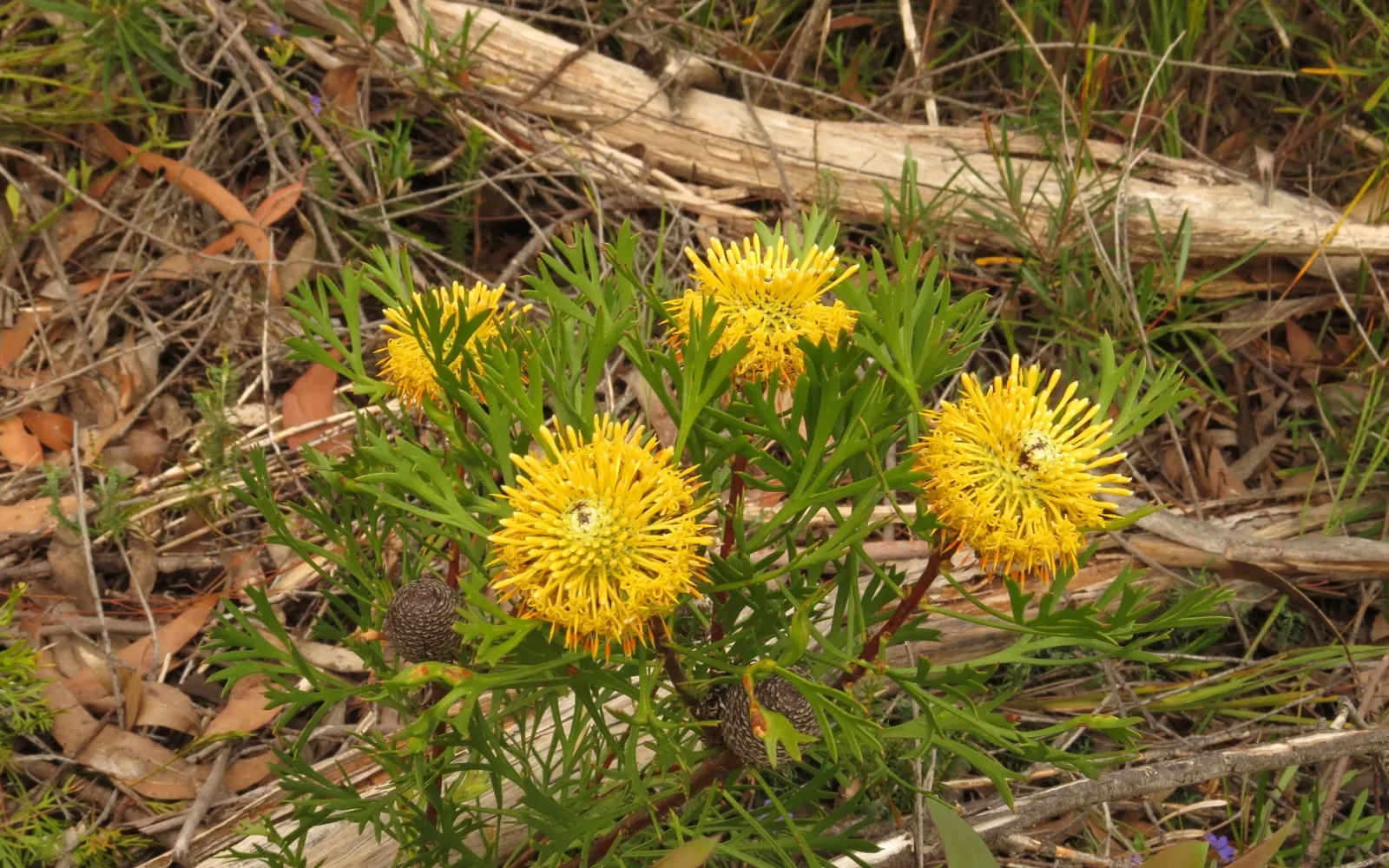
The name drumsticks describes the flower. After the round, bright yellow flower heads finish blooming, the seed heads that follow sit on bare stalks like a row of small drumsticks, each cone-shaped head persisting well after the colour has gone. Below those flower balls sits foliage that looks nothing like a typical shrub leaf, divided into narrow, needle-fine segments that give the whole plant a fine, almost fern-like texture up close.
It is one of the more forgiving members of the wider protea family for a garden setting, tolerating a touch more shade and a slightly broader range of soil than some of its showier relatives, though it still shares the family’s core dislike of rich, fertile ground.
Appearance and character
Leaves are divided into narrow, wedge-shaped segments radiating from a central point, giving each leaf a fan-like, almost feathery appearance rather than the flat, simple blade most shrubs carry. Round, golden- yellow flower heads open at the branch tips in spring, each one a tight cluster of small individual flowers packed into a distinct sphere, followed by the woody, drumstick-shaped seed heads the plant is named for.
Growth is low and spreading, building a wide, ground-hugging mound over a few years rather than gaining much height, which makes this species useful for the front of a border or as informal ground cover in a suitably dry, sunny spot.
Where it is from
Sandstone heath and open woodland in eastern Australia, on poor, sandy, acidic soil in a mild coastal climate, growing alongside other fire- adapted plants of the same sandy, low-nutrient country.
That sandstone heath origin explains the plant’s tolerance of light shade better than many Proteaceae relatives, since it grows naturally among taller shrubs and open woodland rather than on fully exposed, sun-baked slopes, though it still needs the same poor, sharply draining soil its relatives all share.
How it grows
New growth extends steadily through the warmer months, slowing through the cooler part of the year without dying back, and the low, spreading habit builds gradually into a wide mound over a few years rather than gaining much height. Flower heads form on the current season’s growth, followed by the persistent drumstick-shaped seed heads that can remain attractive on the plant for a long period after flowering finishes.
Establishing this plant well starts with the site rather than with ongoing routine. Poor, sandy, acidic soil that drains sharply is worth far more to its long-term health than any amount of feeding or careful watering once it is in the ground.
Through the seasons
Spring is the main flowering period, with round golden-yellow flower heads opening at the branch tips.
Summer growth continues given adequate establishment; established plants tolerate real drought and need little supplemental watering.
Autumn growth slows as temperatures drop, and the woody drumstick seed heads persist on the plant.
Winter established plants tolerate mild, wet winter conditions and a light frost, though a hard freeze poses a real risk.
Care difficulty
Moderate. Water regularly for the first year or so while roots establish, then step back and let dry summer conditions do the rest, since this species tolerates real drought once settled and resents being kept consistently moist. Getting the soil right at planting time matters far more than any care given afterward.
Watering
Regular watering supports establishment in the first year. Once settled, this species tolerates real drought well and generally performs poorly with regular summer watering, which favours root rot over healthy growth.
Warning signs, diseases and pests
Root rot is the main risk this species faces, almost always traced back to soil that holds too much moisture, whether from poor drainage, overwatering, or richer ground than the plant is built for. There is little to treat once rot has set in beyond removing badly affected growth and improving drainage for anything replanted in the same spot.
Sparse or leggy growth, with wide gaps between leaves, usually points to too much shade rather than disease, and moving the plant to a sunnier position, or accepting that it tolerates only light rather than deep shade, generally restores denser growth over time.
Growing environment
Full sun to light shade both work, and poor, sandy, sharply free- draining soil is the single condition worth prioritising over all others when choosing a spot. It suits a rockery, a gravel garden, or the front of a bed alongside other drought-tolerant, low-nutrient-loving plants far better than a conventional, well-fed border.
Feeding
None to minimal, and any fertiliser used should be low in phosphorus, since this species and its relatives are especially sensitive to phosphorus levels that are unremarkable for most other garden plants, often reacting with yellowing or scorched leaf tips within weeks of feeding with an ordinary garden fertiliser.
Troubleshooting
The plant has stopped flowering after a few good years. Check whether nearby feeding or improved soil, even indirectly from a fertilised neighbouring bed, has enriched the ground more than this species tolerates. Reducing fertility, rather than adding more feed, is usually the fix.
Leaves have yellowed or scorched after feeding. Suspect phosphorus sensitivity, common across this plant family. Switch to a low- phosphorus native plant feed, or stop feeding altogether.
Can this be grown in a container? Yes, given a very free-draining, low-nutrient mix such as a native plant or cactus compost blend, though it generally performs better and lives longer planted directly into open ground with poor, sandy soil.
Growth is sparse with wide gaps between leaves. Usually too much shade. Move the plant to a sunnier position, since it tolerates only light rather than deep shade despite being more shade-tolerant than several Proteaceae relatives.
You are choosing companions for a native or drought-tolerant border. Pair it with other plants that share its preference for poor, sandy, low-nutrient soil rather than richer border perennials, since feeding a mixed bed to suit hungrier neighbours will work against this species over time even if it is not planted directly in their soil.