
Pest
Aphids
Aphidoidea
Also called Greenfly, Blackfly, Plant lice
Aphids cluster on soft shoots, buds and leaf undersides, leaving sticky honeydew and distorted new growth. Most colonies can be removed by hand, water or pruning without spraying.
At a glance
- Type
- Pest
- Cause
- Insect
- Severity
- Weakens the plant
- Affects
- Garden plants, Herbs and edibles, Houseplants
- Active
- April to September
- Established in
- Worldwide
What you are seeing
- Dense clusters of small soft-bodied insects on shoot tips, flower buds and the undersides of young leaves
- Sticky honeydew on the leaves below a colony, and on whatever is under the plant
- Black sooty mould growing on the honeydew a few weeks later
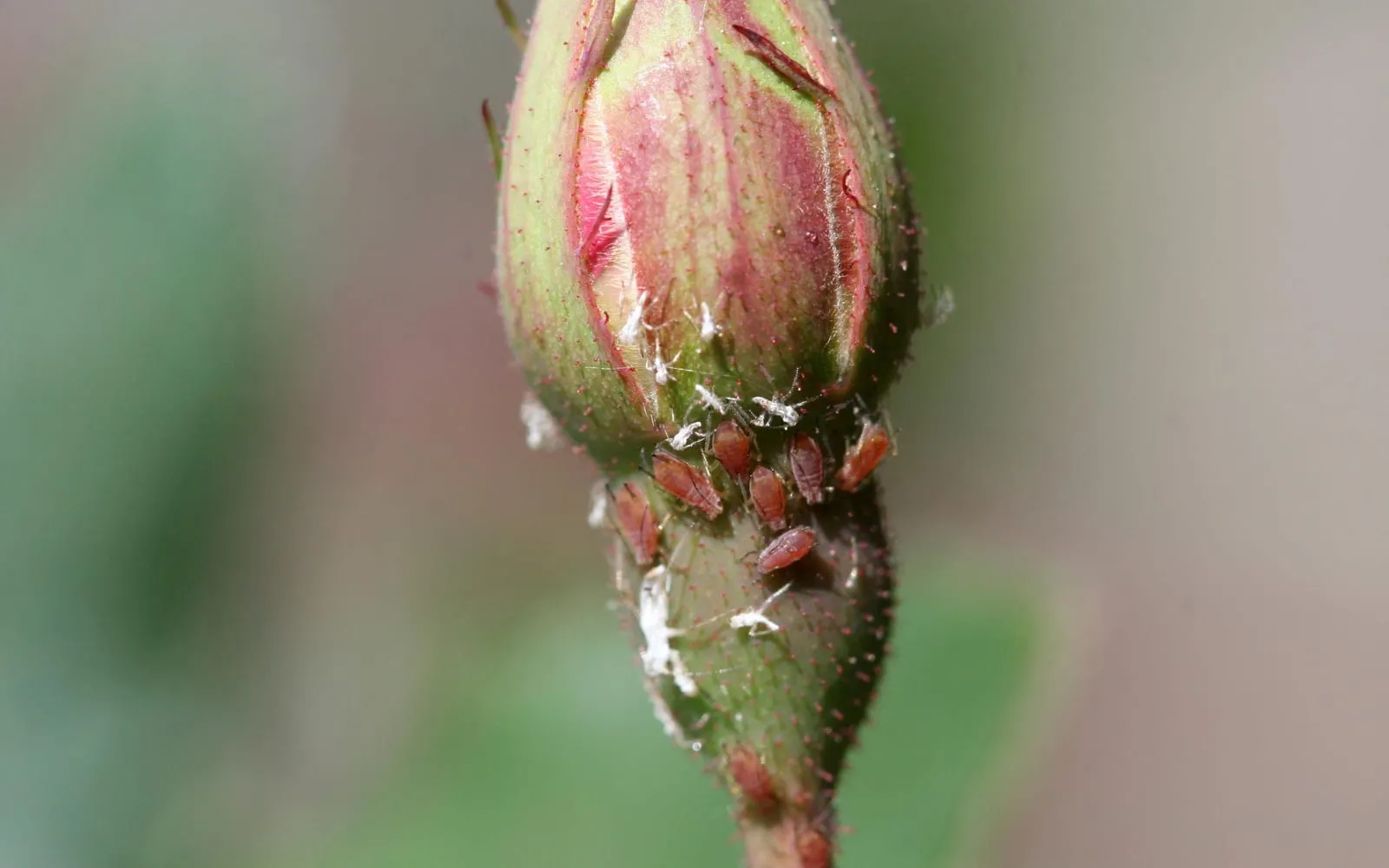
- White flecks among the colony, which are shed skins rather than a second pest
- New leaves cupped, curled or puckered as they expand
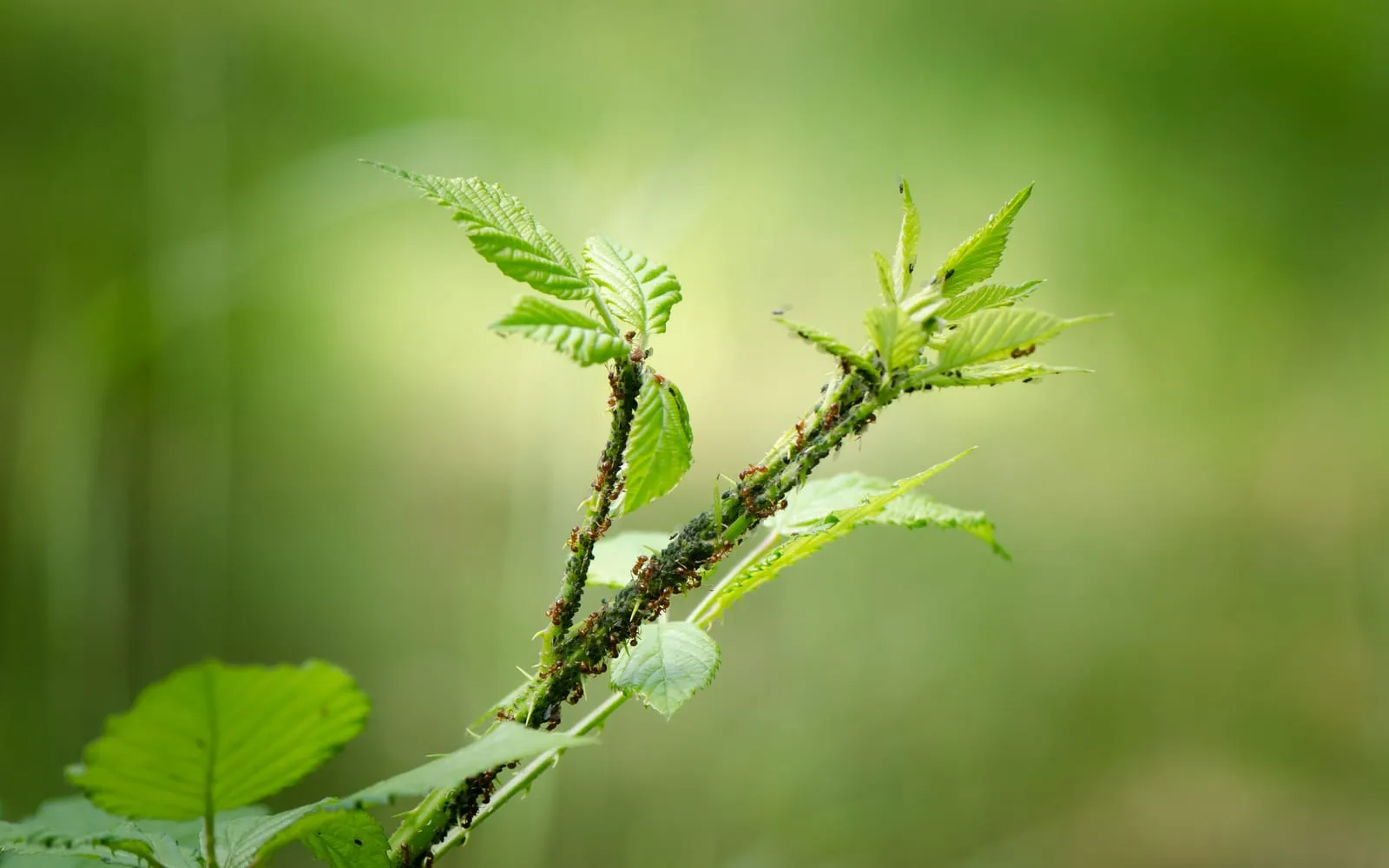
- Ants running up and down the stems
Before you treat anything
Nothing recommended here is harmful to a child, a pet or a pond. The fatty acid and soap sprays sold for aphids are a different matter, since they kill soft-bodied insects by contact and cannot tell a ladybird larva from an aphid. They also scorch foliage if used in sunshine or on a plant short of water.
What you are looking at
Aphids are soft, pear-shaped insects between one and three millimetres long, gathered in a crowd on the newest growth. About five hundred species live in Britain and they come in green, black, pink, grey, yellow and woolly white, so colour tells you very little. The habit tells you a great deal. Aphids sit still in dense groups on shoot tips, flower buds and the undersides of young leaves, and they do not scatter when you disturb them.
One character settles it. At the rear of the abdomen, a pair of short tubes project backwards like exhaust pipes, and no other insect you will meet on a rose has them. They are called cornicles, and the aphid uses them to release a waxy alarm secretion when a predator grabs it. Look at a colony through a hand lens and you will see them on every individual.
Most of a summer colony has no wings. Winged aphids appear when the plant starts to decline or the colony grows crowded, and those are the ones that leave to find somewhere better. A sudden appearance of winged forms is the colony telling you it has outgrown the shoot.
Why the numbers go from nothing to everything
Through spring and summer, female aphids give birth to live young without mating. No eggs, no males, no waiting. A nymph matures in about a week and begins producing several daughters a day of her own.
Inside each of those daughters, the following generation is already forming before she is born. Three generations are therefore present in one insect at one time, which is what turns a handful of aphids in early May into a coated shoot by the end of the month. Nothing else in a garden compounds at that rate.
In autumn the pattern changes. Males are produced, mating happens, and the females lay eggs that sit out the winter on woody stems. Those eggs are what you are looking at when a rose stem carries small black specks in February.
Where they came from
Many aphids spend the year on two different plants, which explains a good deal of apparently random damage.
Blackfly on broad beans overwinter as eggs on spindle, guelder rose and mock orange, then fly to the bean rows in late spring. Cherry blackfly overwinter on the cherry itself and move to bedstraws and speedwells in the summer, which is why the tree looks ruined in June and recovers by August. The lime tree that drips honeydew onto a car all July is host to an aphid that will leave it entirely in the autumn.
The practical use of this is timing. Spraying a bean row in June deals with a population that arrived weeks earlier from a hedge you did not plant.
What the damage amounts to
Aphids feed on phloem sap, and an established plant loses very little to them. The leaf distortion is more alarming than harmful. Cupped, puckered new growth comes from the plant continuing to expand tissue the aphids have been feeding on, and it does not straighten out afterwards, but the leaves that follow are normal once the colony has gone.
Honeydew is the sugary waste they excrete, and it lands on everything below. Black sooty mould then grows on it, which blocks light rather than infecting anything. Wash it off with plain water and it will not come back if the aphids above it have gone.
Virus is the serious part. Aphids are the main insect vector of plant viruses, and the peach-potato aphid alone transmits well over a hundred of them. Cucumber mosaic virus, which infects around a thousand plant species, moves this way. Many of these viruses transfer within seconds of an aphid probing a leaf to taste it, well before any spray could kill the insect, and that is the strongest argument against treating a spray as virus protection. Growing resistant cultivars and removing infected plants does more.
What to do about them
Start by doing nothing for a fortnight. The colonies that appear in April feed the ladybirds, hoverflies and parasitoid wasps that will otherwise never settle in your garden, and by June those predators handle numbers no amount of picking over could. Gardens sprayed clean in spring are the ones with the worst aphid years, because the aphids recover in days and the predators take a season.
Where a colony has to go now, use your fingers. A rose shoot can be cleared in a few seconds by running finger and thumb up it, and a hose will knock most of a colony off a bean row. Neither harms a ladybird larva.
Then look for ants. A stem with ants running up and down it is a farmed colony, and the ants are protecting it from everything that would otherwise eat it in exchange for honeydew. Deal with their route rather than the aphids. A grease band around a fruit tree in autumn stops the ants climbing, and standing a container away from an ant run does the same job in a pot.
The predators, and how to recognise them
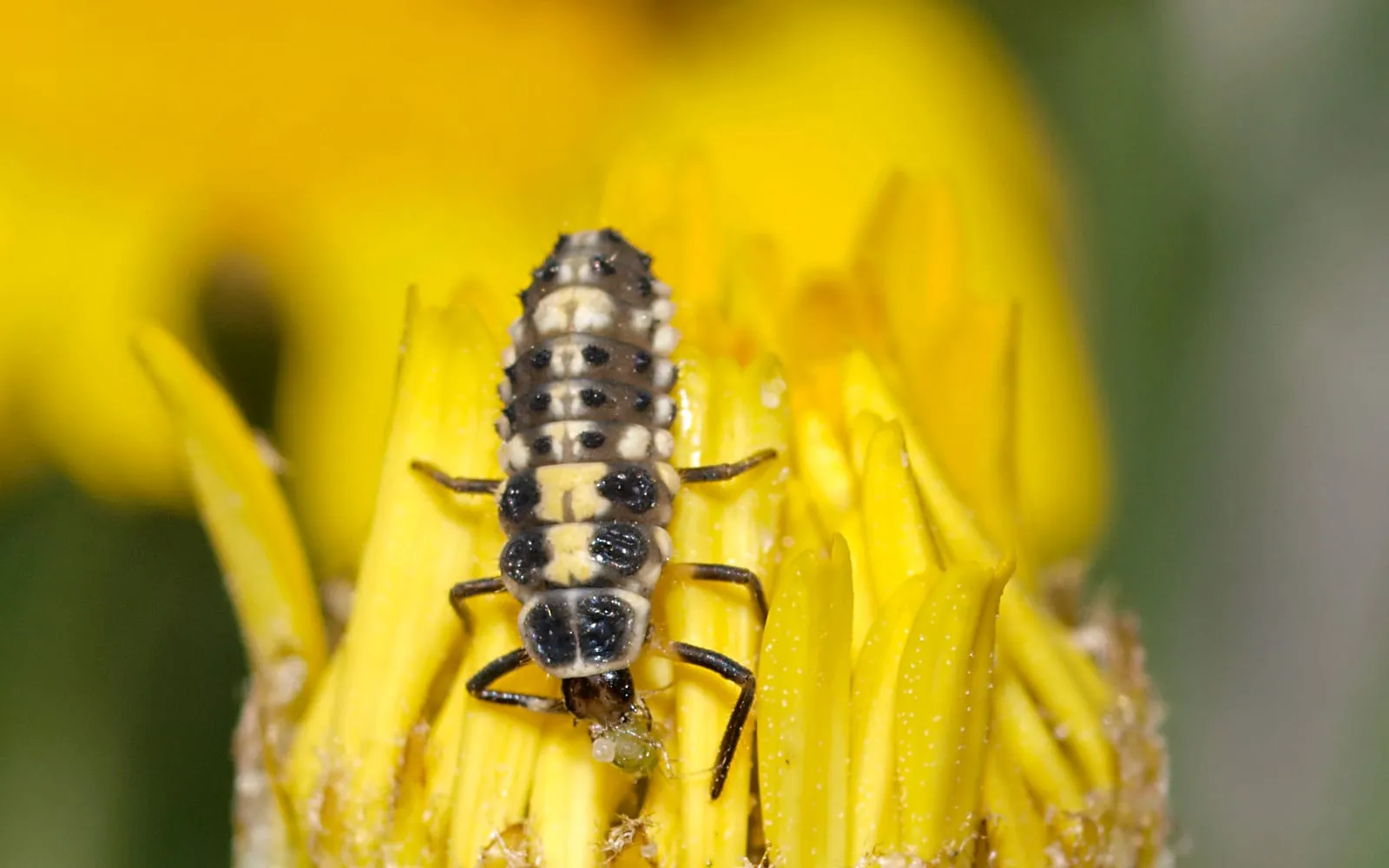
Ladybird larvae look nothing like the beetle they become. They are elongated, spiny and slate grey with orange markings, they move quickly, and they are squashed on sight by gardeners every summer. One eats several hundred aphids before it pupates.
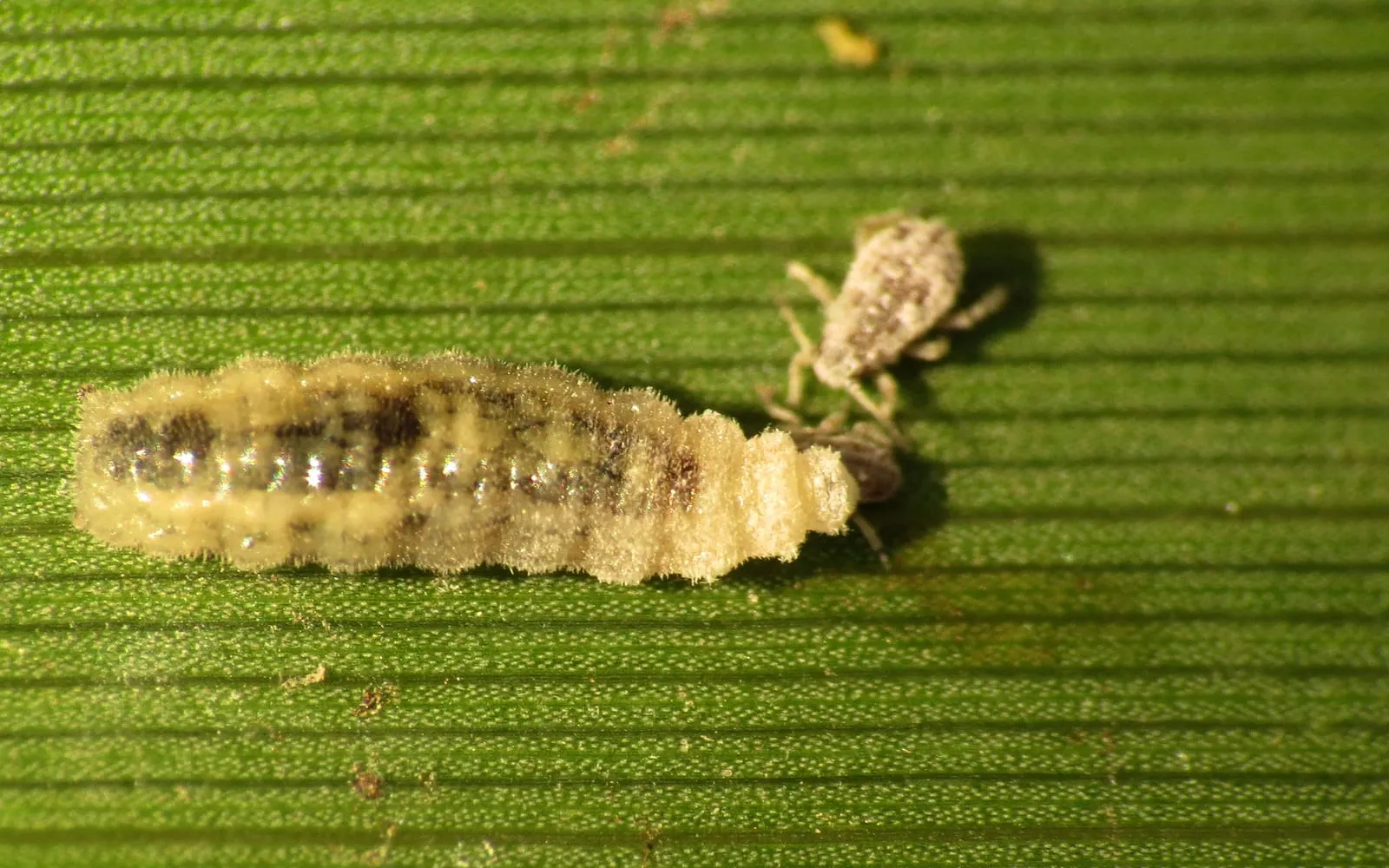
Hoverfly larvae are stranger and better. They are legless, blind, greenish maggots that haul themselves over a leaf and rear up to seize an aphid, and a single larva accounts for hundreds. Adult hoverflies eat nectar and pollen and will only lay near aphids in a garden that feeds them, so let some fennel, dill or coriander flower, and grow pot marigold and poached egg plant.
Parasitoid wasps leave evidence you can read. A swollen, papery, conker-brown aphid stuck to a leaf is a mummy, and there is a wasp inside it that has not yet emerged. Leave the mummies where they are.
Lacewing larvae, earwigs and small birds all take aphids too. Earwigs in particular do more good on a fruit tree than harm.
Under glass or indoors nothing arrives by itself, so buy it in. Aphidius wasps and the aphid midge Aphidoletes aphidimyza both establish well in a greenhouse or conservatory once spring temperatures allow them to fly.
Why no spray is listed here
Broad-spectrum contact insecticides kill ladybird larvae, hoverfly larvae and parasitoid wasps along with the aphids. The aphids recover first, because telescoping generations rebuild a colony in a fortnight while the predators need the rest of the season, so a sprayed plant tends to be worse off by August than an untreated one. The peach-potato aphid has also developed resistance to several classes of insecticide, which makes a spray that damages the predators and fails on the pest a poor bargain.
Fatty acid and soap sprays are sold as the gentle option. They work by contact on soft-bodied insects, which describes a ladybird larva as accurately as it describes an aphid, and they scorch foliage in sunshine or on a plant that is short of water. If you use one, spot-treat a single colony in the evening rather than covering the plant.
What it gets mistaken for
Whitefly fly. Disturb an infested leaf and a cloud of tiny white insects rises and resettles, which no aphid colony will do. Scale insects are immobile brown or yellowish domes stuck to stems and leaf veins, and they will not move when pushed with a fingernail. Mealybugs hide in leaf joints under white waxy fluff and look like small blobs of cotton wool.
The white flecks in an aphid colony are shed skins and get reported as whitefly or as mildew several times a season. They sit among the aphids, they are the same shape as the aphids, and they blow away when you breathe on them.
Distorted young leaves without a single insect on them point somewhere else. Herbicide drift and contaminated manure both twist new growth in a similar way, and they affect the whole plant evenly rather than the shoots the aphids happened to reach.
What to do, in order
Start here
Prevention, and the changes that stop the problem returning. Most of these pages should end at this tier.
- Tolerate the first colonies of the year
- Ladybirds, hoverflies and parasitoid wasps come to a garden because there are aphids in it. Clear every one in April and nothing holds them there, so the colonies that build in May arrive to no predators at all. A rose carrying aphids in spring is how you get a rose without them in July.
- Ease off the nitrogen
- High-nitrogen feed produces the soft sappy growth aphids breed fastest on. A balanced feed gives a tougher plant and a slower colony. Roses fed hard for size are the ones that need picking over every week.
- Pinch out broad bean tips
- Once four trusses of flowers have set, take out the growing tip. Blackfly gather on the softest tissue at the top of the plant, and removing it takes most of the colony away with it.
- Grow open flowers the adult hoverflies can feed at
- Hoverfly larvae eat the aphids and the adults that lay them live on nectar and pollen. They need flat, open flowers they can reach into, so fennel, dill and coriander left to bloom will do it, as will pot marigold and poached egg plant.
- Look over new plants before they come inside
- Most houseplant infestations arrive on a plant from a shop or on something brought in from the garden in autumn. Turn the leaves over and check the growing tip before it joins the others on the windowsill.
Then reach for a barrier
Netting, hand removal and water. Nothing here harms anything except the target.
- Rub the colony off by hand
- Finger and thumb run up an infested rose shoot clears it in seconds and harms nothing else on the plant. Repeat every few days while numbers are building and you will not need anything more.
- Knock them off with water
- A firm jet from a hose dislodges most of a colony and few of them find their way back up. Water in the morning so the foliage dries before nightfall.
- Break the ants' route to the colony
- Ants drive off the predators that would otherwise clear an aphid colony, so a guarded colony keeps growing whatever else you do. A grease band around a fruit tree trunk in autumn, or standing a pot away from an ant run, achieves more than going at the aphids directly.
- Cover young crops with insect mesh
- Mesh of around 0.8 mm excludes winged aphids from broad beans, lettuce and brassicas, which ordinary netting will not. Put it on before the spring flights and keep it clear of the foliage on hoops.
Then bring in the predators
Encourage what already lives in the garden, and buy predators in where the problem is under glass and nothing will arrive on its own.
- Learn the ladybird larva and leave it alone
- It looks nothing like the adult beetle, being long, spiny and slate grey with orange markings, and it moves quickly over the leaf. One larva works through several hundred aphids before it pupates. A good number get squashed each year by people who take them for the pest.
- Learn the hoverfly larva
- A legless, blind, semi-transparent maggot that hauls itself over the leaf like a leech and rears up to take an aphid. Hundreds go into one larva before it pupates, and it is the single most effective aphid predator in a British garden.
- Leave the bronze mummies in place
- A swollen, papery aphid the colour of a conker has a parasitoid wasp developing inside it. Rubbing the mummies off with the rest of the colony removes the wasps that would have parasitised the next generation.
- Order predators for a greenhouse or conservatory
- Nothing arrives on its own in an enclosed space, so buy it in. Aphidius wasps and the aphid midge Aphidoletes aphidimyza both work well under glass from spring onwards, once it is warm enough for them to fly.
Biological controls are live organisms and their sale and release are regulated country by country. An agent sold freely in one place may be unapproved in another, so buy from a licensed supplier where you live and never import or move one yourself.
In pictures
Plants affected
Guides that name it among the problems to watch for. The list is the plants it is characteristic of rather than everything it will feed on.
Common on UK allotments
This is one of the pests and diseases allotment growers meet most often. See it alongside the other common problems on the allotment guide.
Common allotment pests and diseasesA common houseplant pest
This is one of the pests and problems that houseplant owners meet most often. See it alongside the others, with a quick table for telling them apart, on the houseplant pests guide.
Common houseplant pestsA common tomato problem
This is one of the problems tomato growers meet most often. See it alongside the other pests, diseases and disorders on the tomato guide.
Common tomato problemsA common rose problem
This is one of the pests, diseases and disorders that rose growers meet most often. See it alongside the others on the common rose problems guide.
Common rose problemsA common vegetable pest
This is one of the pests that vegetable growers meet most often. See it alongside the others on the vegetable pests guide, grouped by how they feed and with prevention that works against most of them.
Common vegetable pests