
Edible
Tomato
Solanum lycopersicum
Also known as Love apple
How to grow tomatoes, Solanum lycopersicum. Cordon and bush types, side-shooting, blossom end rot, blight, and which parts of the plant you must not eat.
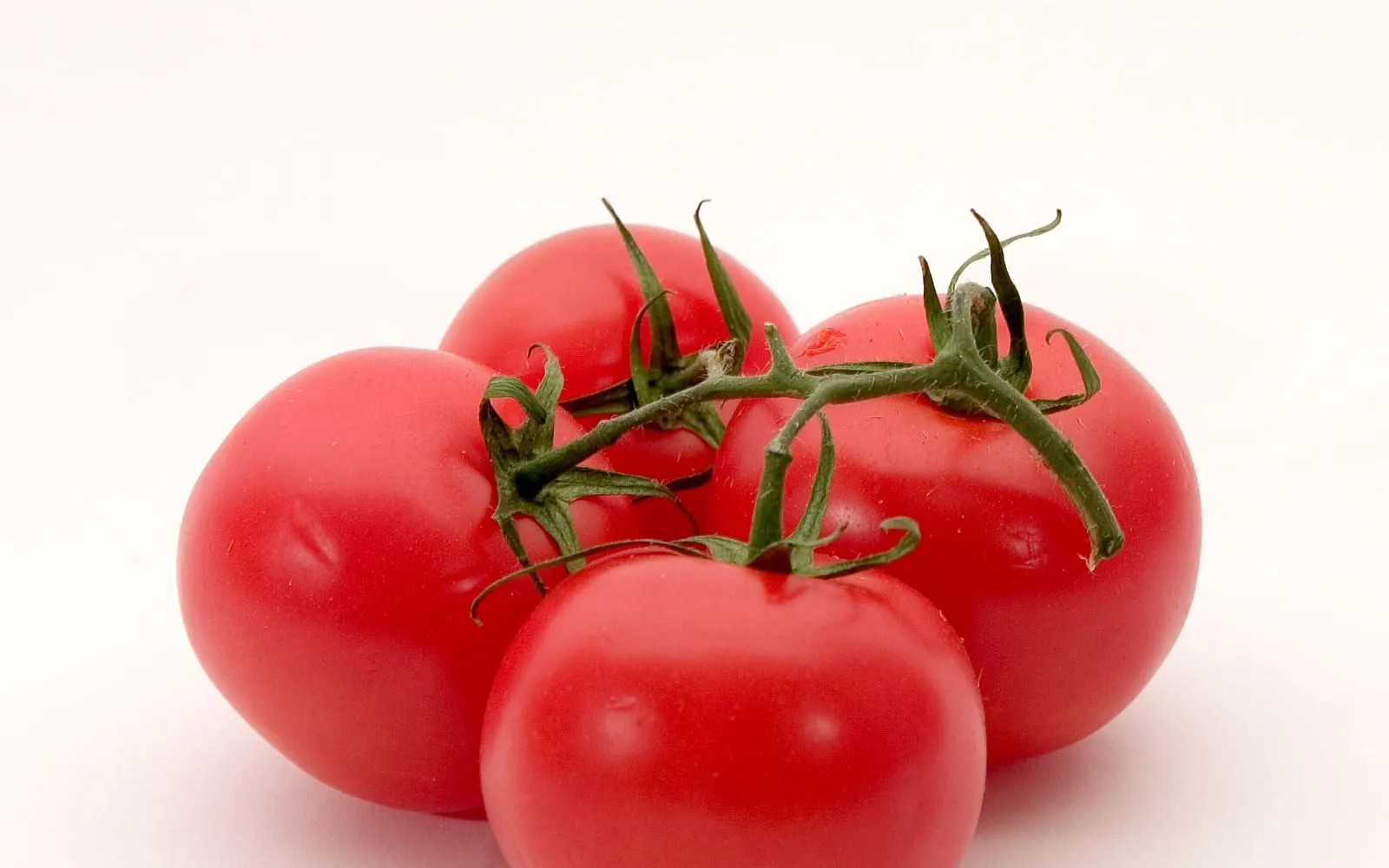
At a glance
- Difficulty
- Easy
- Water
- Consistently. Daily in hot weather, twice in growbags
- Light
- Full sun, at least eight hours. The sweetness comes from light
- Temperature
- 18-28 deg C. Frost tender, and setting fails above 30
- Hardiness
- USDA 10-11, RHS H1c, hardy to 2 C
- Type
- Tender annual where frost comes, perennial where it does not
- Height
- 60 cm bush, up to 2 m cordon
- Native to
- Western South America, Domesticated in Mexico
- Best month
- April in the Northern Hemisphere, October in the Southern Hemisphere
Fruit set is the limit rather than growth. Tomato pollen goes sterile above about 35 deg C by day and below 13 at night, so a plant in a heatwave flowers freely and sets nothing, which looks like a disease and is physiology. Heat-set cultivars bred in Florida and the Caribbean push the upper threshold a few degrees. Cool-climate growers face the opposite problem and sow indoors to buy the season.
Hardiness zones describe winter cold alone. Summer heat, humidity, rainfall and the length of the growing season decide as much, so treat the range as the outer limit rather than as a recommendation.
Every month named in this guide is for the temperate Northern Hemisphere. If you garden in the Southern Hemisphere, shift each one by six months, so April becomes October. Closer to the equator the wet and dry seasons matter more than the calendar, and the shift stops being a useful guide.
Toxic to pets if eaten
- Safe to eat
- Ripe fruit
- Do not eat
- Leaves, stems and unripe green fruit
- Harm from
- Eating it
- Affects
- Cats, dogs and horses
The fruit is food and the rest of the plant is not. The ASPCA lists the tomato plant as toxic to dogs, cats and horses through glycoalkaloids, which it names as solanine, and states plainly that the ripe fruit is non-toxic. The leaves, stems and unripe green fruit are the problem, and the listed signs are drooling, loss of appetite, severe gastrointestinal upset, depression, weakness, dilated pupils and a slowed heart rate. Tomato belongs to the nightshade family alongside potato, and the same rule applies to both: eat the crop and not the foliage. Quantities matter here. A dog that nibbles one leaf is very unlikely to come to harm, whereas a horse with access to a row of haulm is a real concern. Do not compost tomato foliage where livestock can reach it, and do not add prunings to a pet's run. Green tomatoes used for chutney are cooked and eaten in small amounts by tradition, and that is a different thing from a pet eating them raw.
Sources: ASPCA (Tomato plant, Lycopersicon spp), RHS potentially harmful garden plants
About
Tomatoes reward attention more than almost anything else in a vegetable garden. The plant is easy to grow and hard to grow well, and the difference between the two is a weekly feed and a watering can used consistently.
Europe took two hundred years to start eating them. Tomatoes arrived from the Americas in the sixteenth century and were grown as ornamental curiosities, partly because their nightshade relatives were known to be dangerous and partly because acidic tomato juice leached lead out of the pewter plates the wealthy ate from. Poorer people using wooden plates were fine.
Sow in March, plant out after the last frost, and pick from July until the first cold nights.
Tomatoes are the classic subject of companion planting, from basil alongside them to marigolds beneath, though the evidence for most of those pairings is thinner than the tradition suggests.
Appearance and character
A sprawling plant with divided leaves made up of toothed leaflets, covered in short hairs that release a sharp green smell when brushed. That scent is the signature of a greenhouse in July, and it comes from the same family of compounds that make the foliage inedible.
Flowers are small, yellow and five-pointed, hanging in clusters called trusses. They self-pollinate, helped by vibration, which is why tapping the supports or running a fan in a greenhouse improves fruit set.
Two growth habits are sold and choosing the wrong one causes most of the confusion in growing them. Cordon or indeterminate varieties keep growing from the tip indefinitely and need training up a support with side shoots removed. Bush or determinate varieties stop at a set height, branch freely and want no pruning at all.
Fruit ranges from currant-sized to a kilogram beefsteak, in red, yellow, orange, green, purple and near-black.
Where it is from
Western South America, along the coastal strip and Andean foothills of Peru, Ecuador and Chile, where the wild ancestors bear fruit the size of a pea. Domestication happened further north in Mexico, and the name comes from Nahuatl tomatl.
The wild habitat is bright, warm and seasonally dry, with the plant scrambling over other vegetation. That is the origin of the demand for eight hours of sun, the dislike of cold nights, and the sprawling habit that needs support in cultivation.
Tomatoes are perennial in frost-free climates. Anywhere with a winter they are killed each autumn and grown as annuals.
How it grows
Seed germinates in warmth, around 20 deg C, in about a week. From sowing to first ripe fruit is roughly twenty weeks, which is why March sowings crop in July.
The plant grows in a repeating pattern. Cordon varieties produce a leaf, then a truss, then a leaf, then a truss, and a side shoot in every leaf joint. Removing those side shoots concentrates everything into the main stem and the trusses, which is the whole point of side-shooting.
Fruit set fails outside a temperature band. Below about 13 deg C at night and above about 30 deg C by day the pollen does not work, which is why a cold May and a heatwave both produce flowers that drop.
In August, stop a cordon plant by pinching out the growing tip two leaves above the topmost truss. This tells the plant to ripen what it has rather than start more it cannot finish.
Roots form along any buried stem, so tomatoes are planted deeper than they grew in the pot, and a leggy seedling can be buried up to its first leaves.
Through the seasons
Late winter and early spring are for sowing, from February with a heated propagator or March on a windowsill. Pot on as they grow and keep them in good light or they stretch.
Late spring is planting out, after the last frost, which in a cool temperate climate means late May. Harden plants off over a fortnight first.
Summer is the work. Side-shoot cordons weekly, tie in the stems, water consistently, and feed once the first truss sets. Remove the lower leaves as the first trusses ripen to improve airflow.
Autumn is the end. Ripen what you can, then pick the green fruit before the first frost and either ripen it indoors alongside a banana or make chutney.
Care difficulty
Easy in the sense that a plant in a growbag with weekly feed will give you tomatoes. The gap between that and a good crop comes down to two habits.
Water evenly. Almost every fruit disorder here starts with the soil swinging between dry and drenched.
Feed on time. Start the high-potassium feed as soon as the first truss has set fruit, not when the plant looks hungry, and keep it weekly.
Blight is the third factor and largely out of your hands outdoors in a wet summer. Growing under cover or choosing resistant varieties is the answer.
Watering
Consistency beats volume. Tomatoes need even moisture, and the swings are what cause split fruit and blossom end rot.
In hot weather a plant in the ground wants a thorough soak every day or two, and one in a growbag or pot may need water twice a day. Growbags hold very little and dry out fast.
Water at the base and keep it off the leaves. Wet foliage in warm humid air is how blight and leaf mould establish.
Morning watering is better than evening, so the surface dries before nightfall.
Mulch the soil once it has warmed, which steadies the moisture more effectively than watering more often. Garden compost makes a good mulch here, feeding the plant slowly while it holds the moisture in.
Warning signs, diseases and pests
Blight, Phytophthora infestans, is the disease that ends outdoor tomato seasons wherever summers are warm and wet. Brown patches spread on leaves and stems, fruit develops firm brown marbled areas, and in wet warm weather a plant collapses within days. There is no cure once it arrives. Remove and bin affected plants rather than composting them, grow under cover where possible, and choose resistant varieties such as ‘Crimson Crush’ for outdoor beds.
Blossom end rot is a dark sunken leathery patch at the base of the fruit. It is a calcium delivery failure caused by irregular watering rather than a disease or a soil deficiency, and it is far commoner in containers. Water evenly and it stops. Fruit already affected will not recover, though the rest of the truss is often fine.
Splitting follows heavy watering after a dry spell, as the flesh swells faster than the skin.
Whitefly infest greenhouse crops, cluster on the leaf undersides and coat everything in sticky honeydew. The parasitic wasp Encarsia formosa controls them well under glass.
Tomato leaf mould shows as pale yellow blotches on the upper leaf surface with a brown velvety growth beneath, and it is a greenhouse problem driven by humidity. Ventilate hard.
Leaf curl without discolouration is usually a harmless stress response to temperature swings.
Tomato hornworm strips whole branches overnight across North and South America, a caterpillar the length of a finger and camouflaged so well that its droppings on the leaves below are usually noticed before it is. Hand-pick daily through summer, but leave any caterpillar carrying small white cocoons on its back alone, since a parasitic wasp has already dealt with it. It has never established outside the Americas.
Colorado potato beetle, a beetle boldly striped in black and cream, does the same job of stripping foliage across North America, continental Europe and parts of Asia, feeding on tomato as well as its preferred potato and aubergine. Britain treats a sighting as notifiable rather than something to treat at home, since the beetle has never established there.
Brown marmorated stink bug punctures ripening fruit, leaving corky discoloured patches beneath the skin, and is established across North America and a growing list of European countries.
Corn earworm, known on this crop as tomato fruitworm, bores a single hole into green fruit and feeds inside it out of sight. It is confined to the Americas, where a closely related species fills the same role elsewhere under the name cotton bollworm. Cut away the damaged part of an affected fruit; the rest is fine to eat.
Queensland fruit fly stings ripening fruit invisibly and can turn a sound tomato into a collapsing maggot-riddled mass within days. It is established across eastern Australia and parts of the Pacific; Western Australia, South Australia and New Zealand maintain pest-free status and treat a find as an eradication matter. Net the plant and never move home-grown fruit out of a quarantine area.
Growing environment
Full sun, and the more the better. Eight hours of direct light is the working minimum, and sweetness tracks sunshine closely.
Warmth of 18 to 28 deg C is the productive range. Cold nights below 13 deg C stop fruit setting, and sustained heat above 30 deg C does the same. Where summers are cool, cordon varieties under glass or in a polytunnel crop earlier, longer and more reliably than anything outdoors.
Soil should be fertile and free-draining with plenty of compost worked in. Rotate the bed, because tomatoes share soil-borne diseases with potatoes.
Support goes in at planting. Cordons need a cane, a string or a spiral stake running the full height. Bush types need little or nothing.
Ventilation under cover is as important as heat. Still humid air is what leaf mould and blight want.
Feeding
Start weekly high-potassium tomato feed as soon as the first truss has set fruit. Timely feeding supports the crop without pushing too much leaf.
Before that, hold back. Feeding a young plant nitrogen produces a large leafy specimen with fruit that arrives late.
Work compost and a slow-release organic fertiliser into the bed before planting.
Container plants exhaust their compost quickly and depend entirely on liquid feed. Do not skip a week in July.
Magnesium deficiency shows as yellowing between the veins of the older leaves and is common in heavily fed plants, since high potassium blocks magnesium uptake. Epsom salts as a foliar spray corrects it.
Troubleshooting
Dark sunken patch on the bottom of the fruit. Blossom end rot from uneven watering. Water consistently. The rest of the truss is usually fine.
Fruit splitting. A heavy watering after a dry spell. Even out the routine and mulch.
Flowers dropping without fruit. Nights below 13 deg C, days above 30 deg C, or poor pollination. Tap the supports daily and ventilate under cover.
Brown spreading patches on leaves, stems and fruit in a wet summer. Blight. Remove and bin the plants. Grow resistant varieties or move under cover.
Yellowing between the veins on older leaves. Magnesium deficiency, common with heavy potassium feeding. Spray with Epsom salts.
Tall, pale, floppy seedlings. Too little light and too much warmth. Give them the brightest spot you have and cooler nights.
Masses of leaf, few flowers. Too much nitrogen too early. Switch to high-potassium feed.
Green fruit still on the plant in October. Pick it. Ripen indoors in a drawer with a banana, or make chutney.
Tomato problem guides
Not sure what is wrong? See the common tomato problems guide.
- Tomato and potato blight
- Blossom end rot
- Whitefly
- Aphids
- Tomato hornworm, a finger-thick caterpillar found across the Americas
- Colorado potato beetle, which also strips tomato foliage
- Brown marmorated stink bug, established across North America and Europe
- Corn earworm, called tomato fruitworm on this crop, an Americas-only pest
- Queensland fruit fly, established across eastern Australia
- Tomato spotted wilt virus, which thrips bring in
- Herbicide damage from aminopyralid in manure, which curls the growing tips