
Guides
Common pests and problems on houseplants
Houseplants get the same small group of pests wherever they are grown. Indoors, those pests can breed all year and have fewer predators than they would outside. This guide names the ones you are most likely to see, shows how to tell them from watering and light problems, and links to a detailed page on each.
Most houseplant trouble comes from a small group of pests. Indoors, they behave differently from the same insects in a garden. There is no winter to slow them, little rain or washing to remove them, and fewer predators, so a few insects can become an infestation over a season. Some symptoms that look like pests are growing problems instead.
Start with the quick table below. Match what you can see to the likely cause, open the detailed page to confirm it, then decide whether the damage needs action. A black film or a white crust often means a growing problem rather than an insect. A healthy plant also tolerates a light infestation better than a struggling one.
What is wrong with my houseplant?
Match what you can see to the likely cause, then open the guide to confirm it.
| What you are seeing | Likely cause |
|---|---|
| White cottony tufts wedged into the leaf axils and stem forks | Mealybug |
| Brown limpet-like bumps stuck along the stems and leaf veins | Scale insects |
| Fine pale speckling with faint webbing under the leaves | Red spider mite |
| Silvery streaks and tiny black specks scattered on the leaves | Thrips |
| Tiny dark flies running over the compost surface | Fungus gnats |
| Clusters of small insects massed on the soft new growth | Aphids |
| A black sticky film coating the older leaves | Sooty mould |
| Yellowing lower leaves with soft, blackened roots below | Root rot |
| Distorted new leaves that come out small and fail to open | Cyclamen and broad mite |
| A cloud of white flies rising from the leaves when disturbed | Whitefly |
Where to look
Most of these pests stay on one part of the plant. Check the right place before you reach for a hand lens.
| Where to look | What you might find |
|---|---|
| In the compost | Fungus gnats, Root aphids |
| On the leaf undersides | Red spider mite, Whitefly |
| In the leaf joints and crown | Mealybug |
| On the soft new growth | Aphids, Thrips, Cyclamen and broad mite |
| Along the stems and leaf veins | Scale insects |
Six common houseplant pests
Six pests that cause much of the damage on houseplants. Open any one for more photographs and how to tell it from similar problems.
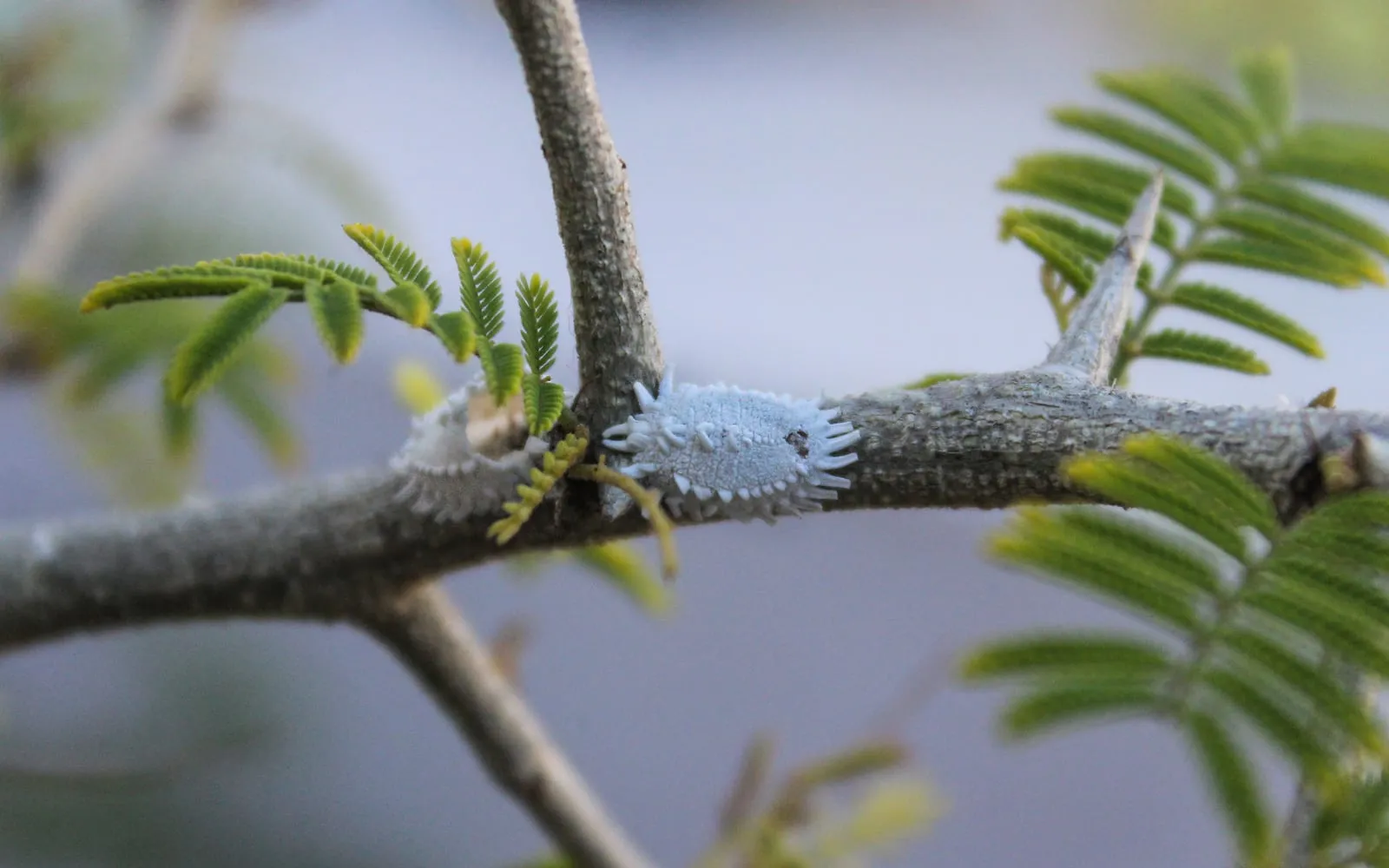 Mealybug
Photo by Suyash Dwivedi, CC BY-SA 4.0. Resized from the original. 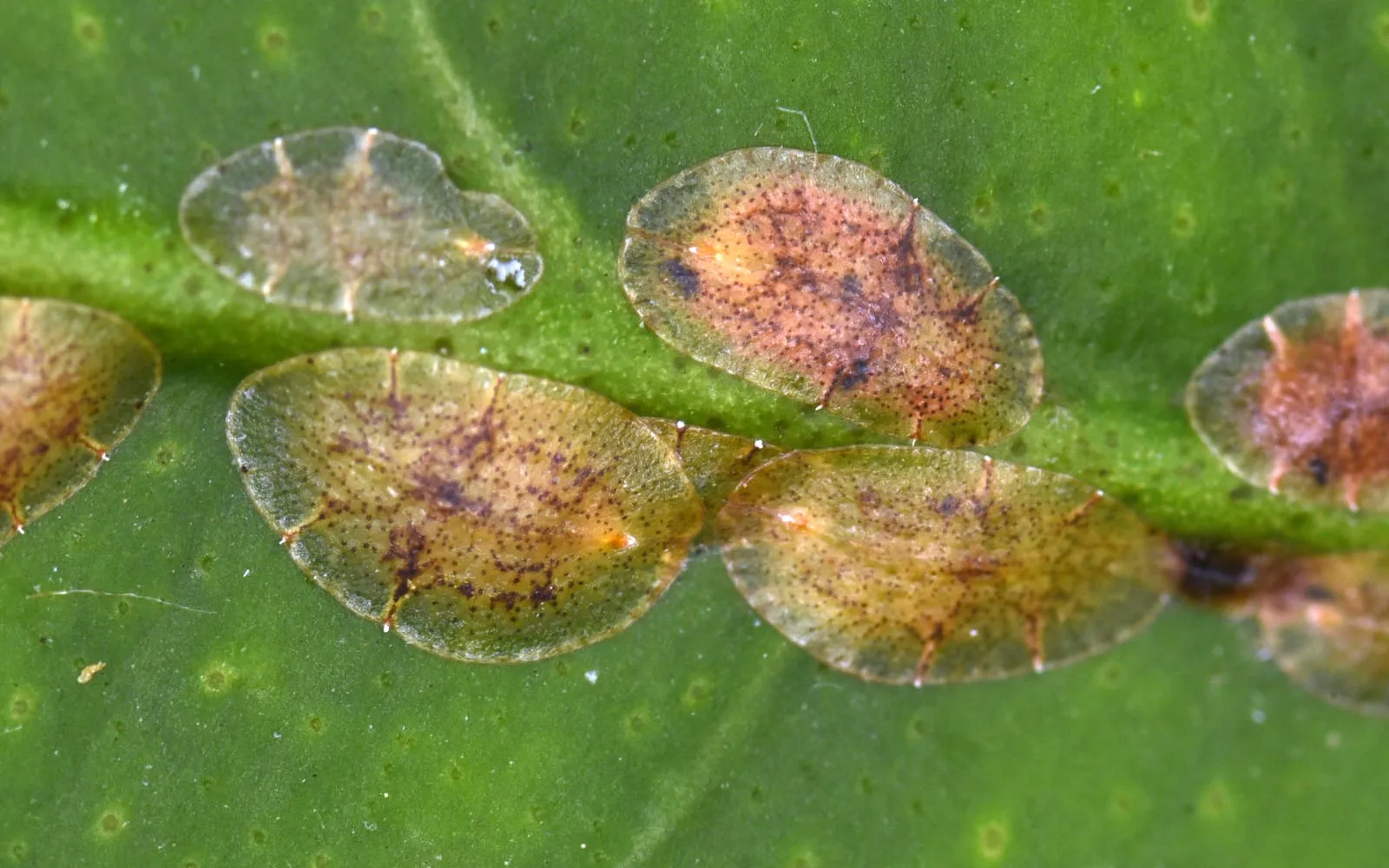 Scale insects
Photo by Amada44, CC BY-SA 3.0. Resized from the original. 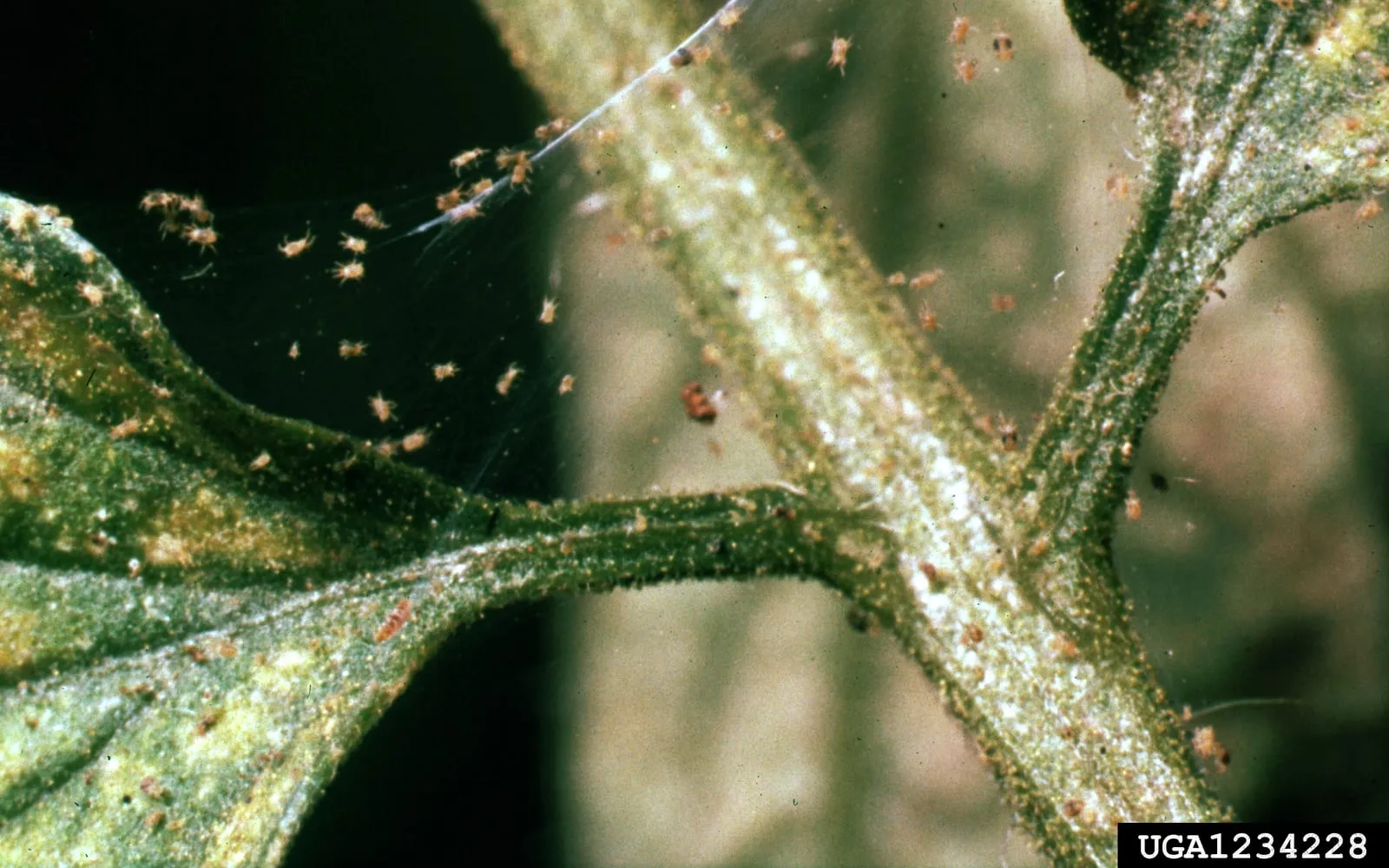 Red spider mite
Photo by Clemson University - USDA Cooperative Extension Slide Series, Bugwood.org, CC BY 3.0 us. Resized from the original. 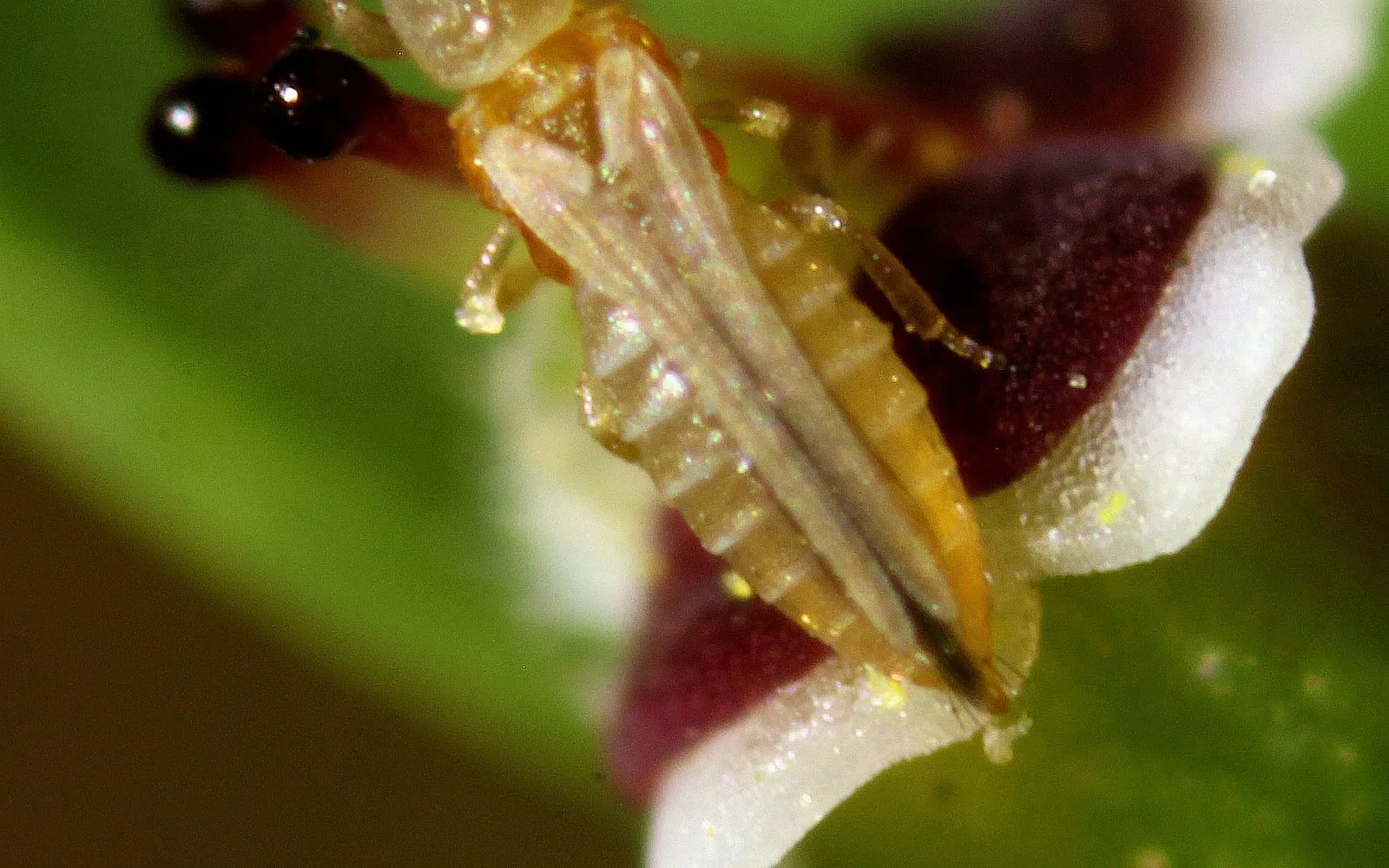 Thrips
Photo by Dave Kirkeby, CC BY-SA 4.0. Resized from the original. 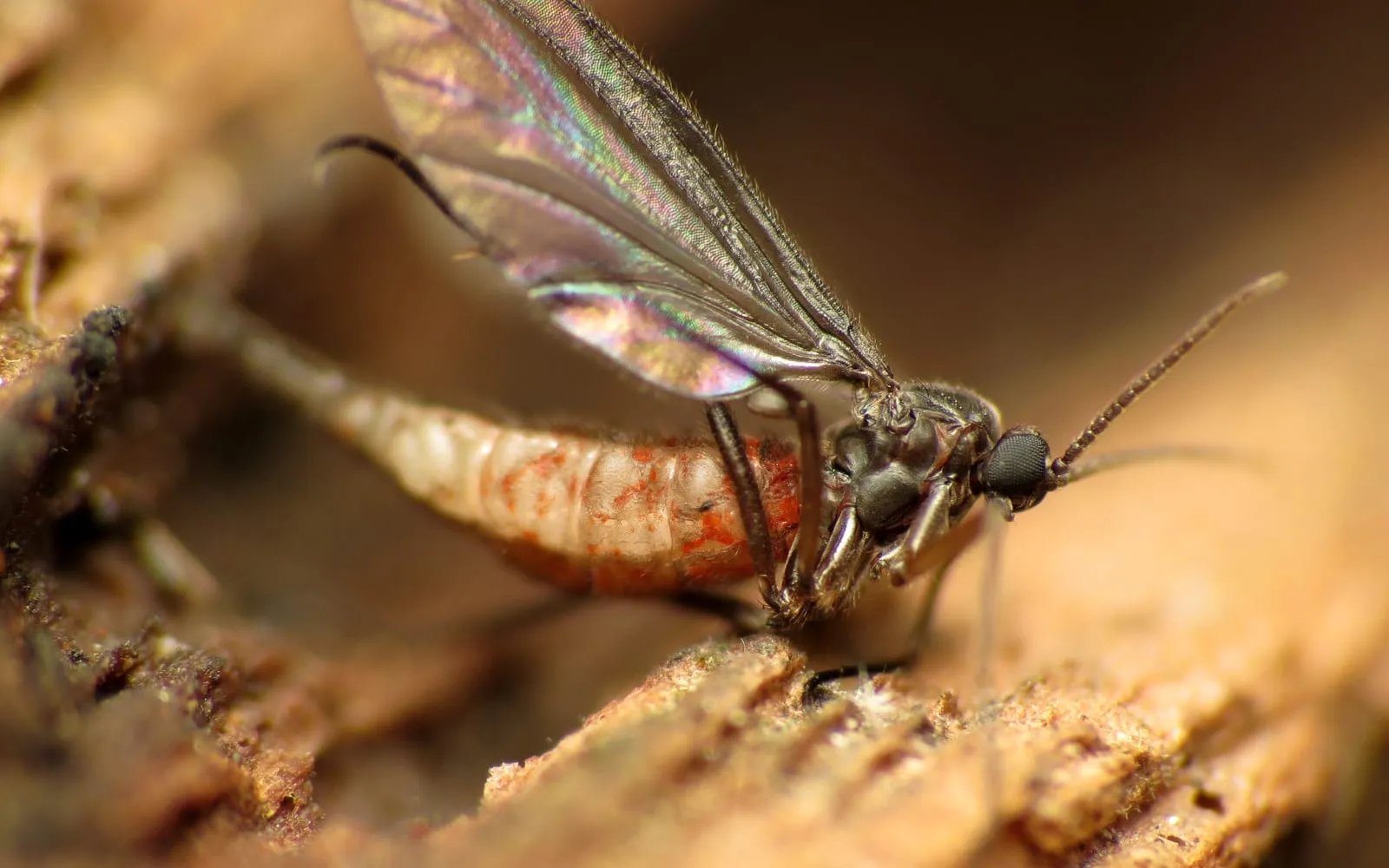 Fungus gnats
Photo by Katja Schulz, CC BY 2.0. Resized from the original. 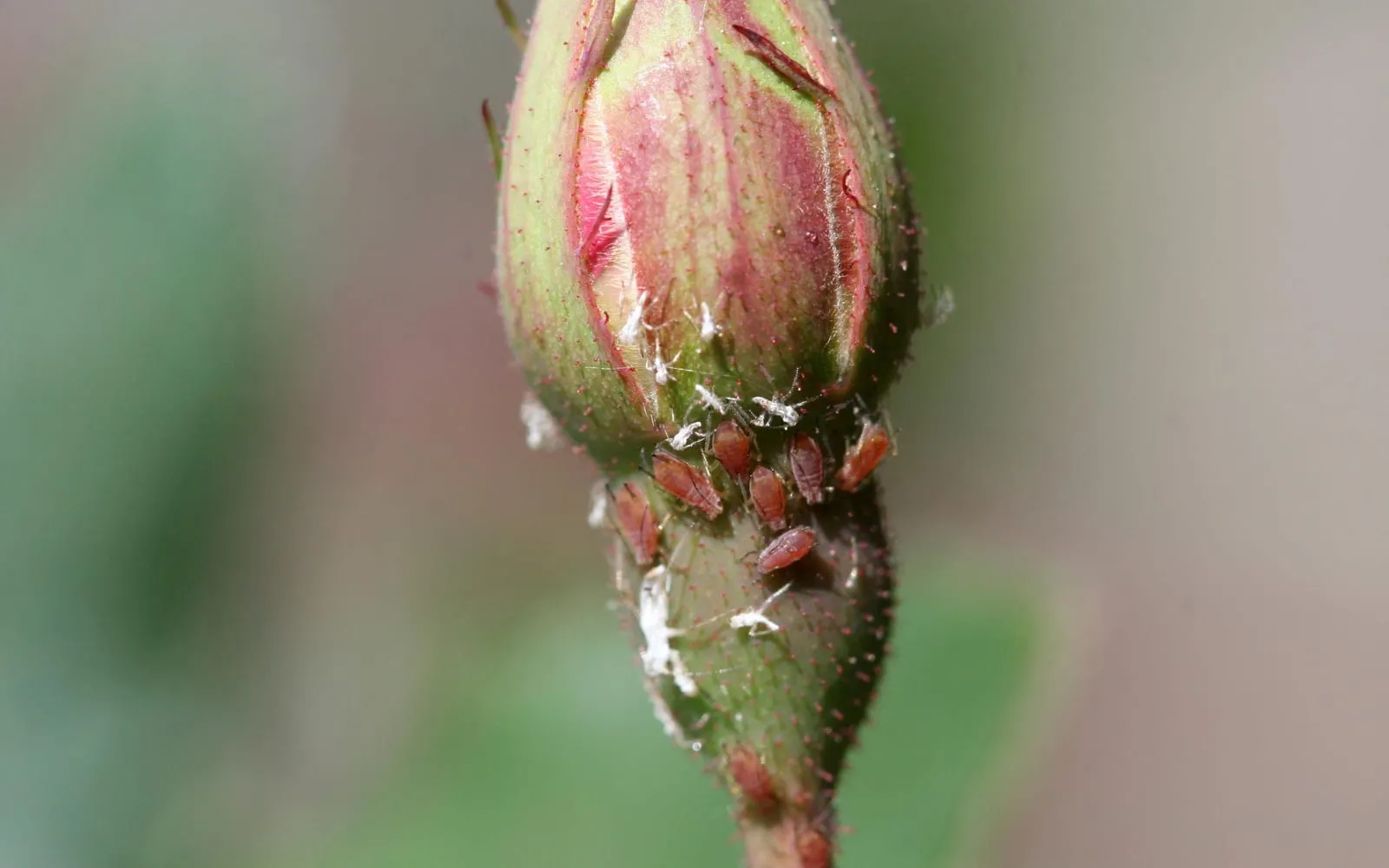 Aphids
Photo by Whitney Cranshaw, Colorado State University, CC BY 3.0 us. Resized from the original.
Sap-sucking pests
These insects push their mouthparts into a leaf or stem and drink sap. On a houseplant, a few insects can become hundreds over winter. The first sign is often sticky honeydew on the leaf below or on the windowsill, rather than the insects themselves. Catch them early, while a cotton bud or a rinse can still remove them.
Mealybug
Weakens the plantWatch on Hoyas, succulents, orchids and citrus
Mealybugs look like small blobs of white waxy fluff in leaf joints, stem forks and the crown of a plant. They are often mistaken for cotton wool or mould. Pull one apart and there is a pale, slow-moving insect underneath. They leave sticky honeydew and stunt new growth over months rather than killing a plant outright, though seedlings and cuttings can decline quickly. Dab them weekly with a cotton bud dipped in surgical spirit.
How to identify and deal with mealybugScale insects
Weakens the plantWatch on Bay, citrus, ficus and orchids
Scale insects are brown, yellowish or black domes, two to six millimetres across, fixed along stems and the undersides of leaf veins. They stay in place when pushed and lift off whole when scraped, which separates them from growths on the plant. Soft scales leave honeydew, so the leaves below turn sticky and then black. Armoured scales can weaken a plant without leaving sticky leaves. Scrape them off and wash the leaves down.
How to identify and deal with scale insectsRed spider mite
Destroys the crop or displayWatch on Figs, calatheas, palms and ivy
Spider mites make glossy leaves look dull and finely speckled with pale dots that will not wipe away. Turn a leaf over and watch for tiny moving specks. Fine webbing on the shoot tips means numbers are high. Hot dry air near a radiator or a sunny window helps them breed quickly, and a plant can lose most of its leaves within a month. Raise the humidity and shower the plant.
How to identify and deal with red spider miteThrips
Weakens the plantWatch on Monsteras, alocasias, calatheas and anthuriums
Thrips leave silvery or bleached patches on leaves, with tiny black dots of excrement. New leaves may emerge puckered and scarred. The insects are slender, about a millimetre long, and run rather than fly when disturbed. Silvering plus black specks is the key sign. An established plant can grow out of light damage, but thrips can carry untreatable viruses, so protect the rest of the collection. Hang a blue sticky trap and treat the leaves and compost together.
How to identify and deal with thripsAphids
Weakens the plantWatch on Soft new shoots, especially plants brought in from the garden
Aphids form dense green, black, pink or grey clusters on soft new shoots, leaf undersides and flower buds. They sit still when disturbed, unlike whitefly, and the white flecks among them are shed skins rather than a second pest. Most arrive on plants brought in from the garden in autumn. They leave sticky honeydew and curl the new leaves, though an established plant usually loses little. Rub them off by hand or rinse them under the tap.
How to identify and deal with aphidsWhitefly
Weakens the plantWatch on Pelargoniums, poinsettias, hibiscus and herbs
Brush the plant and a cloud of tiny white insects lifts off, circles and settles again. Aphids and scale do not do this. The adults sit under the youngest leaves, so a plant can look clean from above. Most of the population is the flat translucent young stage stuck to the leaf underside, which is why swatting the adults changes little. They leave honeydew and slowly yellow the foliage. Wash the undersides, or release Encarsia wasps under glass.
How to identify and deal with whiteflyCyclamen and broad mite
Destroys the crop or displayWatch on Cyclamen, African violets, begonias and ivy
Cyclamen and broad mites leave old leaves looking normal while new leaves come out small, thickened and tightly curled at the edges, often with a bronzed underside. The mite is around 0.2 mm and hides in folded growth, so you usually cannot see it. Severe distortion with no visible insect is the key sign, though it is often mistaken for thrips or virus. Isolate the plant early and cut out the worst growth.
How to identify and deal with cyclamen and broad mite
Pests that live in the compost
These pests live in the pot rather than on the plant, so the leaves can look clean while the roots are affected. A plant may wilt, stall or collapse with nothing on the foliage to explain it. To check for them, knock the plant out of its pot and look at the roots and the compost.
Fungus gnats
CosmeticWatch on Any pot kept constantly damp, ferns and calatheas most
Fungus gnats are small dark flies, two to four millimetres long, that drift up from the compost when you water or move a pot. They stay near the pot rather than on the plant, which separates them from leaf pests. The larvae eat fungi and dead matter in wet compost and do little harm to an established plant, though they can kill seedlings. Let the surface dry between waterings.
How to identify and deal with fungus gnatsRoot aphids
Weakens the plantWatch on Container plants, primulas and chrysanthemums
A plant with root aphids may wilt in afternoon sun and recover overnight, then eventually fail to recover. The leaves can look clean while the compost stays damp. Knock the plant out of the pot and look for grey, cream or yellowish aphids on the roots, often under a white or bluish waxy powder. Spraying the foliage will miss them. Wash the roots clean, cut away the worst damage, and repot into fresh compost.
How to identify and deal with root aphidsVine weevil
Can kill the plantWatch on Cyclamen, begonias, primulas and potted succulents
Vine weevil causes two separate problems. Adults cut neat semicircular notches from leaf edges at night. This looks untidy but rarely matters. The grubs eat the roots of a container plant through autumn and winter until it collapses. Tip out a failed plant and look for plump white legless grubs with an orange-brown head and chewed roots. Water on nematodes in early autumn while the compost is warm, and pick adults off after dark.
How to identify and deal with vine weevilWoodlice and millipedes
CosmeticWatch on Damp pots and seed trays, rarely the plant itself
Woodlice are grey and armoured, and scatter when a pot is lifted. Millipedes are slow and cylindrical, and coil into a spiral when touched. Both usually eat tissue that is already rotting, so they are often present after another pest or rot has damaged the plant first. In a pot they appear in damp compost and seldom trouble a healthy plant, though they can graze seedlings and soft cuttings. Look for the original damage before treating either.
How to identify and deal with woodlice and millipedes
Damage mistaken for a pest
Not everything that looks like an infestation is one. A black film, a white crust or a row of bumps can look like insects, but each problem below comes from growing conditions or from the trace they leave. The fix is water, light or drainage rather than a pest treatment.
Root rot
Can kill the plantWatch on Succulents, orchids, peace lilies and figs
Root rot makes a plant wilt while the compost is wet, which separates it from drought. The roots have died and can no longer take up water, so watering again makes it worse. Lower leaves yellow and drop, the compost smells sour, and a lifted root ball shows brown, soft roots whose outer layer slides off when pinched. It is one of the most common ways a houseplant dies. Cut away the rot, repot into a smaller pot with an open mix, and water less.
How to identify and deal with root rotSooty mould
CosmeticWatch on Any leaf sitting below scale, aphids or whitefly
Sooty mould makes leaves look black, often after they have been sticky for a week or two. Run a finger over a leaf and the black coating lifts away, leaving sound green leaf underneath. The mould lives on honeydew and does not feed on the plant, so it is a sign of sap-sucking insects above rather than an infection. Check for aphids, scale, whitefly or mealybugs. Deal with the insect and the mould stops coming back.
How to identify and deal with sooty mouldOedema
CosmeticWatch on Pelargoniums, peperomias and succulents
Oedema makes small raised blisters on leaf undersides. They are clear and watery at first, then dry into rough tan or rust-brown corky scabs, sometimes with matching ridges on stalks and stems. They will not rub off because they are part of the leaf. Oedema happens when roots take up water faster than the leaves can lose it, often in dull, still winter conditions. Water less, give more light and move some air.
How to identify and deal with oedemaGuttation
CosmeticWatch on Monsteras, alocasias, peace lilies and philodendrons
Guttation leaves clear drops on leaf tips and edges first thing in the morning. The drops are usually gone by mid-morning and may leave a small white crust where they dried. The plant is pushing sap out under root pressure overnight, which is normal, and the crust is often mistaken for scale insects. It wipes off with a damp cloth. Heavy guttation every morning can mean the compost is holding more water than the plant is using.
How to identify and deal with guttationHard water and salt build-up
Weakens the plantWatch on Calatheas, marantas, ferns and spider plants
Hard water leaves a hard white or buff crust on the compost surface and the outside of terracotta pots. It feels gritty rather than fluffy and returns after you scrape it off. On the plant, it can cause brown crisp leaf tips with a narrow yellow band between the brown and the green. Lime-hating plants may yellow between the veins while the veins stay green. Tap water carries dissolved calcium and magnesium that build up in a pot, and fertiliser adds more salts. Flush the pot through and switch to rainwater.
How to identify and deal with hard water and salt build-up
Keeping houseplants free of pests
Most infestations are easier to keep out than to clear. The same few habits work against nearly everything above. None of them involves a spray, and together they do more than most bottled products.
Quarantine every new plant
Most infestations arrive on a bought plant, a cutting or something brought in from the garden. Keep a new plant in another room for a month, away from the collection, and check the leaf undersides and growing tip each week. A month is long enough for many hidden eggs to hatch, so you can treat the plant before pests spread.
Turn the leaves over regularly
Most of these pests sit on the undersides of leaves, in leaf joints and down in the crown. Check a few plants once a month, including the axils, midribs and newest growth. Ten seconds a plant can catch an infestation while it is still small enough to wipe off.
Water so the compost is not always wet
Compost kept constantly wet lets fungus gnats breed near the surface and can rot the roots below. Let the top couple of centimetres dry between waterings, empty the saucer twenty minutes after watering, and water much less through the darker months when the plant is barely growing. Do not water on a fixed day of the week without checking the compost first.
Rinse or wipe the leaves
A firm-leaved plant rinsed every few weeks loses much of the dust, honeydew and early pest colonies before they establish. Support each large leaf and wipe both sides with a damp cloth, or stand smaller plants under a tepid spray. Clean foliage also makes new damage easier to see.
Isolate an affected plant early
As soon as a plant shows a pest, move it away from the others and treat it there. Most of these pests spread by walking between touching leaves or drifting on air, so one infested plant on a crowded shelf can spread the problem. Treating the first few insects with a cotton bud or a rinse is much easier than clearing a heavy infestation later.
Go easy on the feed
Heavy feeding produces soft growth that supports larger colonies of aphids, mealybugs, scale and thrips. Feed at the rate on the bottle and stop through winter, so the plant makes firmer tissue. Overfeeding also leaves salts in the compost, which can brown the leaf tips without any pest being present.
Identify the problem before treating it. A black film, a white crust or a row of bumps may not be insects. Act only when the damage is likely to matter, because a plant can tolerate a light infestation. Start with prevention and with physical or biological controls, and use sprays only as a last resort. On a houseplant, a cotton bud, a rinse or a bought predator often works better and harms less.
Common questions
- Which pests are most common on houseplants?
- Mealybugs, scale insects, spider mites, thrips, aphids and whitefly account for most of what people find on an indoor plant. Fungus gnats account for many worries that do not harm the plant. Which pests appear depends on what you grow and how warm and dry the room is, but most houseplant owners meet this core group sooner or later.
- How do I tell a pest from a watering problem?
- Look at whether anything is on the plant at all. A pest leaves insects, webbing, sticky honeydew or a moving speck under a lens. Brown leaf tips, black film, corky bumps and a white crust on the pot are growing conditions, so no insect is present and no spray will help. When a plant wilts, feel the compost first, because a wilt in wet compost is failing roots rather than thirst.
- How can I treat houseplant pests without harsh chemicals?
- Most indoor pests are cleared without a spray. Touch mealybugs and scale with a cotton bud dipped in surgical spirit, rinse aphids, spider mites and thrips off in the shower and repeat weekly for a month, and let the compost dry to see off fungus gnats. Under glass you can buy in predators such as Encarsia wasps or Phytoseiulus mites. A broad-spectrum spray kills those helpers along with the pest, so it tends to leave you worse off.
- Where do pests on an indoor plant come from?
- Almost always on another plant. A new purchase, a gift, a cutting or something carried in from the garden in autumn can bring eggs or the first few insects with it. A warm room then lets them breed. Fungus gnats can also arrive in a bag of compost left open in a shed. Quarantine anything new for a month before putting it with the rest of the collection.
Sources
Compiled from these authorities. Each linked problem page carries its own sources as well.
- RHS (Aphids)
- RHS (Glasshouse mealybug)
- RHS (Scale insects)
- RHS (Glasshouse red spider mite)
- RHS (Thrips)
- RHS (Fungus gnats)
Reviewed by Matthew Moughtin
Last reviewed
Cannot see your problem here? Search the whole library, or start from what the plant is showing you.