
Outdoor plant
Florist's Chrysanthemum
Chrysanthemum x morifolium
Also known as Garden mum, Hardy mum, Chrysanth
How to grow chrysanthemums, Chrysanthemum x morifolium. Pinching for bushy plants, disbudding for large blooms, overwintering the stools, and the day length that sets the buds.
At a glance
- Difficulty
- Moderate
- Water
- Evenly moist through the growing season
- Light
- Full sun, six hours minimum
- Temperature
- Garden types hardy to about -10 deg C. Florist types are not
- Hardiness
- USDA 5-9, RHS H5, hardy to -15 C
- Type
- Herbaceous perennial, hardiness varying by type
- Height
- 30-90 cm, taller in exhibition varieties
- Native to
- Of garden hybrid origin in China
- Best month
- October in the Northern Hemisphere, April in the Southern Hemisphere
It is a short-day plant and sets buds only once nights lengthen past about ten hours, which is why it flowers in autumn wherever you grow it and why a plant under a street light may never bloom at all. The other constraint is winter wet rather than cold, and garden types rot at the crown in heavy ground. Lift the tender florists' types and overwinter them frost-free.
Hardiness zones describe winter cold alone. Summer heat, humidity, rainfall and the length of the growing season decide as much, so treat the range as the outer limit rather than as a recommendation.
Every month named in this guide is for the temperate Northern Hemisphere. If you garden in the Southern Hemisphere, shift each one by six months, so October becomes April. Closer to the equator the wet and dry seasons matter more than the calendar, and the shift stops being a useful guide.
Toxic if eaten
- Do not eat
- Leaves, stems and flowers
- Harm from
- Eating it and handling it
- Affects
- People, cats, dogs and horses
The ASPCA lists Chrysanthemum as toxic to dogs, cats and horses through sesquiterpene lactones, pyrethrins and other irritants, with vomiting, diarrhoea, drooling, incoordination and dermatitis. The RHS places Chrysanthemum in category C as a skin allergen. The pyrethrin connection is relevant, since pyrethrum insecticide is extracted from a close relative in this family, and the plant produces those compounds as its own pest defence. Cats are especially sensitive to pyrethrins, and cat poisonings from concentrated permethrin products are a well-known veterinary emergency, though a garden chrysanthemum is a very much weaker source than any of those. Handling the foliage causes contact dermatitis in a significant number of people, and chrysanthemum growers and florists develop it often enough that it has been studied as an occupational condition. Wear gloves when cutting or disbudding.
Sources: ASPCA (Chrysanthemum species), RHS potentially harmful garden plants
About
Chrysanthemums flower in October because the nights have got long enough. They are short-day plants, and the bud set is triggered by darkness rather than by temperature or age. Commercial growers exploit this ruthlessly, blacking out glasshouses to force flowering at any time of year, which is why you can buy a pot of chrysanths in April.
In the garden they do it on their own, and they carry the border through a month when almost nothing else is at its best.
The plant has been cultivated in China for around three thousand years and in Japan since the eighth century, where it became the imperial emblem. The sixteen-petalled chrysanthemum is still the crest of the Japanese emperor.
Appearance and character
A bushy plant with lobed, aromatic, toothed leaves that smell sharply herbal when crushed, on stems that go woody at the base by autumn.
Flower forms are extraordinarily varied and formally classified into named groups, which include single, anemone-centred, pompon, incurved, reflexed, spider, quill and spoon. Sizes run from 2 cm buttons to exhibition blooms 25 cm across.
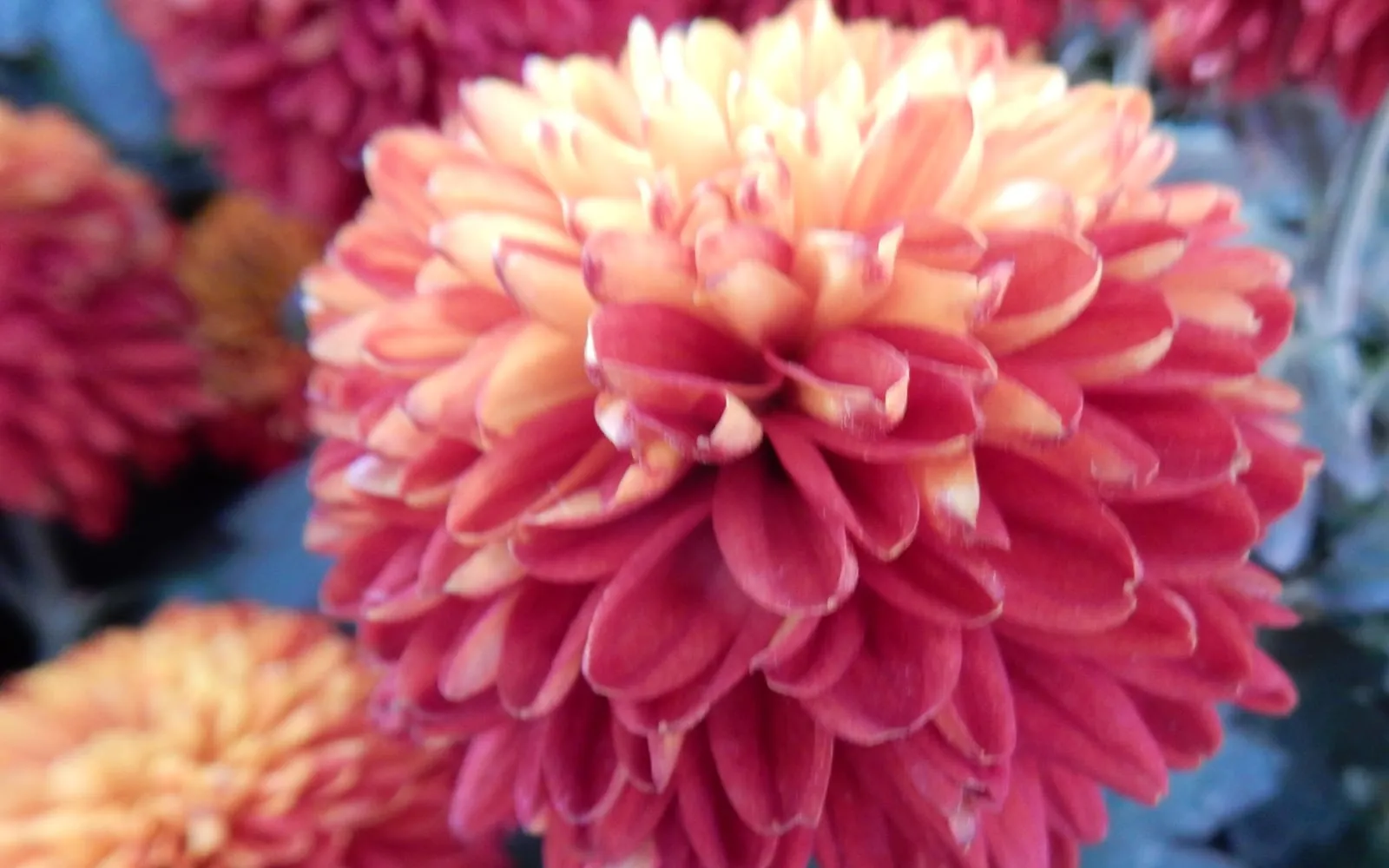
Colours cover white, yellow, bronze, orange, red, pink and purple, and green cultivars exist. There is no true blue.
Garden or hardy types form low mounds and flower profusely with many small to medium blooms. Exhibition and florist types are taller, need staking and disbudding, and are grown for a small number of very large flowers.
Where it is from
The florist’s chrysanthemum is a garden hybrid rather than a wild species, developed in China over millennia from several wild ancestors including Chrysanthemum indicum.
Those ancestors are plants of open hillsides and grassland in temperate East Asia, with hot wet summers and cold dry winters.
That origin explains the requirements. Full sun and good fertility through the growing season, and free-draining soil in winter. Cold is tolerated by the garden types; winter wet around the crown is not.
The plant reached Europe in the seventeenth century and became a British obsession in the Victorian period, when chrysanthemum societies and competitive showing produced most of the classification still used today.
How it grows
A herbaceous perennial that dies back to a woody base, called a stool, each winter and shoots again from the base in spring.
Bud set depends on day length. As nights lengthen past a critical point in late summer, the plant switches from making leaves to making flower buds. Nothing you do in spring changes the flowering date much.
Pinching builds the plant. When the shoots are about 20 cm tall in late spring, pinch out the growing tips. Repeat once more in early June if you want a very dense plant. Stop pinching by the end of June, since later pinching removes the shoots that would have carried flowers.
Disbudding is the opposite technique, used for large blooms. Leave the central bud on each stem and remove all the side buds around it, and the plant puts everything into one flower. Leave all the buds and you get a spray of smaller ones. Both are correct; they produce different things.
Propagation is from basal cuttings taken in spring from the new shoots on an overwintered stool. This is how named varieties are maintained, and it keeps stock vigorous.
Through the seasons
Spring is for taking cuttings from overwintered stools, planting out after the last frost, and starting to pinch once the plants are 20 cm tall.
Summer is growth. Pinch until late June, stake the tall varieties, feed fortnightly, water evenly, and disbud from August if you want large blooms.
Autumn is the flowering season, September through November until the frosts. Switch to high-potassium feed as buds form, and stop feeding once the flowers open to make them last.
Winter is overwintering. In mild areas on free-draining soil, garden types survive outdoors with a dry mulch over the crown. Elsewhere, cut the stems to 15 cm after flowering, lift the stools, and store them in barely damp compost in a cold frame or unheated greenhouse.
Care difficulty
Moderate, and the difficulty is the number of small jobs rather than any hard technique.
Pinching has a window. Do it from late May to late June and stop, since pinching in July removes flower buds.
Winter wet kills more chrysanthemums than cold does. Garden types are hardy to about -10 deg C in soil that drains, and they rot in soil that does not.
Knowing which type you have matters. A garden mum bought in a supermarket in September is usually a florist type forced into flower, and it is often not hardy at all, whatever the label implies.
Watering
Keep the soil evenly moist through the growing season. Chrysanthemums are thirsty plants with a lot of leaf.
Water at the base and keep it off the foliage and flowers. Wet petals are what petal blight and grey mould need, and overhead watering in autumn is the direct cause of both.
Reduce watering after flowering finishes, and keep stored stools barely moist through winter.
Container plants need daily attention in summer.
Mulch in spring to hold moisture and keep the roots cool.
Warning signs, diseases and pests
Chrysanthemum white rust is the serious disease. Pale yellow-green spots appear on the upper leaf surface with buff or white pustules directly beneath them, and it spreads rapidly in humid conditions. It is a notifiable disease in some jurisdictions and it is difficult to eradicate. Remove and destroy affected plants immediately, do not compost them, and do not take cuttings from infected stock. Buy from reputable suppliers.
Petal blight shows as small watery brown spots on the petals that spread until the flower rots, and it is driven by wet weather at flowering time. Remove affected blooms, improve air movement, and never water overhead.
Aphids cluster on shoot tips and buds and spread viruses. Chrysanthemums are particularly prone to virus, which shows as stunted distorted growth and broken flower colour, and there is no cure for it.
Capsid bug feeds on shoot tips leaving ragged holes and distorted growth.
Earwigs chew the petals overnight. Trap them in upturned straw-filled pots on canes.
Leggy floppy growth means the plant was never pinched, or is short of light.
Growing environment
Full sun, six hours a day as a minimum. Chrysanthemums in shade grow tall and lean and flower poorly.
Garden types are hardy to about -10 deg C provided the soil drains freely. Exhibition and florist types need frost-free overwintering under cover.
Soil should be fertile and free-draining, with compost worked in before planting. Winter waterlogging rots the stools, so raised beds or lifting are the answers on heavy ground.
Space at 45 cm apart. Crowded plants get petal blight and mildew.
Support is needed for anything over 60 cm. Put canes or a grow-through frame in early rather than trying to prop a flopping plant later.
Shelter from heavy autumn rain protects the flowers, and growers of exhibition blooms cover them for exactly this reason.
Feeding
A balanced liquid feed fortnightly from late spring, switching to a high-potassium feed such as tomato food once the buds appear in August.
Work compost or well-rotted manure into the bed before planting, since these are hungry plants.
Stop feeding once the flowers are fully open. Continuing to feed shortens the display.
Avoid heavy nitrogen late in the season, which gives soft growth that gets petal blight and frost damage.
Container plants depend entirely on liquid feed and need it fortnightly without fail.
Troubleshooting
Tall, leggy and falling over. Never pinched, or too little sun. Pinch the tips at 20 cm next spring and again in early June, then stop.
Pale spots on top of the leaves with buff pustules underneath. White rust. Destroy the plant immediately and do not compost it or take cuttings from it.
Brown watery spots spreading through the petals. Petal blight from wet weather. Remove affected flowers, improve airflow, and never water from above.
Bought in September, died over winter. It was probably a florist type forced into flower rather than a hardy garden variety. Overwinter under cover, or treat it as seasonal.
Stunted with mottled leaves and broken flower colour. Virus, spread by aphids. There is no cure. Destroy the plant and control aphids.
Flowers much smaller than expected. Not disbudded. Remove the side buds and leave the central one on each stem for large blooms.
Ragged holes in the petals overnight. Earwigs. Set upturned straw-filled pots on canes among the plants and empty them each morning.
Rash on the arms after cutting them. Contact dermatitis, which is common with this plant. Wear gloves and long sleeves.