
Outdoor plant
Russell lupin
Lupinus polyphyllus
Also known as Garden lupin, Large-leaved lupin, Bigleaf lupine
How to grow lupin, Lupinus polyphyllus. Cutting back for a second flush, why lupin aphid arrived and what it does, and the seeds that poison livestock.
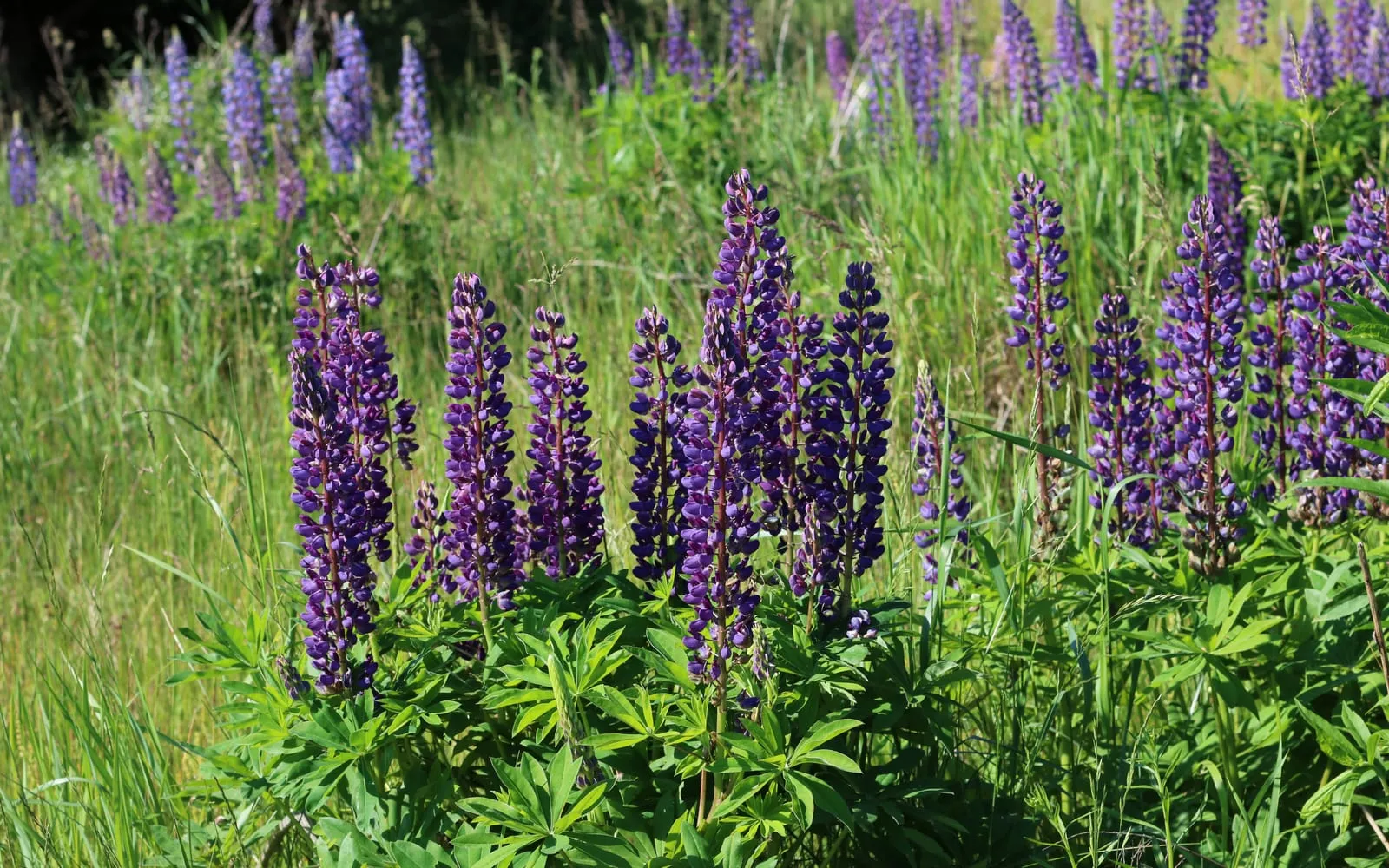
At a glance
- Difficulty
- Moderate
- Water
- In dry spells during the growing season
- Light
- Full sun, and it flowers poorly in shade
- Temperature
- Fully hardy, and the crown rots in wet winter soil
- Hardiness
- USDA 4-8, RHS H7, hardy to -30 C
- Type
- Herbaceous perennial, short lived and dying back each winter
- Height
- 90-120 cm
- Native to
- Western North America, from British Columbia south to California
- Best month
- June in the Northern Hemisphere, December in the Southern Hemisphere
It fixes its own nitrogen and wants poor, slightly acid, free-draining soil, so a rich fed border gives soft growth and a short life. Lupin aphid, a large grey aphid from North America, builds into dense colonies and can kill a plant in a fortnight. Russell lupins have escaped on a large scale into the Mackenzie Basin in New Zealand and across Scandinavia and Tasmania, where they change river-bed habitats.
Hardiness zones describe winter cold alone. Summer heat, humidity, rainfall and the length of the growing season decide as much, so treat the range as the outer limit rather than as a recommendation.
Every month named in this guide is for the temperate Northern Hemisphere. If you garden in the Southern Hemisphere, shift each one by six months, so June becomes December. Closer to the equator the wet and dry seasons matter more than the calendar, and the shift stops being a useful guide.
Toxic if eaten
- Do not eat
- The seeds above all, and the whole plant to a lesser degree
- Harm from
- Eating it
- Affects
- People, cats, dogs and horses
Lupins contain quinolizidine alkaloids including lupanine and sparteine, concentrated in the seeds. Eating them causes dry mouth, dilated pupils, confusion, nausea, tremor, an irregular heartbeat and in serious cases breathing difficulty. The seeds are the hazard that matters in a garden, because they sit in pods at eye level for a small child and look like beans. The RHS lists lupin as harmful if eaten. Livestock poisoning is well documented, and sheep and cattle eating seed-bearing lupins have died, while a separate condition called crooked calf disease results from pregnant cows grazing certain lupin species at a particular stage. Horses are also affected. Never dispose of lupin plants or seed heads where animals can reach them. The edible lupin sold as a food in Mediterranean countries comes from low-alkaloid cultivars of different species and is soaked repeatedly before eating, and garden lupins are not a substitute. Deadhead before the pods set where children use the garden, which removes the problem and improves the plant at the same time.
Sources: RHS potentially harmful garden plants, ASPCA toxic and non-toxic plants
About
Lupins give the biggest return for the least effort of any tall perennial, and they do not last.
A plant put in this spring will flower next June in dense spikes 40 cm long, in colours running from clean white through yellow, apricot, pink, red, blue and purple, often two tones in the same spike. Then it will do it again for three or four years and start going woody and thin, and it wants replacing.
Treat them as a short-term plant rather than a permanent one and they stop being disappointing. They are cheap, they come readily from seed, and a fresh batch every few years costs almost nothing.
Cutting back matters more than feeding. Take the spikes off as soon as they fade and most plants throw a second, smaller flush in late summer.
Lupins fix their own nitrogen through root nodules, which is why they grow on poor thin soil and why feeding them with nitrogen is pointless.
The one modern problem is lupin aphid, a large grey-white American aphid that arrived in Britain in 1981 and has been the main cause of lupin failure since. It builds up on the spikes fast enough to kill a plant in a fortnight.
Appearance and character
A herbaceous perennial reaching 90 to 120 cm in flower, forming a clump that dies back to a woody crown each winter.
Leaves are the recognisable part. Palmate, held on long stalks, with nine to seventeen narrow leaflets radiating from a central point like the spokes of a wheel, in a soft grey-green. They hold water droplets in the centre after rain.
Flower spikes rise well above the foliage in June, dense, upright and unbranched, 30 to 50 cm long, made of many pea-shaped florets opening from the bottom upwards.
Colours in the Russell strain are wide, running through white, cream, yellow, apricot, salmon, pink, red, blue, purple and bicolours.
Scent is present and light, described as peppery.
Seed pods follow, hairy, flattened and pea-like, splitting explosively when dry to scatter the seed.
The crown goes woody and the clump opens out from the centre as the plant ages.
Where it is from
Western North America, from British Columbia and Washington south into California, growing in damp meadows, along stream banks and on roadsides.
It reached Britain in 1826 through David Douglas, the Scottish collector who also introduced the Douglas fir.
The garden lupin as we know it is the work of one man. George Russell, a jobbing gardener in York, spent about twenty-five years from 1911 selecting and reselecting lupins on his allotment, discarding ruthlessly and never revealing his method, and released the Russell strain in 1937 when he was in his seventies. Every named garden lupin descends from that work.
The genus fixes atmospheric nitrogen through bacteria in root nodules, which is why lupins colonise poor ground and why they are sown as a green manure.
Lupinus polyphyllus has naturalised widely in Britain, particularly along railway embankments and in Scotland, and it is invasive in Scandinavia and New Zealand where it displaces native meadow flora.
Lupin aphid, Macrosiphum albifrons, followed the plant from North America and reached Britain in 1981.
How it grows
Plant in spring, or sow seed in spring or early autumn.
Choose full sun. Lupins in shade grow tall, flop and flower poorly.
Light, free-draining, slightly acid soil suits them best. They grow on sand and on poor ground without complaint, and they yellow on chalk and rot on heavy wet clay.
Improve drainage on clay with grit, or grow them in a raised bed.
Protect the emerging shoots from slugs and snails in March and April, which is the same job the delphiniums need and at the same moment.
Cut each spike off as soon as the flowers fade, taking it back to a leaf. This stops seed forming, keeps the plant tidy, removes the poisonous pods and usually triggers a second flush in August or September.
Cut the whole plant to the ground in late autumn.
Do not feed with nitrogen. Lupins make their own and extra nitrogen produces soft leafy growth with fewer flowers.
Stake tall cultivars in an exposed position, though most Russell lupins stand without support in shelter.
Sow seed in spring, soaking or nicking the hard coat first to speed germination. Seedlings flower in their second year, and often in the first if sown early.
Take basal cuttings in spring from a named cultivar, since seed from a named plant does not come true and reverts towards blue and purple over generations.
Replace plants every four or five years. Dividing an old woody crown rarely works.
Watch for lupin aphid from May and act early.
Through the seasons
Winter is dormant, and the crown risks rotting in wet soil rather than freezing.
Spring brings the shoots through in March, which is slug season, and this is when to sow or plant.
Summer flowers in June, and the spikes are cut back straight afterwards for a second flush. Lupin aphid is at its worst in this period.
Autumn may give a second flowering, and the plant is cut down once it dies back.
Care difficulty
Moderate. Nothing about growing a lupin is complicated and several things reduce the result.
Slugs take the spring shoots. Lupin aphid can kill a plant in two weeks in June. Chalk causes yellowing and heavy wet clay rots the crown. The plants are short-lived regardless.
Set against that, they need no feeding, they grow on poor soil, they come easily from seed and they flower within a year or two of sowing.
The realistic approach is to grow them well for four or five years and replace them rather than trying to keep a clump going.
Watering
Water in dry spells through spring and early summer while the spikes are forming.
Established plants on reasonable soil manage on rainfall in a temperate climate, and they tolerate drought better than delphiniums.
Water at the base rather than over the foliage, which reduces mildew.
Sharp drainage in winter matters more than summer watering. A lupin crown sitting in cold wet clay through January will not reappear.
Mulch lightly in spring with compost, keeping it off the crown.
Warning signs, diseases and pests
Dense colonies of large grey-white waxy aphids covering the flower spikes and stems is lupin aphid. They are much bigger than ordinary greenfly and a heavy infestation kills a plant within a fortnight. Check from May, wash them off with a jet of water, cut off and bag badly infested spikes, and encourage ladybirds and hoverflies. Act early rather than waiting.
Shoots eaten to stumps in spring is slugs and snails. Protect the crown from March.
Yellowing between the veins is chlorosis on chalky soil. Lupins want acid to neutral ground and there is no lasting fix on chalk.
White powdery coating on the leaves in late summer is powdery mildew, which follows dry roots. Water and mulch, and cut the plant back.
The crown failing to reappear in spring is rot from winter wet. Improve drainage or grow them in raised beds.
Brown spots and blotches on the leaves is a fungal leaf spot and is cosmetic.
Flowers reverting to blue and purple over several years means the plant has seeded itself and the seedlings have replaced the named cultivars. Deadhead to stop it.
Fewer and thinner spikes each year on a woody old crown is age. Replace the plant.
Growing environment
Full sun. Shade gives tall floppy growth and poor flowering.
Light, free-draining, slightly acid to neutral soil. Sand and poor ground suit them. Avoid chalk and heavy wet clay.
Fully hardy in terms of cold, and vulnerable to winter wet at the crown.
Allow 45 to 60 cm per plant, and group three or five together for a proper display.
It suits a herbaceous border, a cottage garden, a gravel garden, a cutting bed or a sunny bank.
Do not plant them where livestock can reach over a fence, and never throw seed heads into a field.
Deadhead before the pods set where small children use the garden, since the seeds are the poisonous part and the pods look like something to pick.
Their wildlife value is good. Bumblebees work the spikes heavily, and short-tongued species force the keel open to reach the pollen.
Grow them with plants that fill the gap after June. Hardy geranium, nepeta, achillea and late perennials all work, and lupin foliage is worth cutting back hard once it tires.
Feeding
None needed. Lupins fix their own nitrogen through root nodules and grow well on poor soil.
Adding nitrogen produces soft leafy growth, fewer flowers and more aphids.
Apply a potash-rich feed such as sulphate of potash in spring if flowering is poor on very impoverished soil.
Mulch lightly with compost in spring, keeping it clear of the crown.
Avoid lime and avoid mushroom compost, both of which push the soil in the wrong direction.
Troubleshooting
Large grey-white insects have covered the flower spikes. Lupin aphid, which arrived in Britain in 1981 and can kill a plant in a fortnight. Wash them off with a jet of water, cut off and bag heavily infested spikes, and check the plants weekly from May.
Will it flower twice? Usually. Cut each spike back to a leaf as soon as the flowers fade and most plants produce a second smaller flush in August or September.
The shoots were eaten to nothing in spring. Slugs and snails. Protect the crown from March before the shoots break the surface.
My lupins have all turned blue and purple. They have seeded themselves and the seedlings have taken over from the named cultivars. Deadhead to stop it, and propagate named plants from basal cuttings rather than seed.
The leaves are yellow. Chlorosis on chalky soil. Lupins want acid to neutral ground and there is no permanent fix on chalk. Grow them in a raised bed of neutral soil.
Should I feed them? No. They fix their own nitrogen and feeding gives leaf rather than flower. Use a potash feed only if flowering is poor on very poor soil.
How long do they live? Four or five years, and they go woody and thin after that. Replace them rather than dividing, since old crowns divide badly.
Are the seeds poisonous? Yes. Lupin seeds contain quinolizidine alkaloids and are the most toxic part, and they look like beans in a pod at child height. Deadhead before the pods set, and keep them away from livestock.
Can I grow them from seed? Easily. Nick or soak the hard seed coat, sow in spring, and expect flowers in the second year. Seed from named plants does not come true.