
Edible
Morello cherry
Prunus cerasus
Also known as Sour cherry, Acid cherry, Amarelle
How to grow morello cherry, Prunus cerasus. The one fruit tree for a north wall, why it needs different pruning from a sweet cherry, and netting against birds.
At a glance
- Difficulty
- Moderate
- Water
- Regular in dry spells, and essential against a wall
- Light
- Full sun to full shade, and it is the standard tree for a north wall
- Temperature
- Fully hardy, and it flowers later than sweet cherry
- Hardiness
- USDA 4-8, RHS H6, hardy to -30 C
- Type
- Deciduous tree, cropping for twenty years or more
- Height
- 3-5 m on a semi-dwarfing rootstock
- Native to
- South-west Asia and eastern Europe, from a natural cross of two wild cherries
- Best month
- July in the Northern Hemisphere, January in the Southern Hemisphere
Sour cherry flowers a fortnight after sweet cherry, fruits alone without a partner, and crops on a north wall in shade that no other tree fruit would tolerate. Its chill requirement is high at 1000 to 1200 hours, so warm winters suit it least of all the cherries.
Hardiness zones describe winter cold alone. Summer heat, humidity, rainfall and the length of the growing season decide as much, so treat the range as the outer limit rather than as a recommendation.
Every month named in this guide is for the temperate Northern Hemisphere. If you garden in the Southern Hemisphere, shift each one by six months, so July becomes January. Closer to the equator the wet and dry seasons matter more than the calendar, and the shift stops being a useful guide.
Toxic if eaten
- Safe to eat
- The flesh of the ripe fruit, cooked
- Do not eat
- The stones, the leaves and the twigs
- Harm from
- Eating it
- Affects
- People, cats, dogs and horses
Morello cherry carries the standard cautions of the genus Prunus. The flesh of the fruit is safe, and it is too sour to eat raw in quantity, which is what it is for. The stones contain amygdalin, a cyanogenic glycoside releasing cyanide when crushed and chewed, so stones should never be eaten or cracked. A swallowed stone is a choking and obstruction risk rather than a poisoning one, and it matters most for dogs, where a cherry stone can lodge in the gut. The ASPCA lists Prunus species as toxic to cats, dogs and horses on the basis of the stones and foliage. Leaves and twigs contain cyanogenic compounds and wilted foliage releases more cyanide than fresh, which is the classic route to livestock poisoning, so cherry prunings must never be thrown where horses or cattle can reach them. The RHS lists Prunus as harmful if eaten. When cooking, stone the fruit rather than leaving the stones in, or at least warn anybody eating it.
Sources: RHS potentially harmful garden plants, ASPCA toxic and non-toxic plants
About
Morello cherry is the one fruit tree that crops properly on a north-facing wall, which is why it deserves to be planted far more often than it is.
Almost every other fruit wants sun. A north wall in a temperate garden is usually written off, and a fan-trained morello on it produces a heavy crop of cherries every July. It fruits in full shade, it is fully hardy, it is self-fertile so one tree is enough, and it flowers later than sweet cherry so it misses more of the frost.
The fruit is sour. That is the point rather than a failing, since morellos are for cooking, for pies and jam, for bottling, and for the cherry brandy and kirsch traditions of northern Europe. They are too acid to eat raw in quantity and they are excellent cooked.
The one thing that has to be understood is the pruning. Morello cherries fruit almost entirely on wood made the previous summer, where sweet cherries fruit on older spurs. Pruning a morello like a sweet cherry, by shortening back to spurs, removes next year’s crop completely. It needs replacement pruning instead, in the same way as a peach.
Birds are the other issue, and a netted tree is the difference between a crop and none.
Appearance and character
A deciduous tree reaching 3 to 5 m on a semi-dwarfing rootstock, naturally rounded and often slightly weeping, and trained flat as a fan against a wall in most gardens.
Leaves are oval to obovate, 5 to 8 cm long, glossy dark green, toothed, and smaller and darker than those of a sweet cherry.
Blossom opens in April, later than sweet cherry, 2 to 3 cm across, pure white in clusters along the previous year’s wood.
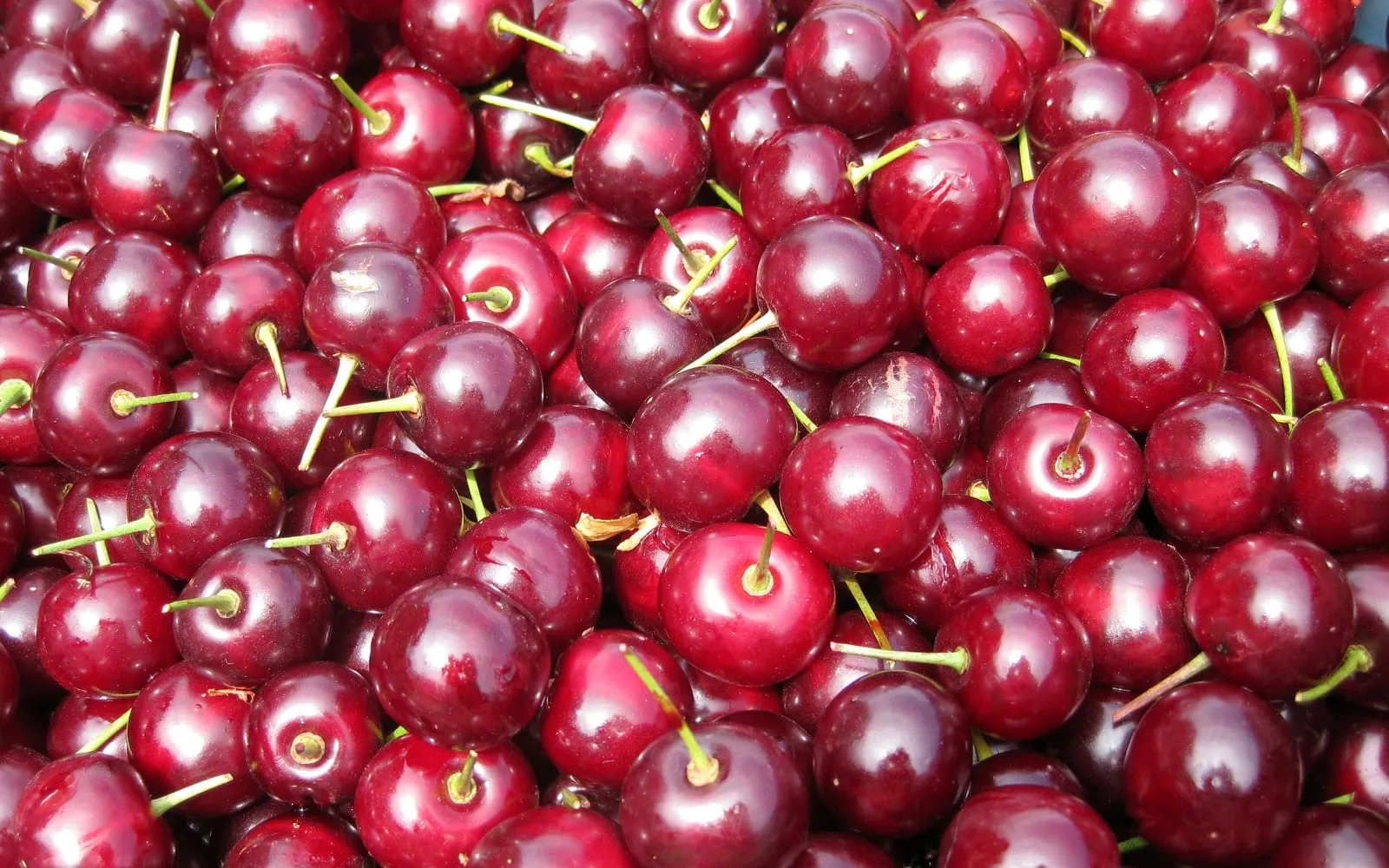
Fruit ripens in July and August, round, 1.5 to 2.5 cm across, dark red to almost black in morello types and bright red in amarelle types, with red juice and a very acid flavour.
The fruit hangs on the tree well and can be left until fully dark for a slightly less sour result.
Growth is naturally rather pendulous and twiggy, and the tree fruits on one-year-old wood.
‘Morello’ is the standard dark-fruited cultivar and is self-fertile. ‘Nabella’ is a modern alternative with a similar habit.
Rootstocks control size. Colt gives a tree of 4 to 5 m and Gisela 5 is dwarfing, giving 2.5 to 3 m and suiting a small garden or a container.
Where it is from
South-west Asia and eastern Europe, and the species is a natural hybrid between the wild sweet cherry, Prunus avium, and the ground cherry, Prunus fruticosa.
It has been cultivated since classical times, and the Romans distinguished sour from sweet cherries.
Morello is a name of Italian origin, and the type reached Britain by the sixteenth century.
The distinction between morello and amarelle types is old. Morellos have dark red flesh and red juice, and amarelles have pale flesh and clear juice.
Sour cherries are central to the food of central and eastern Europe, appearing in Hungarian soup, Polish preserves, German cakes and the kirsch of the Black Forest and Alsace.
The Kentish cherry orchards grew both types, and the sour cherry has always been the minor partner despite being far easier to grow.
Turkey is now the largest producer.
The tolerance of shade, which is the plant’s most useful garden characteristic, comes from its origin as an understorey and woodland-edge species.
How it grows
Plant a fan-trained tree in autumn or early spring, 20 to 25 cm out from the wall, leaning slightly towards it.
A north or east-facing wall is the classic position, and a morello also crops well in sun, where the fruit ripens a little earlier.
Fix horizontal wires 15 cm apart and tie the fan ribs in.
Choose deep, moisture-retentive, free-draining soil, slightly alkaline for preference, and improve it with compost at planting.
Choose the rootstock to fit the space. Gisela 5 for a small garden or a container, Colt for a full-sized fan.
Morello is self-fertile, so one tree crops on its own.
Net the tree before the fruit colours. Birds strip a cherry tree in a day, and this is the commonest reason a home cherry crop never reaches the kitchen. A fan against a wall is far easier to net than a free-standing tree, which is another argument for wall training.
Water regularly, since the soil at the foot of a wall is in permanent rain shadow.
Mulch every spring with compost or well-rotted manure.
Prune in spring and summer, never in winter. Prunus is susceptible to silver leaf and bacterial canker, both of which enter winter wounds.
Prune on the replacement system. Morello fruits on wood made the previous summer. Each spring, select a replacement shoot near the base of every shoot that is about to fruit, and after harvest cut the fruited shoot back to that replacement. Tie the new shoot in.
Do not shorten shoots back to spurs, which is how sweet cherries are pruned and which removes a morello’s entire crop.
Thin the new shoots in summer where they are crowded, keeping them roughly 10 cm apart along the fan.
Harvest in July and August by cutting the stalks with scissors rather than pulling, which avoids tearing the spur and reduces brown rot.
Expect a tree to crop for twenty years or more.
Through the seasons
Winter the tree is dormant and should not be pruned. This is planting season.
Spring flowers in April, later than sweet cherry, and pruning starts once growth begins.
Summer swells and ripens the fruit through July and August, netting goes on before the fruit colours, and the fruited shoots are cut back to their replacements after harvest.
Autumn the leaves fall, and this is the other planting season.
Care difficulty
Moderate, and easier than any other stone fruit in a temperate garden.
It is fully hardy, self-fertile, tolerant of shade, flowers late enough to miss much of the frost, and needs no rain shelter or hand pollination.
The two things to get right are the pruning system and the netting.
Replacement pruning is more involved than spur pruning and it is straightforward once understood, and it has to be done in the growing season rather than in winter.
Netting has to go on before the fruit colours rather than after somebody notices the birds.
Bacterial canker is the disease that shortens the life of a cherry tree, and pruning only in the growing season is most of the prevention.
Watering
Water regularly in dry spells, particularly for the first three years and always against a wall.
The strip at the foot of a wall gets almost no rain, so a wall-trained morello needs watering even in a wet summer.
Give a thorough weekly soak in dry weather rather than a daily sprinkle.
Water steadily as the fruit swells, since fluctuation causes splitting.
Mulch every spring to conserve moisture, keeping it clear of the trunk.
Warning signs, diseases and pests
The whole crop disappearing overnight as it colours is birds. Net the tree before the fruit starts to turn.
Sunken oozing patches on the bark with amber gum, dying shoots and small brown spots with holes in the leaves is bacterial canker, which is the main killer of cherry trees. Cut out affected wood in summer, prune only in the growing season, and remove a badly affected branch entirely.
Silvery sheen on the foliage with a dark stain inside cut wood is silver leaf. Prune only in the growing season.
Fruit rotting on the tree with concentric rings of buff pustules is brown rot. Remove and destroy affected fruit and any mummified fruit hanging on over winter, and cut the stalks rather than pulling the fruit.
Dense black colonies of aphids curling the shoot tips in spring is cherry blackfly. Squash the colonies, remove badly curled tips, and encourage predators. It is disfiguring rather than serious.
Fruit splitting as it ripens is heavy rain or irregular watering after a dry spell.
Little or no fruit on a tree that flowers well is usually pruning as if it were a sweet cherry, which removes the one-year-old wood the crop comes from. Change to replacement pruning.
Gum oozing from the trunk is gummosis, following stress, damage or canker.
Growing environment
Full sun to full shade. It is the standard fruit tree for a north-facing wall and it crops well there.
Deep, moisture-retentive, free-draining soil, slightly alkaline for preference.
Fully hardy, and it flowers in April, later than sweet cherry, which puts it beyond much of the frost risk.
Allow 3.5 to 4.5 m of wall for a fan on Colt rootstock and 2.5 to 3 m on Gisela 5.
It suits a north or east-facing wall, a shady boundary, a fence, a large container on a dwarfing rootstock, or an open position as a small tree.
Grow it where nothing else fruits. A north wall is dead space in most gardens and a morello turns it into a crop.
Choose ‘Morello’ for the standard dark sour cherry, which is self-fertile and widely available.
Net it, and plan how you will do that before you plant it.
Feeding
Feed in early spring with a general balanced fertiliser.
Mulch every spring with compost or well-rotted manure, keeping it clear of the trunk.
Avoid high-nitrogen feeds, which produce soft growth that bacterial canker and blackfly both prefer.
A high-potash feed in early summer supports fruiting on a tree that is cropping heavily.
Container-grown trees need liquid feeding through the growing season and repotting every two or three years.
Troubleshooting
Will it fruit on a north wall? Yes, and it is the standard tree for that position. The fruit ripens a little later than it would in sun and the crop is worth having.
Do I need two trees? No. ‘Morello’ is self-fertile and one tree crops on its own.
It flowers well and hardly fruits. Usually pruning it like a sweet cherry. Morellos fruit on wood made the previous summer, so shortening shoots back to spurs removes the crop. Use replacement pruning instead.
How do I prune it? In spring and summer, never in winter. Select a replacement shoot near the base of every shoot that is about to fruit, and after harvest cut the fruited shoot back to that replacement and tie the new one in.
The birds took the lot. They always will. Net the tree before the fruit starts to colour, which is far easier on a wall-trained fan than a free-standing tree.
Can I eat them raw? They are very sour and edible. Morellos are a cooking cherry, for pies, jam, bottling and cherry brandy, and leaving them on the tree until fully dark makes them a little less acid.
Why not in winter? Cherries are susceptible to silver leaf and bacterial canker, both of which enter pruning wounds in winter when the tree cannot heal them. Prune in the growing season.
There are black aphids all over the shoot tips. Cherry blackfly. Squash the colonies and remove badly curled tips. It is disfiguring rather than damaging.
Can I grow one in a container? Yes, on Gisela 5 rootstock, which keeps it to 2.5 to 3 m and makes netting simple.
Morello cherry problem guides
Not sure what is wrong? See the common vegetable pests guide.