
Disorder
Drought stress
Also called Underwatering, Water stress, Wilting
A wilting plant may be dry or drowning, and the treatments are opposite. Check the compost or soil before watering, and soak dry rootballs thoroughly enough for water to reach the roots.
At a glance
- Type
- Disorder
- Cause
- Growing conditions
- Severity
- Can kill the plant
- Affects
- Houseplants, Garden plants, Herbs and edibles
- Active
- May to September
What you are seeing
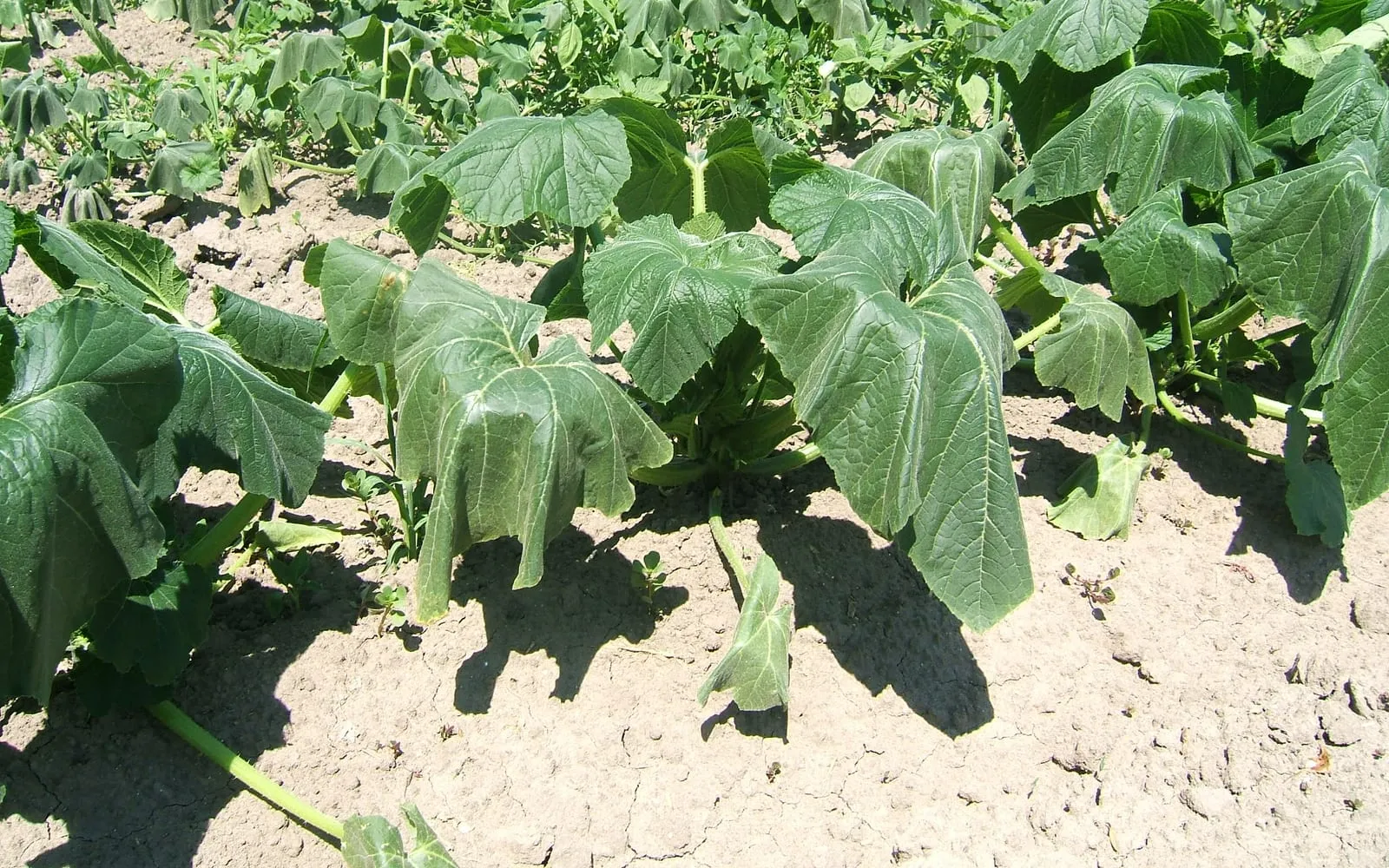
- Wilting that recovers overnight or within an hour of watering
- Compost light in the hand, shrunk away from the side of the pot, and pale on the surface
- Leaves losing their gloss and taking on a dull greyish cast before they wilt
- Brown crisp edges and tips, with the brown sharply divided from the green
- Lower leaves yellowing and dropping while the top of the plant looks well
- Flowers and fruit dropped before they develop
- Premature autumn colour and leaf fall on shrubs and trees in August
- Footprints staying visible on a lawn after you have walked across it
Before you treat anything
Water butts and open containers are a drowning risk to small children and a trap for wildlife. Keep butts lidded and put a plank or a ramp into any open water so a hedgehog can get out.
The test that comes first
A wilting plant may be short of water or it may be drowning, and the two look identical from above. Roots killed by waterlogging cannot take water up, so the leaves go slack while the compost is sodden.
Put a finger into the compost to the second knuckle before you do anything else. Dry, light, shrunk away from the side of the pot is this page. Wet, heavy and sour-smelling is root rot, and watering it again will finish the plant.
That one check takes three seconds and it decides which of two opposite treatments you apply.
What wilting is
Wilting is a control mechanism rather than damage. A plant holds its shape by water pressure inside its cells, and when the roots cannot supply enough, the cells lose pressure and the tissue goes limp. At the same time the pores on the leaf surface close to stop losing more.
A plant that has wilted mildly and recovers by morning has lost a day’s growth and nothing else. Photosynthesis stops while the pores are shut, so a plant that wilts every hot afternoon grows slowly all summer without ever looking obviously ill.
Severe or repeated wilting is a different matter. Air bubbles form in the water columns running up the stem and break them, so those pathways stop working permanently. Fine roots die back. That is why a plant allowed to dry to collapse three or four times stops bouncing back the way it did the first time.
Why a watered pot can still be dry
Compost that has dried hard becomes water-repellent, and it shrinks away from the sides of the pot as it goes. Pour a can over the top and the water finds the gap, runs straight down the inside of the pot and out of the drainage holes.
The pot then feels heavier, water has clearly come through, and the root ball in the middle is still bone dry. People kill plants this way while watering them diligently.
The fix is immersion. Stand the pot in a bucket of water up to the rim and wait until the bubbles stop, which usually takes twenty to thirty minutes. Then let it drain, loosen the compost surface, and press it back against the sides of the pot so the channel closes.
Where the damage shows
Leaf edges and tips go brown and crisp first, because they are furthest from the water supply, and the boundary between brown and green is sharp. Older leaves yellow and drop as the plant sacrifices them to keep the growing tip supplied. Flowers and small fruit are shed for the same reason.
Outdoors, watch for premature autumn colour. A birch, a maple or a magnolia turning in early August has been short of water since June, and a shrub that drops its leaves early is telling you about a drought that already happened.
Some effects arrive a year late. Camellias and rhododendrons form next year’s flower buds in mid to late summer, so a dry August produces a poor spring, and the owner looks for a cause in March that occurred seven months earlier.
What to do about it
Water fewer times and much more thoroughly. Give a shrub ten litres delivered slowly to the root zone rather than a can waved over a border. That draws the roots down to where the moisture lasts, which is what carries the plant through the next dry spell without you.
Water the soil rather than the leaves, and put a mulch on afterwards while the ground is wet.
For containers, learn the weight. Lift the pot when it has just drained and again when it is dry, and after a week you will know what your plants need better than any moisture meter or schedule can tell you.
Keep watering anything planted in the last two years. A newly planted tree has a root ball no bigger than the pot it came in and a canopy that transpires like a tree, and the two-year rule is what separates the trees that establish from the ones that die in their second July.
Two things worth ignoring
Watering in sunshine does not scorch leaves. The idea that droplets act as lenses and burn the foliage has been tested and does not hold on flat leaves. It does waste water to evaporation, which is the real reason to water early or late.
Little and often is the wrong instruction outdoors. It produces a shallow root system living in the top few centimetres of soil, which is the part that dries first, so the plant becomes more dependent on you each season rather than less.
What it gets mistaken for
Root rot causes the same wilt with wet compost, blackened soft roots and a sour smell. Test the compost before deciding.
Nutrient shortage yellows the older leaves while the plant stays turgid and the compost is moist. Feeding a plant that is short of water makes things worse, since fertiliser salts draw water back out of the roots.
Leaf scorch from sun or wind marks the exposed side of a plant and the leaves facing the light, in patches rather than uniformly at the leaf edges.
Vine weevil grubs and root rot both remove a container plant’s ability to take up water, and both look like drought. Tip the pot out and look before you conclude anything.
Hydrangeas and courgettes wilt every hot afternoon regardless of how well watered they are, because their leaves lose water faster than any root system can supply it at two o’clock. Judge those two in the early morning, and if the plant is upright at seven it does not need more water.
What to do, in order
Start here
Prevention, and the changes that stop the problem returning. Most of these pages should end at this tier.
- Water thoroughly and less often
- Outdoors, a good soaking once or twice a week draws roots downwards, where the moisture lasts. A daily sprinkle wets the top two centimetres, keeps the roots up there with it, and leaves the plant more vulnerable than before. Ten litres round a shrub beats a can over the whole border.
- Learn what the pot weighs
- Lift a container when it has just been watered and again when it is dry, and the difference is unmistakable. That is a better guide than any schedule, any moisture meter and any advice about watering twice a week, because it measures the actual plant in the actual week.
- Mulch after watering, not before
- Five centimetres of compost or bark over damp soil keeps the moisture in. The same mulch over dry soil keeps rain out. Mulch in spring while the ground is still wet, and top it up after a thorough soaking rather than during a drought.
- Plant in autumn
- A tree or shrub planted in October has six months of cool wet weather to put roots out before it meets its first summer. The same plant put in during May is asking to be watered every few days for its first year.
- Keep watering new plantings for two years
- This is what kills most new trees and shrubs, and almost nobody is told it. A newly planted tree has a root ball the size of its pot and a canopy the size of a tree, and it needs watering through dry spells for two full growing seasons before it can look after itself.
- Match the plant to the site
- Hydrangeas, ferns, astilbes and hostas want moisture and will always be a struggle at the foot of a wall. Lavender, rosemary, cistus, sedum and most silver-leaved plants prefer it dry. Choosing correctly removes the problem instead of managing it.
- Group houseplants by what they need
- A shelf holding a maidenhair fern, a snake plant and a calathea cannot be watered on one routine. Put the thirsty ones together, away from radiators, and the succulents somewhere else, and the whole collection becomes possible to look after.
Then reach for a barrier
Netting, hand removal and water. Nothing here harms anything except the target.
- Immerse a dried-out pot
- Stand it in a bucket of water up to the rim and leave it until the bubbles stop, usually twenty to thirty minutes. Then drain it. This is the only reliable way to rewet a root ball that has dried hard, and pouring water on the top will not do it.
- Break up the surface and close the gap
- Dry compost shrinks away from the side of the pot, and water then runs straight down that channel and out of the bottom without touching the roots. Loosen the surface, press the compost back against the sides, and water slowly.
- Take the demand off the plant
- A plant that has been badly dried out cannot supply a full head of foliage, flowers and fruit while it recovers. Removing flower buds and some of the leaves, and standing it out of direct sun and wind for a week, gives it a chance to catch up.
- Sink a basin or a pipe by a new tree
- A shallow saucer of soil around the trunk, or a length of perforated pipe set beside the root ball at planting, delivers water to the roots rather than to the surface where it evaporates. On a young tree this halves the work.
- Move pots out of the wind
- Wind dries a plant faster than sun does, because it strips away the humid boundary layer at the leaf surface. A container on an exposed balcony can need twice the water of the same plant in a sheltered corner.
Plants affected
Guides that name it among the problems to watch for. The list is the plants it is characteristic of rather than everything it will feed on.
A common tomato problem
This is one of the problems tomato growers meet most often. See it alongside the other pests, diseases and disorders on the tomato guide.
Common tomato problems