
Outdoor plant
Hosta
Hosta sieboldiana
Also known as Plantain lily, Siebold's plantain lily, Funkia
How to grow hosta, Hosta sieboldiana. Why a thick blue leaf survives slugs when a thin green one does not, growing them in pots, dividing in spring and the shade they want.
At a glance
- Difficulty
- Easy
- Water
- Weekly in dry spells, and far more often in a pot
- Light
- Partial to full shade, and morning sun only in the north
- Temperature
- Fully hardy, and it needs a cold winter to break dormancy
- Hardiness
- USDA 3-8, RHS H7, hardy to -35 C
- Type
- Herbaceous perennial, dying back to nothing each winter
- Height
- 60-100 cm in leaf, and taller in flower
- Native to
- Japan, in damp woodland and on shaded mountain slopes
- Best month
- April in the Northern Hemisphere, October in the Southern Hemisphere
A cold winter is a requirement rather than a risk, and hostas need a proper dormancy, so they do badly in zone 9 and warmer. Sun tolerance follows leaf colour. Yellow-leaved cultivars take more sun, blue-leaved ones lose their waxy bloom in it and need shade. Slugs and snails are the practical limit everywhere, and deer eat them to the ground where deer are present.
Hardiness zones describe winter cold alone. Summer heat, humidity, rainfall and the length of the growing season decide as much, so treat the range as the outer limit rather than as a recommendation.
Every month named in this guide is for the temperate Northern Hemisphere. If you garden in the Southern Hemisphere, shift each one by six months, so April becomes October. Closer to the equator the wet and dry seasons matter more than the calendar, and the shift stops being a useful guide.
Toxic to pets if eaten
- Do not eat
- Every part, and the leaves most of all because they are what gets eaten
- Harm from
- Eating it
- Affects
- Cats, dogs and horses
Hosta is listed by the ASPCA as toxic to cats, dogs and horses. The compounds responsible are saponins, which irritate the gut lining, and the usual result is vomiting, diarrhoea and depression rather than anything worse. Dogs are the ones that get into trouble, because a hosta is at nose height in a border and the leaves are soft enough to chew. Recovery is normally complete once the animal stops eating it, though a dog that has stripped several plants should see a vet for fluids. Hostas are not recorded as harmful to people and the young furled shoots are eaten as a vegetable in Japan under the name urui, which explains why the plant is sometimes described as edible in one place and toxic in another. Treat that as a specialist practice rather than an invitation, since the RHS does not list hosta as a food plant and the pet toxicity is well documented.
Sources: ASPCA toxic and non-toxic plants, RHS potentially harmful garden plants
About
Hosta is grown for its leaves. The flowers are a modest bonus on tall stems in summer, and nobody plants one for them.
It solves a problem most plants make worse. Dry shade under a tree, a north-facing border, the strip beside a fence that never sees sun, all of these defeat most perennials and suit a hosta.
The plant also has a reputation for being eaten alive by slugs, which is true of some hostas and much less true of others. Hosta sieboldiana and its selections carry thick, waxy, heavily corrugated leaves, and a slug makes slow work of them. Thin, glossy, bright green hostas are the ones reduced to lace by June. Choosing the right plant does more than any amount of slug control afterwards.
Appearance and character
A herbaceous perennial forming a dense mound 60 to 100 cm across, dying back to bare soil each winter and reappearing as tight furled spears in April.
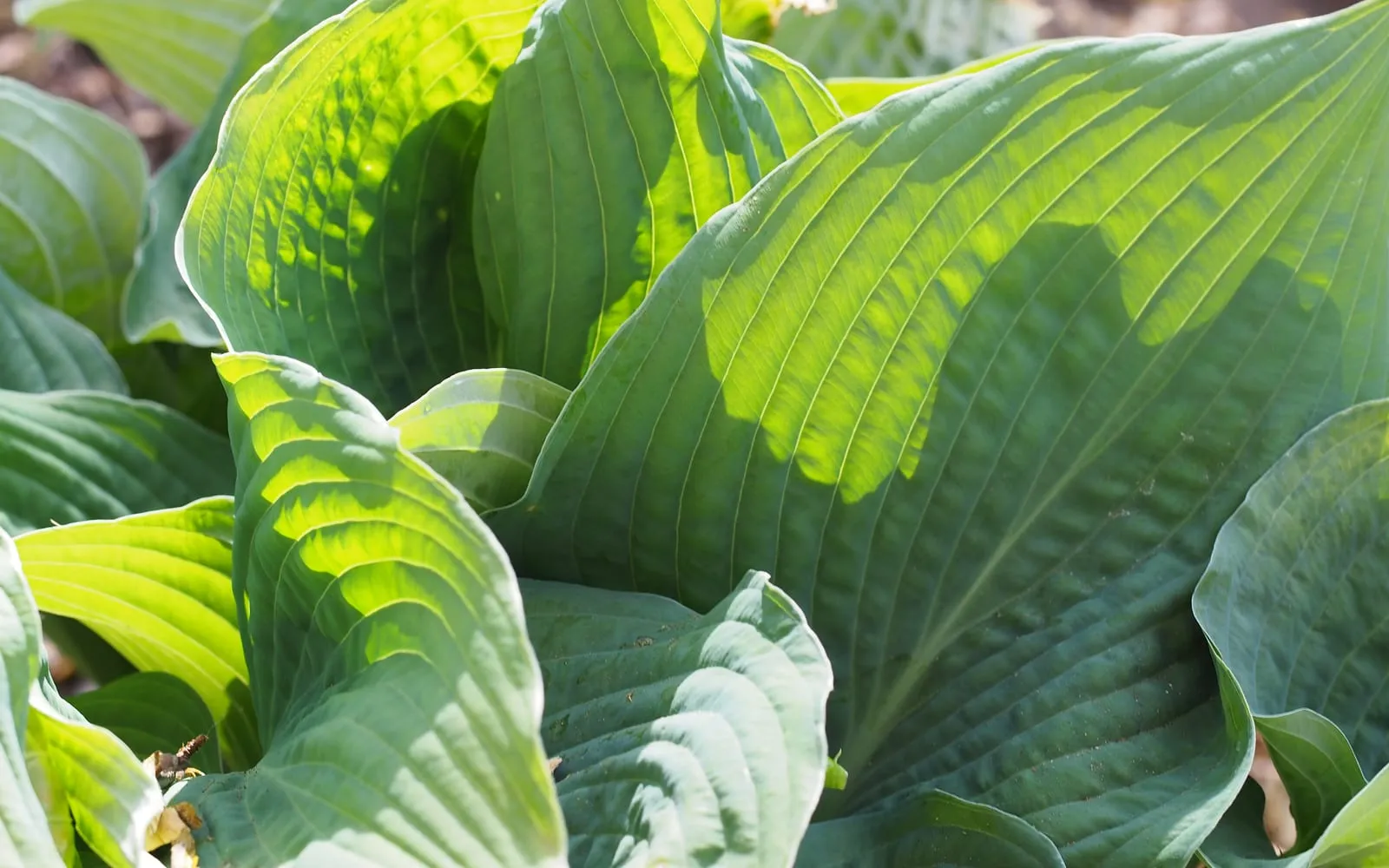
Leaves are the point. In H. sieboldiana they are broad and heart-shaped, up to 30 cm long, blue-grey rather than green, and deeply puckered along the veins in a pattern usually described as quilted.
The blue is a wax bloom on the leaf surface rather than a pigment. Rubbing it removes it, hot sun melts it, and overhead watering gradually washes it off, so a plant in the wrong place turns green by midsummer.
Flowers appear in July on stems held just above or through the foliage, pale lilac to near-white, trumpet-shaped and carried in a one-sided spike.
Thickness is the character to look for when buying. Press a leaf between finger and thumb. A substantial hosta feels like thin leather, and a vulnerable one feels like paper.
Where it is from
Japan, where H. sieboldiana grows on damp shaded mountain slopes and in woodland, in soil made of leaf litter and rarely drying out.
The genus reached Europe through Japan in the early nineteenth century, largely via Philipp Franz von Siebold, whose name the species carries.
Its habitat explains the two conditions it asks for in a garden. Shade for most of the day, and soil that holds moisture without standing water.
The wild plant is much plainer than the garden forms. Almost every hosta sold is a named cultivar, and the thousands available are mostly selections and hybrids rather than species.
How it grows
Plant in spring or early autumn, setting the crown level with the soil surface rather than buried.
Dig in a bucket of garden compost or leaf mould before planting. Hostas are not fussy about soil type and they are fussy about moisture, and organic matter is what holds it.
Allow 60 to 90 cm between plants for a large sieboldiana type. They look sparse for two seasons and then meet.
Divide established clumps in early spring, as the shoots break. Lift the whole crown, cut down through it with a spade or an old bread knife, and replant the pieces with at least three shoots each.
Mulch every spring with compost, keeping it clear of the crown itself.
Cut the foliage down after the first frosts blacken it, and clear it away rather than leaving it, since slug eggs overwinter in the debris.
Pots suit them well and make slug control far easier. Use a soil-based compost, choose a container wider than it is deep, and expect to water almost daily in summer.
Through the seasons
Winter is complete dormancy. The plant vanishes and the space looks empty, which is worth marking so nothing gets planted on top of it.
Spring is when the year is decided. Shoots push through in April as tight spears, and that is the moment slugs do their damage, because a hole made in a furled leaf opens into a row of holes as the leaf unrolls.
Summer brings full leaf by June and flowers in July. Water in dry spells and keep the leaves dry when you do.
Autumn turns the foliage yellow and then to mush after the first frost. Cut it down and clear the debris.
Care difficulty
Easy, provided you control slugs and snails.
The plant itself asks for almost nothing. It is fully hardy, it needs no staking, no deadheading and no winter protection, and an established clump will sit in the same spot for twenty years.
Slugs are the difficulty, and they are a matter of choosing the right cultivar and protecting the plant for about six weeks in spring. After that the leaves have hardened and the risk drops away.
Sun is the other common mistake. A hosta in full sun scorches at the leaf margins and loses its blue, and no amount of watering fixes it.
Watering
Hostas want consistent moisture and they do not want to sit in water.
Water deeply once a week in dry spells rather than lightly every day. A soak that reaches the root zone is worth several sprinklings that wet the surface.
Water at the base rather than over the leaves. Overhead watering removes the waxy bloom that gives a blue hosta both its colour and much of its slug resistance.
Pots need far more. A large hosta in a container in July can need water daily, and a plant that wilts repeatedly will scorch at the leaf edges.
A hosta that flags in the afternoon heat and recovers by evening is not necessarily short of water. One that is still flat the next morning is.
Warning signs, diseases and pests
Slugs and snails cause almost all hosta damage. The signs are ragged holes between the veins, worst on the lower leaves, appearing overnight. Damage done in April to a furled shoot shows up as a neat row of holes across the open leaf, which is why early protection matters more than later effort.
The controls that work are cultural. Choose thick-leaved blue cultivars, clear away dead foliage in autumn so eggs have nowhere to sit, water in the morning rather than the evening, grow vulnerable plants in pots, and go out with a torch on warm damp evenings in April and May when the slugs are on the plant.
Vine weevil is the pot problem. Adults notch the leaf edges in a distinctive scalloped pattern and the grubs eat the roots and crown, so the first sign is often a plant that lifts out of its pot with nothing underneath. Check the compost of any sickly container hosta.
Deer and rabbits graze hostas to the ground where they have access, cutting the leaves off cleanly rather than making holes. Netting or fencing is the only answer.
Hosta virus X shows as ink-bleed mottling and puckering along the veins, spreads on cutting tools and sap, and has no cure. Dig out and bin an affected plant rather than composting it, and clean tools between plants.
Brown crisp leaf margins in a plant with no holes indicate scorch from too much sun or from drying out, not disease.
Growing environment
Partial to full shade. Dappled light under deciduous trees is ideal, and a north-facing border works well.
Some sun is tolerated where summers are cool and by yellow-leaved cultivars, which need a little light to develop their colour. Blue cultivars want the least sun of all, since heat destroys the wax that makes them blue.
Soil should hold moisture and drain freely, which in practice means adding leaf mould or compost. Heavy clay works once improved. Dry sand under a conifer is the one situation where a hosta will struggle.
Shelter matters more than people expect. Large thin leaves tear in wind, and a sieboldiana in an exposed corner looks shabby by August.
They are excellent in pots, in shaded courtyards, and along a north wall.
Good companions are ferns, which enjoy the same conditions, and spring bulbs, which finish as the hosta emerges to cover their dying foliage.
Feeding
A spring mulch of garden compost or well-rotted manure is all most hostas need.
Apply it in March as the shoots break, spreading it around the crown rather than over it.
A general-purpose balanced fertiliser in spring suits plants in poor soil or in pots. Container plants exhaust their compost and benefit from a liquid feed every fortnight through summer.
Avoid high-nitrogen feeds. They produce large soft leaves that slugs prefer and wind tears.
A hosta that is smaller each year is usually short of water or being eaten underground, rather than short of food.
Troubleshooting
The leaves are full of holes by June. Slugs and snails, and almost certainly damage done in April. Choose thick blue-leaved cultivars, clear autumn debris, and patrol on damp evenings while the shoots are emerging.
Which hostas resist slugs? The thick, waxy, corrugated ones. H. sieboldiana and its selections, and anything described as heavy-substance or blue. Thin bright green cultivars are the ones that get shredded.
My blue hosta has turned green. The blue is a surface wax rather than a pigment, and sun, heat and overhead watering all remove it. Move the plant into more shade and water at the base.
The leaf edges are brown and crisp. Scorch, from too much sun or from drying out in a pot. There are no holes, which is what separates this from slug damage.
It came up smaller this year. Check for vine weevil grubs if it is in a pot, and check it is not now in the rain shadow of something that has grown. An established clump may also want dividing.
When do I divide it? Early spring as the shoots break. Cut the crown into pieces with three or more shoots each and replant at the same depth.
The leaves are streaked and puckered along the veins. Possibly hosta virus X, which is incurable and spreads on tools. Bin the plant rather than composting it.
Is it poisonous to my dog? Yes, mildly. Hosta is listed by the ASPCA as toxic to cats, dogs and horses, and a dog that eats the leaves is likely to be sick.