
Disorder
Leaf scorch
Also called Sun scorch, Sunburn
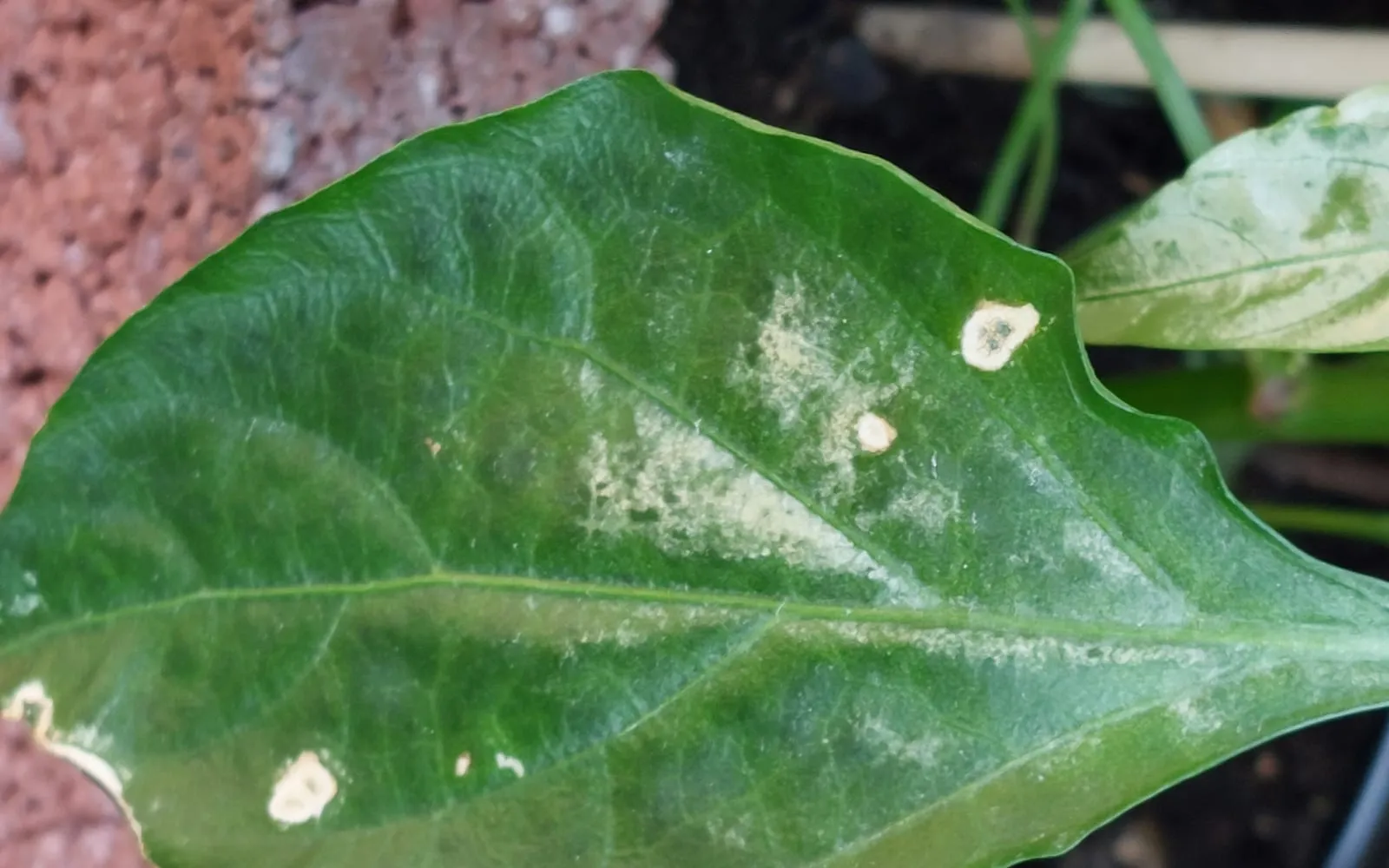
Leaf scorch causes bleached patches and brown crisp margins that appear all at once. It follows sun, wind, frost or water stress rather than infection, so the pattern and timing matter more than sprays.
At a glance
- Type
- Disorder
- Cause
- Growing conditions
- Severity
- Weakens the plant
- Affects
- Houseplants, Garden plants, Herbs and edibles
- Active
- February to September
What you are seeing
- Pale, bleached or straw-coloured patches in the middle of the leaf blade, on the side that faced the light
- Brown, dry, crisp margins and tips with a sharp boundary against the green
- Damage on one side of the plant only, matching the direction of the sun or the prevailing wind
- Everything appearing at once after a hot spell, a cold dry wind or a move
- The affected tissue thin and papery rather than soft or spotted
- No spread from leaf to leaf after the event
Before you treat anything
Some plants scorch skin rather than the other way round. Giant hogweed, rue and several other plants cause severe blistering when their sap is exposed to sunlight, and the reaction is a burn rather than a rash. Cover up when cutting them back, and keep children away.
What you are looking at
Damage that appeared all at once and has not moved since.
Sun scorch shows as pale, bleached or straw-coloured patches in the middle of the leaf blade, on the side of the plant facing the light, with a sharp edge and a thin papery texture. Wind and salt scorch show as brown, dry, crisp margins and tips, worst on the exposed side, with the boundary between brown and green running roughly parallel to the leaf edge.
Both share one character that separates them from every disease on this site. They do not spread. A fungal infection appears on a few leaves and is on twenty by next week. Scorch is the record of something that happened on a particular afternoon, and it is the same size a fortnight later.
Look also at where it is on the plant. Damage confined to the south or west side, or to the side facing an open field, is a physical cause. Damage scattered through the canopy without regard to aspect is not.
Three different problems under one name
Sun scorch happens when a leaf receives more light than it can use, and the excess energy destroys the pigments and cooks the tissue. Leaves grown in shade have thin cuticles and few protective compounds, so they burn at light levels a sun-grown leaf handles without difficulty. That is why the plant that suffers is almost always one that has just been moved.
Wind scorch is drought at leaf level. Moving air strips away the humid layer that sits against a leaf surface, so water is lost faster than the roots can replace it, and the tissue at the margins dries and dies. On evergreens in February and March the soil is often cold or frozen, so the roots can supply almost nothing while the wind keeps taking, and a laurel or a photinia can be badly burnt by weather that never dropped below freezing.
Salt scorch produces the same margin burn from fertiliser build-up in a pot, from de-icing salt thrown up beside a road, or from coastal spray. Look for a white crust on the compost or the pot.
The water droplet myth
Watering in sunshine does not scorch leaves. The idea is that droplets act as lenses and focus the light, and it has been tested directly. On smooth flat leaves the droplet sits too close to the surface for its focal point to fall on the tissue, and the water evaporates before any damage occurs.
One documented exception explains where the belief came from. On leaves with dense water-repellent hairs, a droplet can be held up above the surface far enough for the focus to land on the leaf. Almost nothing in a British garden has that kind of hairy surface.
So water when it suits you. Early or late is still better, and the reason is evaporation rather than burning.
Why the plant that gets scorched is usually the one that just moved
The pattern is consistent enough to be a rule. A greenhouse tomato hardened off over two weeks is fine, and one carried straight out on a bright May morning is bleached by evening. A monstera that has lived beside a north window for a year burns in a south one. Bedding plants bought from a covered garden centre display and planted the same afternoon are scorched by the weekend.
Leaves cannot be re-engineered once they are formed. What a plant needs is time to produce new leaves suited to the new position, and that takes two to three weeks. Every hardening-off instruction is a way of buying that interval.
What to do about it
Nothing brings a scorched leaf back. The tissue is dead and the plant will replace it rather than repair it, so the work is all in prevention and in getting the plant growing again.
Shade it while it recovers, keep it watered, and leave the damaged leaves on unless they look bad enough to bother you. A plant that has lost half its leaf area to scorch needs the rest, however poor it looks.
Then fix the cause. Move it back and reintroduce it slowly. Shade the greenhouse. Put a mesh screen on the windward side of the new hedge. Flush the pot if there is a salt crust on it. Water thoroughly ahead of the next hot spell, because a plant that is already dry closes its pores and loses the only cooling mechanism it has.
What it gets mistaken for
Drought produces brown crisp leaf edges too, and the two often arrive together. Drought affects the whole plant and shows the compost dry; scorch is confined to the exposed side.
Fungal leaf spots have defined round or angular marks, often with a yellow halo or a darker border, and they appear on more leaves each week. Scorch is a single event.
Frost damage blackens and turns young growth limp rather than papery, and it affects the tips and the youngest tissue rather than the sunny side.
Spray drift and weedkiller damage twist and distort new growth as it expands, which no amount of sun or wind will do.
Red spider mite dulls and stipples a leaf with a fine even speckling, and there is often webbing at the shoot tips. Scorch is a solid patch rather than a scatter of points.
Hard water marks and foliar feed residue leave white deposits that wipe off with a cloth. Scorched tissue is part of the leaf.
What to do, in order
Start here
Prevention, and the changes that stop the problem returning. Most of these pages should end at this tier.
- Harden anything off before it goes outside
- A plant raised indoors has thin leaves with no protective pigments and no thickened cuticle. Two weeks of increasing exposure, starting with an hour in a sheltered spot, builds both. Tomatoes, courgettes and bedding moved straight from a windowsill to an open bed in May are the commonest casualties.
- Move houseplants to brighter positions gradually
- A calathea, a fern or a monstera that has lived on a north wall for a year will burn in a south window within a day. Shift it in stages over a fortnight, and it will adapt to a position it could not have survived immediately.
- Shade a greenhouse from May
- Glass concentrates heat and light while cutting the air movement that would carry heat away. Shade paint, netting or blinds from late spring until September prevent almost all greenhouse scorch, and they reduce watering as well.
- Plant a permeable windbreak rather than a solid fence
- A solid fence creates turbulence on its lee side that can be worse than the open wind. A hedge, or windbreak mesh at around 50 per cent permeability, slows the air instead of deflecting it and shelters a distance of about ten times its height.
- Keep camellias out of the early morning sun
- Frozen buds and young leaves thaw too quickly when the sun hits them at dawn, and the tissue is destroyed. An east-facing wall is the worst place for a camellia in Britain, and a west or north aspect avoids the problem entirely.
- Water thoroughly before a hot spell
- A plant with a full water supply keeps its leaf pores open and cools itself by transpiration. One already short of water has closed them, so leaf temperature climbs and the tissue cooks. Drought and scorch usually arrive together.
Then reach for a barrier
Netting, hand removal and water. Nothing here harms anything except the target.
- Put up temporary shade
- Fleece, shade netting or an old sheet over vulnerable plants for the two or three days of a heatwave costs nothing and prevents damage that lasts the rest of the season. Lettuce, hostas and newly planted anything all benefit.
- Screen evergreens through late winter
- Cold dry easterly winds in February and March strip water from evergreen leaves while the roots cannot replace it from frozen or cold soil. A temporary screen of mesh on the windward side of a young hedge or a newly planted shrub carries it through.
- Flush a pot with a salt crust on the compost
- Accumulated fertiliser and hard water salts burn leaf margins in a way that looks identical to sun damage. Water heavily until it runs freely from the base, three or four times, and the marks stop appearing on new growth.
- Take the worst leaves off for appearance only
- Scorched tissue never recovers and the plant will not repair it. Removing badly marked leaves tidies the plant, and it should be done a few at a time so the plant keeps the leaf area it still has.
Plants affected
Guides that name it among the problems to watch for. The list is the plants it is characteristic of rather than everything it will feed on.