
Pest
Slugs and snails
Gastropoda
Also called Slugs, Snails, Molluscs
Slugs and snails leave smooth-edged holes, missing seedlings and slime trails. Most species do little harm, but grey field slugs, keeled slugs and garden snails need control around young plants and potatoes.
At a glance
- Type
- Pest
- Cause
- Slug or snail
- Severity
- Destroys the crop or display
- Affects
- Garden plants, Herbs and edibles
- Active
- March to November
- Established in
- Worldwide
What you are seeing
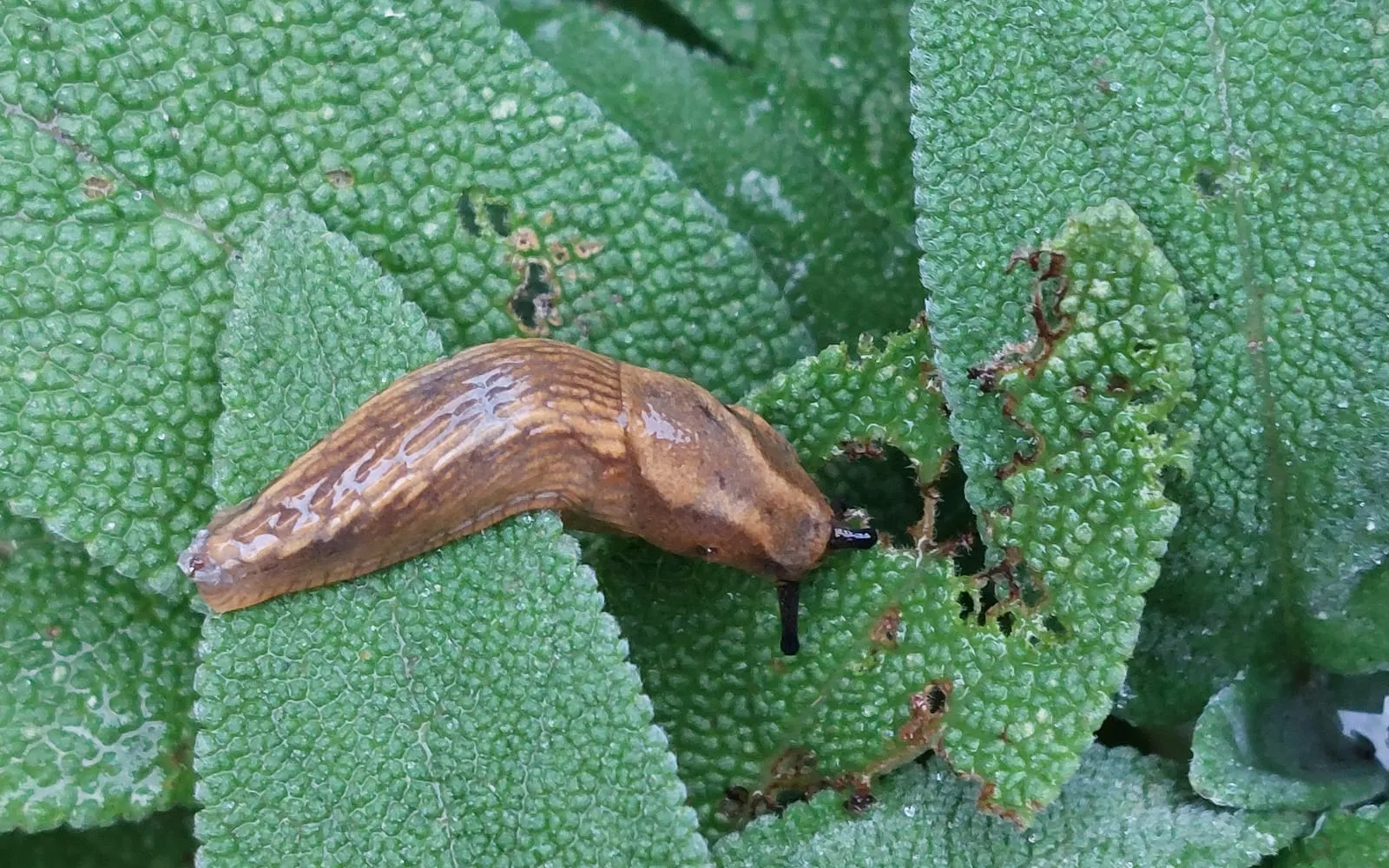
- Irregular holes in the middle of a leaf with smooth rounded edges, rather than notches cut in from the margin
- Whole seedlings gone overnight, sometimes with a stub of stem left
- Silvery dried slime trails on leaves, pots and paving in the morning
- Ragged hosta leaves, worst on the lower foliage and on the thinnest cultivars
- Grazed patches on the skin of a strawberry or a courgette where they rest
- Potato tubers hollowed out underground with clean-walled cavities and no tunnelling insect inside
Before you treat anything
Ferric phosphate slug pellets are approved for use in organic growing and are much less hazardous to a dog than the blue pellets they replaced, though a container left where a pet can reach it is still a bad idea. The greater risk on this page is a sunken beer trap, which drowns ground beetles and the occasional shrew. Stand the rim proud of the soil.
What you are looking at
Slug and snail damage is a hole in the middle of a leaf with a smooth, rounded edge, and the animal is rarely there when you find it. Look for the second sign. A dried slime trail catches the light on a leaf or a paving slab in the morning, silvery and irregular, and nothing else in a garden leaves one.
Both animals rasp rather than bite. A tongue covered in thousands of tiny teeth scrapes the tissue away, which is why the edge of the hole is smooth instead of chewed. On a seedling there may be nothing left to inspect. A row that had forty lettuce plants in it at dusk can have eleven at dawn, with a few short stems still standing.
The four groups that do the damage
Britain has around forty-four species of slug and rather more snails, and the great majority never touch a living plant. They eat fallen leaves, dung and dead wood, and a garden runs better with them in it.
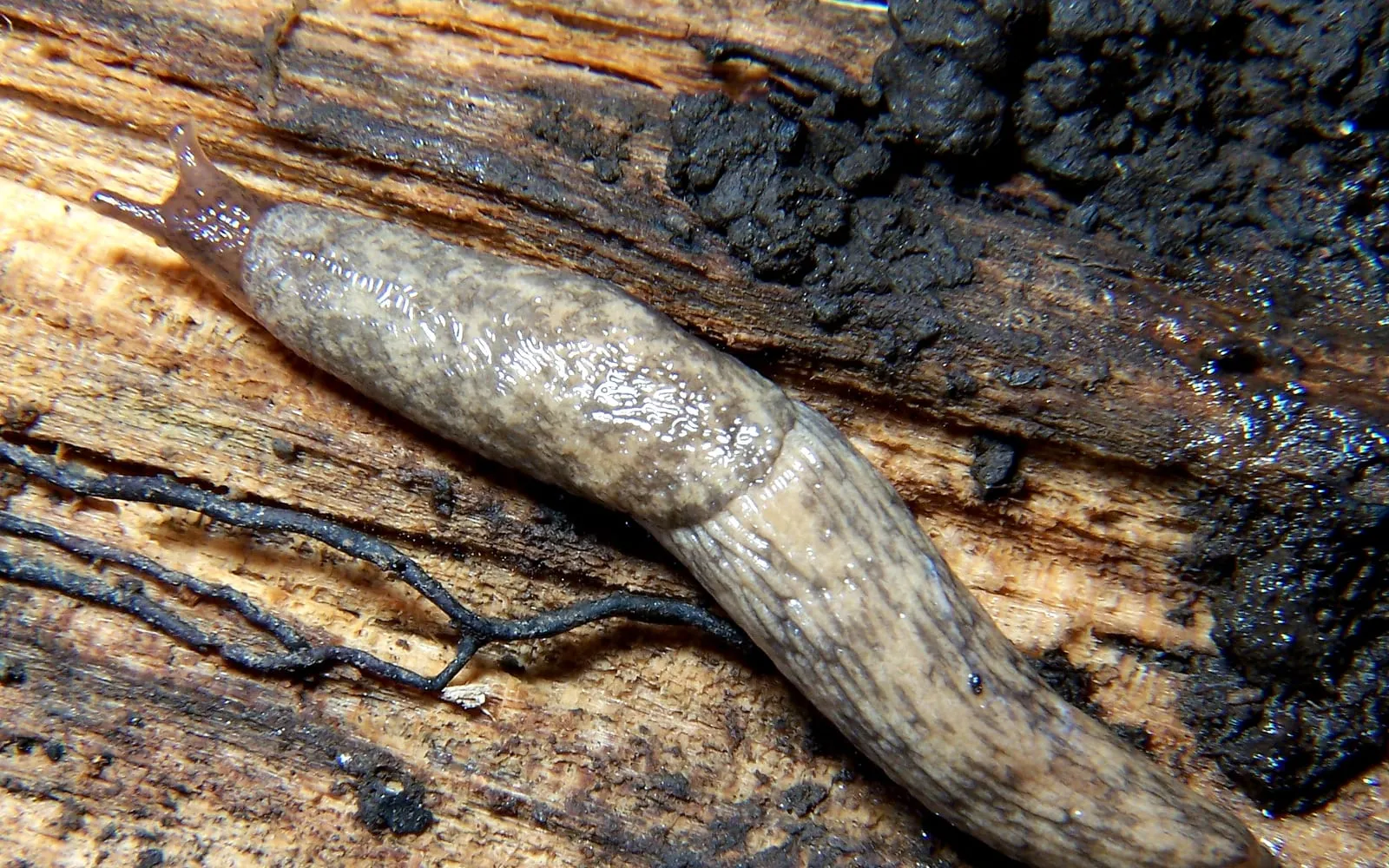
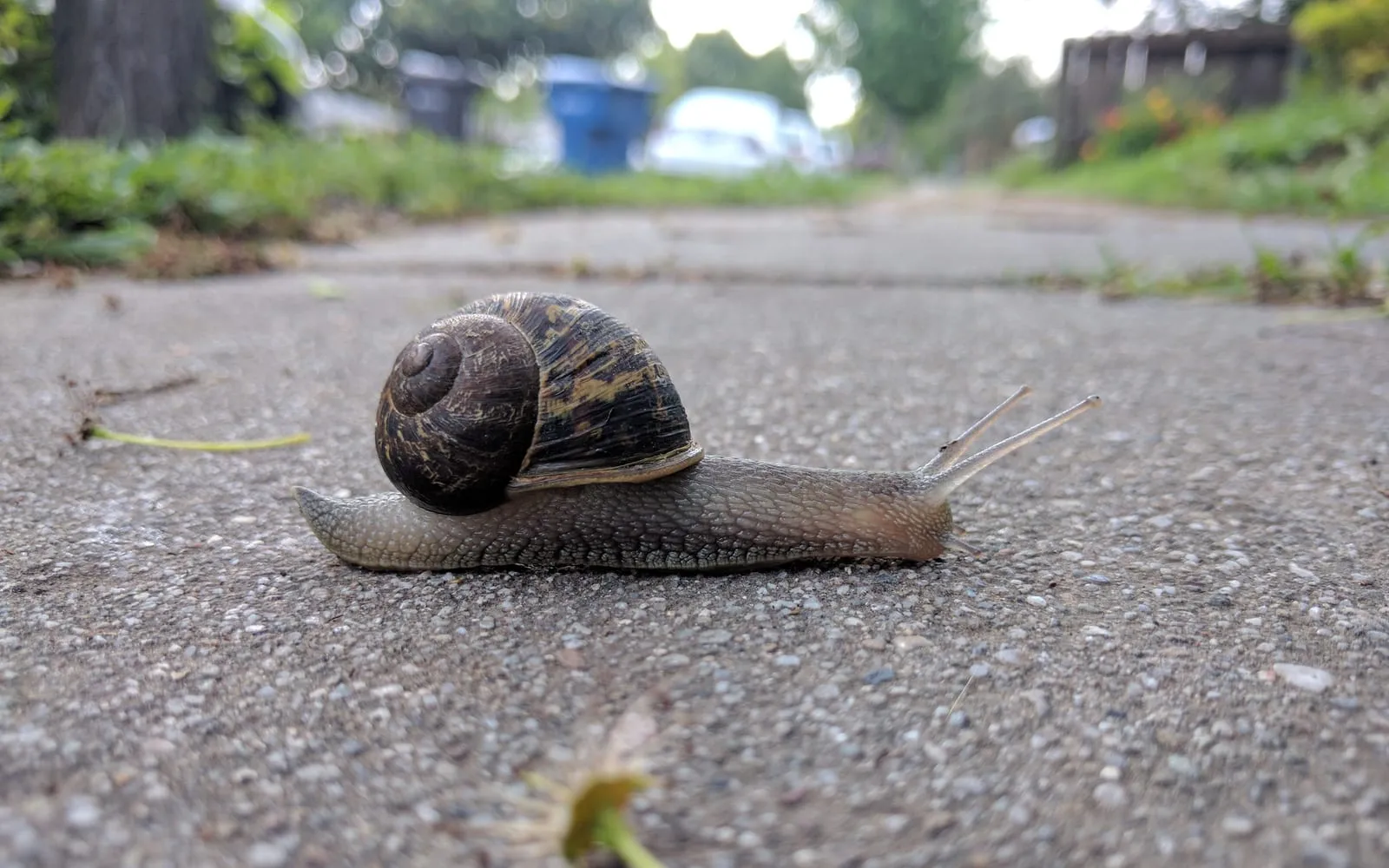
The grey field slug, Deroceras reticulatum, is small, pale and mottled, and it does more damage than everything else combined. The garden slug group, Arion hortensis and its relatives, is dark with an orange sole and works at and below the surface. Keeled slugs, Tandonia and Milax, hollow out potatoes without appearing above ground. The garden snail, Cornu aspersum, climbs, so a barrier around the base of a plant often fails.
The big black slug, Arion ater, is the one people photograph and the one that does least harm. It is largely a scavenger. The Spanish slug, Arion vulgaris, arrived more recently, grows large, breeds heavily and does eat living plants, so an unusually big brown slug in numbers is worth taking seriously in a way the native black one is not.
When they feed
They come out after dark and after rain, and they need a moist surface to move on. On a dry night in June a garden that lost a row of seedlings last week can look completely clear.
Egg batches of ten to fifty sit in soil crevices, under stones and in the crowns of plants, pearly white and about the size of a peppercorn. The grey field slug can produce eggs in any month mild enough, which is why a warm wet winter is followed by a bad spring rather than a good one.
Most controls work better at night. A torch at ten o’clock finds the breeding adults; the same border at noon looks fine.
What it does to a plant
An established hosta or a mature cabbage loses leaf area and keeps going. The plants that die are the young ones, and the window is short. From the moment a seedling goes out until it has hardened and made half a dozen leaves, one night can end it, and after that the same feeding is disfigurement rather than a threat.
Below ground the arithmetic is different. Keeled slugs feed on potato tubers through late summer and autumn, leaving clean-walled cavities that only turn up at lifting. There is no leaf damage to warn you, and the crop looks perfect from above until you dig it.
Grazed patches on strawberries and courgettes are usually where the fruit rests on the soil. Lifting the fruit onto straw, a tile or a mat solves that one outright.
What to do about them
Take the young plants out of reach first. Sowing into modules and planting out larger, later and hardened off removes most of the risk before any control is needed, and it is free. Water in the morning rather than the evening so the surface is dry when they are travelling.
Then go out with a torch. An hour after dusk on a damp night, two or three nights running, will take out most of the breeding adults in a town garden. It is usually more effective than a bought barrier.
Where a bed keeps losing plants, water on nematodes in spring once the soil has reached about 5 degrees C. They reach the slugs that live below the surface, which is the group no barrier and no torch will find, and they leave snails alone entirely because snails are not down there.
Barriers vary sharply in usefulness. A cloche or a cut plastic bottle over each seedling works because it is a physical enclosure. Copper tape works while it stays bright and stops working when it tarnishes, so a pot rim needs cleaning to keep its edge. Crushed eggshell, sharp grit, coffee grounds and bran have all been tested and none of them held up.
The predators
Ground beetles matter more than anything else and are the ones a gardener is most likely to kill by accident. They eat slug eggs and young slugs, they are fast, black and shiny, and they fall into a beer trap sunk level with the soil. Standing the rim two centimetres proud fixes that. They overwinter in rough grass and leaf litter, so a strip of the garden left undisturbed pays back across the whole plot.
Hedgehogs, frogs, toads and slow-worms all take slugs in quantity. A pond with one shallow sloping side is the strongest single thing you can add, and a gap under the fence lets a hedgehog work a range far larger than one garden.
Song thrushes take snails and break them open on a stone they use for years. If you find a flat rock ringed with broken shells, leave it where it is.
Where the advice changed
Most of what still ranks for this search recommends a product that has been illegal to use outdoors in Great Britain since 2022. Metaldehyde was withdrawn for outdoor amateur and professional use because of what it does to birds, hedgehogs and water, and the blue pellets that remain in sheds across the country cannot legally be scattered. Take unused stock to a household waste site rather than emptying it onto a border.
What replaced it is ferric phosphate, which is approved for organic growing and much safer around pets and wildlife. It is not a licence to scatter, though. Slugs that eat it stop feeding and die out of sight, so nothing appears on the soil to tell you it has worked, and the temptation is to keep adding more. A few pellets to the square metre is the rate, and it should be the last thing tried rather than the first.
What it gets mistaken for
Vine weevil adults cut neat semicircular notches in from the edge of a leaf and never make a hole in the middle. Caterpillars leave dark pellets of frass on the foliage below, and they chew rather than rasp, so the edges of the damage are ragged. Neither leaves a slime trail.
Holes with a yellow halo around them are a leaf spot disease rather than anything eating the plant, and the tissue falls out of the centre after the infection has killed it. Slug holes have living green tissue right up to the edge.
Seedlings that vanish leaving no stem, no slime and a small hole in the soil are more likely to be mice, which take newly sown peas and beans in quantity and get blamed on slugs every spring.
What to do, in order
Start here
Prevention, and the changes that stop the problem returning. Most of these pages should end at this tier.
- Water in the morning
- Slugs move on a film of moisture and travel furthest on a wet evening. Watering at dawn means the surface has dried by the time they come out, and it costs nothing to change. This does more for a row of lettuce seedlings than any barrier around it.
- Plant out later and larger
- Almost all the damage that ends a plant happens in its first fortnight outside. Grow on in modules until the stem has hardened and the plant carries six leaves rather than two, and the same population that would have cleared the row does cosmetic damage instead.
- Choose hostas with thick leaves
- Cultivar makes more difference than anything you spread on the soil. The blue-leaved, heavily corrugated sorts carry a waxy cuticle a slug struggles with, so Halcyon, Sum and Substance and Big Daddy come through a season readable while a thin-leaved green one is lace by June.
- Leave a dry gap around vulnerable plants
- Slugs shelter under dense low cover and cross open dry ground reluctantly. Keeping a hand's width of bare soil between a lettuce row and the nearest mat of foliage removes the daytime refuge rather than the animal.
- Turn the soil over in winter
- Eggs sit in clusters in soil crevices through the cold months, pearly and translucent, in batches of ten to fifty. Forking a bed over on a frosty day in January brings them to the surface for the birds and the weather, which thins the spring generation before it hatches.
- Give ground beetles somewhere to live
- Ground beetles are the main predator of slug eggs and young slugs in a British garden, and they need undisturbed cover to overwinter in. A strip of rough grass, a log pile or a beetle bank at the end of a plot supports far more of them than a bare tidy border does.
Then reach for a barrier
Netting, hand removal and water. Nothing here harms anything except the target.
- Go out with a torch an hour after dusk
- Two or three nights running, after rain, will take out most of the breeding adults in a small garden. Look under pot rims, along the edge of paving and on the underside of the lowest leaves.
- Set beer traps with the rim standing proud
- Sink a pot of beer so the lip sits two centimetres above the soil. Level with the surface, it catches the ground beetles that were eating the slugs for you, which is how a trap can leave a bed worse off than no trap at all.
- Lay a plank or a grapefruit half as a daytime refuge
- They gather under anything damp and dark by morning, so give them somewhere obvious and collect from it. A wooden board on the soil next to a row works as well as anything sold for the purpose.
- Use a cloche or a cut bottle over each seedling
- A physical cover over the two weeks that matter beats treating a whole bed for a season. Push the rim into the soil so there is no gap underneath and take it off once the plant is growing away.
- Raise and inspect containers
- Pots standing on paving collect slugs under the rim and in the drainage holes, and they will climb back up every night from the same place. Stand pots on feet, and run a finger round the underside of the rim when you water.
Then bring in the predators
Encourage what already lives in the garden, and buy predators in where the problem is under glass and nothing will arrive on its own.
- Water on nematodes for slugs in the soil
- Phasmarhabditis hermaphrodita is a parasitic nematode watered onto moist soil once it has reached about 5 degrees C. It finds slugs below ground, including the keeled slugs that ruin potatoes and never come to the surface, and it gives roughly six weeks of protection. It has no effect on snails, which live on top of the soil rather than in it.Sold across Europe and, more recently, North America. No slug nematode is approved for gardeners in Australia or New Zealand, so this control is unavailable there.
- Make room for the things that eat them
- Hedgehogs, frogs, toads, slow-worms and song thrushes all take slugs in quantity. A pond with a sloping edge and a gap under the fence brings in more predators than any product, and the animals that arrive stay through the season rather than working for six weeks.
- Keep the anvil stones
- A flat stone surrounded by broken snail shells is a song thrush's anvil, and the bird will use the same one for years. Clearing it away moves a working snail predator somewhere else.
Biological controls are live organisms and their sale and release are regulated country by country. An agent sold freely in one place may be unapproved in another, so buy from a licensed supplier where you live and never import or move one yourself.
Last resort only
Reach for this after the tiers above, never instead of them. Pesticide approvals are national and change often. Any product named here was checked in the jurisdiction stated beside it. Confirm the same active substance is approved for amateur use where you live before buying it, and follow the label rather than this page.
Ferric phosphate
- Why
- Where a crop is going in during a wet spring and hand collecting, cloches and nematodes together have not held the population, this is the remaining pellet an amateur may use in Great Britain.
- Also kills
- It kills slugs and snails without distinction, including the many species that eat dead material and never touch a living plant. Slugs that take it stop feeding and die underground, so the visible result is an absence rather than a body count, and it is easy to over-apply while waiting to see something happen. Scatter thinly, a few pellets to the square metre.
- Approval checked
- for Great Britain, on the approvals register
In pictures
Plants affected
Guides that name it among the problems to watch for. The list is the plants it is characteristic of rather than everything it will feed on.
Common on UK allotments
This is one of the pests and diseases allotment growers meet most often. See it alongside the other common problems on the allotment guide.
Common allotment pests and diseasesA common vegetable pest
This is one of the pests that vegetable growers meet most often. See it alongside the others on the vegetable pests guide, grouped by how they feed and with prevention that works against most of them.
Common vegetable pests