
Edible
Beetroot
Beta vulgaris
Also known as Beet, Garden beet, Table beet
How to grow beetroot, Beta vulgaris. Why each seed is a cluster, sowing to avoid bolting, eating the leaves, and the harmless red urine that alarms people.
At a glance
- Difficulty
- Easy
- Water
- Every ten days or so in dry weather
- Light
- Full sun to light shade
- Temperature
- 10-24 deg C. Fairly hardy, and cold snaps trigger bolting
- Hardiness
- USDA 2-11, RHS H4, hardy to -8 C
- Type
- Biennial grown as an annual
- Height
- 30-45 cm of leaf
- Native to
- Coasts of the Mediterranean and Atlantic Europe, from sea beet
- Best month
- June in the Northern Hemisphere, December in the Southern Hemisphere
Two weeks below about 10 deg C after germination is enough to vernalise a young plant and send it to seed, which is why early sowings bolt and why bolt-resistant cultivars exist. Heat suits it better than it suits most roots, and it tolerates salt and drought once away. Frost damages the shoulders of roots left standing.
Hardiness zones describe winter cold alone. Summer heat, humidity, rainfall and the length of the growing season decide as much, so treat the range as the outer limit rather than as a recommendation.
Every month named in this guide is for the temperate Northern Hemisphere. If you garden in the Southern Hemisphere, shift each one by six months, so June becomes December. Closer to the equator the wet and dry seasons matter more than the calendar, and the shift stops being a useful guide.
Not known to be toxic
- Safe to eat
- The root and the leaves, both raw or cooked
Non-toxic, and the whole plant is food. The root and the leaves are both eaten, and the leaves are closer to chard than to a salad leaf, since chard and beetroot are the same species selected in different directions. The ASPCA does not list beetroot among plants harmful to cats, dogs or horses. Two harmless effects cause needless alarm. Beeturia is the passing of pink or red urine after eating beetroot, caused by the pigment betanin surviving digestion, and it affects perhaps ten to fifteen per cent of people. It is not blood and it is not a sign of anything wrong, though anyone unsure should say what they have eaten before tests are run. Stools can turn red for the same reason. Separately, beetroot leaves contain oxalates in amounts comparable to spinach and chard, which matters only to people already advised to limit oxalate because of kidney stones. Cooking the leaves and discarding the water reduces the amount.
Sources: ASPCA toxic and non-toxic plants, RHS potentially harmful garden plants
About
Beetroot is the crop that gives you two vegetables from one sowing. The root is the point, and the leaves are as good as chard and usually thrown away.
It is also among the most forgiving things in the vegetable garden. Beetroot tolerates poor soil, needs no feeding, stores well, and asks for nothing beyond even watering and enough space.
One quirk explains most beginner confusion. A beetroot seed is a dried fruit holding several seeds inside it, so each one you sow produces a cluster of seedlings, and thinning is compulsory rather than optional.
Appearance and character
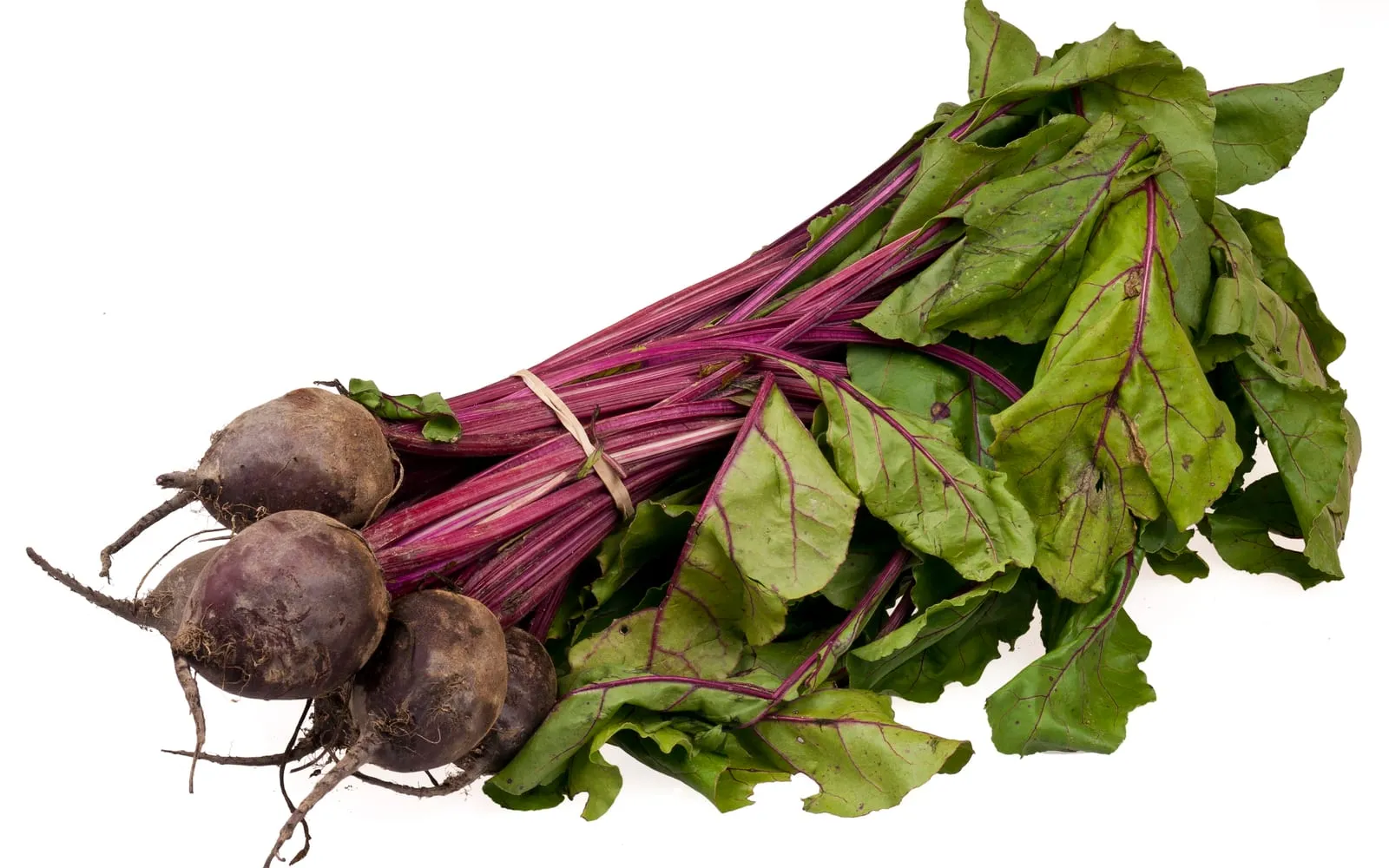
A rosette of glossy leaves on crimson stalks, deep green with red veins, growing 30 to 45 cm tall.
The root sits mostly at soil level with its shoulders exposed, swelling into a globe, a flattened disc or a long tapering cylinder depending on variety.
Colour is not limited to deep purple-red. ‘Burpee’s Golden’ is orange-yellow, ‘Albina Vereduna’ is white, and ‘Chioggia’ cuts open to concentric pink and white rings that fade on cooking.
In a second year the plant sends up a tall branched flowering stem with tiny green flowers, which is what has happened when a first-year plant bolts.
Sugar beet, chard, spinach beet and mangel are all the same species selected for different parts.
Where it is from
The coasts of the Mediterranean and Atlantic Europe, including Britain, where the wild ancestor sea beet still grows on shingle and cliff tops with a thin tough root and thick salt-tolerant leaves.
Leaves came first. Classical Greek and Roman writers describe beet as a leaf vegetable, and the swollen root is a comparatively recent selection, developed in Germany and Italy from around the sixteenth century.
Its coastal origin explains the salt tolerance and the liking for light free-draining ground, and it is why beetroot does well in sandy gardens where other roots struggle.
The plant is a biennial that stores food in the root through winter and flowers the following summer. The crop is that store, taken in the first year.
Cold triggers the switch to flowering, which is why a spring cold snap makes a sowing bolt.
How it grows
Sow direct from April to July, 2 cm deep and 10 cm apart in rows 30 cm apart. For young roots through the season, sow a short row every three or four weeks rather than the whole lot at once. Beetroot transplants poorly, so sow where it is to grow, or use modules and plant out while small.
Each seed cluster produces two to four seedlings. Thin to the strongest one per station when they are a few centimetres tall, and use the thinnings as salad.
Soaking the seed overnight before sowing improves germination noticeably.
Roots begin swelling from about six weeks. Pull the first as golf balls at eight to ten weeks, and leave the rest to reach tennis ball size.
Sow a short row every three weeks from April for a continuous supply.
For storage, sow in June and lift the crop in October, twisting the tops off rather than cutting them, which stops the roots bleeding.
Bolt-resistant varieties such as ‘Boltardy’ allow a March or early April sowing; anything else risks running to seed after a cold spell.
Through the seasons
Early spring starts under cover. Sow bolt-resistant varieties from March under cloches or in modules in a cold frame.
Late spring is the main sowing window. Sow direct from April, thin promptly, and keep the bed weeded.
Summer is picking and successional sowing. Pull roots young, sow another short row every three weeks, and water steadily in dry spells.
Autumn is the storage harvest. Lift in October before hard frost, twist off the tops, and store the roots in boxes of damp sand somewhere cool.
Care difficulty
Easy, and one of the best crops for a beginner or a poor plot.
Thinning is the one job that cannot be skipped. Unthinned clusters give a mass of small distorted roots.
Bolting is the main disappointment and it follows cold weather early in the season. Sowing after mid-April, or using a bolt-resistant variety, avoids it.
Even watering prevents splitting, which is the other common complaint.
Beetroot is otherwise untroubled by pests, needs no support and no feeding, and tolerates a wide range of soil.
Watering
Water every ten days or so during dry weather, giving a thorough soak rather than a light sprinkle.
Consistency matters more than volume. A dry spell followed by heavy rain makes the root swell suddenly and split, and the same swing makes the flesh woody.
Mulch between the rows once the seedlings are established.
Seedlings need the surface kept damp until they are through.
Beetroot in containers dries out fast and wants checking every day or two in summer.
Warning signs, diseases and pests
Bolting, with a flower stem rising from the centre in the first year, follows a cold spell after sowing. The root turns woody. Sow bolt-resistant varieties for early sowings, and wait until the soil has warmed for the rest.
Splitting and cracking come from irregular watering. Water steadily and mulch.
Woody, tough roots mean the beetroot was left too long or grew through drought. Pull them younger.
Beet leaf miner tunnels between the leaf surfaces, making pale blistered patches. Pick off affected leaves. The roots are unharmed and the plant grows through it.
Downy mildew shows as pale patches with a grey furry growth beneath in damp weather. Space plants well and rotate.
Birds pull at seedlings. Net or use fleece for the first fortnight.
Small distorted roots crowded together mean the seed clusters were never thinned.
Pale leaves with red veins can indicate a shortage of nitrogen on very poor ground, though beetroot naturally carries red veining.
Growing environment
Full sun is best, and beetroot tolerates light shade better than most roots.
Light, free-draining, fertile soil. Sandy ground suits it. On heavy clay, grow a globe variety rather than a long cylindrical one.
Neutral to slightly alkaline pH. Beetroot dislikes acid soil and lime helps on ground below pH 6.5.
Do not use fresh manure, which causes forking. Follow a crop that was manured the previous year.
Space 10 cm apart in rows 30 cm apart, and give storage crops a little more room.
Containers work well. Use a pot at least 20 cm deep for globe varieties.
Rotate on a three or four-year cycle.
Feeding
Beetroot needs very little. On reasonable soil it needs nothing at all.
A general-purpose fertiliser raked in before sowing is enough on poor ground.
Avoid high nitrogen, which produces large leaves and small roots.
Beetroot is one of the few crops that appreciates a little salt, reflecting its coastal ancestry. A light dressing on very sandy soil can improve the crop, though it is rarely necessary.
Do not manure the bed directly before sowing.
Troubleshooting
A flower stem has appeared in the first year. Bolting after a cold spell. The root goes woody, so pull it. Sow ‘Boltardy’ or similar for early sowings.
The roots have split. Uneven watering, usually a downpour after a dry spell. Water steadily and mulch.
Lots of tiny distorted roots crowded together. The seed clusters were never thinned. Each seed holds several, so thin to one seedling per station.
The beetroot is woody and tough. Left in the ground too long, or grown through drought. Pull them at tennis ball size or smaller.
Pale blistered patches in the leaves. Beet leaf miner. Pick off the affected leaves. The roots are fine.
Can I eat the leaves? Yes, and they are excellent. Treat young leaves as salad and older ones as chard.
My urine turned red. Beeturia, from the pigment betanin. It is harmless and affects a minority of people.
How do I store them? Lift in October, twist rather than cut the tops off so they do not bleed, and pack the roots in boxes of damp sand in a cool shed.
Beetroot problem guides
Not sure what is wrong? See the common vegetable pests guide.