
Outdoor plant
Garden Tulip
Tulipa gesneriana
Also known as Common tulip, Didier's tulip, Tulip
How to grow garden tulips, Tulipa gesneriana. Why they go in late, how deep to plant, why the second year disappoints, and how to spot tulip fire before it spreads.
At a glance
- Difficulty
- Easy
- Water
- Rain is enough. Water only in a dry spring
- Light
- Full sun. Shade gives weak stems and poor colour
- Temperature
- Fully hardy. Needs a cold winter to flower
- Hardiness
- USDA 3-8, RHS H6, hardy to -30 C
- Type
- Bulbous perennial, usually grown as an annual
- Height
- 30-60 cm
- Native to
- Of cultivated origin, from wild ancestors in Central Asia and Turkey
- Best month
- April and October in the Northern Hemisphere, October and April in the Southern Hemisphere
Twelve to sixteen weeks below about 9 C are needed before a tulip will flower, so from zone 8 upwards the bulbs are pre-chilled in a refrigerator and grown as annuals. Summer is the other half. The bulb rebuilds during a hot dry rest, and in ground that stays damp through summer it splits into undersized bulbs that come up blind the following year. Lift and dry them, or grow the smaller species tulips, which persist where the big hybrids do not.
Hardiness zones describe winter cold alone. Summer heat, humidity, rainfall and the length of the growing season decide as much, so treat the range as the outer limit rather than as a recommendation.
Every month named in this guide is for the temperate Northern Hemisphere. If you garden in the Southern Hemisphere, shift each one by six months, so April becomes October. Closer to the equator the wet and dry seasons matter more than the calendar, and the shift stops being a useful guide.
Toxic if eaten
- Do not eat
- Every part, and the bulb most of all
- Harm from
- Eating it and handling it
- Affects
- People, cats, dogs and horses
Tulips are toxic and the bulb holds the highest concentration. The ASPCA lists Tulipa as toxic to dogs, cats and horses through tulipalin A and B, with vomiting, drooling, depression and diarrhoea. The RHS puts Tulipa in category B, harmful if eaten, and adds that it is a skin allergen. Serious poisoning nearly always involves bulbs rather than flowers, and it happens because a tulip bulb looks like an onion or a shallot. During the Dutch famine of 1944 tulip bulbs were eaten in quantity out of desperation, and the illness that followed is well recorded. The sap causes an occupational dermatitis known as tulip fingers, which is common among bulb handlers and florists, so wear gloves if you are planting hundreds. Store bulbs where pets and children cannot reach them, and keep them out of the vegetable rack.
Sources: ASPCA (Tulip, Tulipa spp), RHS potentially harmful garden plants
About
Tulips are the one bulb where the standard autumn planting advice is wrong. Daffodils and crocuses go in from September. Tulips want November, and there is a reason: the fungus that causes tulip fire is far less active in cold soil, and a bulb planted into warm September ground has weeks longer to pick it up.
They came to Europe from the Ottoman court in the sixteenth century, and by the 1630s Dutch speculation in tulip bulbs had produced the first documented asset bubble. The most valuable bulbs of all were the ones with feathered and flamed petals, which turned out to be infected with a virus that weakened the plant. People were paying a house price for a sick tulip.
Tulipa gesneriana is the catch-all name for the garden tulip, a long-cultivated group rather than a tidy wild species.
Appearance and character
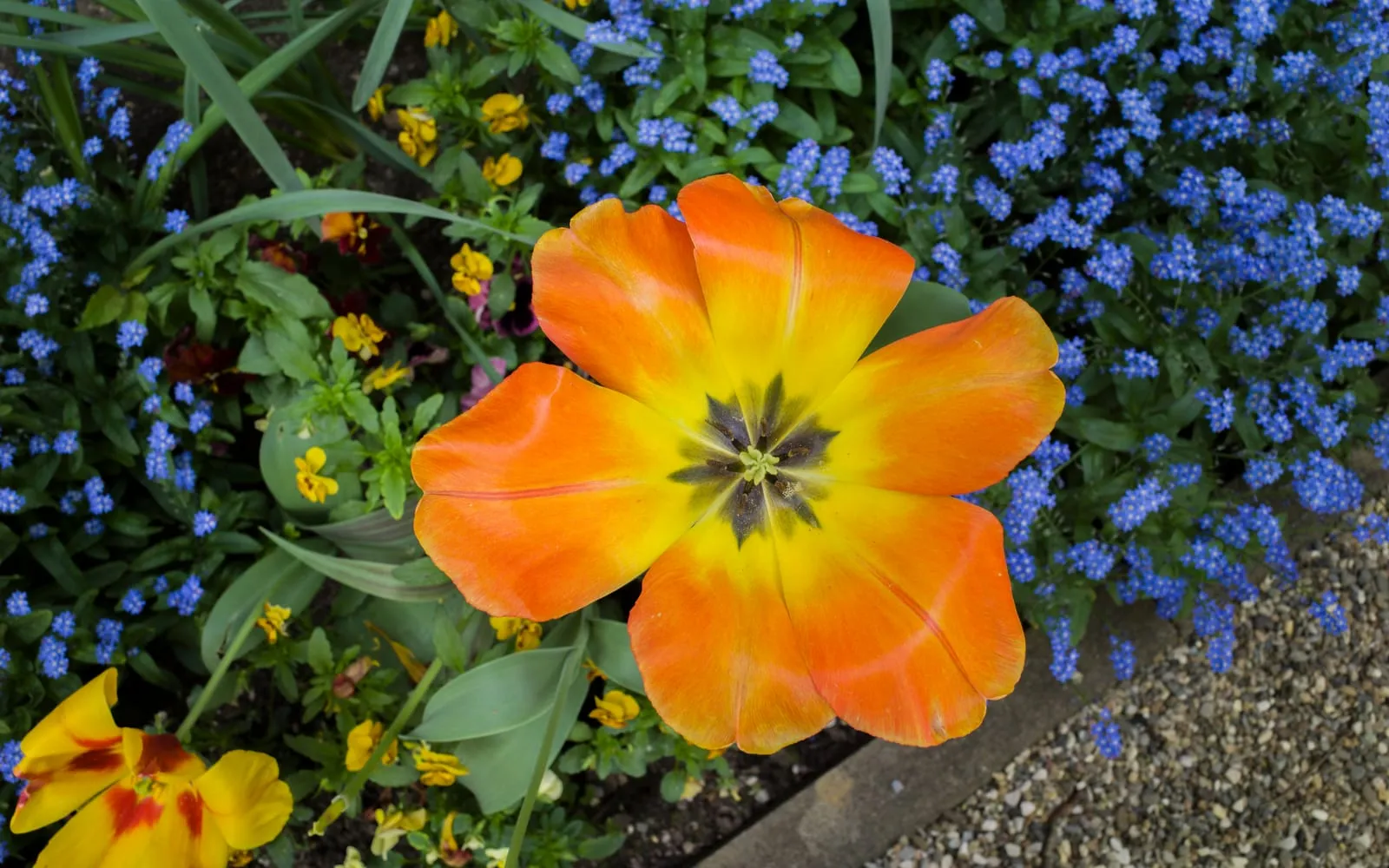
Broad, waxy, grey-green leaves clasping a single upright stem, with one large cup-shaped flower at the top. Modern garden tulips come in every colour except a true blue, and in forms from single early through parrot, fringed, lily- flowered and double.
The flower opens in warmth and closes in cold, and it does this by growing. Cells on the inner face of the petal expand faster than those on the outer when the temperature rises, which levers the cup open, and the reverse happens as it cools. A tulip therefore opens wider each day of its life and eventually cannot close.
Cut tulips carry on growing in the vase, adding several centimetres and bending towards the light. Nothing is wrong when an arrangement rearranges itself overnight.
The bulb is a true bulb wrapped in a papery brown tunic, and it is replaced entirely each year.
Where it is from
The garden tulip is a plant of cultivation rather than a wild species. Its ancestors grow across Central Asia, from Kazakhstan and the Tien Shan mountains west through Iran to Turkey.
Those mountains have cold snowy winters, a short wet spring and a hot bone-dry summer. Every rule for growing tulips comes out of that pattern. They need a proper winter chill to flower, they want water in spring, and they want to bake dry from June onwards.
Cool summers are the problem. Soil that stays damp when a tulip expects to be roasting is why the bulbs shrink and split rather than building themselves back up.
How it grows
A bulbous perennial with a completely annual bulb. The bulb you plant is used up producing this year’s flower, and a new bulb forms beside it, together with smaller offsets.
Whether that new bulb is bigger or smaller than the old one decides next spring. Given the hot dry summer of its homeland it is bigger. Given a cool damp June it is smaller, and it splits into several undersized bulbs that make leaves and no flower.
This is why most gardeners in a cool climate treat tulips as annuals, lifting or replacing them each year, and it is a reasonable choice rather than an admission of failure.
Some groups perennialise far better. Darwin hybrids, Fosteriana, Kaufmanniana and Greigii tulips, and the small species tulips such as Tulipa sylvestris and Tulipa tarda, come back for years in a dry sunny spot.
Through the seasons
Autumn is planting, and November is the month. Plant 15 to 20 cm deep, which is deeper than most people go, and about 10 cm apart.
Winter is dormancy with roots growing underground. Shoots may show by February.
Spring is flowering, April into May depending on the group. Deadhead as soon as flowers fade so nothing goes into seed.
Summer is the decision point. Either lift the bulbs once the foliage yellows and store them somewhere warm and dry, or leave them in and accept that most will disappoint next year.
Care difficulty
Easy to flower once, harder to flower twice.
The first spring is close to guaranteed, because the bulb arrives with the flower already formed inside it. Nothing you do between November and April changes it much.
The second spring depends entirely on a hot dry summer that a cool damp climate never provides. Lifting the bulbs in July, drying them off and storing them in paper bags somewhere warm is the traditional answer and it works. Planting deeply, at 20 cm rather than 10, is the low-effort alternative, since deeper bulbs split less.
Watering
Water once after planting and then leave them to the weather. Autumn and winter rain is what they want.
Water only if spring is unusually dry and the plants are in bud.
Stop entirely once flowering finishes. Summer moisture around a dormant tulip bulb is what rots it and what makes it split, so keep them out of borders that get irrigated in July.
Containers need watching in both directions. Keep the compost just moist through growth, then stop and move the pot somewhere dry.
Warning signs, diseases and pests
Tulip fire, caused by Botrytis tulipae, is the disease that matters. Shoots emerge twisted and withered, leaves carry brown scorched patches with a grey mould in damp weather, and flowers develop small bleached spots. It spreads fast and survives in the soil as sclerotia for several years.
There is no cure. Dig up and bin affected plants including the bulbs, do not compost them, and do not plant tulips in that ground for at least three years. Planting late into cold soil, spacing generously and avoiding overhead watering all reduce the risk.
Squirrels and mice dig newly planted bulbs, mostly in the first few weeks. Chicken wire laid over the bed just under the surface stops them.
Slugs graze emerging shoots in a mild winter.
Bulbs that rot in the ground are usually in soil that stays wet. Add grit, or grow in pots.
Growing environment
Full sun. Tulips in shade produce weak stems that lean, and the colours come out muddy.
Fully hardy to about -30 deg C, and the winter cold is a requirement. Bulbs need twelve to sixteen weeks below about 9 deg C to flower, so from zone 8 upwards they have to be chilled in a refrigerator first.
Soil must drain freely. Tulips prefer neutral to alkaline ground and dislike acid soil, so lime helps on an acid site. Heavy clay is the worst case, and adding grit to the planting hole is worth the effort.
Depth is the commonest mistake. Plant at 15 to 20 cm. Shallow bulbs split into non-flowering offsets and are easier for animals to find.
Shelter matters for the taller groups, which snap in wind. Position them where a wall or hedge takes the worst of it.
Feeding
If you are treating tulips as annuals, skip feeding entirely. It changes nothing.
If you intend to keep them, feed with a high-potassium fertiliser as soon as the flowers fade, while the leaves are still green and building the new bulb. Tomato feed is ideal.
Avoid nitrogen-rich feeds, which produce soft leafy growth and encourage tulip fire.
Bone meal at planting helps on thin soils and does nothing on good ones.
Troubleshooting
Wonderful the first year, thin the second. Normal wherever summers are cool and damp. Lift and dry the bulbs each summer, plant deeper, or choose Darwin hybrids and species tulips which perennialise properly.
Leaves but no flowers. The bulb split into undersized offsets. Lift, discard anything smaller than about 3 cm across, and replant the large ones deeply.
Twisted, withered shoots with brown scorching. Tulip fire. Remove and bin the whole plant with its bulb, and do not replant tulips there for three years.
Bulbs missing after planting. Squirrels or mice. Cover the bed with wire mesh next autumn.
Stems bending and lengthening in the vase. Tulips keep growing after cutting and bend towards light. Turn the vase, or enjoy it.
Flowers open flat and fall apart quickly. Warm weather. Tulips last far longer in a cool room or a cold spring.
Streaked and feathered petals on a weak plant. Tulip breaking virus. It is the effect that caused the seventeenth-century mania, and the plant is infectious to others. Dig it out.