
Edible
Spinach
Spinacia oleracea
Also known as True spinach, Annual spinach
How to grow spinach, Spinacia oleracea. Stopping it bolting in summer, sowing for autumn and spring crops, and the perpetual spinach that does not bolt.
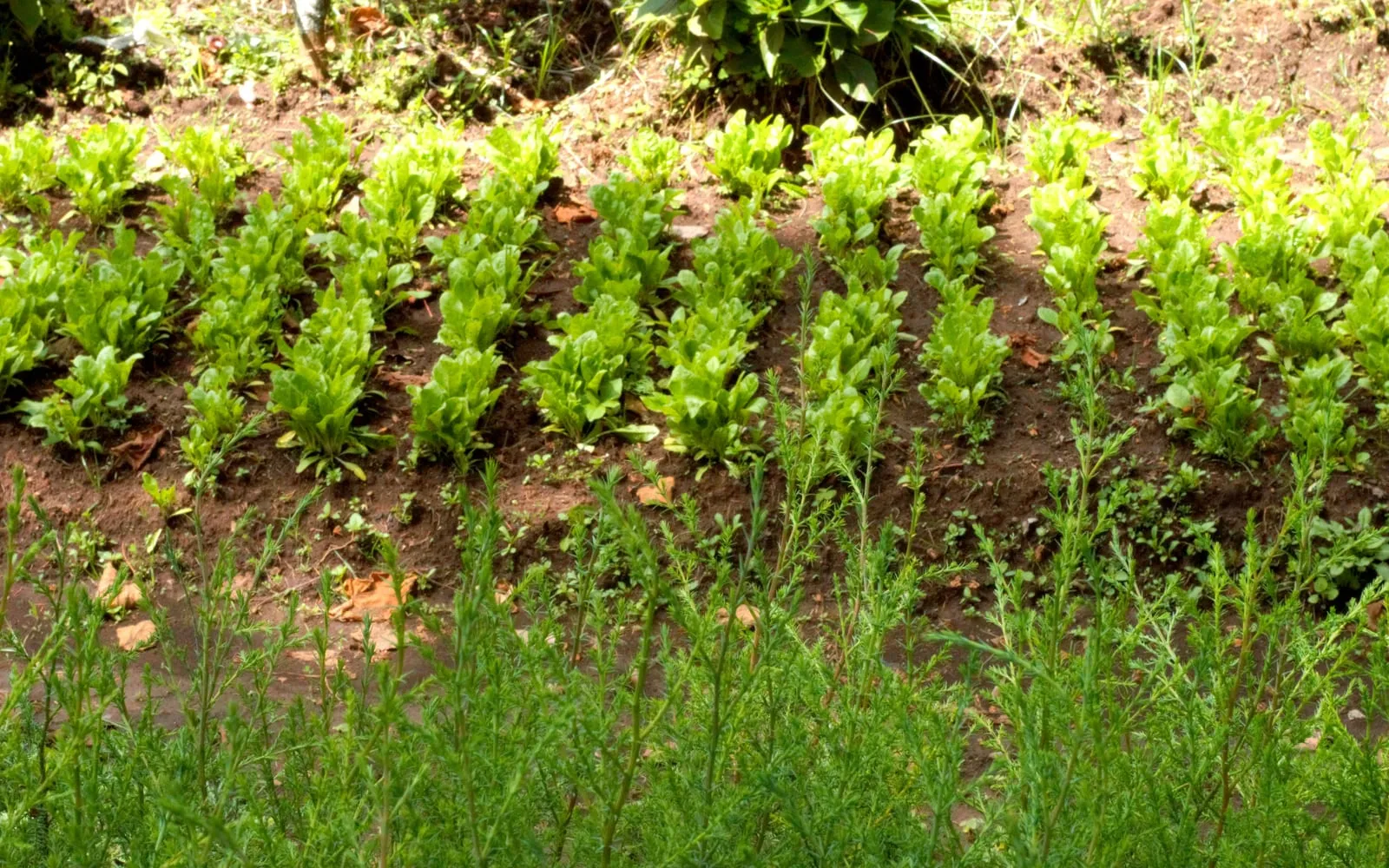
At a glance
- Difficulty
- Moderate
- Water
- Regular and generous, since drought triggers bolting
- Light
- Full sun in spring and autumn, and light shade in summer
- Temperature
- Hardy, and it stands frost as a small overwintering plant
- Hardiness
- USDA 2-9, RHS H5, hardy to -10 C
- Type
- Annual, cropping quickly and bolting once day length increases
- Height
- 20-30 cm in leaf, and 60 cm when bolted
- Native to
- Central and south-west Asia, probably from Persia
- Best month
- March in the Northern Hemisphere, September in the Southern Hemisphere
Spinach bolts once the day passes about 13 hours, whatever the temperature, which is why a spring sowing runs to seed in early summer even in a cool year and why midsummer sowings are pointless. Spring and autumn are the windows everywhere. Overwintered plants stand hard frost and start again in February.
Hardiness zones describe winter cold alone. Summer heat, humidity, rainfall and the length of the growing season decide as much, so treat the range as the outer limit rather than as a recommendation.
Every month named in this guide is for the temperate Northern Hemisphere. If you garden in the Southern Hemisphere, shift each one by six months, so March becomes September. Closer to the equator the wet and dry seasons matter more than the calendar, and the shift stops being a useful guide.
Not known to be toxic
Spinach is a food crop and carries no toxicity concern in normal use. It is not listed by the RHS as a potentially harmful garden plant. The ASPCA lists spinach as toxic to cats, dogs and horses on the basis of its oxalate content, and the practical position is that a dog eating a little cooked spinach comes to no harm while large or repeated quantities are a genuine concern for an animal with kidney problems. For people, spinach is high in oxalic acid, which binds calcium and iron and reduces their absorption, and which contributes to kidney stones in people prone to them. That is a reason for variety in the diet rather than avoidance, and cooking and discarding the water reduces the oxalate substantially. Spinach is also high in vitamin K, which matters for anybody taking warfarin, where consistency of intake matters more than quantity. Spinach concentrates nitrate when heavily fertilised with nitrogen, so avoid piling it on late and do not harvest immediately after a heavy feed.
Sources: RHS potentially harmful garden plants, ASPCA toxic and non-toxic plants
About
Spinach bolts, and everything about growing it is arranged around that fact.
The plant responds to long days and to any stress by running up a flower stem, at which point the leaves turn bitter and coarse and the crop is over. Sown in May in full sun on dry ground it can bolt within six weeks, before you have picked anything worth eating.
The way round it is to sow it when the days are short and getting shorter, or short and getting longer only slowly. That means late summer and early autumn for an autumn and winter crop, and February to April for a spring crop, and treating a midsummer sowing as optional.
Steady moisture and rich soil do the rest. Spinach that dries out bolts, and spinach that runs short of nitrogen bolts, so the crop rewards generous ground preparation more than almost any other leaf.
Perpetual spinach, sometimes sold as spinach beet, is the useful alternative. It is a chard rather than a true spinach, it does not bolt in the same way, it crops for months from one sowing, and it stands the winter. The leaves are coarser and the plant is far more forgiving.
Grow true spinach for the tender leaves in spring and autumn, and perpetual spinach to cover the summer.
Appearance and character
An annual forming a low rosette of leaves 20 to 30 cm across, running up to a flower stem 60 cm tall when it bolts.
Leaves are soft, smooth or slightly crinkled, dark green, on long stalks, and the shape varies from rounded to arrow-shaped depending on cultivar.
Round-seeded cultivars have smoother rounder leaves and are the summer types. Prickly-seeded cultivars have more pointed leaves and are hardier, suiting autumn sowing, and the names refer to the seed rather than the plant.
Baby leaf spinach is the same plant harvested young at 5 to 10 cm, sown thickly and cut whole.
Bolting produces a rapidly elongating central stem with narrow pointed leaves and small green flowers, and the plant is separately male and female.
Perpetual spinach, Beta vulgaris subsp. cicla, looks quite different, with larger coarser leaves on thicker stalks, and it is a beet rather than a spinach.
New Zealand spinach, Tetragonia tetragonioides, is another substitute, a sprawling tender plant with thick triangular leaves that thrives in summer heat.
Where it is from
Central and south-west Asia, probably originating in Persia, where it was cultivated by at least the sixth century.
It reached China in the seventh century as a gift from Nepal, where it is still called Persian vegetable, and it spread west into the Mediterranean through the Arab world by the eleventh century.
Spinach reached England in the fourteenth century and was well established by the sixteenth.
The bolting behaviour follows from its origin as a cool-season crop in a region with a short spring, and the plant is programmed to flower as day length increases.
The association between spinach and iron is a long-standing exaggeration. Spinach contains a reasonable amount of iron, and the oxalic acid it also contains binds much of it and reduces absorption, so it is a less effective iron source than the reputation suggests. The story that a misplaced decimal point in a nineteenth-century analysis inflated the figure tenfold appears itself to be a myth, and the real explanation is simpler, which is that the oxalate was not accounted for.
Popeye began appearing in 1929 and the spinach association dates from then.
How it grows
Dig in plenty of well-rotted manure or compost before sowing. Spinach is a hungry crop and rich moisture-retentive soil is the main defence against bolting.
Rake to a fine tilth and aim for pH 6.5 to 7.
Sow at the right time. This is the whole skill.
Sow the spring crop from February to April, under cloches or outside, for picking from April to June.
Sow the autumn and winter crop from late August to mid-September, for picking in October and November and again from March after overwintering.
Sow a summer crop from May to July only in light shade with reliable water, using a bolt-resistant cultivar, and expect a short picking window.
Sow direct rather than transplanting, since spinach dislikes root disturbance.
Sow thinly at 2 cm deep in rows 30 cm apart, and thin to 15 cm apart for full-sized plants or 7 cm for baby leaf.
Sow every three weeks for a succession.
Water generously and never let it dry out. Drought is the commonest trigger for bolting.
Mulch between the rows to conserve moisture.
Top dress with a nitrogen feed once the plants are established, since a shortage of nitrogen also triggers bolting.
Provide light shade over a summer sowing, from a taller crop, a shade net or the north side of a row of beans.
Pick regularly from the outside, taking the outer leaves and leaving the growing point. Frequent picking keeps the plant producing.
Cut baby leaf spinach whole with scissors 2 cm above the crown, and it regrows for two or three cuts.
Cover an autumn sowing with a cloche or fleece from November, which gives usable leaves through the winter and a much earlier spring crop.
Pull and compost a bolted plant. The leaves turn bitter and it will not recover.
Rotate, and follow spinach with a crop that wants less nitrogen.
Through the seasons
Winter overwintered autumn-sown plants sit low under cloches or fleece, giving occasional pickings.
Spring is the best cropping period from overwintered plants and early sowings, and the main sowing season.
Summer is the difficult season, when spinach bolts. Sow in light shade with a bolt-resistant cultivar, or grow perpetual spinach instead.
Autumn is the second good cropping period, from a late August or early September sowing.
Care difficulty
Moderate, and the difficulty is one thing.
Spinach is easy to germinate, quick to crop and undemanding in every respect except that it bolts, and it bolts readily.
Sowing at the right time of year is most of the answer. A February or a September sowing behaves quite differently from a June one, and a gardener who accepts that spinach is a spring and autumn crop finds it straightforward.
Rich soil, steady moisture and a nitrogen top dressing handle the rest.
Downy mildew is the one significant disease, and choosing a resistant cultivar deals with it.
Watering
Water generously and regularly, keeping the soil damp at all times. This is the single most best way to delay bolting.
Water in the morning rather than the evening, which reduces mildew.
Mulch between the rows to hold moisture.
A summer sowing needs watering almost daily in hot weather, which is part of why it is a difficult season for the crop.
Never let a young plant check. A dry spell at the seedling stage produces a plant that bolts within weeks.
Warning signs, diseases and pests
A rapidly elongating central stem with narrow pointed leaves is bolting, triggered by long days, drought, heat, crowding or a shortage of nitrogen. The leaves turn bitter and the plant will not recover. Pull it, and sow at the right season next time.
Yellow blotches on the upper leaf surface with a grey-purple felt underneath is downy mildew, which is the main spinach disease. It follows crowding and damp weather. Thin the rows, water at the base in the morning, clear affected leaves, and grow a resistant cultivar, since resistance varies enormously between them.
Pale winding blotches inside the leaf, going brown, is spinach leaf miner. Pick off and bin affected leaves and net the crop with fine mesh.
Seedlings pulled out of the row is birds. Cover with netting or fleece until established.
Leaves holed and seedlings eaten is slugs and snails.
Small yellow speckles with fine webbing in hot dry weather is red spider mite, which is rare outdoors.
Pale weak growth is usually a shortage of nitrogen, which also brings bolting forward.
Seed failing to germinate in summer is heat. Spinach germinates poorly above about 25 deg C, which is another reason midsummer sowings disappoint.
Growing environment
Full sun for spring and autumn crops, and light shade for anything sown in summer.
Rich, moisture-retentive, well-drained soil, generously manured, at around pH 6.5 to 7.
Hardy. Autumn-sown plants overwinter outdoors and do better under a cloche or fleece.
Thin to 15 cm apart for full-sized plants and 7 cm for baby leaf, in rows 30 cm apart.
It suits a vegetable bed, a raised bed, a container, a windowbox for baby leaf, or the shaded side of a row of taller crops in summer.
Rotate with the rest of the vegetable plot, and it fits well after a legume, which leaves nitrogen behind.
Grow it as a catch crop between slower vegetables, since it occupies the ground for only six to ten weeks.
Grow perpetual spinach or chard alongside it to cover the summer, since neither bolts the way true spinach does and both crop for months.
Grow New Zealand spinach as another summer substitute if you have space, since it thrives in the heat that kills true spinach.
Feeding
Manure or compost the ground generously before sowing, which matters more than anything applied later.
Apply a general balanced fertiliser before sowing.
Top dress with a nitrogen feed once the plants are established, since nitrogen shortage brings bolting forward.
Avoid heavy nitrogen immediately before harvest, since spinach concentrates nitrate.
Feed container-grown plants with a liquid feed every two weeks.
Follow spinach with a crop that wants less nitrogen, since it takes a good deal out of the ground.
Troubleshooting
My spinach bolted before I picked anything. Sown at the wrong time of year, or allowed to dry out. Spinach runs to flower as day length increases. Sow February to April and late August to mid-September, keep it watered and well fed, and treat summer as the difficult season.
Can I grow it in summer at all? With difficulty. Sow in light shade, use a bolt-resistant cultivar, water almost daily, and expect a short picking window. Perpetual spinach or chard is the better summer answer.
What is perpetual spinach? A chard, Beta vulgaris, sold as spinach beet. It does not bolt the way true spinach does, crops for months from one sowing and stands the winter. The leaves are coarser and the plant is far more forgiving.
The leaves have yellow blotches with grey mould underneath. Downy mildew, the main spinach disease. Thin the rows, water at the base in the morning, remove affected leaves and grow a resistant cultivar, since resistance varies a great deal.
There are pale blisters inside the leaves. Spinach leaf miner. Pick off and bin the affected leaves, and cover the crop with fine insect mesh.
How should I pick it? Take the outer leaves regularly and leave the growing point, which keeps the plant producing. For baby leaf, cut the whole plant with scissors 2 cm above the crown and it regrows two or three times.
Can I transplant it? Poorly. Spinach dislikes root disturbance and a checked plant bolts. Sow direct where it is to grow.
Should I worry about the oxalate? It is a reason for variety in the diet rather than avoidance. Cooking and discarding the water reduces oxalate substantially, and it matters most for anyone prone to kidney stones.
Is it a good source of iron? Less than the reputation suggests. Spinach contains iron, and the oxalic acid binds much of it and reduces absorption.
Spinach problem guides
Not sure what is wrong? See the common vegetable pests guide.