
Edible
Cauliflower
Brassica oleracea var. botrytis
Also known as Cauli, Romanesco
How to grow cauliflower, Brassica oleracea var. botrytis. The hardest brassica, why buttoning and blindness happen, and blanching the curd white.
At a glance
- Difficulty
- Difficult
- Water
- Regular and generous, without any check at all
- Light
- Full sun
- Temperature
- Summer types are frost tender, and winter types stand hard frost
- Hardiness
- USDA 3-9, RHS H5, hardy to -10 C
- Type
- Annual or biennial depending on type, harvested once
- Height
- 40-60 cm
- Native to
- Bred from wild cabbage, developed in the eastern Mediterranean and Italy
- Best month
- June in the Northern Hemisphere, December in the Southern Hemisphere
The fussiest of the brassicas, because curd initiation happens inside a narrow temperature band and any check throws it out. Heat, drought or cold at the wrong moment gives buttoning, riciness or no curd. Summer types want 15 to 20 deg C through initiation; winter types need a cold period first and then stand hard frost.
Hardiness zones describe winter cold alone. Summer heat, humidity, rainfall and the length of the growing season decide as much, so treat the range as the outer limit rather than as a recommendation.
Every month named in this guide is for the temperate Northern Hemisphere. If you garden in the Southern Hemisphere, shift each one by six months, so June becomes December. Closer to the equator the wet and dry seasons matter more than the calendar, and the shift stops being a useful guide.
Not known to be toxic
Cauliflower is a food crop and carries no toxicity concern for people. It is not listed by the RHS as a potentially harmful garden plant, and the ASPCA does not list it as toxic to cats and dogs, though brassicas cause wind and digestive upset in dogs eating a lot of them. Raw brassicas in very large daily quantities affect iodine uptake in people with an existing thyroid condition, which is a matter of moderation rather than avoidance. Cauliflower is lower in vitamin K than kale or broccoli, so the warfarin consideration that applies to those crops matters less here. The livestock problem associated with brassica forage crops, where heavy grazing causes anaemia and goitre in sheep and cattle, does not arise with a garden vegetable. Where a plant is unlisted by both sources rather than positively assessed, read that as no hazard recorded, and in the case of a vegetable that has been eaten in Britain for four centuries the position is straightforward.
Sources: RHS potentially harmful garden plants, ASPCA toxic and non-toxic plants
About
Cauliflower is the hardest common vegetable to grow well anywhere because it will not tolerate any interruption.
The plant has to grow steadily and without a check from germination to harvest. A week of drought, a spell of cold, becoming pot-bound in a module, root disturbance at transplanting, a shortage of nitrogen, any of these stops the plant and it responds by producing a tiny curd the size of a coin and then stopping altogether. That is called buttoning, and it is the classic cauliflower failure.
Blindness is the other one. The growing point is damaged by frost, by pests or in handling, and the plant makes a large healthy leafy rosette with nothing in the middle at all.
Neither can be corrected once it has happened. Everything about growing cauliflower is about preventing a check rather than curing one.
Set against that, it is rewarding. A well-grown cauliflower is a substantial crop from one plant, romanesco with its fractal green spirals is one of the handsomest vegetables there is, and the winter-heading types crop in April when a plot is otherwise empty.
Anyone starting brassicas is better off with kale or calabrese first.
Appearance and character
A stout leafy plant reaching 40 to 60 cm, producing a single dense curd at the centre.
The curd is a mass of arrested flower buds, tightly packed into a solid dome 10 to 25 cm across.
Colour is white in the standard types, and cultivars exist in orange, purple and lime green.
Romanesco produces a lime-green curd made of spiralling conical florets, arranged in a repeating fractal pattern, and it is the same crop grown the same way.
Leaves are large, blue-green, upright, and they wrap partly over the developing curd in some cultivars, which self-blanches it.
The plant produces one curd and stops. There are no side shoots and no second crop.
Left too long the curd loosens, breaks into separate florets and runs to flower.
Types are grouped by season. Summer and autumn cauliflowers are sown in spring for a summer or autumn crop. Winter cauliflowers, sometimes sold as heading broccoli, are sown in spring and stand through the winter to crop from March to May.
Where it is from
Bred from wild cabbage, Brassica oleracea, with the flower-head selections developed around the eastern Mediterranean and refined in Italy.
The crop is documented in the Middle East from the twelfth century and reached Italy and then northern Europe by the sixteenth.
It arrived in England around 1600 and became a fashionable vegetable, and Britain has bred a distinct group of hardy overwintering cultivars that few other countries grow.
Cauliflower is the same species as cabbage, kale, broccoli, Brussels sprouts and kohlrabi, each being a selection of a different part of the same wild plant.
Romanesco appears in Italian records from the sixteenth century and reached temperate gardens in the late twentieth.
Lincolnshire and Cornwall are the main British commercial producing areas, Cornwall specifically because its mild winters suit the overwintering types.
The curd is a mass of immature flower shoots arrested in development, which is why any stress that pushes the plant towards flowering produces a small premature curd.
How it grows
Lime the bed the autumn before if the soil is acid, aiming for pH 6.5 to 7.
Dig in a generous quantity of well-rotted manure or compost the autumn before. Cauliflower is the hungriest brassica and wants richer ground than the others.
Tread the bed firm before planting and do not fork it again.
Sow in modules rather than a seedbed, and plant out before the roots fill the module. Root disturbance and becoming pot-bound both cause buttoning.
Sow summer cauliflower in January or February under cover, or from March to May outside. Plant out in May or June and harvest from July to September.
Sow autumn cauliflower in April or May, plant out in June or July, and harvest from September to November.
Sow winter cauliflower in April or May, plant out in June or July, and harvest from March to May.
Plant out when the plants have four or five true leaves and no later. Plant at 60 cm spacing for summer types and 70 cm for winter types.
Plant to the base of the lowest leaves and firm in hard.
Water in generously and keep the plants watered without exception. Cauliflower needs more water than any other brassica, and 10 to 20 litres per square metre weekly in dry weather is realistic.
Net the bed with fine insect mesh from planting to harvest.
Top dress with a nitrogen feed six weeks after planting, and again if growth slows.
Mulch after planting to hold moisture.
Blanch the curd on white cultivars once it starts to form, by snapping two or three outer leaves over it or tying them together above it. This keeps the curd white, since sunlight yellows it. Many modern cultivars self-blanch and need no help.
Protect winter types from the worst frost by bending a leaf over the curd.
Harvest promptly. Cut while the curd is still tight and smooth, with a few outer leaves attached to protect it. A curd left a few days too long loosens and goes ricey.
Cut in the morning while the curd is cool.
Rotate. Do not grow brassicas in the same ground more than one year in three or four.
Through the seasons
Winter is when the winter-heading types stand in the ground, and the time to lime and manure next year’s bed.
Spring harvests winter cauliflower from March to May, and is the main sowing season.
Summer plants out and harvests summer types from July, and is the period when watering matters most.
Autumn harvests autumn cauliflower, and the winter types are building their frames.
Care difficulty
Difficult, and the hardest of the common brassicas.
The plant demands uninterrupted growth. Rich firm soil, generous steady water, enough nitrogen, module-raised plants transplanted before they are pot-bound, and no cold check. Missing any of those produces buttoning or a small poor curd.
Blindness from a damaged growing point is the other unrecoverable failure.
Everything else about it, netting, club root, pigeons, is the same as any brassica.
The realistic advice for a first-time brassica grower is to start with kale or calabrese and come to cauliflower once the bed is set up and the routine is established.
Watering
Water more than any other brassica. Cauliflower is the thirstiest of them and drought is the commonest cause of a poor curd.
Give 10 to 20 litres per square metre weekly in dry weather, applied as a thorough soak.
Water in generously at transplanting and through the first fortnight.
Keep the supply steady. Fluctuation between dry and wet is as damaging as continuous drought.
Mulch after planting to conserve moisture, keeping it clear of the stems.
Water winter types through dry autumn spells while they build their frames.
Warning signs, diseases and pests
A tiny curd the size of a coin on a small plant, which then stops growing, is buttoning. It follows a check to growth, from drought, cold, becoming pot-bound in a module, root disturbance at transplanting, or a shortage of nitrogen. It cannot be reversed. Raise plants in modules, plant out promptly, feed and water generously.
A large healthy leafy plant with no curd at all is blindness, caused by damage to the growing point from frost, pests or handling. It cannot be corrected. Remove the plant.
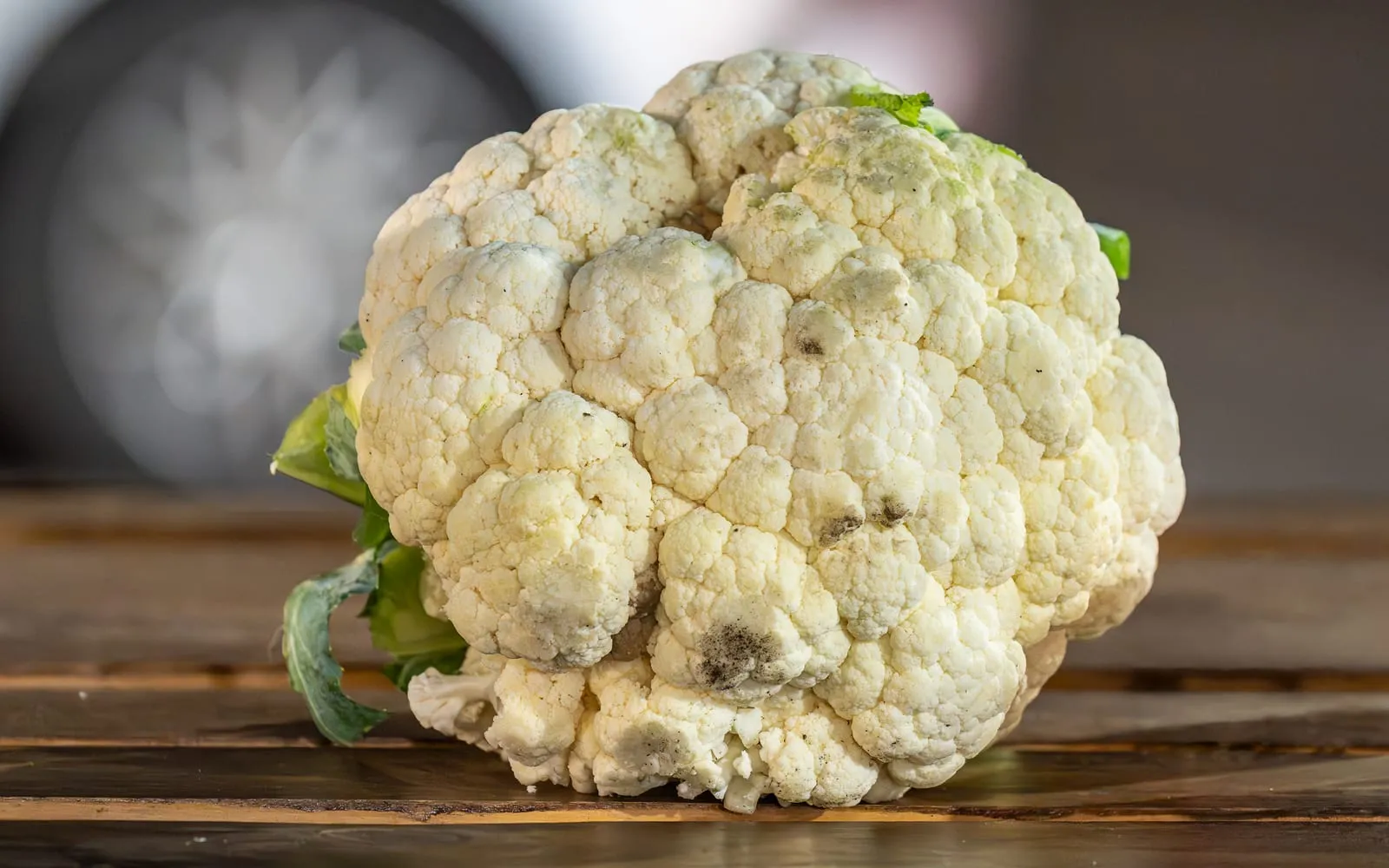
A curd that is loose, separated into distinct florets, or with a fuzzy granular surface, is ricey curd, caused by heat, drought or leaving it too long. Harvest promptly and keep the plants watered.
A yellow or brown curd is sun exposure. Blanch it by folding outer leaves over it, or grow a self-blanching cultivar.
Brown or purple discolouration in the curd on winter types is frost damage. Fold a leaf over the curd in cold weather.
Caterpillars in the curd is cabbage whites. Net the crop, and soak harvested curds in salted water for half an hour.
Small pinholes and papery windowpane patches, with a thin pale green caterpillar that drops off on a silk thread when touched, is diamondback moth, the most economically damaging brassica pest worldwide. The same net keeps it out.
Swollen distorted club-shaped roots with stunted wilting plants is club root. There is no cure and the spores last up to twenty years. Lime to pH 7.2, improve drainage and raise plants in large pots first.
Young plants wilting and dying with roots eaten away is cabbage root fly. Fit collars or net the crop.
Harlequin bug drains the leaves into pale cloverleaf-shaped blotches across the southern and central United States, where it can overwinter, and turns up further north as a seasonal visitor. Hand-pick the boldly coloured adults, nymphs and banded egg clusters. It has not established outside the Americas.
Growing environment
Full sun.
Firm, rich, deep, moisture-retentive soil limed to pH 6.5 to 7 and generously manured the autumn before. Cauliflower will not do well on thin or hungry ground.
Summer types are frost tender at the curd. Winter-heading types are hardy and stand a temperate winter, and they crop in spring.
Allow 60 cm between summer plants and 70 cm for winter types.
It suits an allotment or a well-prepared vegetable bed. It is a poor container crop because of the water and feeding demands.
Rotate on a three or four year cycle with the other brassicas, following legumes or potatoes.
Grow the whole brassica bed under one run of netting.
Grow romanesco for a handsome and slightly more forgiving version of the same crop, and grow a winter-heading cultivar if you want a spring harvest from ground that would otherwise be idle.
Feeding
Manure or compost the ground generously the autumn before planting. Cauliflower is the hungriest brassica.
Apply a general balanced fertiliser before planting.
Top dress with a high-nitrogen feed about six weeks after planting, hoeing it in and watering it.
Top dress again if growth slows at any point, since a check is what causes buttoning.
Top dress winter types in late February as they start into growth.
Avoid heavy nitrogen in late autumn on overwintering plants, which produces soft growth that frost damages.
Lime the ground in autumn where the pH is below 6.5, keeping lime and manure applications in different seasons.
Troubleshooting
My cauliflower produced a tiny curd and stopped. Buttoning, caused by a check to growth from drought, cold, being pot-bound, root disturbance or a shortage of nitrogen. It cannot be reversed. Raise plants in modules, plant out before the roots fill the cell, and feed and water without interruption.
It made a big leafy plant with nothing in the middle. Blindness, caused by damage to the growing point. There is no remedy. Remove the plant.
The curd has gone loose and grainy. Ricey curd, from heat, drought or leaving it too long. Harvest while the curd is still tight and smooth.
The curd went yellow. Sun exposure. Fold two or three outer leaves over the curd as it develops, or grow a self-blanching cultivar.
Why is cauliflower harder than other brassicas? Because it will not tolerate any interruption to growth, and because it produces one curd and stops. Kale and broccoli both recover from a setback and cauliflower does not.
How much water does it need? More than any other brassica. Ten to twenty litres per square metre weekly in dry weather, applied as a thorough soak rather than a sprinkle.
When do I harvest it? As soon as the curd is full sized, tight and smooth, cutting in the morning with a few outer leaves attached. A few days too late and it loosens.
Can I grow one for spring? Yes. Sow a winter-heading cultivar in April or May, plant out in July, and it stands the winter to crop from March to May.
Should I start with cauliflower? No. Start with kale or calabrese, get the bed prepared and the netting routine established, and grow cauliflower once that is working.
Cauliflower problem guides
Not sure what is wrong? See the common vegetable pests guide.