
Edible
Kale
Brassica oleracea var. acephala
Also known as Borecole, Curly kale, Cavolo nero
How to grow kale, Brassica oleracea var. acephala. The easiest brassica, picking leaves all winter, and why frost improves the flavour.
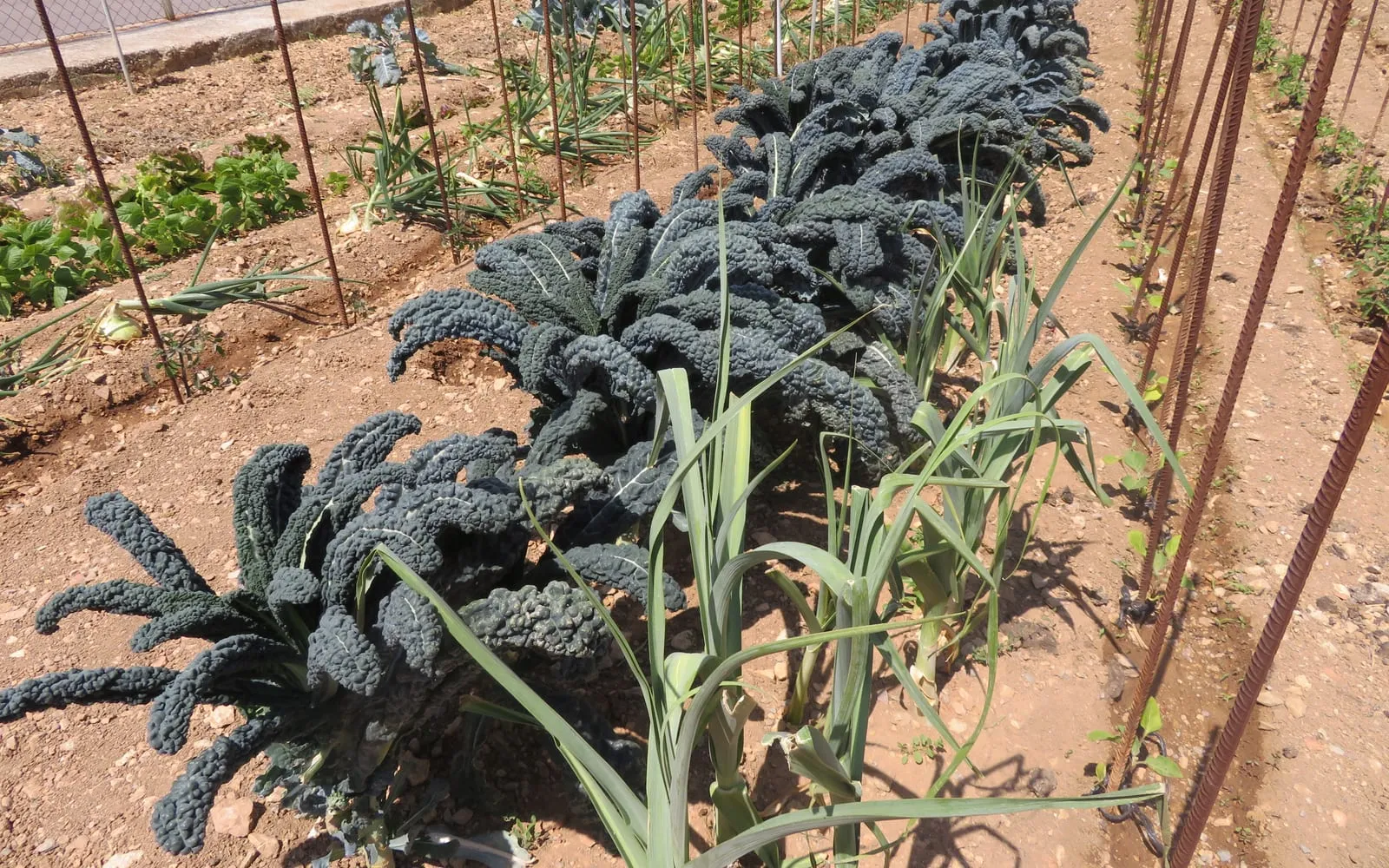
At a glance
- Difficulty
- Easy
- Water
- In dry spells during establishment and summer growth
- Light
- Full sun to light shade
- Temperature
- The hardiest brassica, standing well below -10 deg C
- Hardiness
- USDA 2-10, RHS H7, hardy to -20 C
- Type
- Biennial grown as an annual, cropping from autumn through winter
- Height
- 45-90 cm
- Native to
- Bred from wild cabbage of the Atlantic and Mediterranean coasts of Europe
- Best month
- November in the Northern Hemisphere, May in the Southern Hemisphere
The hardiest brassica by a wide margin, standing -20 deg C and better for it, since frost converts starch to sugar and takes the coarseness out of the leaf. Heat is what it dislikes. Above about 27 deg C the leaves turn bitter and tough, so warm regions grow it as a short winter crop rather than through the summer.
Hardiness zones describe winter cold alone. Summer heat, humidity, rainfall and the length of the growing season decide as much, so treat the range as the outer limit rather than as a recommendation.
Every month named in this guide is for the temperate Northern Hemisphere. If you garden in the Southern Hemisphere, shift each one by six months, so November becomes May. Closer to the equator the wet and dry seasons matter more than the calendar, and the shift stops being a useful guide.
Not known to be toxic
Kale is a food crop and carries no toxicity concern for people. It is not listed by the RHS as a potentially harmful garden plant, and the ASPCA does not list it as toxic to cats and dogs, though brassicas cause wind and digestive upset in dogs eating a lot of them. The livestock point is worth recording because kale is grown as a forage crop in Britain on a large scale. Brassica forage contains S-methylcysteine sulphoxide, which causes haemolytic anaemia in sheep and cattle grazed on kale heavily without other feed, and glucosinolates which affect iodine uptake and can cause goitre. Farmers introduce stock to a kale crop gradually and balance it with hay for exactly that reason. None of this applies to a garden crop or to eating it. Kale is high in vitamin K, which matters for anybody taking warfarin, since a sudden large change in intake affects the dose, and the advice there is consistency rather than avoidance. Raw kale in very large daily quantities affects iodine uptake in people with an existing thyroid condition.
Sources: RHS potentially harmful garden plants, ASPCA toxic and non-toxic plants
About
Kale is the brassica to grow if the others have defeated you.
It has no head to form, so it cannot fail to heart up. It does not need the ruthlessly firm soil that cabbage and Brussels sprouts want. It is the hardiest vegetable in a temperate garden, standing well below -10 deg C without protection. And it crops from October to April, when there is almost nothing else coming out of a vegetable bed.
You pick it leaf by leaf from the bottom of the plant upwards rather than harvesting the whole thing, so a row of six plants supplies a household all winter and keeps producing new growth from the top.
Frost improves it. Cold weather converts starch to sugar in the leaves, and kale picked after a hard frost is noticeably sweeter than the same plant in October.
The types are worth distinguishing. Curly kale is the tightly frilled traditional sort, cavolo nero is the dark blistered Italian one with narrow strap leaves, and red Russian is flatter, softer and better raw.
The one real job is netting it against pigeons, which will otherwise reduce a bed of kale to stems in a hard January.
Appearance and character
A biennial grown as an annual, reaching 45 to 90 cm on a stout upright stem, with no head.
Leaves are held alternately up the stem and are picked from the bottom upwards, leaving a palm-like plant with a tuft of growth at the top by late winter.
Curly kale has deeply frilled tightly curled leaves in blue-green, on cultivars such as ‘Dwarf Green Curled’ and ‘Winterbor’.
Cavolo nero, also called Tuscan kale or black kale, has long narrow strap-shaped leaves in very dark blue-green with a heavily blistered surface.
Red Russian kale has flatter grey-green leaves with purple stems and a softer texture, which suits raw use.
‘Redbor’ is deep purple-red and ornamental enough for a flower border.
Leaves darken and often flush purple after frost.
Left to a second year the plant bolts in spring, sending up branching stems of yellow four-petalled flowers, and the flower shoots are edible and taste like sprouting broccoli.
Where it is from
Bred from wild cabbage, Brassica oleracea, which grows on the sea cliffs of Atlantic and Mediterranean Europe, including chalk cliffs in southern England.
Kale is the oldest form of cultivated cabbage and the closest to the wild plant, since it is selected for leaves rather than for a modified bud. Cabbage, broccoli, cauliflower, Brussels sprouts and kohlrabi are all selections of the same species.
The Greeks and Romans grew it, and it was the standard green vegetable across northern Europe through the middle ages, before heading cabbage became common.
Scotland has a long kale tradition. A kailyard was a kitchen garden, kail was a general word for dinner, and the crop stood through Scottish winters when nothing else did.
Cavolo nero comes from Tuscany, where it is the basis of ribollita and other traditional soups, and it reached temperate gardens in the 1980s.
Kale was promoted heavily in Britain during the Second World War through the Dig for Victory campaign, since it produced a winter green crop on almost any ground.
Ornamental kales, sold for winter bedding in pink, white and purple, are the same species and are edible if bland.
How it grows
Lime the bed the autumn before if the soil is acid, aiming for pH 6.5 to 7.
Dig in well-rotted manure or compost the autumn before and let the ground settle.
Sow from March to June, in a seedbed or in modules. May is a good general date, giving plants ready to go out in July after early potatoes or broad beans come up.
Sow thinly, 1 to 2 cm deep, and thin or prick out to give the seedlings room.
Transplant when the plants have four or five true leaves and are 10 to 15 cm tall, watering the seedbed first and lifting with as much root as possible.
Plant at 45 cm spacing for dwarf curly types and 60 cm for tall cultivars and cavolo nero.
Plant deeply, to the base of the lowest leaves, and firm in well. Kale is less demanding about firmness than cabbage and still benefits from it.
Water in generously and keep watering through the first fortnight.
Net the bed with fine insect mesh from planting through to the end of the season, which excludes cabbage whites in summer and pigeons in winter.
Top dress with a nitrogen feed in late summer to build the plants for winter.
Stake tall cultivars on an exposed site, and earth up the stems in autumn to steady them.
Start picking from October, taking the lower leaves first and working upwards, and never strip a plant bare.
Pick regularly. Frequent picking keeps new leaves coming from the top.
Remove yellowing lower leaves as you go, which reduces whitefly and disease.
Top dress again in late February, which drives a final flush of leaves and then the flower shoots.
Leave a plant or two to bolt in spring and eat the flower shoots, which are excellent and taste like sprouting broccoli.
Rotate. Do not grow brassicas in the same ground more than one year in three or four.
Through the seasons
Winter is the main harvest, and the leaves are sweetest after frost. Pigeon protection matters most now.
Spring gives a final flush of leaves and then the edible flower shoots before the plants are cleared.
Summer is sowing, transplanting and establishment, and the peak season for cabbage whites.
Autumn builds the plants, takes the nitrogen top dressing, and the first picking starts in October.
Care difficulty
Easy, and the easiest of the brassicas by a clear margin.
There is no head to form and therefore no way for it to fail the way cabbage and cauliflower do. It tolerates a wider range of soil, it stands the worst frost a temperate winter produces, and it crops for six months from one planting.
The work is netting it and picking it regularly.
Club root affects it as it does all brassicas, and the response is the same, and kale is better able to grow through a mild infection than cauliflower or cabbage.
Watering
Water in generously at transplanting and through the first fortnight.
Water in dry spells through the summer while the plants are building.
Established plants need little water through autumn and winter, when rainfall does the job.
Kale tolerates dry conditions better than most brassicas once established.
Mulch after planting to conserve moisture, keeping it clear of the stems.
Warning signs, diseases and pests
Leaves reduced to veins in late summer, with caterpillars on the undersides, is cabbage white butterflies. Net the crop with fine insect mesh and rub off any eggs you find.
Small pinholes and papery windowpane patches, with a thin pale green caterpillar that drops off on a silk thread when touched, is diamondback moth, the most economically damaging brassica pest worldwide. The same mesh keeps it out.
Leaves stripped to the stems in hard winter weather is pigeons, which is the main problem with a winter brassica. Net it, and make sure the net is supported clear of the leaves.
A cloud of tiny white insects rising when the plants are disturbed, with sticky leaves and sooty mould, is cabbage whitefly. It is largely cosmetic on kale, and washing the leaves deals with it. Removing yellowing lower leaves reduces the population.
Grey-white mealy colonies in the growing tip with distorted growth is mealy cabbage aphid. Squash small colonies and cut out badly affected tips.
Swollen distorted club-shaped roots with stunted wilting plants is club root. There is no cure and the spores last up to twenty years. Lime to pH 7.2, improve drainage, raise plants in large pots first, and never move soil off the affected ground.
Plants rocking and falling over on an exposed site is wind. Earth up the stems and stake tall cultivars.
Yellowing lower leaves through winter is normal ageing. Pick them off.
Plants bolting in spring is normal at the end of the crop, and the flower shoots are worth eating.
Harlequin bug drains the leaves into pale cloverleaf-shaped blotches across the southern and central United States, where it can overwinter, and turns up further north as a seasonal visitor. Hand-pick the boldly coloured adults, nymphs and banded egg clusters. It has not established outside the Americas.
Growing environment
Full sun to light shade. It tolerates more shade than most vegetables.
Firm, fertile soil limed to pH 6.5 to 7, manured the autumn before rather than at planting.
The hardiest brassica, standing well below -10 deg C, and the flavour improves after frost.
Allow 45 cm between dwarf plants and 60 cm for tall cultivars.
It suits a vegetable bed, an allotment, a raised bed or a large container, and the coloured cultivars such as ‘Redbor’ and cavolo nero are handsome enough for an ornamental border.
Rotate on a three or four year cycle with the other brassicas, following legumes or potatoes.
Grow it under the same netting as the rest of the brassica bed.
Sow it to follow an early crop. Kale sown in May goes out in July after broad beans, early potatoes or garlic have been lifted, which uses the ground twice.
Feeding
Manure or compost the ground the autumn before planting.
Apply a general balanced fertiliser before planting.
Top dress with a high-nitrogen feed in late summer, hoeing it in and watering it, which builds the plants before winter.
Top dress again in late February to drive a final spring flush.
Avoid heavy nitrogen in late autumn, which produces soft growth that suffers in frost.
Lime the ground in autumn where the pH is below 6.5, keeping lime and manure applications in different seasons.
Troubleshooting
Which kale should I grow? Curly kale such as ‘Dwarf Green Curled’ for hardiness and traditional flavour, cavolo nero for Italian cooking and a striking plant, and red Russian for softer leaves that work raw. ‘Redbor’ is purple and ornamental.
When do I sow it? March to June, and May is a good general date because the plants go out in July after an early crop has been lifted.
How do I pick it? From the bottom upwards, taking the lower leaves and leaving the growing point at the top. Pick regularly and never strip a plant bare, and it keeps producing.
Does frost damage it? No, and it improves the flavour. Cold weather converts starch to sugar in the leaves, so kale picked after a hard frost is sweeter.
Pigeons have stripped my plants. The main winter problem. Net the bed with the netting held clear of the leaves on hoops, and keep it on all winter.
There is a cloud of white flies when I touch it. Cabbage whitefly, which is largely cosmetic on kale. Wash the leaves before cooking, and remove yellowing lower leaves to reduce the population.
Can I eat the flower shoots? Yes, and they are one of the better things about the plant. Leave a plant or two to bolt in spring and pick the shoots like sprouting broccoli.
The roots are swollen and the plants wilt. Club root, which affects all brassicas. There is no cure. Lime to pH 7.2, improve drainage and raise plants in large pots so they go out with a good root system.
Can I grow it in a container? Yes, one plant per 30 cm pot in loam-based compost, fed and watered regularly. Cavolo nero and ‘Redbor’ both look well in a pot.
Kale problem guides
Not sure what is wrong? See the common vegetable pests guide.
- Cabbage white caterpillars in late summer
- Diamondback moth, the world's most insecticide-resistant brassica pest
- Pigeons, which strip it in hard winter weather
- Whitefly, which clouds up when the leaves are disturbed
- Mealy cabbage aphid in the growing tips
- Club root, which affects all brassicas
- Harlequin bug across the southern and central US