
Pest
Cutworms
Agrotis and Noctua species
Also called Cutworm, Turnip moth caterpillar, Black cutworm, Surface caterpillar
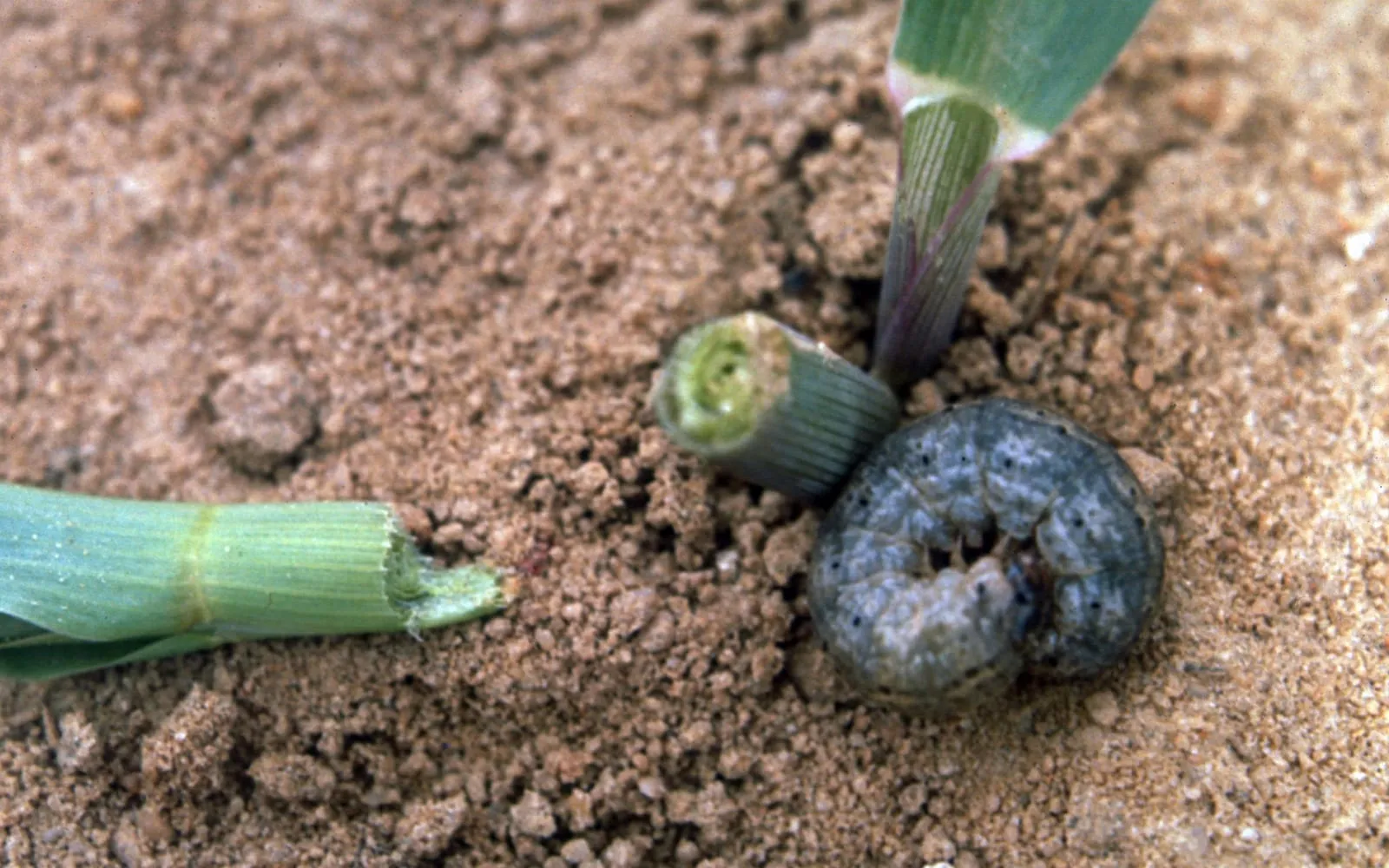
A row of young plants toppled at soil level with the tops left uneaten. The caterpillar responsible is lying curled in the top few centimetres within a hand's width of the stem, and you can find it in a minute.
At a glance
- Type
- Pest
- Cause
- Insect
- Severity
- Destroys the crop or display
- Affects
- Garden plants, Herbs and edibles
- Active
- May to September
- Established in
- Worldwide
What you are seeing
- Young plants toppled over at soil level with a clean cut through the stem
- The severed top left lying beside the stump rather than taken away
- Losses appearing overnight and spreading a plant or two further each night
- A fat soft caterpillar, grey, brown or greenish, that curls tightly into a C when touched
- The caterpillar found in the top 5 cm of soil within a hand's width of the damaged plant
- Older plants with the stem ringed and gnawed at the base rather than cut through
- Shallow bites into potato tubers, carrot shoulders and celery hearts at soil level
- Nothing to see by day, and the damage always fresh in the morning
Before you treat anything
Nothing here is harmful. Nematodes are safe around children, pets and wildlife, and no insecticide appears on this page because a collar round the stem and a minute spent digging beat anything sprayed at a pest that is underground when you are awake.
What you are looking at
You go out in the morning and a young plant is lying on its side. The stem has been cut clean through at soil level, and the top is on the ground beside the stump where it fell.
That last part is the identification. Something that eats the plant carries it off or chews it up. A cutworm bites through the stem, the plant falls over, and the caterpillar carries on to the next one. The leaves lying uneaten beside a neat stump are the signature.
The next night another plant a little further along has gone the same way, and the night after that a third. One caterpillar works down a row.
On older plants the damage changes shape. Instead of cutting the stem through it gnaws a ring round the base, or takes shallow bites out of a potato, a carrot shoulder or a celery heart where they meet the soil.
Find the caterpillar in a minute
Cutworms feed at night and spend the day just under the surface, close to what they were eating. Scrape the top 5 cm of soil away in a circle a hand’s width around the cut stem and run it through your fingers.
What comes up is a plump smooth caterpillar 2 to 5 cm long, grey, dull brown, pinkish or greenish depending on the species, with no hairs and no bright markings. Touch it and it curls into a tight C and stays there.
Take it out and the row stops losing plants. One caterpillar is usually all there is, which is why a minute with your fingers in the soil beats everything else here.
A habit rather than a species
Cutworm names a way of feeding shared by the caterpillars of several dozen night-flying moths, most of them noctuids. The turnip moth and the large yellow underwing account for most of it across Europe, and the black cutworm turns up almost everywhere, migrating long distances each year.
The moths lay in late spring and summer onto weedy ground, grass and bare soil, often several hundred eggs at a time. Young caterpillars feed on leaves near the ground and do little harm. As they grow they move down to the soil and start cutting stems, and the last two stages do nearly all the damage.
Where the summer is long enough there are two generations, so the damage comes in waves with a quiet spell between them.
Dry seasons are the bad ones. Small caterpillars die in wet soil, so a June that stays damp kills most of a generation before it ever reaches the size where it can fell a plant. On light sandy ground in a dry summer, the same brood comes through in numbers.
The collar settles it
Anything that stops the caterpillar reaching the stem stops the damage completely, and a collar is the cheapest way of doing it.
A toilet roll tube, a cardboard strip stapled into a ring, a plastic bottle with the ends cut off, or a short length of drainpipe all work. Push it 3 cm into the soil so nothing crawls under, and leave 5 cm standing above. Slide it over the transplant at planting time and take it off when the stem has thickened, or let the cardboard rot in place.
For a bed of lettuce or brassicas set out as plants this is a few minutes’ work and it removes the problem for the season. For a direct-sown row of carrots it is impractical, which is where the watering, the hoeing and the clean seedbed have to carry it instead.
What to do about it
Dig round the stump the morning you find the first plant down, and take the caterpillar out.
Fit a collar round every transplant that is worth the trouble.
Clear the weeds out of a bed a few weeks before you sow into it.
Water a seedbed through a dry spell, since wet soil kills the small ones.
Cultivate a fortnight before sowing and again when a crop comes out.
Hoe between the rows through the season.
Go out with a torch an hour after dark and pick them off the surface.
Raise plants in modules so they go out with a stem too thick to cut.
Water on Steinernema carpocapsae in the evening onto warm damp soil if the losses keep coming.
What it gets mistaken for
Slugs shred the leaves and leave slime trails, and the plant stays standing.
Wireworms sever seedlings the same way, and the grub is thin, stiff, shiny and orange rather than fat and soft.
Damping off collapses a seedling with a shrivelled darkened stem base, still attached.
Cabbage root fly wilts a transplant over days and leaves white maggots at the root plate.
Rabbits bite through at an angle and take the top away.
Mice dig the seed up and leave scrapes rather than a standing stump.
What to do, in order
Start here
Prevention, and the changes that stop the problem returning. Most of these pages should end at this tier.
- Keep the bed free of weeds before you sow
- Moths lay onto weedy ground and onto grass, and the young caterpillars feed on whatever is there before they move on to the crop. A bed cleared of weeds a few weeks ahead of sowing carries far fewer of them than one planted into a green fallow. This is the measure that prevents the problem rather than reacting to it.
- Water the bed hard in dry spells
- Small cutworms die in wet soil, and the years people remember for cutworm damage are the dry ones. Irrigating a seedbed through a dry June does more than most treatments, and it is why the damage is worst in a hot dry summer and on light sandy ground.
- Cultivate before sowing and again after clearing
- Turning the top of the soil over exposes caterpillars and pupae to birds and to drying out. Do it a fortnight before sowing so anything you miss has starved, and do it again after a crop comes out rather than leaving a bed to green over.
- Set out sturdy plants rather than sowing direct
- A cutworm can cut a stem the thickness of a matchstick and struggles with one the thickness of a pencil. Raising plants in modules and planting them out with a solid stem carries them past the stage where a single caterpillar costs you a plant.
- Get the crop past the vulnerable weeks
- Damage stops mattering once the stems have thickened, so an early sowing that races through and a late one that misses the main flight both do better than a sowing in the middle. Where losses have been bad two years running, move the sowing date rather than repeating it.
Then reach for a barrier
Netting, hand removal and water. Nothing here harms anything except the target.
- Dig for the caterpillar the morning you find the damage
- Scrape the top 5 cm of soil away in a circle a hand's width around the cut stem and sift it through your fingers. The caterpillar is nearly always there, curled up and pretending to be a clod. Take it out and that particular animal costs you nothing further, since one caterpillar will work its way along a row night after night.
- Put a collar round each transplant
- A ring of cardboard, a cut-down plastic bottle or a length of drainpipe pushed 3 cm into the soil and standing 5 cm proud stops the caterpillar reaching the stem. Tube collars round brassicas, sweetcorn and tomatoes are quick to make and they work completely, which is more than anything else on this page can claim.
- Go out after dark with a torch
- Cutworms come up to feed at night and are on the surface and easy to see from about an hour after dusk. Two evenings of this at the start of an outbreak clears most of what is in a small bed.
- Hoe the surface regularly through the season
- Shallow hoeing between rows breaks up the loose surface layer they rest in and turns them up for the birds. It is the same pass that keeps the weeds down, so it costs nothing extra.
Then bring in the predators
Encourage what already lives in the garden, and buy predators in where the problem is under glass and nothing will arrive on its own.
- Water on Steinernema carpocapsae in the evening
- This is the nematode that hunts on the soil surface rather than in it, which suits a pest that comes up at night. Apply to soil above 12 deg C, water before and after, and treat in the evening so it is not killed by sunlight before the caterpillars appear. Repeat after ten days if the losses continue.Sold widely across Europe and North America, often labelled for caterpillars and soil pests. Australia and New Zealand permit far fewer nematode species and prohibit releasing an unapproved one, so check the local register rather than importing.
- Leave the ground beetles and the birds alone
- Carabid beetles take large numbers of small cutworms, and starlings, blackbirds and robins take them off freshly turned soil. A plot with a rough edge and a log pile somewhere carries far more predators than one cleared to the boundary.
Biological controls are live organisms and their sale and release are regulated country by country. An agent sold freely in one place may be unapproved in another, so buy from a licensed supplier where you live and never import or move one yourself.
Plants affected
Guides that name it among the problems to watch for. The list is the plants it is characteristic of rather than everything it will feed on.
Common on UK allotments
This is one of the pests and diseases allotment growers meet most often. See it alongside the other common problems on the allotment guide.
Common allotment pests and diseasesA common vegetable pest
This is one of the pests that vegetable growers meet most often. See it alongside the others on the vegetable pests guide, grouped by how they feed and with prevention that works against most of them.
Common vegetable pests