
Edible
French bean
Phaseolus vulgaris
Also known as Green bean, Dwarf bean, Haricot
How to grow French beans, Phaseolus vulgaris. Dwarf against climbing, why they must not be sown cold, picking to keep them coming, and drying the pods for haricots.
At a glance
- Difficulty
- Easy
- Water
- Generously once the flowers open
- Light
- Full sun, and a sheltered spot
- Temperature
- Sow when the soil is above 12 deg C. Frost kills it outright
- Hardiness
- USDA 10-11, RHS H2, hardy to 0 C
- Type
- Half-hardy annual, killed by the first frost
- Height
- 45 cm for dwarf, and 2 m for climbing
- Native to
- Central and South America
- Best month
- May in the Northern Hemisphere, November in the Southern Hemisphere
Seed rots in soil below 12 deg C, so sowing by calendar rather than by soil temperature is what loses most early rows. Flowers drop without setting above about 30 deg C. Between those two limits it is among the fastest and most forgiving crops in the garden.
Hardiness zones describe winter cold alone. Summer heat, humidity, rainfall and the length of the growing season decide as much, so treat the range as the outer limit rather than as a recommendation.
Every month named in this guide is for the temperate Northern Hemisphere. If you garden in the Southern Hemisphere, shift each one by six months, so May becomes November. Closer to the equator the wet and dry seasons matter more than the calendar, and the shift stops being a useful guide.
Toxic if eaten
- Safe to eat
- The pods and beans, cooked
- Do not eat
- The raw beans, and the dried beans above all
- Harm from
- Eating it
- Affects
- People, cats and dogs
Raw beans are poisonous and cooked beans are not, and the gap between the two is larger than most people expect. Phaseolus vulgaris contains phytohaemagglutinin, a lectin that clumps red blood cells and damages the gut lining. Dried beans carry by far the highest concentration, and eating as few as four or five raw or undercooked ones causes violent vomiting and diarrhoea within a few hours. The critical point concerns cooking method. Dried beans must be soaked for at least five hours, drained, and then boiled hard at a full rolling boil for at least ten minutes. Cooking below boiling point makes matters worse rather than better, and a slow cooker held at 80 deg C can raise the lectin activity to several times that of the raw bean, which is a documented cause of outbreaks. Fresh green pods eaten as a vegetable contain far less and are safe with ordinary cooking, though they should not be eaten raw in quantity. The ASPCA does not list Phaseolus vulgaris as toxic to cats and dogs, and a dog that eats a bowl of dried beans will still be very unwell for the same reason a person would be. Keep dried beans out of reach and cook them properly.
Sources: RHS potentially harmful garden plants, ASPCA toxic and non-toxic plants
About
French beans are the third of the trio, alongside runner beans and broad beans, and they are the one to grow if you want something tender. The pods are finer, they cook in three minutes, and they come in yellow, purple and speckled as well as green.
They are also the least hardy of the three by a wide margin. Runner beans sulk in cold soil, broad beans are sown in November, and French beans rot in the ground if sown before it reaches about 12 deg C. In a cool temperate spring that means mid-May at the earliest.
Choose between dwarf and climbing forms before buying seed. The two forms are the same species doing different jobs. Dwarf beans crop hard for three or four weeks and finish. Climbing beans crop from July until frost.
Appearance and character
A half-hardy annual, either a low bush 45 cm high and wide, or a twining climber to 2 m.
Leaves are divided into three broad pointed leaflets, mid-green and slightly rough.
Flowers open from June, small and pea-shaped, usually white or pale lilac, and often self-pollinating before they open, which is why French beans set reliably in weather that stops runner beans.
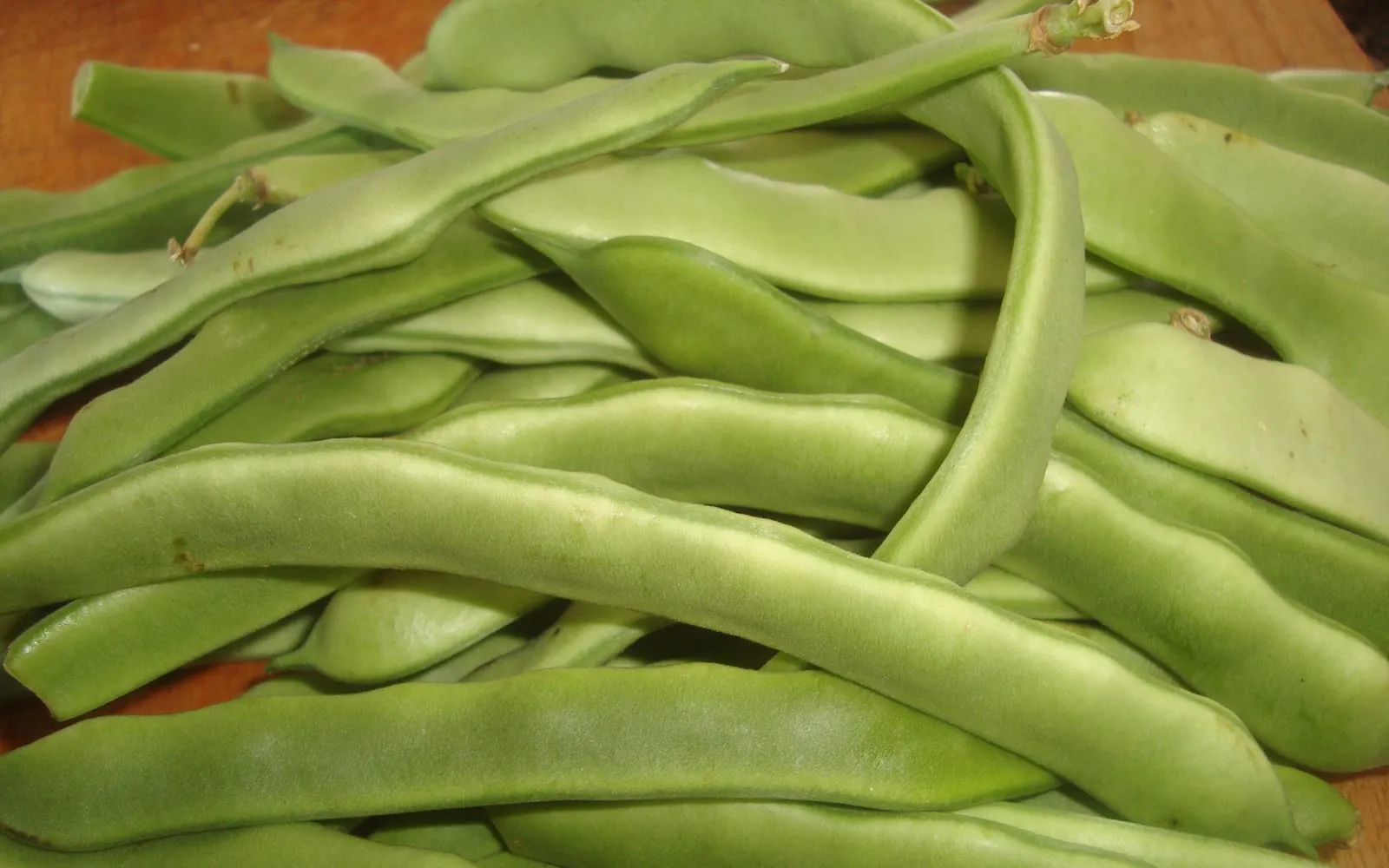
Pods follow quickly, from 10 to 20 cm, and vary widely. Round pencil pods, flat romano pods, green, gold, purple and streaked forms are all Phaseolus vulgaris.
Purple varieties turn green when cooked, which disappoints children every single time.
Seeds inside are kidney-shaped and their colour identifies the type. Haricot, cannellini, borlotti, black turtle, flageolet and kidney beans are all this species, dried at different stages of ripeness.
Climbing forms twine anticlockwise and need canes, netting or strings. Dwarf forms need nothing.
Where it is from
Central and South America, where Phaseolus vulgaris was domesticated at least twice, once in Mexico and once in the Andes, more than seven thousand years ago.
The two domestications explain the enormous variety of bean types, since the Mesoamerican and Andean lineages were bred separately for millennia.
Beans were one third of the Three Sisters planting used across the Americas, grown up maize with squash beneath, and the nitrogen the beans fixed fed the maize.
Spanish and Portuguese ships brought them to Europe in the sixteenth century, and they replaced the older European broad bean for many uses within a couple of centuries.
The name French bean reflects the route rather than the origin. They reached Britain by way of France, and Americans call the same plant a green bean or a snap bean.
Their tropical origin is why they need warm soil, hate frost and grow so fast once they start.
How it grows
Wait for warm soil. Sow outdoors only once the soil has reached about 12 deg C, which in a cool temperate spring means mid-May to early June. Seed sown into cold wet soil rots.
Sow indoors in pots from mid-April for an earlier start, and plant out after the last frost.
Sow 5 cm deep. Dwarf beans 15 to 20 cm apart in rows 45 cm apart, or climbing beans 15 cm apart at the base of canes.
Build the support before sowing for climbing varieties. A wigwam or a double row of canes 2 m tall, tied at the top.
Sow again in early July for a late crop, which is worth doing with dwarf varieties. Two or three staggered sowings keep pods coming until the cold.
Protect the seedlings from slugs, which is the main early hazard.
Water generously once the flowers appear, which is when the crop is decided.
Pick constantly. This matters more than anything else. A French bean plant stops flowering once it has ripened seed, so every pod left to swell reduces the crop. Pick every two or three days, taking pods while they are young and snap cleanly.
Pick with two hands or scissors. Pulling one-handed uproots dwarf plants.
For haricots, do the opposite. Leave the pods on the plant until they are dry and papery, then shell and dry the beans thoroughly before storing.
Cut the plants off at ground level when they finish and leave the roots in the soil, since the nitrogen nodules feed the next crop.
Through the seasons
Spring is sowing. Start in pots indoors from mid-April, and sow outdoors from mid-May once the soil has warmed.
Early summer is planting out and building supports. Watch for slugs, and keep the plants weeded.
Midsummer is the crop. Pick every two or three days from July, water generously, and feed once flowering is under way.
Autumn ends it. The first frost kills the plants outright. Leave any haricot pods to dry, and cut the tops off leaving the roots in.
Care difficulty
Easy, with one hard rule about soil temperature.
Sowing too early is the commonest failure, and the seed rots. Patience until mid-May solves it.
Frequent picking is the other discipline, and it is the difference between a three-week crop and a ten-week one.
Slugs take the seedlings and blackfly take the tips, and neither is serious.
The plants fix their own nitrogen and need very little feeding.
Watering
Water sparingly until the flowers appear. Too much water early produces leaf rather than pods.
Water generously from flowering onward, twice a week in dry weather, since that is when the crop is set.
Water at the base rather than over the flowers, which knocks them off and spreads disease.
Mulch once the soil has warmed to hold moisture and suppress weeds.
Containers need daily watering in summer, and dwarf varieties grow well in a large pot.
Warning signs, diseases and pests
Seed that never comes up almost always means the soil was too cold and wet. Wait until mid-May, or start plants in pots indoors.
Flowers that fall without setting pods usually mean the plant is dry at the root or the weather is very hot. French beans set far more reliably than runner beans, so this is uncommon.
The plant stopping cropping after three weeks means pods have been left to swell. Pick every two or three days without exception.
Slugs and snails shred the seedlings overnight. Protect them until the plants are 15 cm tall.
Blackfly colonise the growing tips in early summer. Pinch out the affected tips, and predators usually clear the rest.
Halo blight produces small dark spots with a pale yellow ring on the leaves, and it is seed-borne. Destroy affected plants and do not save seed from them.
Anthracnose causes dark sunken spots on the pods and stems in wet seasons.
Yellowing lower leaves late in the season are normal as the plant finishes.
Mexican bean beetle, a coppery ladybird-like beetle that eats leaves rather than aphids, skeletonises the foliage from the underside and is worst in the Mid-Atlantic and Appalachian United States. Hand-pick adults, spiny pale larvae and egg clusters from the leaf underside. It has not established outside the Americas.
Growing environment
Full sun, and a sheltered position out of strong wind.
Warm, fertile, free-draining soil enriched with compost the previous autumn.
Wait for soil warmth above almost anything else. A soil thermometer is worth more than a calendar here.
Space of 45 cm between rows for dwarf beans, and a 2 m support structure for climbing ones.
Shelter matters for climbing beans, which catch a lot of wind when in full leaf.
Dwarf varieties grow well in a large container or a raised bed and are a good choice for a small space.
Rotate the ground and avoid growing beans in the same spot each year, which builds up soil-borne disease.
Feeding
Dig in well-rotted compost or manure the previous autumn.
Feed with a high-potassium fertiliser, such as a tomato feed, once flowering begins.
Avoid nitrogen fertiliser entirely. Beans fix their own nitrogen through root nodules, and adding more produces leaf at the expense of pods.
Leave the roots in the ground when clearing the plants, since the nitrogen they have fixed benefits whatever follows.
Container plants need feeding fortnightly through the cropping season.
Troubleshooting
When can I sow them outdoors? Once the soil is above about 12 deg C, which in a cool temperate spring means mid-May to early June. Earlier sowings rot in the ground.
Nothing came up. The soil was too cold and wet when you sowed. Start again, or sow in pots indoors and plant out after the frosts.
It has stopped cropping. Pods have been left on the plant to swell. Once seed ripens the plant stops flowering. Pick every two or three days.
Dwarf or climbing? Dwarf crops heavily for three or four weeks and needs no support. Climbing crops from July until frost and needs 2 m canes. For a long season, choose climbing.
The purple beans turned green when I cooked them. They always do. The pigment breaks down with heat.
Can I eat them raw? Not in quantity. Fresh green pods contain some phytohaemagglutinin and dried beans contain a great deal. Cook them.
How do I dry beans for haricots? Leave the pods on the plant until dry and papery, shell them, and dry the beans thoroughly. Soak for five hours and boil hard for ten minutes before eating.
Why must dried beans be boiled hard? Slow cooking below boiling point increases the lectin activity rather than destroying it, and a slow cooker is a documented cause of poisoning. A full rolling boil for ten minutes destroys it.
French bean problem guides
Not sure what is wrong? See the common vegetable pests guide.