
Edible
Garden Pea
Pisum sativum
Also known as Pea, English pea, Shelling pea
How to grow garden peas, Pisum sativum. Sowing dates, supports, why mice take the seed, and how a crop that feeds itself with nitrogen should be treated at the end of the season.
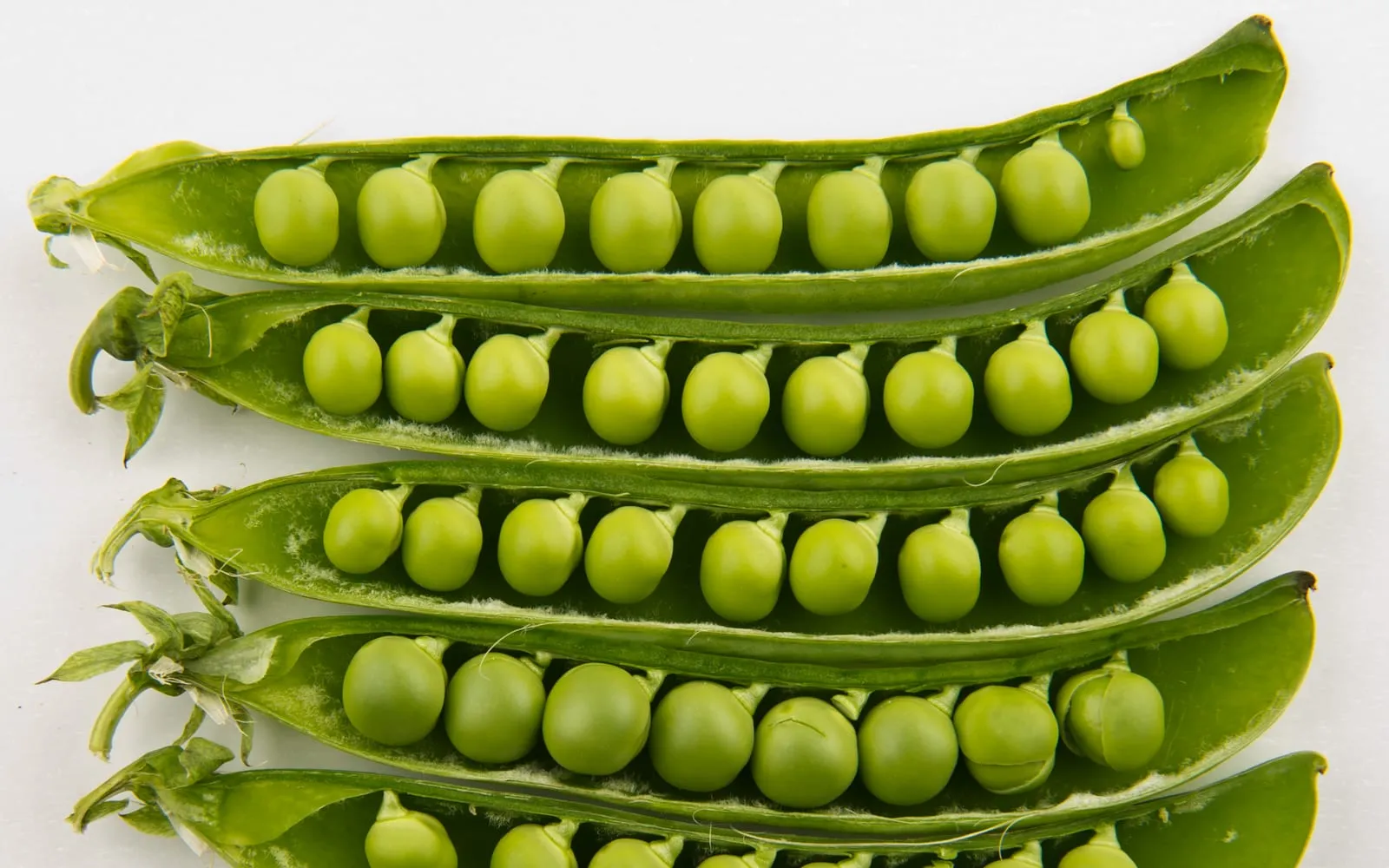
At a glance
- Difficulty
- Moderate
- Water
- Little until flowering, then generously
- Light
- Full sun, though peas take light shade better than most vegetables
- Temperature
- Cool-season crop. Best at 10-20 deg C, struggling above 25
- Hardiness
- USDA 3-9, RHS H5, hardy to -10 C
- Type
- Hardy annual
- Height
- 30-180 cm depending on variety
- Native to
- The eastern Mediterranean, Western Asia
- Best month
- March in the Northern Hemisphere, September in the Southern Hemisphere
Peas germinate at 5 deg C and stop setting pods above about 27, so the crop runs from the first workable soil to the first real heat and then finishes. Sowing late means powdery mildew and empty pods. In warm climates it is a winter crop rather than a spring one.
Hardiness zones describe winter cold alone. Summer heat, humidity, rainfall and the length of the growing season decide as much, so treat the range as the outer limit rather than as a recommendation.
Every month named in this guide is for the temperate Northern Hemisphere. If you garden in the Southern Hemisphere, shift each one by six months, so March becomes September. Closer to the equator the wet and dry seasons matter more than the calendar, and the shift stops being a useful guide.
Not known to be toxic
- Safe to eat
- Pods, seeds and shoots
Garden peas are food. NC State Extension carries no toxicity section for the species, and the pods, seeds and shoots are all eaten, with pea shoots sold as a salad leaf. The plant to keep separate in your mind is the sweet pea. Lathyrus latifolius and its relatives are ornamental climbers grown for scent, they look similar enough to confuse a child, and the ASPCA lists sweet pea as toxic to horses through aminoproprionitrile, with weakness, tremors, seizures and possible death. Sweet pea seeds have also caused lathyrism in people where they were eaten as famine food over long periods. Sweet peas are not a food crop and their pods should never be eaten. If you grow both, as many people do, keep them on separate supports so nobody picks from the wrong one.
Sources: NC State Extension, Lathyrus oleraceus (pea), ASPCA (Sweet pea, Lathyrus latifolius)
About
A pea eaten raw in the garden within a minute of picking tastes of something the freezer aisle cannot sell you. The sugars in a pea start converting to starch as soon as the pod comes off the plant, and a few hours makes a noticeable difference. This is the main argument for growing them, since peas are neither the easiest nor the highest-yielding thing you can put in the same space.
They also changed biology. Gregor Mendel chose peas for his breeding experiments in the 1850s because the flowers self-pollinate reliably and the traits come in clean pairs, and the laws of inheritance came out of a monastery garden full of them.
Sow the first batch in March, keep sowing every fortnight until June, and pick from June to September.
Appearance and character
A scrambling annual climbing by tendrils, which are modified leaflets at the end of each leaf that coil around anything they touch. Peas cannot twine like a bean, so they need something thin to grip. Netting, twiggy sticks and wire all work; a smooth pole does not.
Leaves are blue-green and divided into oval leaflets, with a pair of large leafy stipules where the leaf meets the stem. Some modern varieties are “semi-leafless”, bred so that most leaflets become extra tendrils, and these hold each other up with far less support.
Flowers are white, occasionally purple, and shaped like a sweet pea’s without the scent. They self-pollinate before opening, so you get pods whether or not any bee visits.
Height ranges enormously by variety. Dwarf types stop at 45 cm, tall old-fashioned varieties reach 1.8 m and crop over a much longer period.
Where it is from
The eastern Mediterranean and western Asia, where it grows as a winter annual, germinating in autumn rains and cropping before the summer heat.
That cycle explains how to grow peas. They are built for cool damp weather and short days, so they grow well in a cool spring and give up in a hot dry summer. Everything about timing follows from it.
Peas are among the oldest crops in cultivation, found on Neolithic sites in the Near East from around 7000 BC, and reached Britain with the earliest farming.
How it grows
A hardy annual completing its life in one season. Seed germinates at soil temperatures from about 10 deg C, which in a cool temperate spring means about mid-March outdoors.
Roots carry nodules containing Rhizobium bacteria, which take nitrogen from the air and pass it to the plant in exchange for sugars. A pea crop therefore feeds itself, and adding nitrogen fertiliser produces lush foliage and fewer pods.
Flowering starts about eight weeks after sowing on early varieties and runs for several weeks. Pods fill quickly and picking has to keep up: once seed inside a pod matures fully the plant reads it as a job done and stops flowering.
At the end of the season cut the plants off at ground level and leave the roots in the soil. The nodules break down and release their nitrogen for whatever you plant next, which is why peas belong before brassicas in a rotation.
Through the seasons
Late winter is for the earliest sowings under cloches, from late February in mild areas, and for autumn-sown overwintering crops to get going again.
Spring is the main sowing period, March to May, in fortnightly batches so the harvest spreads. Put supports in at sowing rather than later.
Summer is picking. Harvest every two or three days once pods start filling. Water heavily during flowering and podding. Sowings after mid-June rarely succeed because mildew and heat catch them.
Autumn offers one more option. Hardy round-seeded varieties sown in October or November and covered with a cloche overwinter as small plants and crop several weeks earlier than a spring sowing.
Care difficulty
Moderate, and almost all of the difficulty is at the two ends.
Getting seed to become a seedling is the first problem. Mice dig up sown peas with remarkable accuracy, cold wet soil rots them, and birds take whatever survives. Starting them in lengths of guttering under cover and sliding the whole row into a shallow trench when they are 8 cm tall solves all three at once.
Keeping the crop going through midsummer is the second. Powdery mildew arrives in dry weather and finishes the plants, so water at the roots, space the rows for air movement, and accept that the season ends in August.
Watering
Peas need surprisingly little water until they flower. Overwatering young plants encourages leaf at the expense of roots.
From the first flower onward that reverses completely. Water generously, around 20 litres per square metre a week in dry spells, concentrated at the base. Drought during flowering makes the plant abort flowers, and drought during podding gives you small hard peas.
Water the soil rather than the plants. Wet foliage in warm weather invites mildew.
Mulch once the soil has warmed, which keeps the roots cool and holds moisture through the critical weeks.
Warning signs, diseases and pests
Mice are the first pest and take sown seed within days. Sowing in guttering under cover is the reliable answer. Setting traps or covering the row with wire mesh both help outdoors.
Pea moth lays on flowers from June to August and the caterpillars are the small maggots found inside pods at podding time. Fine mesh over the crop through flowering excludes the moth. Very early and very late sowings miss the flight period altogether.
Powdery mildew coats the leaves white from midsummer, worst on dry-rooted plants in still air. Keep the roots watered, space the rows, and pick mildew- resistant varieties for later sowings.
Pea and bean weevil eats neat semicircular notches from the leaf edges. It looks alarming and rarely matters on established plants, though it can check seedlings, so cover early sowings with fleece.
Plants collapsing at soil level in wet ground is usually foot rot. Rotate the bed, and avoid sowing into cold sodden soil.
Birds strip seedlings. Netting or a cloche until the plants are 15 cm tall deals with it.
Growing environment
Full sun is best, though peas tolerate light shade better than most vegetables and a partly shaded bed can extend the season into July.
Cool weather is what they want. Growth and pod quality both fall away above about 25 deg C, so an open airy site beats a hot sheltered one.
Soil should drain well and hold moisture, which usually means digging in compost the autumn before. Peas dislike acid ground; lime to bring the pH towards 6.5 to 7 if yours is below 6.
Supports go in at sowing time. Pea netting, hazel twigs or a wire mesh panel all work, and the plants need something to grip within a fortnight of emerging.
Feeding
Do not feed peas with nitrogen. They make their own, and added nitrogen gives you a mass of leaf and very few pods.
Grow them in ground that was manured for a previous crop rather than freshly manured ground.
A single potassium feed as the first flowers open helps pod fill on poor or sandy soils. Comfrey liquid or tomato feed both do the job.
After the last picking, cut the tops for the compost heap and leave the roots in the ground.
Troubleshooting
Nothing came up. Mice, cold wet soil, or birds. Sow the next batch in guttering under cover and transplant.
Plenty of leaf, hardly any pods. Too much nitrogen, or too much shade. Stop feeding and check the site gets real sun.
Flowers drop without setting pods. Drought or heat during flowering. Water heavily at the base and mulch.
Small hard peas in full pods. Left too long on the plant, or water-stressed during podding. Pick every two or three days.
Maggots inside the pods. Pea moth. Net through flowering next year, or shift sowing dates to miss June and July.
White powdery coating on the leaves in July. Powdery mildew. Water the roots, improve airflow, and treat the crop as finished if it is widespread.
Plants stop cropping in midsummer. Normal. Peas are a cool-season crop, and successional sowing rather than nursing one row is how you extend the harvest.
Garden Pea problem guides
Not sure what is wrong? See the common vegetable pests guide.