
Disease
Damping off
Also called Seedling blight, Seedling collapse
A tray of seedlings that were fine yesterday, toppled over this morning with pinched dark stems. The conditions that cause it, and why the water butt is part of the problem.
At a glance
- Type
- Disease
- Cause
- Oomycete (water mould)
- Severity
- Destroys the crop or display
- Affects
- Herbs and edibles, Garden plants, Houseplants
- Active
- January to May
- Established in
- Worldwide
What you are seeing
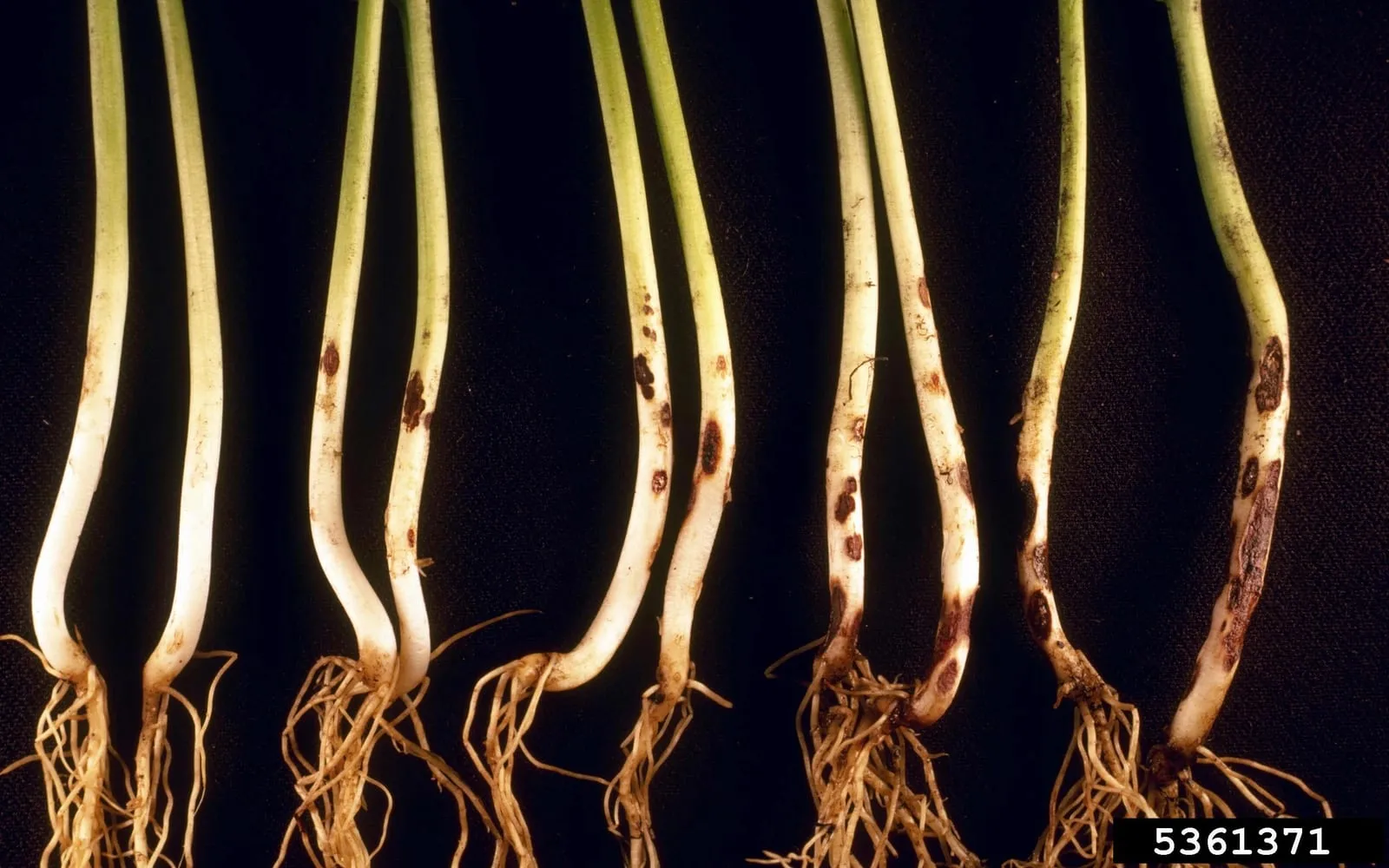
- Seedlings toppling over with the stem pinched, dark and water-soaked at compost level
- The collapse spreading outwards from one point through a tray over a few days
- Seedlings that were upright and healthy the previous evening
- Fine white cobwebby growth on the compost surface around the affected patch
- Roots discoloured and reduced, with the fine root hairs gone
- Seed that never comes up at all, in a tray where germination should have been good
Before you treat anything
Horticultural disinfectants used for cleaning pots and greenhouse staging are cleaning products and should be used as the label describes. None of them is approved to be applied to compost or to plants as a treatment for this.
What you are looking at
A tray of seedlings that stood up perfectly well yesterday, lying flat this morning. Pick one up and the stem is pinched, dark and water-soaked at the point where it met the compost, as though it had been nipped between two fingers. The top of the seedling is still green.
Over the next few days the collapse spreads outwards from wherever it started, in a widening patch, until a whole tray has gone. Sometimes a fine white cobwebby growth appears on the compost surface around the edge of the patch.
There is a second form that is harder to spot. Where the seed is attacked before it emerges, nothing comes up at all, and the sowing gets blamed on old seed or a cold windowsill.
What is doing it
Damping off is a name for a result rather than an organism. Several different soil-borne things produce it, and Pythium is the commonest.
Pythium is an oomycete, a water mould, related to blight and to the Phytophthora behind root rot rather than to the fungi. Its spores swim. They need a continuous film of water between compost particles to move through, and where the compost is merely damp rather than saturated, they cannot travel.
Rhizoctonia solani is a true fungus that produces much the same collapse and tends to leave the fine white webbing on the surface. Fusarium and Botrytis both turn up as well.
All of them are opportunists on tissue that is soft, crowded and wet, which is why the conditions matter far more than the identification does.
The five things that cause it
Every case traces to some combination of these, and all five are within your control.
Sowing too thickly, so the seedlings touch and the air between them never moves. Compost kept saturated rather than damp. Poor light, which produces a thin drawn stem that stays vulnerable for weeks instead of days. A propagator lid left on after germination. And dirty pots, old compost or water from a butt, any of which supplies the organism in the first place.
The water butt is the one that surprises people. Stored rainwater is the right choice for almost everything in a garden and the wrong one for a seed tray, because a butt is a reservoir of exactly these water moulds. Use mains water for seedlings and save the butt for established plants.
Why February sowings suffer most
Enthusiasm arrives before the light does. A tomato sown on a windowsill in February germinates in the warmth of the house and then grows towards a window that is giving it a fraction of the light it needs, producing a long pale stem that takes weeks to firm up.
The same seed sown in mid-March comes up into far better light, hardens quickly and passes through the vulnerable stage in days. It also catches up with the February sowing by May.
Bottom heat helps for the same reason. Anything that shortens the time between sowing and a sturdy seedling shortens the window in which this can happen.
What to do about it
Prevention is the whole treatment, because there is nothing to apply once the stems have gone. The copper-based Cheshunt compound that older gardening books recommend has been withdrawn and is no longer available in the UK, and nothing has replaced it for amateur use.
So sow thinly into fresh seed compost, in clean trays, watered from the tap and from below. Top the surface with a few millimetres of vermiculite or fine grit, which dries quickly and keeps the stem base out of the wet. Take the lid off as soon as the seedlings are up, give them the best light you have, and prick them out before they crowd.
When it starts, act the same day. Lift out the collapsed seedlings with a generous margin of compost around them, let the surface dry, improve the ventilation, and you will often keep the rest of the tray.
What it gets mistaken for
Cutworms cut seedlings off cleanly at soil level overnight and leave the tops lying beside the stump. There is no pinching, no discoloration and no spreading patch, and the damage is outdoors rather than in a tray.
Slugs eat the leaves and leave a slime trail, and they take a seedling from the top down rather than felling it at the base.
Drying out kills a tray of seedlings from the edges inwards, in the pots nearest the heat, with shrivelled rather than water-soaked stems.
Fungus gnat larvae in heavy numbers will kill seedlings by eating the roots, and a tray with adult gnats flying over it deserves a look for both problems at once.
Etiolation, the long pale drawn growth of a seedling in poor light, is not a disease and does not kill on its own. It is the condition that makes damping off likely, and it is why light and timing appear so often on this page.
What to do, in order
Start here
Prevention, and the changes that stop the problem returning. Most of these pages should end at this tier.
- Sow thinly
- A crowded tray holds still, saturated air at compost level and puts every seedling in contact with its neighbours, which is how a single infection becomes a whole tray. Sow at half the density instinct suggests and prick out early.
- Use fresh compost from a sealed bag
- The organisms behind this live in soil, in old compost and in the residue in a used pot. A bag that has stood open in a shed all winter is not sterile. Use fresh seed compost, and use seed compost rather than multipurpose, which holds too much water.
- Water seedlings from the tap, not the butt
- Rainwater stored in a butt carries Pythium and other water moulds, which is the point almost nobody is told. Mains water is chlorinated and is the right choice for seed trays specifically, even though a butt is better for everything else.
- Give them light, and plenty of it
- A seedling growing fast in good light hardens its stem quickly and outgrows the risk. One drawn up thin and pale on a north windowsill in February stays vulnerable for weeks. Sowing two or three weeks later, when the light has improved, produces stronger plants and fewer losses.
- Keep the compost moist rather than wet
- These organisms swim. Their spores need a continuous film of water to move through the compost, so a tray that is damp rather than saturated breaks the chain physically.
- Ventilate, and take the lid off
- A propagator lid is for germination and not for the fortnight after it. Once the seedlings are up, remove it or prop it open, because the saturated still air underneath is the single condition this disease needs most.
Then reach for a barrier
Netting, hand removal and water. Nothing here harms anything except the target.
- Scrub pots and trays before you use them
- Hot water and a brush, or a horticultural disinfectant, on every module tray and pot before sowing. The dried residue in the corners of a reused tray is where last year's population is waiting.
- Top-dress with vermiculite or fine grit
- A few millimetres over the compost surface dries within an hour of watering and keeps the stem base dry at the point where the infection takes hold. This is the most effective small change on the page.
- Water from below
- Stand the tray in shallow water until the surface darkens, then take it out. The compost gets what it needs, the surface stays comparatively dry, and the seedlings are not knocked about by a can.
- Remove affected seedlings and the compost around them
- It spreads outwards through a tray. Lifting out the collapsed seedlings and a generous margin of compost, as soon as you see the first ones, will often save the rest.
- Prick out promptly into fresh compost
- Moving seedlings on before they crowd each other takes them out of the environment the disease depends on and into a larger volume of clean compost.
Plants affected
Guides that name it among the problems to watch for. The list is the plants it is characteristic of rather than everything it will feed on.