
Edible
Sweetcorn
Zea mays
Also known as Corn, Maize, Corn on the cob
How to grow sweetcorn, Zea mays. Planting in a block for wind pollination, testing the cobs for ripeness, and why supersweet types must be grown alone.
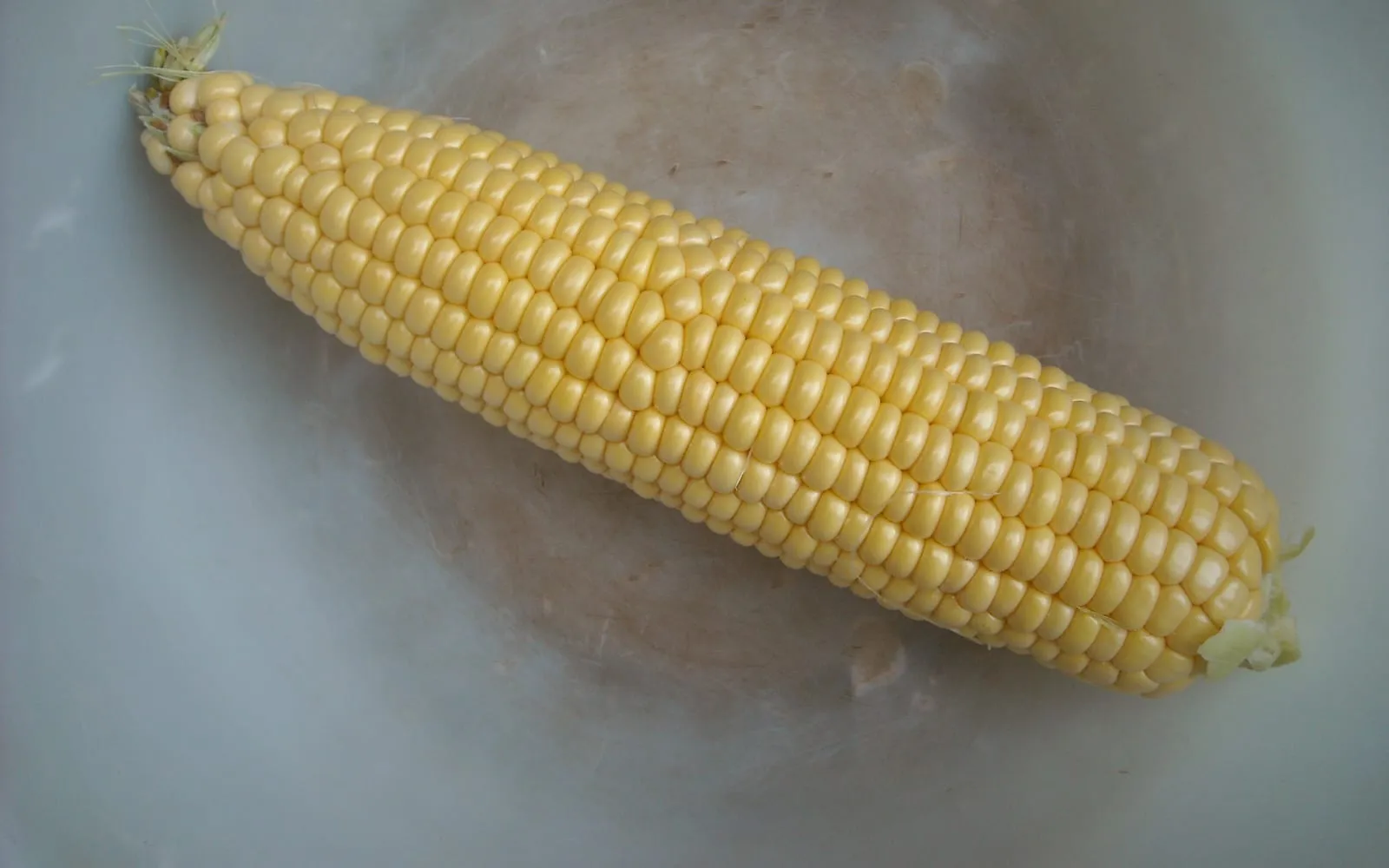
At a glance
- Difficulty
- Moderate
- Water
- Regular, and generous at flowering and cob filling
- Light
- Full sun, in a warm sheltered position
- Temperature
- Frost tender, and it needs a soil temperature above 10 deg C to germinate
- Hardiness
- USDA 10-11, RHS H2, hardy to 0 C
- Type
- Annual, sown after the last frost and cropping in late summer
- Height
- 1.5-2 m
- Native to
- Southern Mexico, domesticated from the wild grass teosinte
- Best month
- August in the Northern Hemisphere, February in the Southern Hemisphere
Soil has to reach 10 deg C before the seed will germinate rather than rot, and supersweet types want 15. Pollination decides the rest. Sweetcorn is wind-pollinated, so it goes in a block rather than a row, and a supersweet cultivar crossed by pollen from an ordinary sugary one gives starchy kernels, which means 200 m of separation or a fortnight between sowings.
Hardiness zones describe winter cold alone. Summer heat, humidity, rainfall and the length of the growing season decide as much, so treat the range as the outer limit rather than as a recommendation.
Every month named in this guide is for the temperate Northern Hemisphere. If you garden in the Southern Hemisphere, shift each one by six months, so August becomes February. Closer to the equator the wet and dry seasons matter more than the calendar, and the shift stops being a useful guide.
Not known to be toxic
Sweetcorn is a food crop and carries no toxicity concern for people. It is not listed by the RHS as a potentially harmful garden plant, and the ASPCA does not list Zea mays as toxic to cats and dogs. Two practical points come up with dogs. Corn cobs are a well-known cause of intestinal obstruction in dogs, since they do not break down and lodge in the gut, and a dog that has swallowed a cob needs a vet promptly rather than watching. The kernels themselves are harmless. The other point concerns mould. Maize is susceptible to Fusarium and Aspergillus moulds which produce mycotoxins, and this is a real problem in stored grain maize in warm climates rather than in fresh sweetcorn picked and eaten from a garden. Do not eat cobs showing pink, black or fuzzy mould growth, and compost them rather than feeding them to animals. Where a plant is unlisted rather than positively assessed, read that as no hazard recorded.
Sources: RHS potentially harmful garden plants, ASPCA toxic and non-toxic plants
About
Sweetcorn must be planted in a block rather than a row, and a cob with scattered empty patches on it is what happens when it is not.
Corn is wind pollinated. The tassel at the top of the plant sheds pollen, which has to drift down onto the silks emerging from the developing cob below, and every single silk connects to one kernel. A silk that catches no pollen produces no kernel.
A single row of plants lets the pollen blow away sideways. A block of at least four rows by four, or five by five, keeps the pollen within the planting and fills the cobs properly.
The other rule concerns cultivar type. Supersweet cultivars carry a genetic modification to the sugar conversion, and if they are pollinated by standard or tender-sweet corn the kernels turn starchy and tough. Grow only one type, or separate them by 8 m or by two weeks of flowering.
Beyond that it is a straightforward crop that wants warmth, sun, shelter and water. Northern Europe is at the edge of where it grows well, and a warm sheltered spot and a modern early cultivar make the difference.
Picked and put straight into the pan it is a different vegetable from anything you can buy, because the sugars start converting to starch within an hour of picking.
Appearance and character
An annual grass reaching 1.5 to 2 m on a single unbranched stem, sometimes with a few tillers at the base.
Leaves are long and strap-shaped, up to 90 cm, arranged alternately and clasping the stem.
The tassel is the male flower, a branched spike at the very top of the plant, shedding pollen in July and August.
Cobs form in the leaf axils partway up the stem, each wrapped in green husks, with a tuft of silks emerging from the tip.
Each silk is a style connected to a single ovule, so every kernel on a cob requires its own grain of pollen to reach its own silk.
Kernels are yellow, white or bicoloured depending on cultivar, in neat rows around a central core.
Most plants produce one good cob and sometimes a second smaller one.
Prop roots emerge from the base of the stem and brace the plant, and earthing up encourages them.
Cultivar types matter. Standard sweetcorn is the traditional sort, tender-sweet or sugar enhanced is sweeter and more tender, and supersweet holds its sugar far longer after picking but germinates poorly in cold soil and must be isolated from the others.
Where it is from
Southern Mexico, domesticated around 9,000 years ago from teosinte, a wild grass with tiny hard seeds in a completely different arrangement.
The transformation from teosinte to maize is one of the most dramatic examples of domestication known, and it involved changes in only a handful of genes.
Maize spread through the Americas and became the staple crop of Mesoamerican and North American civilisations, and it reached Europe after 1492.
Sweetcorn is a specific mutant type in which a recessive gene slows the conversion of sugar to starch in the kernel, and it was grown by Native American peoples long before Europeans selected it further.
The supersweet types, carrying the shrunken-2 gene, were developed in the 1950s and transformed commercial production because the cobs hold their sugar for days rather than hours.
Maize is now the largest cereal crop in the world by tonnage, and the great majority is grown as grain and forage rather than as sweetcorn.
Sweetcorn was a marginal crop in northern Europe until modern early-maturing cultivars made it reliable, and it is now a standard allotment vegetable there.
How it grows
Choose a warm sheltered sunny position. Sweetcorn is a subtropical crop and a cool temperate summer is the edge of where it works.
Dig in well-rotted manure or compost before planting. It is a hungry crop.
Sow indoors in April in modules or deep cells, one seed per cell, 2.5 cm deep, at 15 to 18 deg C. Root disturbance sets it back badly, so use deep modules or biodegradable pots.
Sow direct outside in May and June where the soil has warmed above 10 deg C, two seeds per station and thin to the stronger.
Warm the soil under black polythene for a fortnight before a direct sowing.
Harden off indoor-raised plants carefully and plant out after the last frost, from late May in the south and early June further north.
Plant in a block, not a row. A minimum of 4 by 4 plants, and 5 by 5 is better. Space them 35 to 45 cm apart each way.
Grow only one cultivar type, or separate supersweet from standard cultivars by at least 8 m, or by sowing dates two weeks apart so they flower at different times.
Water in generously and keep the plants watered, particularly from the time the tassels appear.
Top dress with a nitrogen feed when the plants reach 45 cm.
Earth up the base of the stems as prop roots appear, which steadies the plants against wind.
Do not remove the side shoots or tillers at the base. Older advice said to, and they contribute to the plant rather than taking from it.
Tap the tassels gently on a still morning when they are shedding, which helps the pollen fall onto the silks below.
Mulch to conserve moisture.
Protect the cobs from birds, mice, squirrels and badgers as they ripen, with netting or a wire cage, since badgers in particular will flatten a whole block overnight.
Test the cobs for ripeness. The silks turn brown and dry. Peel back a little of the husk and press a kernel with a thumbnail. A milky white juice means ready, a clear watery juice means too early, and a thick doughy paste means too late.
Pick by twisting the cob downwards and pulling.
Cook it as soon as possible after picking. The sugars convert to starch within hours in standard cultivars, which is why home-grown corn tastes different.
Through the seasons
Winter the ground is empty, and this is the time to manure the bed for next season.
Spring sows indoors in April and direct in May, and plants out after the last frost.
Summer grows fast, tassels appear in July, pollination happens in July and August, and watering matters most now.
Autumn harvests from late August into September, and the plants are cleared afterwards.
Care difficulty
Moderate. The growing is straightforward and the pollination arrangement catches people out.
Planting in a block rather than a row is the single most important thing, and half-empty cobs are almost always a spacing decision rather than a growing problem.
Keeping supersweet cultivars away from standard ones is the other rule that has to be followed rather than learned by experience, since the failure only shows at harvest.
The rest is warmth, water and feeding, and the limitation in a cool climate is heat rather than anything the gardener does.
Animal damage to ripening cobs is a real problem on an allotment.
Watering
Water in generously at planting and keep the plants watered through the season.
Water generously from the moment the tassels appear, through flowering and cob filling. This is the period that determines the crop, and drought then gives small poorly filled cobs.
A thorough weekly soak beats a daily sprinkle, and more is needed in hot dry weather.
Mulch after planting to conserve moisture and warm the soil.
Container-grown plants need daily watering in summer and are a marginal proposition for this crop.
Warning signs, diseases and pests
Cobs with scattered missing kernels or largely empty tips is poor pollination. Plant in a block of at least 4 by 4 rather than a row, and tap the tassels on a still morning to help the pollen fall.
Starchy tough kernels on a supersweet cultivar is cross-pollination from a standard cultivar nearby. Grow one type only, or separate them by 8 m or two weeks of flowering.
Seed rotting without germinating is cold wet soil. Sweetcorn needs above 10 deg C to germinate, and supersweet types need warmer still. Sow indoors or warm the ground under polythene first.
Plants blown flat is wind on an exposed site. Earth up the stems and choose a sheltered position.
Cobs stripped or plants flattened overnight is badgers in Europe and raccoons in North America, which are the most destructive sweetcorn pests there are. A wire fence or an electric fence is the only reliable answer.
Cobs pecked open at the tip is birds. Net the block or slip a paper bag over each cob.
Kernels replaced by grey-white swollen galls is smut, caused by Ustilago maydis. It is uncommon in cool climates and eaten as a delicacy in Mexico, where it is called huitlacoche. Remove and destroy affected cobs before the galls burst, and rotate.
Small stunted plants with purple leaves is cold and phosphate shortage early in the season, and they usually grow out of it as the soil warms.
Aphids on the tassels are common and rarely need action.
Japanese beetle chews the silks back and can interfere with pollination where it feeds in numbers on the tassels. It is well established across most of the United States, reached northern Italy in 2014 and has since spread into southern Switzerland, and the rest of Europe treats a sighting as notifiable.
Brown marmorated stink bug punctures kernels through the husk, leaving shrunken or discoloured spots, and is already established across North America and a growing list of European countries.
Fall armyworm feeds hidden in the whorl of young plants and can kill a seedling outright. It has spread from its native Americas across Africa since 2016, Asia since 2018 and Australia since 2020, and is now one of the most consequential pests of maize worldwide outside Europe, where it has not established.
Corn earworm feeds down through the silks into the tip of the cob, confined to the Americas, where a closely related species does the same job elsewhere under the name cotton bollworm or Old World bollworm. Treat the silk tip with a few drops of mineral oil once most silks have browned, and cut away the damaged tip at harvest rather than discarding the whole cob.
Growing environment
Full sun in a warm sheltered position. This is the crop most limited by a cool summer.
Rich, moisture-retentive, free-draining soil, manured before planting, and warm.
Frost tender at both ends of the season. Do not plant out until after the last frost.
Space 35 to 45 cm apart each way in a block of at least 4 by 4 plants.
It suits a vegetable bed, an allotment or a sunny sheltered corner. It is a poor container crop because of the block planting requirement.
Grow it in a three sisters arrangement with climbing beans and squash if you have the space, which is the traditional Mesoamerican combination where the corn supports the beans, the beans fix nitrogen and the squash covers the ground. The companion planting guide sets out how the three share the bed, and which other pairings hold up.
Rotate with the rest of the plot, and it follows a legume well.
Choose an early F1 cultivar bred for northern conditions, and grow a supersweet type if you want cobs that hold their quality after picking, remembering to isolate it.
Feeding
Manure or compost the ground before planting. Sweetcorn is a hungry crop.
Apply a general balanced fertiliser before planting.
Top dress with a nitrogen feed when the plants reach 45 cm, hoeing it in and watering it.
Do not feed heavily once the cobs are filling, since the plant needs water more than nutrients at that point.
Mulch to conserve moisture and warmth.
A crop following a legume needs less nitrogen, since the previous crop has left some behind.
Troubleshooting
My cobs have gaps with no kernels. Poor pollination. Sweetcorn is wind pollinated and every kernel needs its own grain of pollen on its own silk. Plant in a block of at least 4 by 4 plants rather than a row, and tap the tassels on a still morning.
The kernels are tough and starchy. A supersweet cultivar cross-pollinated by a standard one. Grow only one type, or separate them by at least 8 m or by two weeks of flowering.
How do I know when to pick? The silks turn brown and dry. Peel back a little husk and press a kernel with a thumbnail. Milky white juice means ready, clear watery juice means too early, and a thick doughy paste means too late.
Why does home-grown taste so different? The sugars start converting to starch within an hour of picking in standard cultivars. Put the water on before you go to pick.
The seed rotted in the ground. Cold wet soil. Sweetcorn needs above 10 deg C to germinate, and supersweet types need warmer. Sow indoors in April in deep modules, or warm the soil under black polythene before sowing direct.
Should I remove the side shoots? No. Older advice said to remove the tillers at the base and they contribute to the plant rather than taking from it.
Something flattened the whole block overnight. Badgers in Europe, raccoons in North America. Only a substantial fence keeps either out.
Can I grow it in a container? Poorly. The block planting needed for pollination makes it a bad container crop, and the water demand is high.
Which cultivar should I grow? An early F1 bred for northern conditions. Supersweet types hold their quality longer after picking and germinate less readily in cold soil, and they must be kept away from other types.
Sweetcorn problem guides
Not sure what is wrong? See the common vegetable pests guide.
- Corn smut swelling the kernels into grey galls after a hot dry spell
- Cold soil at sowing, which rots the seed
- Badgers, mice, birds and squirrels taking the cobs
- Wind blowing the plants over on an exposed site
- Japanese beetle stripping silks across the US, newly arrived in northern Italy and Switzerland
- Brown marmorated stink bug puncturing kernels, established across North America and Europe
- Fall armyworm, established across Africa, Asia and Australia since 2016
- Corn earworm, an Americas-only pest that feeds down through the silks
- Cutworms felling young plants at soil level