
Edible
Sweet Basil
Ocimum basilicum
Also known as Basil, Genovese basil, Saint Joseph's wort
How to grow sweet basil, Ocimum basilicum. Warmth, morning watering, pinching to delay flowering, and how to rescue a supermarket pot.
At a glance
- Difficulty
- Moderate
- Water
- When the surface dries, and in the morning
- Light
- Full sun, or the brightest windowsill available
- Temperature
- 20-25 deg C. Damaged below 10, killed by frost
- Hardiness
- USDA 10-11, RHS H1c, hardy to 5 C
- Type
- Tender annual where frost comes
- Height
- 30-60 cm
- Native to
- Tropical Asia, Tropical Africa
- Best month
- May in the Northern Hemisphere, November in the Southern Hemisphere
Chilling injury starts at about 10 deg C, well above freezing, so leaves blacken on a cold night in a mild garden and a bunch put in the fridge is ruined by morning. Flavour follows the same logic in reverse. Oil concentrates under heat, bright light and a little drought, so a plant fed hard and watered daily gives big pale leaves that taste of very little.
Hardiness zones describe winter cold alone. Summer heat, humidity, rainfall and the length of the growing season decide as much, so treat the range as the outer limit rather than as a recommendation.
Every month named in this guide is for the temperate Northern Hemisphere. If you garden in the Southern Hemisphere, shift each one by six months, so May becomes November. Closer to the equator the wet and dry seasons matter more than the calendar, and the shift stops being a useful guide.
Not known to be toxic
- Safe to eat
- Leaves, stems and flowers
Non-toxic. The ASPCA lists Ocimum basilicum as non-toxic to dogs and cats, and basil does not appear on the RHS list of potentially harmful garden plants. It is a culinary herb eaten raw in quantity, and there is nothing to avoid in the leaves, stems or flowers. Basil is one of the few plants in these guides you can grow on a kitchen worktop without thinking about who else lives in the house. The only note of caution concerns concentrated basil essential oil rather than the herb, since it contains estragole and is not something to give to pets or use undiluted on skin. The plant itself is food.
Sources: ASPCA (Basil, Ocimum basilicum), RHS potentially harmful garden plants
About
Basil is a tropical plant being asked to live through a temperate summer, and almost everything that goes wrong with it follows from that. It wants heat, bright light and dry air, and it reacts to a cold night the way a tomato does.
Most people meet it as a supermarket pot that collapses within a week. Those pots hold twenty or thirty seedlings crammed into a plug of peat, grown fast under glass and sold at the point of exhaustion. They are not a lost cause, and the rescue is covered further down.
Grown properly, from a March sowing under cover or a May sowing outdoors, one plant will keep a kitchen supplied from July to September.
It also takes readily to hydroponics, where a warm, bright spot grows it fast, though a winter crop indoors still needs a grow light.
Appearance and character
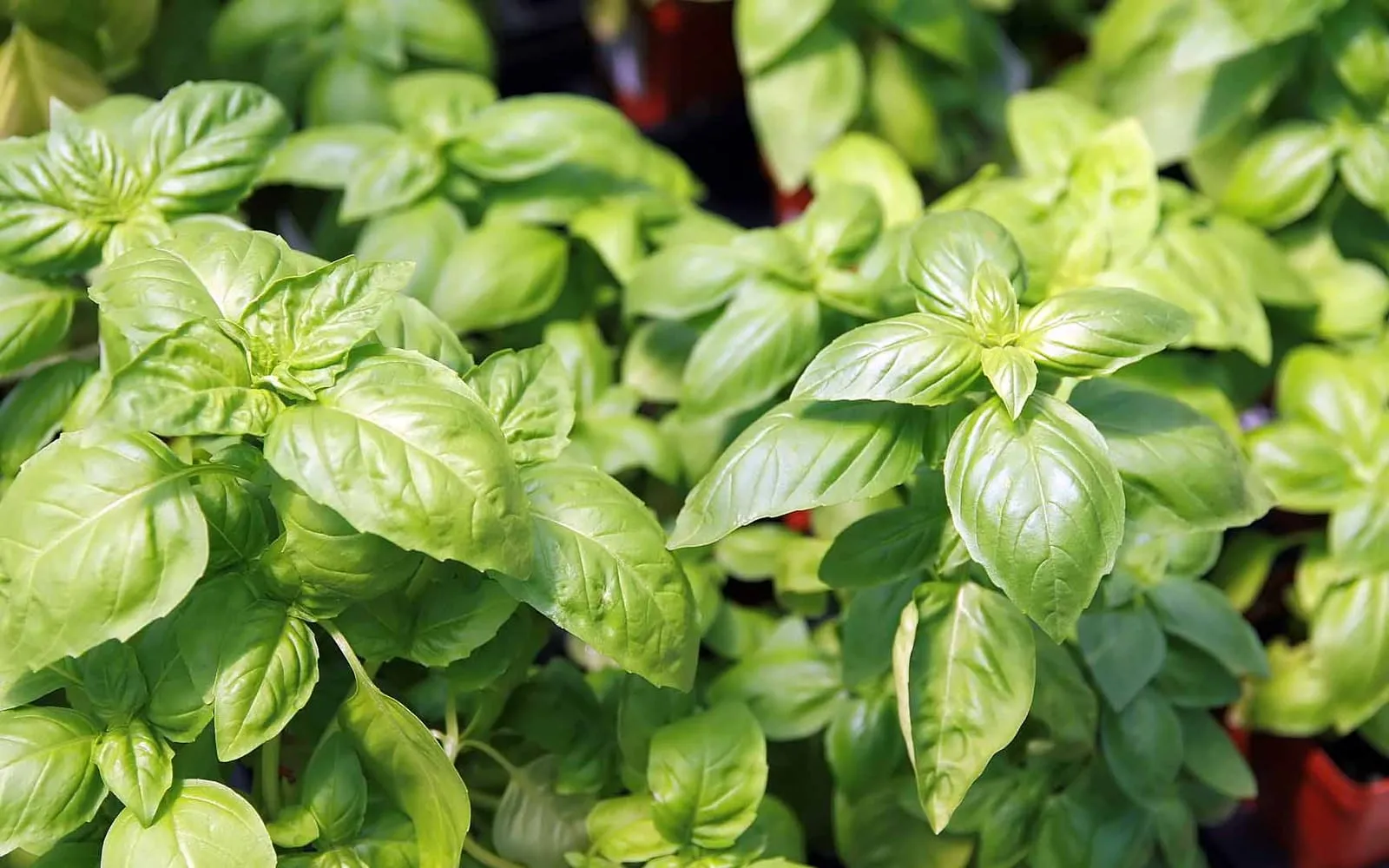
A bushy annual with soft, glossy, oval leaves in opposite pairs on square stems. The square stem places it in Lamiaceae alongside mint, rosemary, thyme and lavender.
The scent is warm and sweet with clove and anise behind it, and it varies sharply by variety. Genovese basil is the classic Italian type for pesto. Thai basil is more strongly aniseed with purple stems. Greek basil forms a tight small-leaved dome that suits a pot. Lettuce-leaf basil has leaves the size of a hand.
Flowers are small, white to pale pink, in whorled spikes at the shoot tips. They signal the end of useful leaf production, because the plant diverts everything into seed and the leaves turn coarse and bitter.
Purple-leaved varieties such as ‘Dark Opal’ look striking and are generally milder in flavour than the green ones.
Where it is from
Tropical Asia and Africa, most likely originating in India where it has been cultivated for thousands of years and where holy basil, a different species, has religious significance.
The plant expects consistent warmth, strong light and soil that drains fast after heavy rain. It has no dormancy and no frost tolerance, because it never needed either.
Basil reached the Mediterranean early enough to become inseparable from Italian cooking, and reached Britain in the sixteenth century, where it has been grown under glass ever since for good reason.
How it grows
A tender annual completing its life in a single season. Seed germinates in warmth, around 20 deg C, in five to ten days, and the plant is cropping within eight weeks.
Growth is driven by pinching. Basil branches from the leaf joint below wherever the tip is removed, so a plant pinched above the second pair of leaves becomes two stems, then four, then eight. An unpinched plant grows straight up, flowers, and is finished.
Flowering is triggered by day length and by stress, particularly drought and root restriction. Pinching out flower spikes as they form buys several more weeks of leaf.
Cuttings root in water within ten days, which is the quickest way to multiply a variety you like, and it works on a supermarket plant.
Through the seasons
Spring is sowing. Start indoors from March at 20 deg C, or direct outdoors from late May once the soil has warmed. Do not plant out until nights are reliably above 10 deg C, which usually means June.
Summer is harvest. Pinch the tips constantly, remove flower buds, and water in the morning. This is also when downy mildew arrives, so keep the plants spaced and ventilated.
Autumn ends it. Growth stops as nights cool. Take cuttings in September to overwinter on a warm windowsill, or harvest everything and freeze it as pesto.
Winter is possible indoors with real effort. Basil needs more light than a winter windowsill offers at high latitude, so a grow light is the difference between a plant and a stick.
Care difficulty
Moderate, and harder than its reputation suggests, because the two things it needs are warmth and dry leaves.
Cold does visible damage well above freezing. Below about 10 deg C the leaves blacken and the plant checks, so a May planting out is usually a fortnight too early.
Wet leaves overnight invite downy mildew, which has become the defining basil disease since it reached Europe in the early 2000s and can destroy a crop in a week. Water the compost in the morning and never the foliage.
Watering
Water when the surface of the compost dries, and water in the morning so anything splashed dries during the day.
Water the compost rather than the plant. This single habit prevents most of the disease trouble basil gets.
Basil wilts dramatically and recovers quickly, which tempts people into overwatering. A wilted plant in dry compost needs water. A wilted plant in wet compost has root rot and more water finishes it.
Containers dry out fast in summer heat and may need daily attention. Terracotta dries faster than plastic.
Warning signs, diseases and pests
Basil downy mildew is now the most serious problem. Leaves yellow between the veins from the top surface, and a grey-purple fuzz appears on the undersides. It spreads on humid air and there is no cure for an infected plant. Bin affected material rather than composting it, space plants generously, ventilate anything under cover, water in the morning at the base, and look for resistant varieties such as ‘Prospera’ and ‘Eleonora’.
Fusarium wilt causes sudden one-sided wilting, brown streaking inside the stem, and death. It is soil and seed borne, so use fresh compost, buy certified seed, and do not replant basil in the same ground.
Aphids cluster on soft shoot tips. Rub them off or rinse the plant.
Slugs and snails shred seedlings overnight outdoors and are the main reason direct sowings fail.
Grey mould rots stems in still damp air, particularly in a crowded pot.
Blackened leaves after a cool night are cold damage rather than disease. Remove them and move the plant somewhere warmer.
Growing environment
Full sun outdoors, or the brightest windowsill indoors. South-facing is right for basil, unlike most of the houseplants in these guides.
Warmth of 20 to 25 deg C is the productive range. Growth slows below 15 deg C, damage starts below 10, and frost kills outright. A greenhouse, a polytunnel or a sunny windowsill outperforms an open garden most years where summers are cool.
Soil and compost should drain freely and hold moderate fertility. A general peat-free compost with added perlite works in pots.
Air movement matters more for basil than for most herbs, because still humid air is what downy mildew wants. Space plants at least 25 cm apart.
Basil is a traditional companion for tomatoes and the two want identical conditions, which is the practical reason the pairing works.
Feeding
A balanced organic liquid feed at half strength, fortnightly once the plant is established and growing.
Use organic feeds on a herb you are eating raw. Seaweed extract suits it.
Avoid heavy nitrogen, which produces large soft leaves with diluted oil content and weaker flavour.
Container plants exhaust their compost quickly and depend on liquid feed. Plants in a well-prepared bed need very little.
Troubleshooting
Supermarket pot collapsed within a week. It holds dozens of seedlings competing in a tiny plug. Tip it out, tease it into three or four clumps, pot each into its own container of fresh compost, water, and keep it warm and bright. Most recover.
Leggy with long gaps between leaves. Not enough light, or never pinched. Move it into full sun and pinch every shoot tip above a pair of leaves.
Flowering early and leaves turning bitter. Stress, usually drought or a pot that is too small. Pinch out the flower spikes, pot it on, and water more evenly.
Yellow patches between the veins, grey fuzz underneath. Basil downy mildew. Bin the plant. Space, ventilate and water in the morning next time.
Blackened leaves overnight. Cold damage. Basil suffers well above freezing. Bring it in.
Wilting even though the compost is wet. Root rot or fusarium wilt. Check for brown streaks inside the stem. Start again in fresh compost.
Plant fine outdoors in July, dead by mid-September. Normal. Basil is a tender annual. Take cuttings in early September to carry a plant through winter indoors.