
Edible
Dill
Anethum graveolens
Also known as Dill weed, Dillseed
How to grow dill, Anethum graveolens. Sowing direct because it hates transplanting, succession sowing against bolting, harvesting the seed, and keeping it away from fennel.
At a glance
- Difficulty
- Moderate
- Water
- Steadily, and never let it dry out and then flood it
- Light
- Full sun, and a sheltered position
- Temperature
- Half-hardy. It dislikes cold soil and dies at the first frost
- Hardiness
- USDA 2-11, RHS H3, hardy to -5 C
- Type
- Annual, going from seed to seed in one season
- Height
- 60-150 cm
- Native to
- The eastern Mediterranean and western Asia
- Best month
- August in the Northern Hemisphere, February in the Southern Hemisphere
Cold wet soil at sowing gives poor germination and a plant that bolts almost at once, so waiting for warmth is worth more than sowing early. Keep it away from fennel, since the two cross and the seed comes true to neither. Leaf and seed want different sowings, because the plant that makes good seed has already lost its leaf.
Hardiness zones describe winter cold alone. Summer heat, humidity, rainfall and the length of the growing season decide as much, so treat the range as the outer limit rather than as a recommendation.
Every month named in this guide is for the temperate Northern Hemisphere. If you garden in the Southern Hemisphere, shift each one by six months, so August becomes February. Closer to the equator the wet and dry seasons matter more than the calendar, and the shift stops being a useful guide.
Not known to be toxic
- Safe to eat
- Leaves, stems, flowers and seed
Non-toxic. The ASPCA does not list Anethum graveolens among plants harmful to cats, dogs or horses, and every part of the plant is used in cooking. The feathery leaves are the herb, the flower heads go into pickling jars, and the ripe seed is a spice. Dill water has been given to infants for colic for generations, which says something about how gentle it is. Two ordinary cautions apply, neither of them serious. Dill contains furanocoumarins, as many members of the carrot family do, and handling large quantities of the foliage in bright sunlight can cause mild phytophotodermatitis in sensitive people, although the concentration is far below that of giant hogweed or even parsnip. Wear gloves if you are cutting a large crop on a hot day. The more important point is one of identification. Dill belongs to the family that contains hemlock and hemlock water dropwort, both of which are lethal, and a bolted dill plant carries the same flat white-to-yellow umbels as the whole family. Never gather anything resembling dill in the wild, and grow it where you know what you planted.
Sources: ASPCA toxic and non-toxic plants, RHS potentially harmful garden plants
About
Dill has the same problem as coriander and the same solution. It is an annual that wants to flower, anything that checks its growth brings that forward, and a single sowing gives you three or four weeks of leaf before it runs up to seed.
Sow it direct, sow it every three weeks, and stop expecting one plant to last the summer.
The compensation is that a bolted dill is not a failure the way a bolted lettuce is. The flower heads go into pickling jars, the ripe seed is a spice worth having, and the plant is one of the best hoverfly attractants in a vegetable garden. Letting some run is part of growing it well.
Appearance and character
An upright annual, 60 cm to 1.5 m depending on variety and conditions, with a single hollow ridged stem that branches near the top.
Stems are smooth, hollow, blue-green and often bloomed with a waxy coating.
Leaves are finely divided into thread-like segments, soft, feathery and blue-green, and they clasp the stem at the base.
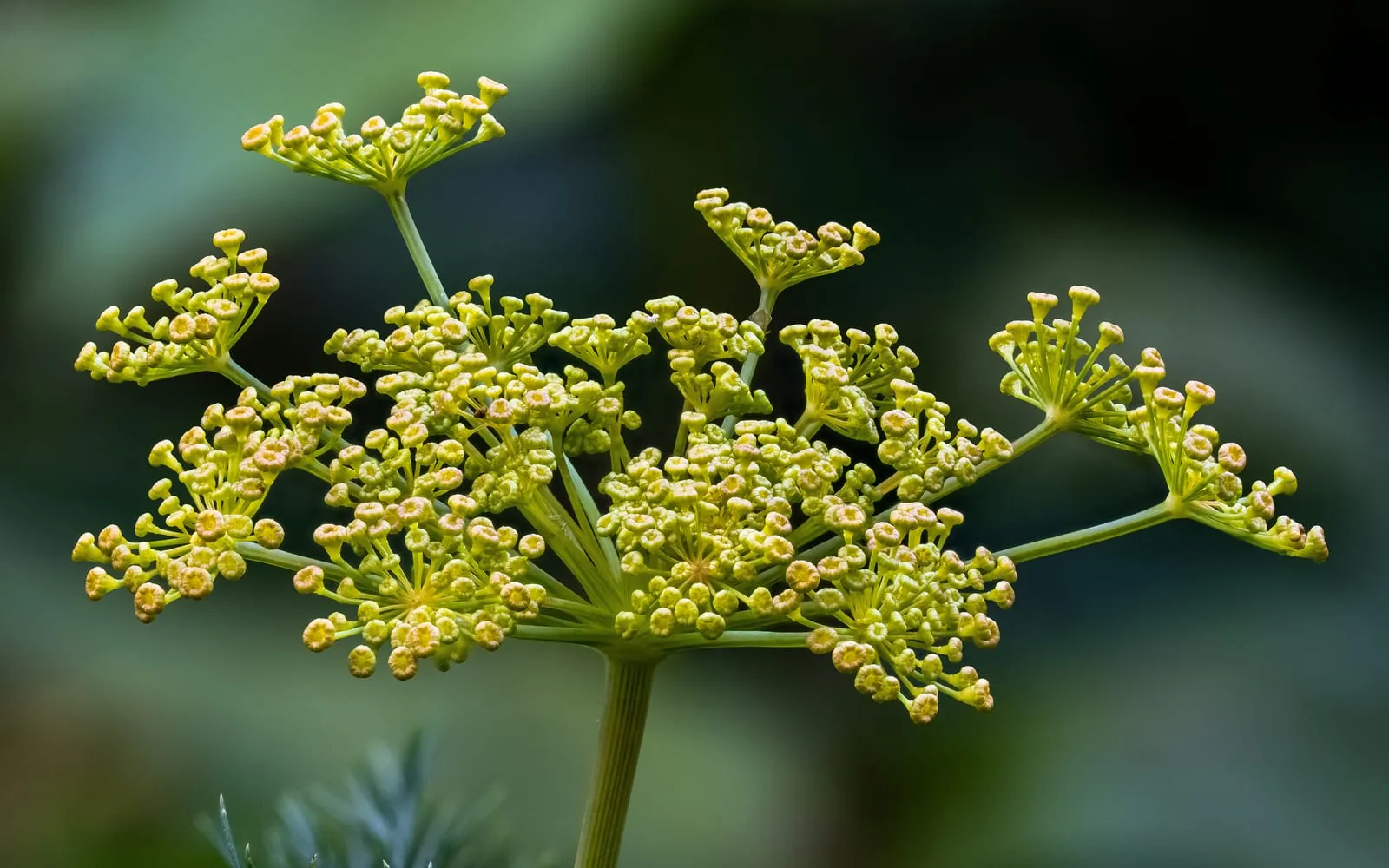
Flowers open from midsummer in flat compound umbels 10 to 20 cm across, made of many spokes each carrying a cluster of tiny yellow-green flowers.
Seed follows as flat, oval, ridged brown seeds about 4 mm long, lighter and broader than fennel seed.
The whole plant is aromatic. The leaf smell is fresh, grassy and faintly aniseed, and the ripe seed is warmer and more caraway-like.
Telling dill from fennel catches people out, since they look very similar. Dill is an annual with a single main stem, blue-green thread-fine leaves and a grassy anise smell. Fennel is a perennial forming a clump of many stems, with slightly coarser leaves and a much stronger, sweeter aniseed scent.
Varieties are worth choosing. ‘Fernleaf’ and ‘Dukat’ are slower to bolt and better for leaf, and ‘Mammoth’ runs up fast and is grown for seed.
Where it is from
The eastern Mediterranean and western Asia, where it grows in open ground and on disturbed soil with hot dry summers.
Cultivation is very old. Dill appears in Egyptian medical papyri from around 1500 BC, it was found in Tutankhamun’s tomb, and it is named in the Talmud as a crop subject to tithe.
The English name comes from the Old Norse dilla, to soothe or lull, which is the origin of dill water for colicky babies.
Its native climate is the reason it bolts. A plant adapted to a short spring followed by drought survives by flowering early, so heat, dryness and root disturbance all act as signals to run to seed.
It is grown across northern and eastern Europe on a scale that surprises temperate gardeners, and Scandinavian, Polish and Russian cooking use far more of it than British cooking does.
How it grows
Sow direct where the plants are to grow. Dill has a taproot and resents transplanting, and a moved seedling bolts within a fortnight.
Sow from April to July, thinly, about 1 cm deep in rows 30 cm apart, and thin the seedlings to 20 cm.
Sow again every three weeks. Succession is what turns dill from a three-week crop into a summer-long one.
Choose a sheltered position. The hollow stems are tall and brittle and a windy site flattens them.
Water steadily and evenly. Drought is a direct trigger for bolting, and swings between dry and soaked are worse than a consistently modest supply.
Pick the leaves from the top of the plant once it has several sets, taking whole sprigs.
Let some plants flower deliberately. The flower heads are the classic addition to a jar of pickled cucumbers, and the hoverflies they bring in eat aphids elsewhere on the plot.
Harvest the seed when the heads turn from green to pale brown. Cut the stems, hang them upside down in a paper bag somewhere dry, and the seed drops out as it dries.
Keep dill and fennel well apart if you intend to save seed, since they cross and the resulting seedlings are worth nothing.
Sow a late batch in a pot in August for autumn picking on a windowsill.
Through the seasons
Spring is the first sowing. Start outdoors from April once the soil has warmed, and keep sowing every three weeks.
Summer is picking and bolting. Leaf is best in June and early July, flower heads follow, and successive sowings keep the leaf coming.
Late summer is the seed harvest. Cut the heads as they turn pale brown in August and dry them in a paper bag.
Autumn ends it. The first frost kills the plants outright. A pot sown in August gives a little leaf indoors.
Care difficulty
Moderate, and the difficulty is concentrated in the bolting.
Sowing direct and sowing often are the two habits that make dill work, and neither is difficult once accepted.
Wind is the practical nuisance. Tall dill in an exposed spot ends up on the ground.
The plant needs no feeding and very little attention beyond watering.
Anyone treating a bolted plant as a seed and pickling crop rather than a failure gets far more out of it.
Watering
Water steadily and evenly. A plant that dries out and then recovers will bolt within days.
Water the soil rather than the foliage, particularly in humid weather.
Avoid waterlogging. Dill rots in cold wet ground and seedlings damp off readily.
Containers dry out fastest and need checking daily in summer. Use a deep pot of at least 25 cm for the taproot.
Reduce watering as the seed heads ripen, which helps them dry.
Warning signs, diseases and pests
Bolting is what people ask about. A flower stem rises, the leaves thin out, and the plant stops producing usable foliage. It is triggered by transplanting, drought, heat and root disturbance, and nothing reverses it. Sow direct, water steadily, choose a slow-bolting variety such as ‘Dukat’, and treat the next sowing as the answer.
Plants falling over means the position is too exposed or the soil too rich. Stake them, or move to a sheltered spot.
Aphids gather on the flower heads and stems in summer. The hoverflies the flowers attract usually deal with them.
Damping off kills seedlings at soil level in cold wet compost. Sow into free-draining soil once it has warmed, and avoid overwatering.
Poor germination usually follows sowing into cold wet soil in early spring, or using old seed. Dill seed stays viable about three years.
Yellow lower leaves on a young plant point to waterlogging.
Powdery mildew appears on crowded plants late in the season.
Growing environment
Full sun. Dill grows leggy and pale in shade.
Light, free-draining, moderately fertile soil. Rich manured ground produces soft growth that falls over.
Shelter from wind is more important than for most herbs, because of the height and the hollow stems.
Sow where the plants will stay. Transplanting is the surest way to a bolted plant.
A deep container suits it, since depth matters more than width for the taproot.
Grow it near the vegetables rather than in a herb bed if you want the hoverfly benefit, since the flowers bring in aphid predators.
Keep it away from fennel if saving seed, and note that dill also crosses poorly with carrots grown for seed nearby.
Feeding
Dill needs almost nothing on reasonable soil.
Avoid rich feeding and fresh manure, which produce tall soft growth with less flavour that flops in the first wind.
A single dilute balanced feed mid-season is enough for a container plant.
Plants grown for seed benefit from a low-nitrogen feed as the flower head forms, though most soils supply enough.
Troubleshooting
It flowered after a month. Dill is an annual that bolts under stress, and transplanting, heat and drought all trigger it. Sow direct, water steadily, and sow again every three weeks.
Can I stop it bolting? Not once it starts. Choose a slow-bolting variety such as ‘Dukat’ or ‘Fernleaf’, keep it evenly watered, and rely on succession sowing.
Can I buy a plant instead of sowing? You can, and it will bolt quickly once planted out because of the root disturbance. Sowing direct is far better.
What is the difference between dill and fennel? Dill is an annual with one main stem and a grassy anise smell. Fennel is a perennial clump with coarser foliage and a much stronger sweet aniseed scent. They cross, so keep them apart if saving seed.
The plants blew over. Too exposed, or the soil is too rich. Choose a sheltered spot and do not feed.
When do I harvest the seed? When the heads turn from green to pale brown. Cut the stems, hang them in a paper bag somewhere dry, and the seed falls out.
Are the flower heads useful? Yes. They go into pickling jars, and they are one of the best hoverfly plants in a vegetable garden. Let some plants run.
Can I grow it on a windowsill? In a deep pot in the brightest spot, yes, though it stretches and bolts faster indoors than outside.