
Fertilisers: what NPK means and which type to use
A fertiliser supplies the mineral nutrients a plant takes up through its roots. The three numbers on the bag are nitrogen, phosphorus and potassium, and most feeding decisions start with matching those numbers to the crop.
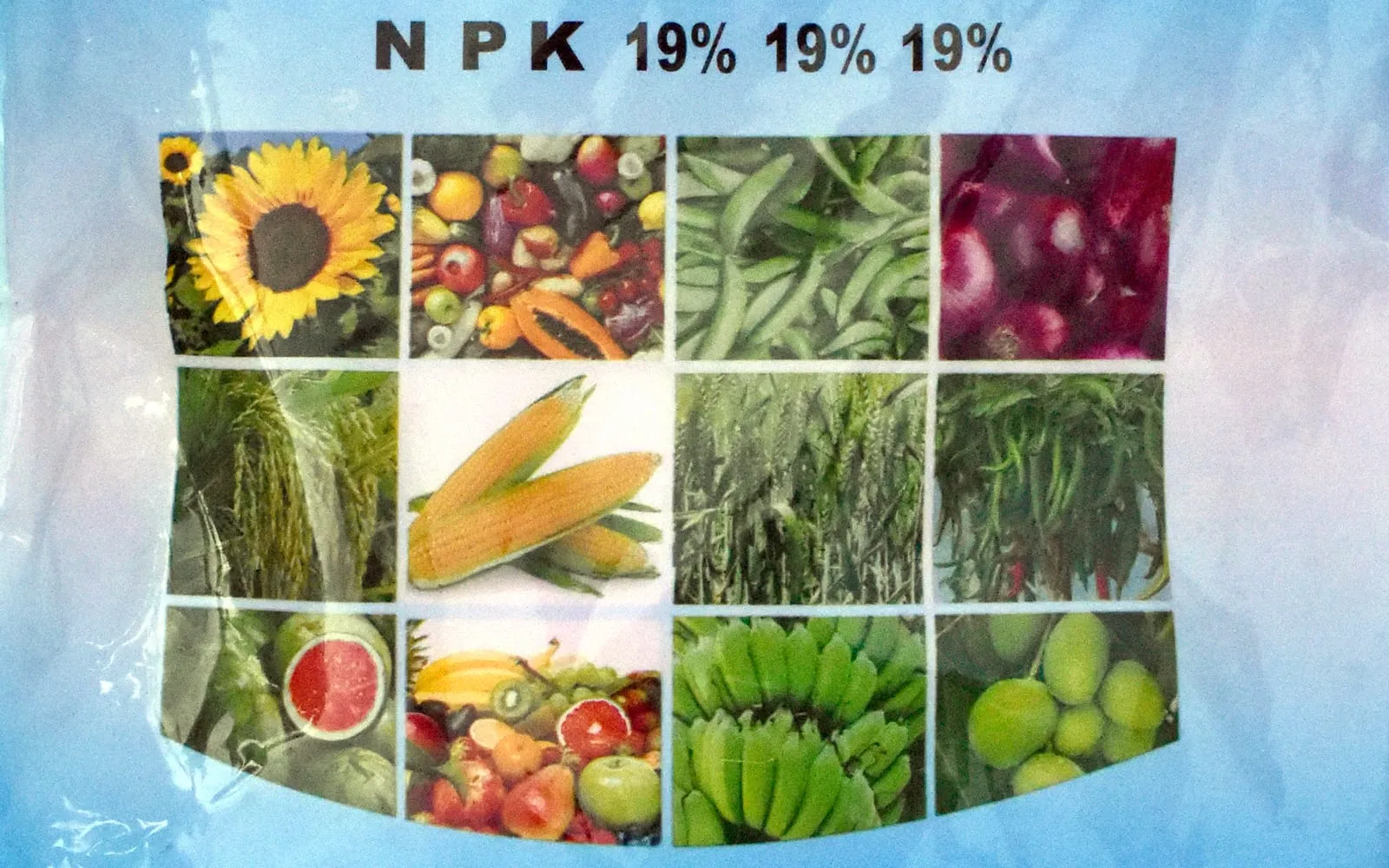
A fertiliser supplies the mineral nutrients a plant takes up through its roots. Plants make their own sugars from air, water and light, so fertiliser does not give them energy. It supplies the mineral elements they need to turn those sugars into proteins, chlorophyll and cell walls. Most of those elements come from the soil. If one runs short, growth slows or the leaves discolour. A fertiliser replaces what the soil is not supplying. In hydroponics there is no soil to supply anything, so the water has to carry the full set of these elements itself.
The three numbers on the bag
Every fertiliser label shows three NPK numbers, such as 7-7-7 or 4-3-8. They are the percentages by weight of nitrogen, phosphorus and potassium, always in that order. They are the quickest guide to what a feed will do. Phosphorus and potassium are listed as their oxides, phosphate and potash. This is an old labelling convention, and it means those two numbers are slightly higher than the amount of pure phosphorus or potassium in the bag. When you choose a feed, the ratio between the three numbers matters more than the exact figures.
Nitrogen (N) helps a plant make leaves and stems. It is part of chlorophyll, proteins and enzymes. A plant short of nitrogen grows slowly, and its oldest leaves turn pale first, sometimes with red or purple tints on the stems. A feed high in nitrogen encourages leafy growth. That suits a lawn or a lettuce, but it is less useful for a plant you want to flower.
Phosphorus (P) helps a plant move and use energy. It also supports roots, flowers, fruit and seed. Seedlings need it as they make their first roots, and transplants need it as they settle into new ground. A shortage shows as dull, dark, sometimes purple leaves on a stunted plant. It is most common in cold, wet or very acid soils, where roots cannot take up the phosphorus already present.
Potassium (K) helps a plant control water through the pores on its leaves. It also moves sugars into developing fruit and flowers, and improves flowering, fruit quality and resistance to drought, cold and disease. A plant short of potassium may scorch along the margins of its older leaves and set few flowers or fruit. High-potassium feeds suit tomatoes, chillies and plants grown for fruit or flowers.
The place where symptoms appear can tell you which nutrient is missing. Nitrogen, phosphorus, potassium and magnesium move freely inside a plant. When the supply runs short, the plant takes them from old leaves and sends them to new growth, so the symptoms appear lower down. Iron and calcium cannot be moved once they are built into a leaf, so their shortages show at the top, on the youngest growth. The nutrient deficiency guide works through the patterns leaf by leaf.
Different plants want different ratios
Plants grown for their leaves need plenty of nitrogen. Lettuce, spinach, cabbage, the other brassicas and lawn grass are all leaf crops. They respond well to a feed weighted towards nitrogen.
Plants grown for fruit or flowers need more potassium once they start to crop. A general balanced feed suits tomatoes while they make stems and leaves. Once the first trusses of flowers set, growers usually switch to a high-potassium tomato feed so the plant puts more of its growth into fruit rather than leaf. Peppers, strawberries and most flowering plants benefit from the same kind of feed.
Root and bulb crops need less nitrogen, not more. Carrots, beetroot and onions given a nitrogen-rich feed make too much leaf and less root. They usually grow best in ground that was manured for a previous crop rather than freshly fed. Sweetcorn is different. It is a hungry plant and usually benefits from a generous general feed. In a mixed bed, where you may not want to feed each plant separately, a balanced compound feed around 7-7-7 suits most crops.
Organic and mineral feeds
Fertilisers come in two main families. Organic feeds are made from material that was once alive. Soil organisms have to break them down before the plant can use their nutrients. Mineral feeds, often called chemical or synthetic feeds, are refined or manufactured salts. They dissolve into nutrients the roots can take up straight away.
Organic feeds include pelleted poultry manure, blood, fish and bone, bone meal for phosphorus, slow-release hoof and horn for nitrogen, seaweed meal, and the liquid you can brew at home by steeping stinging nettle or comfrey in water. Microbes release the nutrients over time, so organic feeds work slowly and steadily. They are also difficult to overdose. As well as feeding the plant, they feed soil organisms that help build crumb structure and hold water. Used regularly, organic feeds improve the soil year by year. The trade-off is that organic feeds are slow and imprecise. They release little while the soil is cold, their nutrient content is low and roughly stated, and a fast-growing crop in a pot may need more than the microbes can release.
Mineral feeds include Growmore at 7-7-7, sulphate of ammonia at about 21 per cent nitrogen and nothing else, superphosphate, sulphate of potash, soluble general and tomato feeds, and the coated controlled-release granules sold for containers. Their advantage is speed and control. The nutrients are already in a form the roots can absorb. The ratio is exact, they work in cold soil, and they can correct a visible shortage within days. The same strength makes mineral feeds easier to misuse. They add nothing to the soil’s structure or biology, and too much can scorch the roots. Soluble forms also wash out in heavy rain. The nitrate and phosphate they carry can pollute rivers and feed algal blooms. Manufacturing nitrogen fertiliser also takes a great deal of energy.
Most gardeners end up using both. Bulky organic matter and slow organic feeds build the soil over the long run. A quick liquid or mineral feed can correct a shortage or keep a container plant growing.
The micronutrients that cause most yellow leaves
Beyond the big three, plants need other nutrients in much smaller amounts. Three of them cause most of the yellow-leaf problems gardeners see.
Magnesium sits at the centre of the chlorophyll molecule, so a plant short of magnesium cannot keep its leaves green. The yellowing appears between the veins of the older leaves, while the veins themselves stay green. The edges often take on an orange or red flush. Magnesium shortage is common late in the season on plants fed heavily with a high-potassium feed, because potassium and magnesium compete at the root. It is also common on light, acid soils. Apply Epsom salts, which are magnesium sulphate, or spray a dilute solution on the leaves for a faster response. Dolomitic limestone adds magnesium and raises pH at the same time.
Calcium stiffens cell walls and is needed at every growing tip. It moves with the water the plant takes up. Once calcium is in a leaf or fruit, the plant cannot move it to new growth. Fast-growing fruit can therefore run short even when the soil holds plenty. This causes blossom end rot in tomatoes and bitter pit in apples. The plant cannot deliver calcium to the fruit fast enough, usually because watering has been uneven. Steady watering usually helps more than adding calcium to the soil.
Iron is needed to build chlorophyll. When iron is short, the newest leaves turn yellow between a fine net of green veins. In bad cases, they bleach almost white. The soil almost always contains enough iron. A high pH makes it unavailable to the roots. That is why the symptom often appears on acid-loving plants such as blueberries, camellias and rhododendrons grown on chalky soil or watered with hard tap water.
The remaining micronutrients, among them manganese, boron, zinc, copper, molybdenum and sulphur, are needed in tiny quantities. Clear shortages are uncommon in soil kept rich in organic matter. Seaweed feeds and good garden compost supply the whole range, which is one reason to use them alongside a straight NPK feed.
Soil acidity and nutrient uptake
A fertiliser only works if the roots can take up the nutrients it supplies. Soil pH helps decide whether they can. The scale runs from acid through neutral to alkaline. Most garden plants grow best in slightly acid to neutral soil, around pH 6 to 7, and most nutrients are easiest for roots to absorb in that range. Outside that band, some nutrients become harder for roots to absorb even if the total amount of nutrient in the soil stays the same.
Soil pH does not add or remove nutrients. It changes how much of each nutrient dissolves into a form the roots can absorb. On alkaline, chalky soil, iron, manganese and phosphorus bind into compounds a plant cannot use. The plant then runs short while the ground still contains plenty. This is the lime-induced chlorosis behind the yellow leaves in the iron section above. Strongly acid soil causes different problems. Phosphorus becomes unavailable again, calcium and magnesium wash out, and aluminium and manganese can dissolve to levels that harm the roots.
Check the pH before you reach for more feed. Adding fertiliser to soil at the wrong pH often does little, because the added nutrient may become unavailable too. The shortage was not caused by too little nutrient in the soil. It was caused by roots being unable to take it up. A cheap test kit reads the pH in a minute. Ground limestone raises pH towards neutral, and sulphur or acidic organic matter lowers it. Both take a season or more, so it is usually easier to choose plants that suit your soil than to change the soil for the plant.
Ericaceous plants and the wrong pH
Some plants evolved on acid ground and struggle anywhere else. Rhododendrons, azaleas, camellias, blueberries, pieris and heathers are the common examples. They are grouped together as ericaceous or lime-hating plants, and they want a pH of roughly 4.5 to 5.5. They take up iron and manganese well in acid soil, where both dissolve freely. At a higher pH, those nutrients become unavailable and the plant cannot get enough of them.
In neutral or chalky ground, an ericaceous plant develops iron-deficiency chlorosis. The newest leaves go pale between green veins, even though the soil around the roots still contains iron. If the plant stays there, it weakens, stops growing and may die. Hard tap water can cause the same problem slowly. It is usually alkaline, so it raises the pH of the compost a little at every watering. That is why a blueberry in a pot can crop well for three years and turn yellow in the fourth.
More fertiliser will not solve this. The plant needs the right soil. Grow these plants in ericaceous compost, in a pot or a made-up bed, water them with stored rainwater, and use an ericaceous feed. Sequestered iron, sold as a chelate, can green them up quickly while the pH comes down, but it only treats the symptom. For a lasting fix, keep the roots in acid compost and use rainwater.
A smaller group prefers the opposite conditions. Lavender and pinks grow well on alkaline, chalky ground that would make a rhododendron yellow. Gardeners also lime the ground for cabbages and other brassicas partly because club root causes less trouble as pH rises. Most vegetables and border plants fall in the middle and grow well anywhere near neutral.
Compost and fertiliser do different jobs
Compost, leaf mould and rotted manure are soil improvers rather than feeds. They are bulky organic matter that opens up the structure of the soil, holds water and air, and feeds the organisms living in it. They carry nutrients too, but at low concentration and released slowly as they rot. A fertiliser is the reverse: a concentrated dose of nutrients with almost no bulk.
Compost and fertiliser both add nutrients, but they do different jobs. Compost also improves the soil. Fertiliser can correct a real shortage quickly. The two work best together. Use compost, which you can make yourself at home, to build fertility over years. Use fertiliser when a hungry crop needs more than the soil is supplying.
Feeding without overdoing it
Feed while a plant is growing, not while it is dormant. A plant that has stopped growing cannot use what you give it, and the surplus washes down past the roots and out of reach.
Most yellow or stunted plants do not need fertiliser. Waterlogged, cold or pot-bound roots cannot take up what is already in the soil, and feeding such a plant can make matters worse. Look at the roots and the watering before you assume a nutrient deficiency.
More is not better. Overdo the nitrogen and you get soft, sappy growth that aphids and mildew settle on. Overdo a soluble feed and its salts draw water back out of the roots. The plant then wilts and browns at the leaf margins even though the soil is wet. This is fertiliser scorch. Follow the rate on the pack. With plants in containers, feed little and often rather than in one heavy dose.
A plant in a pot depends on you for nutrients. The compost holds a fixed store that runs down in six to eight weeks, so container plants need feeding through the growing season. A plant in open ground has access to a far larger reserve. Many established plants in decent soil do not need regular feeding.
Common questions
- What do the three numbers on a fertiliser mean?
- They are the percentages by weight of nitrogen, phosphorus and potassium, always in that order. A 7-7-7 feed is balanced; a 4-3-8 feed is higher in potassium for fruit and flowers. For choosing a feed the ratio between the three matters more than the exact figures.
- Is organic fertiliser better than chemical?
- They do different jobs. Soil organisms break down organic feeds and release their nutrients slowly. Mineral feeds dissolve into nutrients the roots can take up straight away, usually in a precise ratio. Many gardeners use both. Organic feeds are better for building fertility over years; mineral feeds are better for correcting a shortage quickly.
- What is the difference between compost and fertiliser?
- Compost is a bulky soil improver. It adds organic matter, holds water and air, and feeds soil life. It carries some nutrients, but at low concentration. A fertiliser is a concentrated nutrient source with little bulk. Compost improves the soil; fertiliser supplies extra nutrients when a hungry crop needs them.
- What causes yellow leaves between the veins?
- Yellowing between green veins on the oldest leaves usually means magnesium shortage; the same pattern on the newest leaves usually means iron. The position tells them apart. Both are often a symptom of the wrong soil pH or poor root function rather than an empty soil, so feeding does not always cure it.
- Can you use too much fertiliser?
- Yes. Too much nitrogen gives soft sappy growth that pests and disease favour, and too much soluble feed draws water back out of the roots and scorches the plant. Follow the rate on the pack, and feed plants in pots a little and often rather than in one heavy dose.
Sources and further reading
- FertilisersRoyal Horticultural SocietyAn overview of the NPK numbers, straight and compound feeds, and the organic and mineral families.
- Plant nutrition and feedingRoyal Horticultural SocietyWhich plants to feed, when in the season, and how much.
- Nutrient deficienciesRoyal Horticultural SocietyReading the leaf symptoms of nitrogen, potassium, magnesium and iron shortage.
- Soil pH and testing soilRoyal Horticultural SocietyWhy soil pH decides which nutrients a plant can take up, whatever the soil holds.
- The ABCs of NPK: a fertilizer guideOregon State University Extension ServiceA US land-grant guide to reading the three numbers and working out how much nutrient a bag holds.