
Companion planting: what works and what doesn't
Growing certain plants together can cover soil, bring in useful insects and give some pests another plant to settle on. Much of the traditional advice is untested, so it helps to know why a pairing might work.
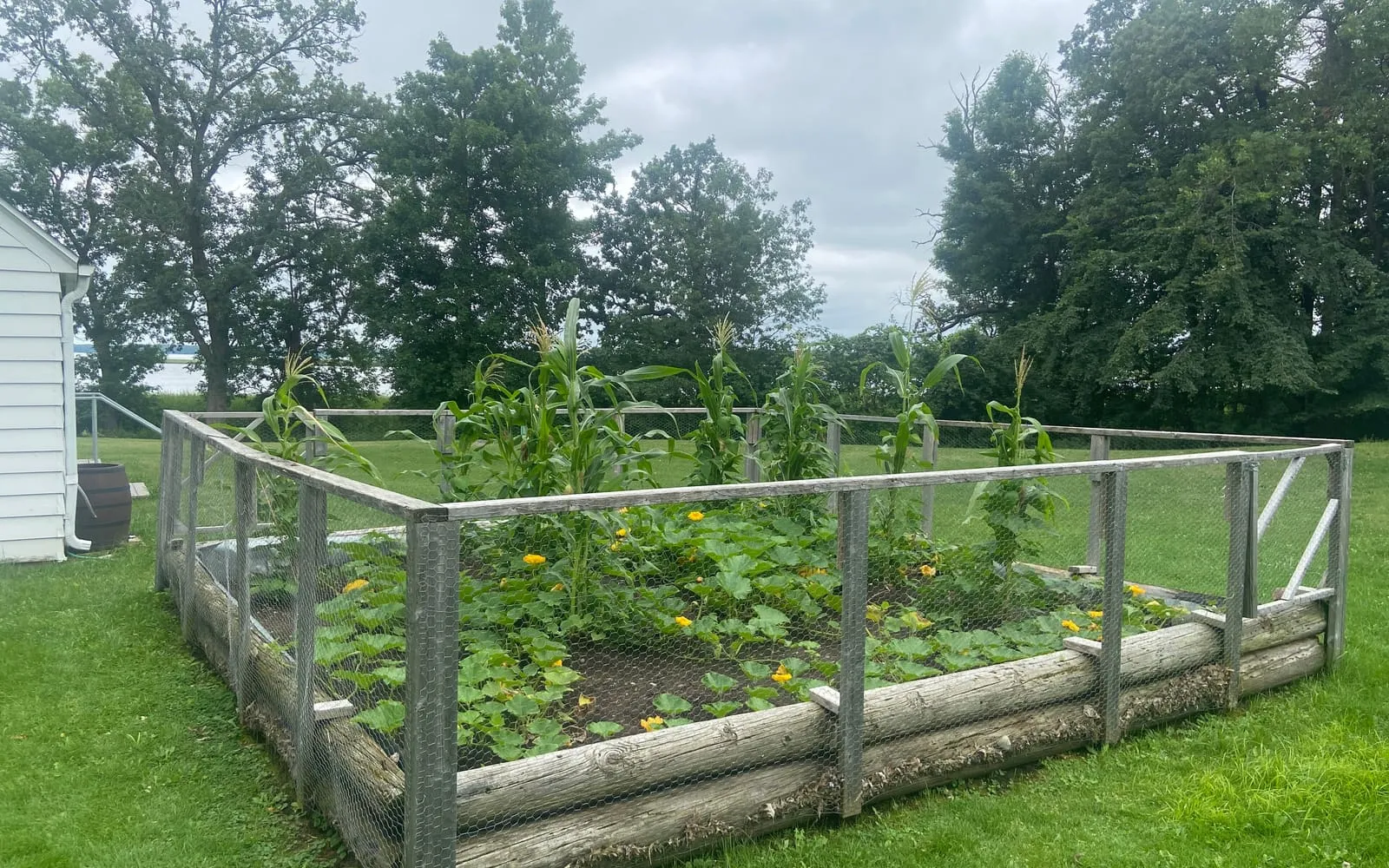
Companion planting means growing different plants close together so that at least one of them benefits. Some pairings work for clear reasons, such as a bean fixing nitrogen or a flower feeding the insects that eat aphids. Much of the advice is folklore passed down through gardening books and repeated so often that it reads as fact. The useful question is simple: how does this plant help the one beside it?
The three sisters
One of the oldest documented examples is the three sisters, grown for centuries by Indigenous peoples across the Americas. Sweetcorn grows tall and gives a climbing bean a support. The bean fixes nitrogen at its roots, and some of that nitrogen reaches the other two crops as old roots and leaves break down. A squash spreads its broad leaves across the ground below, shading the soil, holding in moisture and keeping weeds down. This gives you three crops in the same space, with each one using a different part of the bed.
Beans and peas feed the soil
Legumes such as beans and peas host bacteria in their root nodules that turn nitrogen from the air into a form plants can use. Legumes do not feed their neighbours much while they are still growing. While the plant is alive, it keeps most of that nitrogen for its own pods. The nitrogen reaches the soil later, when you cut the plant off at the base after cropping and leave the roots to rot. That nitrogen feeds the next crop.
Flowers bring in the insects you want
Flowers in a vegetable bed help two groups of useful insects. Pollinators such as bees visit the flowers and the crop alongside them, which improves fruit set on beans, courgettes and tomatoes. Predators and parasites of pests, among them hoverflies, lacewings and parasitic wasps, feed on nectar and pollen as adults while their larvae eat aphids. Open, simple flowers suit them best, because a short-tongued hoverfly cannot reach into a deep bloom. Good examples are borage, with its open blue flowers, the flat heads of dill and other umbellifers, and single-flowered marigolds. The predators and parasitoids you see will depend on where you garden, so the best flowers will vary too.
Trap crops give pests another target
A trap crop is a plant a pest prefers to your vegetables. You grow it nearby so pests settle there first. Nasturtiums are the classic example. Blackfly and cabbage caterpillars often settle on nasturtiums ahead of nearby beans or brassicas, and you then deal with the pest there or let the nasturtiums take the damage. A trap crop repels nothing. It helps only if you act before the pest moves back to the crop.
Carrots and onions
Onions or garlic grown among carrots are said to confuse carrot fly by hiding the carrot scent it follows. Trials show some effect, but the onions have to outnumber the carrots by a wide margin. The effect also lasts only while the onion leaves are growing strongly. Once the onions bulb up and their foliage fades, they no longer protect the carrots. A fine mesh barrier over the carrots is far more reliable than any planting. The carrot fly is a cool-climate pest of Europe, New Zealand and parts of North America. Where it does not occur, the pairing is not useful.
Marigolds and root-knot nematodes
Marigolds are one companion-planting claim with good evidence. French and African marigolds, the Tagetes species, release compounds from their roots that suppress root-knot nematodes, the microscopic worms that swell and distort roots in warm soils. The effect is real, but it needs a whole bed of marigolds grown for two to four months and then dug in as green manure. A few plants dotted through a crop will not do the same job. The effect also depends on the species and even the variety, so the bedding marigold at the garden centre may do nothing. Root-knot nematodes cause most damage in warm climates and heated greenhouses, so marigolds are mainly worth trying there.
Shade, shelter and a living mulch
Tall plants change the conditions for short ones beside them. In a hot summer lettuce and other leafy crops bolt, running to seed as soon as heat and long days stress them. A row of sweetcorn or sunflowers on the sunny side casts afternoon shade that keeps the soil cooler and holds the leaves in usable condition for longer. The same tall plants shelter tender crops from wind.
A living mulch works at ground level. A sprawling plant such as squash, or a sown carpet of low clover, covers the bare soil between taller crops so less water evaporates and fewer weeds find the light to germinate. It competes for the same water and nutrients, so it pays off mainly where the ground would otherwise sit bare.
Where the evidence is weak
Plenty of pairings in the old companion tables have never been tested, and some fail when someone checks. One famous example is basil and tomatoes. Basil is said to improve the growth and flavour of tomatoes grown next to it. The flavour claim has no support in trials, and any effect on growth is small at best. Basil and tomatoes are still worth growing together because they like the same warm conditions and are useful together in the kitchen. Grow them side by side for that and expect nothing more. Read the printed good-neighbour tables the same way. Some entries describe a real effect, many are repetition, and a few are wrong.
Plants still compete
Every plant in a bed competes with its neighbours for light, water and nutrients, and companion planting helps only when the benefit outweighs that competition. Pack plants too close and each one grows worse, whatever a companion chart says. A few plants also suppress others chemically. Many vegetables grow poorly near fennel. Little grows under a black walnut, whose roots and fallen leaves release a compound called juglone. Give companions room, and watch what happens in your own beds rather than trusting the chart.
How to try it
Start with pairings that have a practical reason to work. Grow flowers through the vegetable beds for pollinators and natural predators. Try the three sisters if you have the room and a summer warm enough to ripen corn. Leave the bean and pea roots in the ground after harvest. Keep the rest as experiments rather than rules. Change one thing at a time and note what happened. Your soil, climate and pests are not the ones the old advice was written for.
Common questions
- Does companion planting work?
- Some pairings do. Legumes fix nitrogen, flowers feed pollinators and aphid predators, trap crops give pests another plant to settle on, and tall plants shade tender ones. Many pairings in the old companion tables have never been tested and some fail when checked, so treat those as experiments rather than rules.
- What are the three sisters?
- The three sisters are sweetcorn, climbing beans and squash grown together, a method used for centuries by Indigenous peoples of the Americas. The corn supports the beans. The beans fix nitrogen, some of which reaches the soil as their old roots break down. The squash shades the soil to hold moisture and keep weeds down. The method needs a summer warm enough to ripen corn.
- Do marigolds keep pests away?
- French and African marigolds (Tagetes) release compounds from their roots that suppress root-knot nematodes. They need to be grown as a dense bed for a whole season and then dug in, and the effect depends on the species and variety. The wider claim that marigolds repel aphids and whitefly by smell has little support. Root-knot nematodes do most harm in warm climates and heated greenhouses.
- Can companion planting replace pesticides?
- No, though it can lower the need for them. Bringing in pollinators and natural predators, using barriers and trap crops, and keeping plants unstressed all reduce pest pressure. It works best alongside crop rotation and good growing conditions rather than as a single fix.
- Which plants should not be grown together?
- Avoid crowding heavy feeders that compete for the same light, water and nutrients. A few plants suppress others chemically: fennel discourages many vegetables around it, and little grows under a black walnut because of a compound called juglone. Beyond those, most bad-neighbour warnings in the old tables are untested.
Sources and further reading
- Three ways to use companion plantingRoyal Horticultural SocietyOn flowers for beneficial insects, pest masking and plants grown together to share space.
- The three sistersRoyal Horticultural SocietyHow sweetcorn, climbing beans and squash are grown together, and why.
- Marigolds (Tagetes spp.) for Nematode ManagementZane J. Grabau and others. University of Florida IFAS Extension, EDISOn growing marigolds as a whole-season cover crop to suppress root-knot nematodes, and why the species and variety matter.