
Pest
Tomato hornworm
Manduca quinquemaculata
Also called Tobacco hornworm, Manduca sexta
A plant defoliated overnight by a caterpillar the length of a finger, camouflaged so well it is usually found by its droppings first. Two nearly identical species, why a hornworm carrying white cocoons should be left alone, and why this is a North and South American problem rather than a global one.
At a glance
- Type
- Pest
- Cause
- Insect
- Severity
- Destroys the crop or display
- Affects
- Herbs and edibles
- Active
- June to September
- Established in
- North America and Central and South America
What you are seeing
- Whole branches of a tomato, chilli or aubergine plant stripped of leaves within a day or two, sometimes with green fruit gouged as well
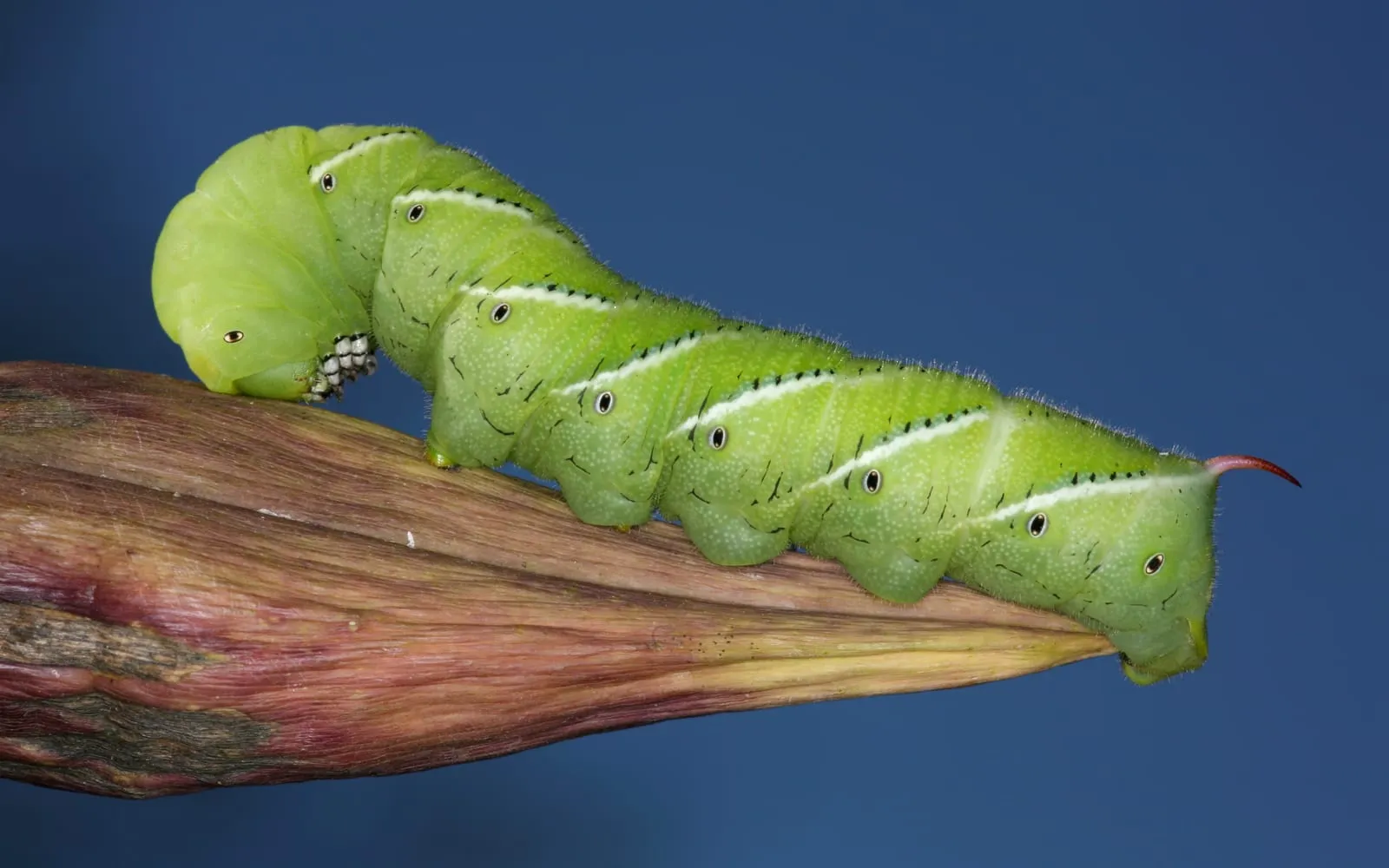
- A fat green caterpillar up to 10 cm long, with white V-shaped or diagonal stripes down each side and a curved horn-like spike at the tail end
- Dark green or black pellet-shaped droppings on the leaves and soil beneath the plant, usually noticed before the caterpillar is
- A large brown moth with a heavy body and narrow wings, seen hovering at dusk like a small hummingbird
- White silk-wrapped cocoons standing upright along the caterpillar's back, a sign it is already parasitised and past doing more damage
Before you treat anything
The horn at the tail end looks alarming but is soft and cannot sting or bite. The caterpillar is harmless to handle.
What you are looking at
Whole branches stripped bare in a day or two, sometimes with gouges bitten into the green fruit as well, and dark pellet-shaped droppings scattered on the leaves and soil below. The caterpillar responsible is usually the last thing found, because it matches the foliage almost exactly: bright green, up to 10 cm long and as thick as a finger, marked with pale diagonal stripes down each side and carrying a curved horn-like spike at the tail end that looks far more dangerous than it is.
The adult is a large heavy-bodied moth with narrow wings, often seen at dusk hovering in front of flowers like a small hummingbird. It is easy to mistake for one at a glance.
Two very similar species
Manduca quinquemaculata, the tomato hornworm proper, is commoner across the northern United States and into Canada. Its close relative Manduca sexta, the tobacco hornworm, takes over across the southern states and the Gulf Coast, and is named for the crop it was first described damaging. Both feed on tomato, chilli pepper, aubergine, potato and tobacco, both look almost identical without counting the diagonal stripes closely, and both are managed the same way, which is why one page covers them together.
Neither has established outside the Americas. A hornworm-sized caterpillar on tomatoes in Europe, Africa, Asia or Australasia belongs to a different species doing similar damage, most often a large local sphinx moth larva rather than an escaped Manduca.
Look for the white cocoons before you act
A hornworm carrying small upright white silk cocoons along its back has already lost. A parasitic braconid wasp, commonly Cotesia congregata, laid eggs inside it earlier in its life; the wasp larvae have eaten their way out and spun those cocoons on the caterpillar’s skin, and it will die within days having done no further damage. Killing or removing it at this point only stops the wasps inside from completing their life cycle and does nothing for the plant. The correct response to this specific sight is to leave the caterpillar exactly where it is.
Every hornworm without cocoons is fair game.
What to do about it
Check plants daily through summer, working from any dropping or nibbled leaf back along the stem, since the caterpillar is otherwise close to invisible against tomato foliage. A torch or blacklight after dark shows the eyes reflecting even when the body is hidden.
Hand-pick every caterpillar without white cocoons into soapy water.
Till the bed in autumn and again before planting to expose overwintering pupae, and rotate nightshade crops away from where they grew the previous year.
Leave any caterpillar already carrying cocoons on the plant.
What it gets mistaken for
Cabbage white and other common garden caterpillars are much smaller and stay on brassicas. Nothing else found on a tomato, chilli or aubergine plant in most gardens approaches a hornworm’s size, so identification rarely needs more than a tape measure.
What to do, in order
Start here
Prevention, and the changes that stop the problem returning. Most of these pages should end at this tier.
- Till the soil in autumn or spring
- The pupa overwinters several centimetres down in the soil beneath where the plant grew. Turning the bed over in autumn after harvest, or again before planting in spring, exposes pupae to cold, drying and birds, and breaks the cycle for next year's plants.
- Rotate nightshade crops each year
- Moths emerging nearby in early summer seek out tomato, chilli, aubergine and potato foliage to lay on. Moving the bed away from where these crops grew the previous year reduces how easily the first generation finds it.
- Grow dill, basil or marigold nearby
- These are commonly recommended companions on the reasoning that their scent disrupts the moth's search for host plants, though the evidence for this is thinner than for hand-picking and tilling. They do no harm and support other beneficial insects regardless.
Then reach for a barrier
Netting, hand removal and water. Nothing here harms anything except the target.
- Check plants daily from early summer and hand-pick
- The caterpillar's green colouring and diagonal stripes hide it extremely well against tomato foliage, and droppings on the leaves or soil below are often the first sign something is there. Working along the stem from the damage backward, checking both sides of each leaf, finds them faster than scanning the whole plant at once. Drop collected caterpillars into soapy water.
- Use a blacklight after dark
- The caterpillar's eyes reflect a torch or blacklight beam, showing up as small green points in the foliage even when the animal itself is invisible in daylight. Many gardeners find this the most reliable way to locate a hornworm that has been missed during the day.
Then bring in the predators
Encourage what already lives in the garden, and buy predators in where the problem is under glass and nothing will arrive on its own.
- Leave a hornworm carrying white cocoons alone
- A caterpillar with rows of small white silk-wrapped cocoons standing along its back has already been parasitised by a braconid wasp, commonly Cotesia congregata. The wasp larvae have fed inside it and pupated on its skin, and the caterpillar will die and stop feeding within days regardless of what is done to it. Removing or killing it at this stage only prevents the next generation of wasps emerging to control the hornworms still to come; leave it on the plant.
- Encourage general predators
- Lacewings, ladybirds and predatory stink bugs all take hornworm eggs and small larvae, and a garden with a resident population of these needs less hand-picking overall.
Biological controls are live organisms and their sale and release are regulated country by country. An agent sold freely in one place may be unapproved in another, so buy from a licensed supplier where you live and never import or move one yourself.
Plants affected
Guides that name it among the problems to watch for. The list is the plants it is characteristic of rather than everything it will feed on.
A common tomato problem
This is one of the problems tomato growers meet most often. See it alongside the other pests, diseases and disorders on the tomato guide.
Common tomato problemsA common vegetable pest
This is one of the pests that vegetable growers meet most often. See it alongside the others on the vegetable pests guide, grouped by how they feed and with prevention that works against most of them.
Common vegetable pests