
Edible
Aubergine
Solanum melongena
Also known as Eggplant, Brinjal, Melongene
How to grow aubergines, Solanum melongena. The heat they need and how to supply it in a cool summer, stopping at five fruits, red spider mite under glass, and picking while the skin still shines.
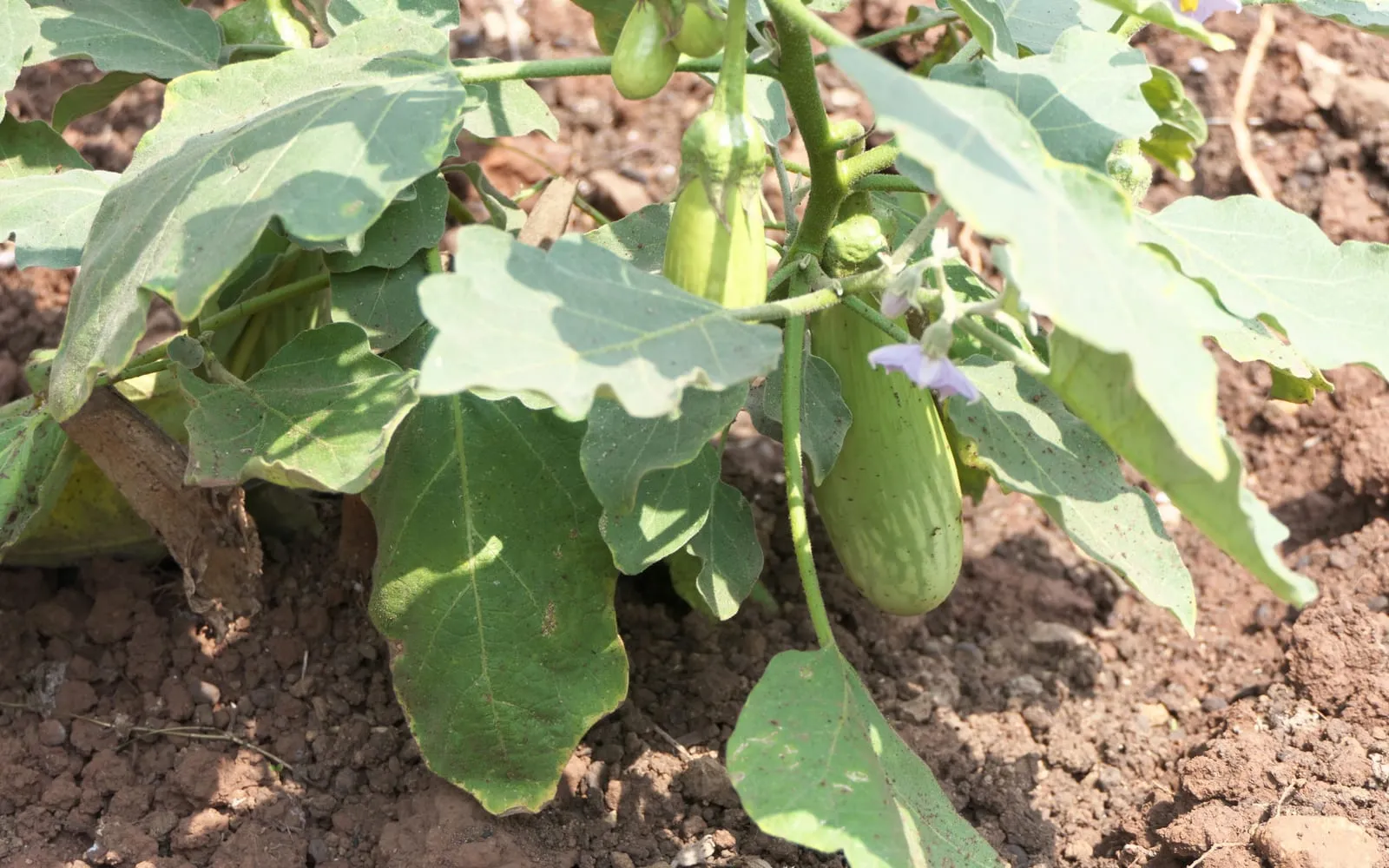
At a glance
- Difficulty
- Moderate
- Water
- Every two or three days, daily under glass in heat
- Light
- Full sun. Outdoors where summers are hot, under glass where they are not
- Temperature
- 22-30 deg C. Growth stops below 15 deg C
- Hardiness
- USDA 10-12, RHS H1b, hardy to 10 C
- Type
- Tender perennial grown as an annual
- Height
- 60-120 cm
- Native to
- India and South East Asia
- Best month
- February in the Northern Hemisphere, August in the Southern Hemisphere
Tropical and subtropical, and grown as an annual far outside that. What decides the crop is summer heat rather than winter cold. Aubergines fruit outdoors without help anywhere daytime temperatures hold above 22 deg C for three months, which covers the Mediterranean, the southern United States, much of Australia, southern Africa and the subtropics generally. In a cool maritime summer they need a greenhouse or a polytunnel to reach those temperatures at all.
Hardiness zones describe winter cold alone. Summer heat, humidity, rainfall and the length of the growing season decide as much, so treat the range as the outer limit rather than as a recommendation.
Every month named in this guide is for the temperate Northern Hemisphere. If you garden in the Southern Hemisphere, shift each one by six months, so February becomes August. Closer to the equator the wet and dry seasons matter more than the calendar, and the shift stops being a useful guide.
Edible, with limits
- Safe to eat
- The ripe fruit, cooked
- Harm from
- Eating it
- Affects
- People, cats, dogs and horses
The aubergine fruit is a food crop eaten worldwide and is safe cooked. The caution concerns the rest of the plant. Aubergine is in the Solanaceae with potato, tomato and deadly nightshade, and its leaves, stems and calyx contain solanine and related glycoalkaloids. The ASPCA lists Solanum melongena as toxic to cats, dogs and horses on those grounds, with vomiting, drooling and lethargy from eating the foliage, and the RHS lists Solanum species among plants harmful if eaten. Do not let a pet chew the plant and do not compost the foliage where livestock can reach it. Glycoalkaloid levels in the fruit itself are low and fall as it ripens, which is one reason an over-mature bitter fruit is better composted than eaten. Aubergine also contains nicotine, at concentrations far too low to have any effect, a fact that circulates online with more alarm than it deserves. Raw aubergine is unpleasant rather than dangerous, and cooking is the normal preparation everywhere it is grown.
Sources: ASPCA toxic and non-toxic plants, RHS potentially harmful garden plants
About
Aubergines need more heat than tomatoes and considerably more than peppers, and where you garden decides whether that is a detail or the whole problem. In a hot summer they are a straightforward outdoor crop that wants sun, water and feeding. In a cool maritime summer they belong under glass or in a polytunnel, because a plant outdoors makes flowers, drops most of them, and ripens one small fruit at the end of the season.
Under glass they are straightforward and generous. Sow in February, plant into a border or a large pot in May, stop the plant at five fruits, and pick from August to October.
Pick at the glossy stage. An aubergine is ready while the skin is still glossy and springs back from a thumb press. Once the shine dulls, the seeds harden and the flesh turns bitter, and the fruit that looks most impressive on the plant is usually the one past its best.
Appearance and character
A bushy upright plant, 60 cm to 1.2 m, with stout stems that often carry short spines.
Leaves are large, oval and shallowly lobed, grey-green, and covered in fine star-shaped hairs that give them a felted feel. The midribs are frequently purple and sometimes spiny.
Flowers are star-shaped and purple with a prominent yellow anther cone, hanging singly or in small clusters, and they look much like a potato flower.
Fruit varies enormously. The familiar large glossy purple-black oval, the slim Japanese types, small round Indian brinjals, white egg-shaped fruits that gave the plant its American name, and green, striped and orange forms.
Flesh is white to cream, spongy in texture, turning silky when cooked, and it absorbs oil readily, which is the whole basis of how it is used in the kitchen.
Where it is from
Aubergine was domesticated in India and South East Asia, from wild relatives that still grow there, and it has been cultivated for well over two thousand years.
Chinese records describe it from the fifth century, and Arab traders carried it west across the Middle East and into the Mediterranean by the ninth century.
Mediaeval Europe distrusted it. Its relationship to deadly nightshade was obvious to anybody who looked at the flower, and several herbals warned that it caused madness, which is where the Italian melanzana is sometimes said to come from.
The English name comes from Catalan alberginia through French, and it traces back to Sanskrit vatinganah through Persian and Arabic.
The American eggplant records the small white egg-shaped varieties that reached Britain and North America first, which look nothing like what a supermarket now sells.
How it grows
Sow indoors in February at 20 to 25 deg C, which is earlier than tomatoes because the season is longer.
Germination takes ten to twenty-one days and needs steady warmth. A heated propagator is close to essential.
Prick out into 9 cm pots at the first true leaf and grow on above 18 deg C.
Plant into a greenhouse border, a growbag or a 30 cm pot in May, at 60 cm apart. Outdoors in the south, plant in June against a south-facing wall and expect less.
Stake the plant, since a fruiting aubergine is top-heavy.
Pinch out the growing tip at 40 cm to force side shoots. Once five fruits have set, remove any further flowers, which concentrates the plant’s effort on ripening what it has.
Pick from August with secateurs, cutting the stalk, while the skin is still glossy.
Through the seasons
Late winter is sowing, in February at 20 to 25 deg C in a propagator.
Spring grows the plants on above 18 deg C. Pot on twice rather than letting them become potbound, which checks them badly.
Early summer is for planting out under glass in May, or outdoors in the warmest position in June. Stake at planting.
Summer is the growing season. Pinch out the tip at 40 cm, mist the flowers or tap the stems to help pollination, water every two or three days and feed weekly with high potash once fruit has set. Damp the greenhouse floor daily against red spider mite.
Autumn is the harvest, from August to October. Stop feeding in September and pick everything before the nights drop below 10 deg C.
Care difficulty
Easy in a hot summer, moderate under glass, and difficult outdoors in a cool one. Heat is the reason for all three.
Warmth is the first requirement. Growth stops below 15 deg C and flowers drop below 18. Everything about growing aubergines in a cool climate is about holding temperature, and everywhere warm enough that the question does not arise, they are among the easier crops.
Red spider mite is the pest that ruins glasshouse crops, and it thrives in the same dry heat the plant wants. Damping the floor daily is the single most effective control.
Blossom drop follows cold nights, dry air or dry roots.
Stopping at five fruits is the technique people skip. A plant left to set ten ripens none of them properly in a short season. Where the season runs long and hot, a strong plant carries more than five and you can leave it alone.
Picking at the right moment decides the eating quality more than anything else.
Watering
Water every two or three days, and daily under glass in hot weather.
Keep the compost evenly damp. Irregular watering causes blossom drop and misshapen fruit.
Damp the greenhouse floor and staging every morning in hot weather. Raising humidity helps pollination and suppresses red spider mite, which is the two most useful things you can do at once.
Water at the base rather than over the leaves.
Reduce watering in September as the crop finishes.
Container plants in a 30 cm pot or a growbag need watering daily from July and dry out fast in a hot greenhouse.
Warning signs, diseases and pests
Red spider mite speckles and bronzes the leaves, spins fine webbing between them, and defoliates a plant in weeks. It is the defining glasshouse pest of this crop. Damp the floor daily, and introduce Phytoseiulus predators early rather than after webbing appears.
Whitefly rise in clouds when the plant is disturbed and coat the leaves in sticky honeydew that turns sooty. Use Encarsia parasitic wasps under glass.
Aphids cluster on the growing tips and spread virus. Wash them off.
Blossom drop means cold nights, dry air or dry roots. Keep the night temperature above 18 deg C where possible, mist and damp down, and water evenly.
Grey mould rots damaged fruit and stems in a humid autumn. Ventilate and remove affected material.
Verticillium wilt yellows and wilts one side of a plant on old greenhouse soil. Grow in fresh compost or containers.
Bitter, hard-seeded fruit means it was picked too late.
Colorado potato beetle, striped black and cream with a humpbacked orange grub, strips outdoor aubergine foliage across North America and continental Europe as readily as it does potato. Hand-pick adults and egg clusters from shoot emergence. It has never established in Britain, where a sighting is notifiable rather than something to treat.
Brown marmorated stink bug punctures fruit outdoors, leaving corky discoloured patches beneath the skin, and is established across North America and a growing list of European countries.
Growing environment
Full sun. Outdoors in USDA 9 and warmer, or anywhere summer daytime temperatures hold above 22 deg C for three months. In cooler regions grow them under glass or in a polytunnel, and outdoors only in the warmest, most sheltered position you have facing the sun.
Rich, free-draining but moisture-retentive soil, or a good multipurpose compost in containers.
Neutral to slightly acid, pH 6 to 7.
Warmth above all. Aim for 22 to 30 deg C by day and above 18 at night.
Humidity helps both pollination and mite control, which is unusual and convenient.
Rotate with tomatoes, peppers and potatoes on three years, or grow in fresh compost each year, since all four share verticillium and several viruses.
Feeding
Use a balanced liquid feed from planting until the first fruit sets.
Switch to a high-potash tomato feed once fruit has set, weekly.
Avoid heavy nitrogen after flowering, which gives leaf at the expense of fruit.
Stop feeding in mid-September and let the plant finish what it has.
Growbags and containers need feeding from about six weeks after planting, since the compost runs out.
Troubleshooting
Flowers appear and fall off. Blossom drop, from cold nights, dry air or dry roots. Keep nights above 18 deg C, damp down daily, and water evenly.
Fine webbing and speckled bronze leaves. Red spider mite. Damp the greenhouse floor every morning and introduce Phytoseiulus predators early.
The fruit is bitter with hard seeds. Picked too late. Harvest while the skin is still glossy and springs back from a thumb press.
Lots of small fruits, none ripening. The plant set too many. Stop at five fruits per plant and remove later flowers.
The plant sat still all summer. Too cold. Growth stops below 15 deg C. Grow under glass or in a polytunnel.
Sticky leaves with black mould. Whitefly honeydew and sooty mould. Use Encarsia parasitic wasps under glass.
One side of the plant wilted and yellowed. Verticillium wilt on old greenhouse soil. Grow in fresh compost or containers and rotate.
Do I need to salt them? Modern varieties are much less bitter than older ones and salting is rarely necessary for flavour. It does reduce how much oil the flesh absorbs, which is a cooking decision rather than a requirement.
Aubergine problem guides
Not sure what is wrong? See the common vegetable pests guide.
- Red spider mite, the defining pest under glass
- Whitefly under cover
- Aphids on the growing tips
- Grey mould on damaged fruit and stems
- Blossom drop in cold or dry conditions
- Verticillium wilt on old greenhouse soil
- Colorado potato beetle outdoors across North America and continental Europe
- Brown marmorated stink bug, established across North America and Europe