
How to make compost at home
Good compost comes from feeding the organisms that rot plant waste. Balance soft green material with dry brown, keep the heap damp and airy, and give it enough bulk to warm up.
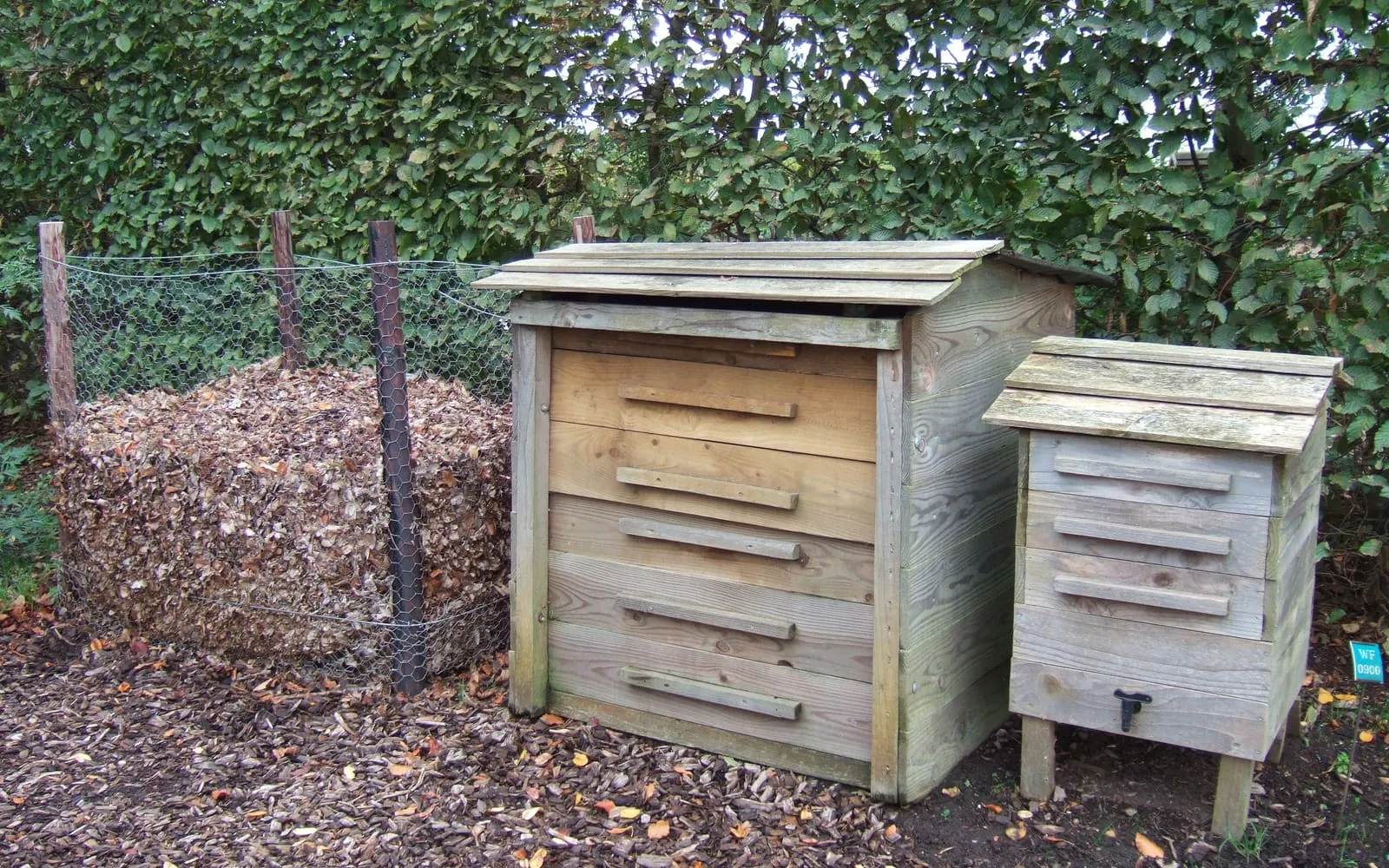
A compost heap is a controlled version of what happens on a woodland floor. Bacteria, fungi, worms, woodlice and springtails break dead plant material into a dark, crumbly, sweet-smelling soil improver, and a heap feeds them well enough to finish the job in months rather than years. The work is mostly keeping their conditions right. Mix soft green material with dry brown, keep air moving through the heap, keep it damp, and give it enough bulk to hold its own warmth.
Greens and browns
Everything you add is either a green or a brown, and the balance between them decides how well the heap rots. Greens are the wet, soft, nitrogen-rich materials. Grass clippings, vegetable peelings, coffee grounds, tea leaves, soft prunings and annual weeds all count, and they rot fast and warm the heap. Browns are the dry, tough, carbon-rich materials, such as dead leaves, straw, torn cardboard, woody stems, sawdust and plain paper. They rot slowly, hold air, and soak up moisture.
A heap that is all greens turns to a wet, airless, foul-smelling sludge. A heap that is all browns sits there dry and barely changes. Aim for more brown than green, very roughly two parts brown to one part green by volume, and mix or layer them as you build. If in doubt, add browns. They are the material most people are short of, and a heap can take far more cardboard and dead leaves than you expect.
Air and water
The organisms that rot compost need oxygen, and they drown in a wet, compacted heap. That is why browns matter beyond their carbon. Their coarse texture props the material open and keeps air moving through it. You can add more air by turning the heap, by mixing in scrunched cardboard or twiggy prunings, or by standing a perforated pipe upright in the middle as you build.
Moisture should sit at about the level of a wrung-out sponge, damp to the touch but not dripping. A heap under cover or in a hot, dry spell dries out and stalls, so water it as you would a pot. A heap left open to heavy rain turns sodden and airless, so keep a lid or a cover over it.
Heat and size
Size is what separates a heap that heats up from one that stays cold. A small heap loses warmth from its surface as fast as the microbes make it. Build a heap of about a cubic metre in one go, roughly a metre wide, long and tall, and the core insulates itself and climbs to 55 to 65 deg C within days. That heat speeds decomposition and kills most weed seeds and root diseases, and a hot heap can finish in six to eight weeks if you turn it two or three times along the way.
Most gardeners never gather a cubic metre at once, so they compost cold instead, adding material as it comes. A cold heap never heats up and takes six months to a year, and it does not kill weed seeds or disease, so keep those out of it. The compost it makes is as good. It only takes longer, and you have to be fussier about what goes in.
What to keep out
Most plant and vegetable waste is fair game, but a few things cause trouble. Keep meat, fish, dairy and cooked food out of an open heap, because they turn rancid and draw rats and flies. A sealed hot bin or a Bokashi bucket can take them, an open heap cannot. Leave out dog and cat faeces, which carry parasites that composting may not kill. Skip coal ash, glossy or plastic-coated card, and anything treated with weedkiller, since some lawn herbicides pass through the heap and damage the next crop.
Weeds need a judgement. Soft annual weeds rot down like any green, as long as they have not set seed. Perennial roots such as bindweed, couch grass and ground elder regrow from a scrap, and seeding heads sprout wherever you spread the finished compost, so a cold heap should not have them. A hot heap cooks both, and a cold heap does not.
Turning and troubleshooting
Turning means lifting the heap and putting it back, moving the dry outside to the warm middle and letting air in. A hot heap turned every week or two finishes fastest. A cold heap does not need turning at all, though an occasional fork-over speeds it and breaks up any slimy patches.
Two problems cover most of what goes wrong. A wet, smelly, slimy heap has too much green and too little air, so mix in browns and turn it. A dry heap where nothing is happening is either too dry or too brown, so water it and add greens. Both faults come back to the same balance, and you fix both by adjusting it rather than starting again.
Composting in your climate
Heat and moisture set the pace, so the same heap behaves differently in different places. Where summers are hot and dry, a heap bakes and stops, so put it in shade and water it like a plant. Where winters fall near or below freezing, the organisms slow and a heap can sit almost still until spring, then restart on its own as the ground warms. Where it stays warm and wet for much of the year, everything rots fast, and the main job is keeping enough browns in to stop it going sour.
Leaf mould, made on its own
Autumn leaves are worth keeping separate. They rot mainly through fungi rather than the bacteria that drive a compost heap, slowly and cold, and they make leaf mould rather than compost. Pack fallen leaves into a wire cage or a punctured bin bag, damp them down, and leave them for a year or two. One year gives a crumbly mulch, two a fine, dark material good for seed sowing and potting. It feeds little, but it holds water and improves the texture of any soil.
A wormery for small spaces
You need no garden to compost kitchen waste. A wormery is a stacked bin of composting worms, the brandling or tiger worms rather than ordinary earthworms, that eat peelings and scraps in a box on a balcony or under the sink. They turn kitchen waste into a rich, dark cast and a liquid you dilute as a feed. Add waste in thin layers, keep it damp, and do not overload them, or the bin turns sour. A wormery suits a flat or a small yard where a heap will not fit.
Feeding the heap
Some plants make good compost activators, high in nitrogen and quick to heat a sluggish heap. Young stinging nettle tops and grass clippings both warm the material fast. Comfrey leaves do the same and are worth growing in a spare corner for the job. Soft leafy plants like borage and dandelion rot quickly and add to the green side. There is no need to buy an activator, as a bucket of grass or nettles does the same work.
When it is ready, and how to use it
Finished compost is dark brown and crumbly and smells of earth, with the original scraps no longer recognisable apart from the odd twig or eggshell. Cold heaps take six months to a year, hot heaps a few weeks to a few months. If you are not sure, sieve it. What falls through is ready, and what stays behind goes back on the next heap.
Spread it as a mulch a few centimetres deep around plants, fork it into beds before planting, or mix it with garden soil and leaf mould for a potting blend. It is too strong and too lumpy to sow seed into on its own, so sieve it fine and cut it with leaf mould or sand for that. Left on the surface, it feeds the soil, holds moisture and brings earthworms up to work it in. Spread it around hungry crops such as tomatoes and courgettes and they will use it.
Compost improves the soil and releases its nutrients slowly. Where a hungry crop needs more than that, a concentrated fertiliser tops up the particular nutrients it is short of.
Common questions
- How long does home-made compost take?
- A cold heap, built up gradually, takes about six months to a year. A hot heap of a cubic metre or more, built in one go and turned every week or two, can be ready in six to eight weeks. Warmth speeds everything, so any heap works faster in summer and slows through a cold winter.
- Can I compost cooked food, meat and dairy?
- Keep them out of an open heap or bin, because they turn rancid and draw rats and flies. A sealed hot composter or a Bokashi bucket, which ferments waste before it goes on the heap, can handle small amounts. Raw vegetable and fruit peelings are always fine.
- Why does my compost smell bad?
- A sour, rotten-egg smell means the heap is too wet and airless, usually from grass and soft green material packed down with no air between it. Mix in plenty of dry browns such as cardboard, dead leaves or straw, turn the heap to let air in, and the smell clears within a few days.
- Do I have to turn the heap?
- No. A cold heap rots without turning and only takes longer. Turning lifts the material and lets air in, which speeds decomposition and is what makes a hot heap finish fast. If you never turn it, add coarse browns as you build so air can still move through.
- Can I put weeds on the compost?
- Soft annual weeds make good compost as long as they have not set seed. Keep out the roots of perennial weeds such as bindweed, couch grass and ground elder, which regrow from fragments, and any weed carrying seed heads, unless your heap runs hot enough to cook them.
Sources and further reading
- Garden compostRoyal Horticultural SocietyOn the green-to-brown balance, siting a bin, turning, and common problems.
- Composting at homeUnited States Environmental Protection AgencyA hot-and-cold overview written for a range of climates, with what to keep out.
- CompostingGarden OrganicAn organic-growing charity's advice on activators, leaf mould and wormeries.