
Disorder
Blossom end rot
Also called Black bottom on tomatoes, BER
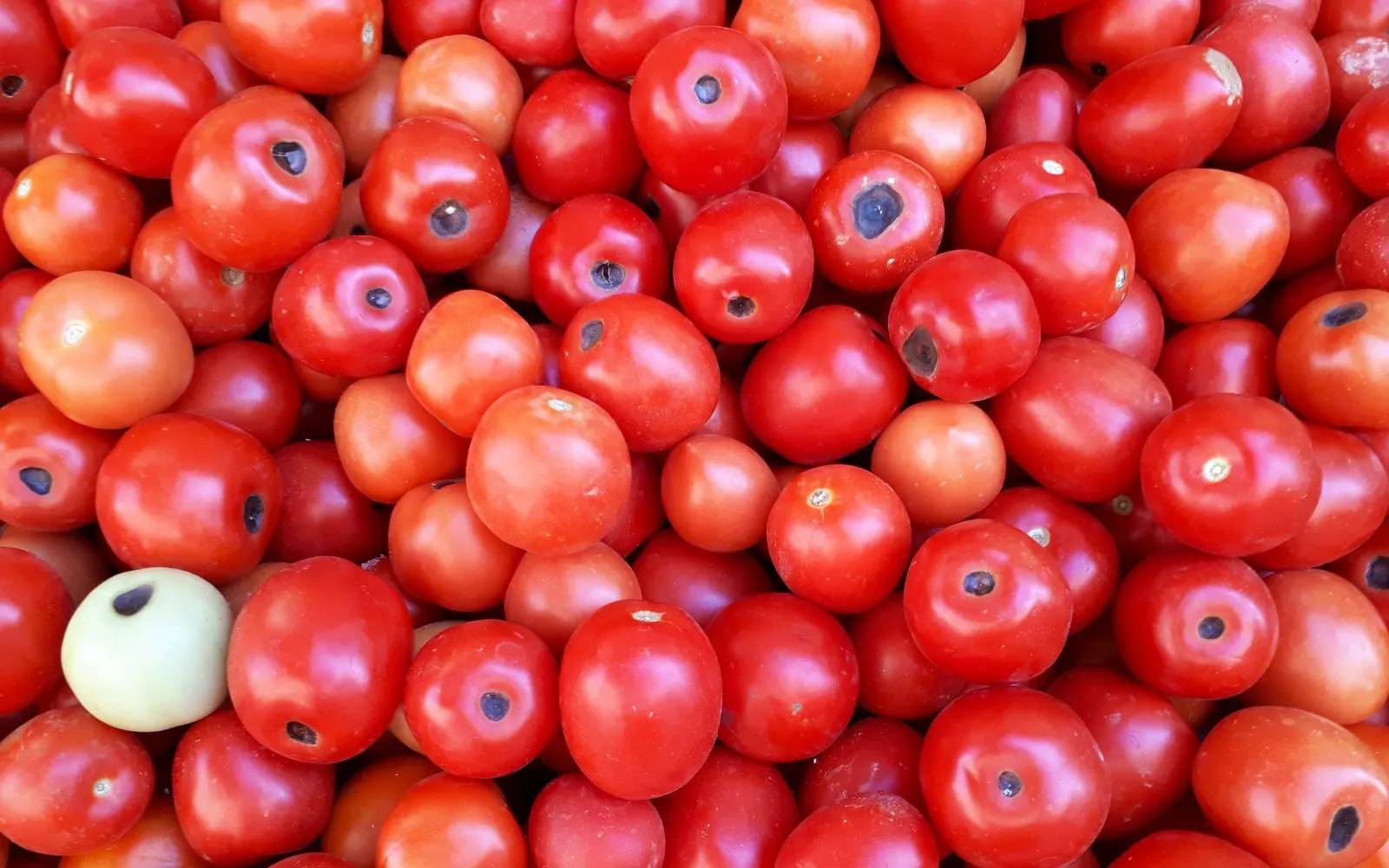
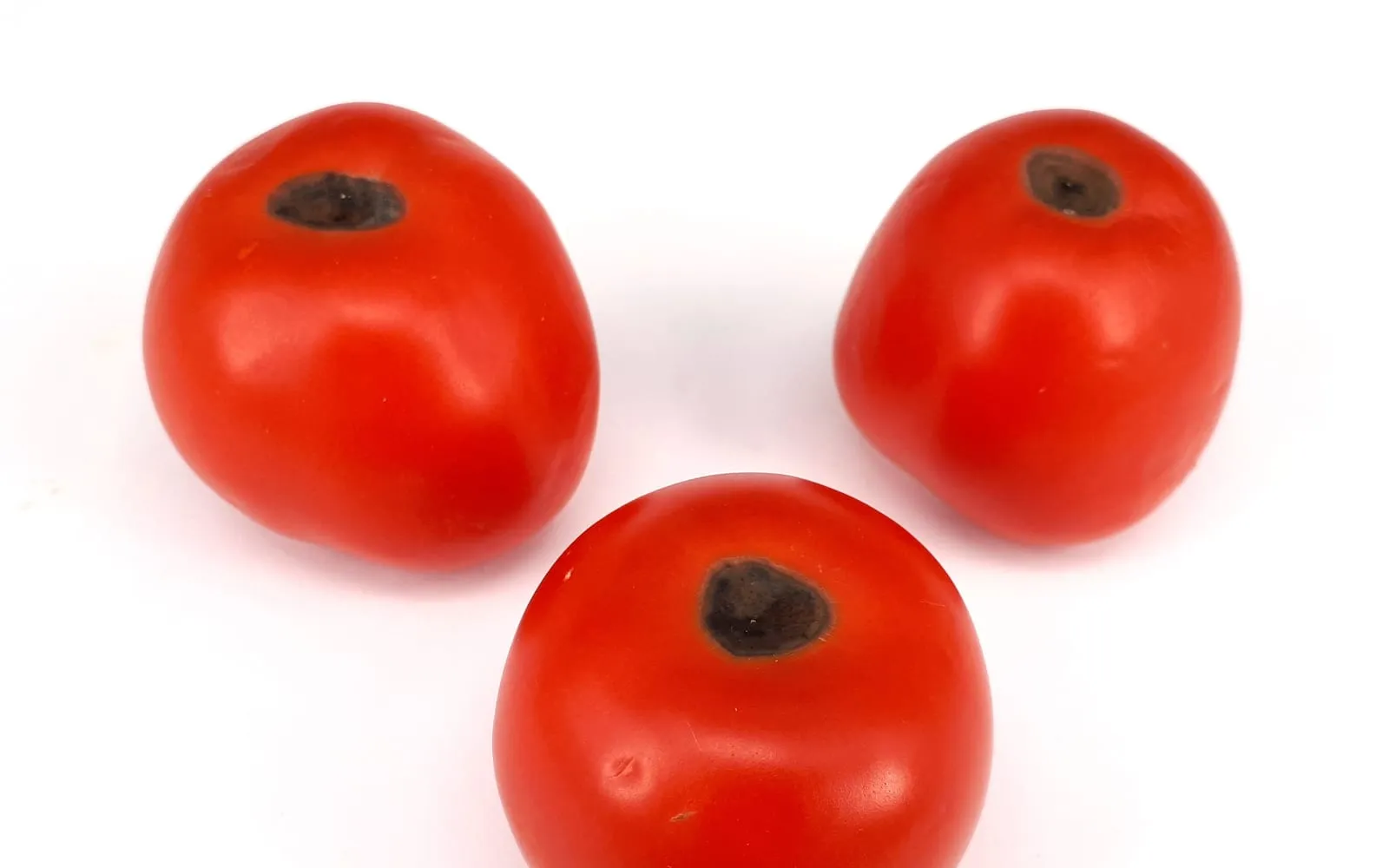
Blossom end rot makes a black leathery patch on the bottom of a tomato. The plant is failing to move calcium into the fruit, so steady watering usually matters more than adding calcium to the soil.
At a glance
- Type
- Disorder
- Cause
- Feeding or nutrients
- Severity
- Destroys the crop or display
- Affects
- Herbs and edibles
- Active
- June to September
What you are seeing
- A pale, water-soaked patch at the bottom of the fruit, opposite the stalk
- The patch darkening to brown or black, going flat or sunken, and turning leathery rather than soft
- The damage sharply bounded, with the rest of the fruit ripening normally
- The first truss affected while later fruit come through clean
- Long-fruited and plum cultivars hit far harder than round ones
- Moulds growing on the dead patch later, which arrive after the damage rather than causing it
Before you treat anything
Fruit showing blossom end rot is safe to eat once the dead patch is cut away. Where a mould has grown over the damage, discard that fruit rather than trimming it.
What you are looking at
A pale, water-soaked patch appears at the bottom of a developing tomato, on the end opposite the stalk. Over a few days it darkens through brown to black, goes flat or slightly sunken, and dries to something like leather. The edge is sharp and the rest of the fruit ripens as though nothing had happened.
Peppers do the same thing, usually with the patch a little paler and papery. Courgettes and marrows rot from the flower end, though there the more likely cause is a fruit that was never pollinated.
The position settles the diagnosis. Damage at the blossom end and nowhere else is this, and marks on the shoulders, around the stalk or scattered across the skin are something different.
Why the calcium advice is wrong
Search for this and you will be told your soil is short of calcium, and offered crushed eggshells, garden lime and a calcium spray. British soils are, with rare exceptions, well supplied with calcium, and so is every bag of tomato compost sold. The plant is not short of it.
Calcium moves through a plant only in the xylem, carried along by the flow of water that transpiration pulls up from the roots. It cannot be redistributed through the phloem the way nitrogen or potassium can. Where the water goes, the calcium goes.
Leaves transpire hard. A fruit, with its waxy skin and few stomata, transpires very little, so it always receives a small share. The cells at the far end of the fruit, furthest from the stalk, are last in that queue and are also the ones expanding fastest during the first fortnight after set.
Interrupt the water supply at that moment, by letting a growbag dry out, by a hot bright day, or by damaging the roots, and those cells do not get enough calcium to build their membranes. The membranes fail, the cells collapse, and the tissue dies. The black patch appears a week or two later, when the fruit is large enough to show it.
That is why the fix is a watering can rather than a bag of lime.
Why the first fruit and not the rest
The plant is smallest and its root system least developed when the first truss is swelling, so the buffer against a dry afternoon is at its thinnest. By August the same plant has roots through the whole bag and a canopy that shades its own compost, and fruit set then often comes through clean while the early trusses are ruined.
Anyone who has had a disastrous first truss and a fine crop afterwards has watched this happen. It is not the treatment working. It is the plant growing.
What to do about it
Water more evenly and give the roots more to work with. Three plants in a growbag in a July greenhouse can need watering twice a day, and the difference between a crop with blossom end rot and one without is usually that second can. Standing bottomless pots on the bag, or using containers of at least twenty litres each, doubles the volume of compost holding water.
Feed at the rate printed on the bottle. Potassium, magnesium and ammonium nitrogen all compete with calcium at the root surface, so a plant given a high-potassium tomato feed at double strength, plus a dose of Epsom salts because the leaves looked pale, is being made more susceptible rather than less.
Shade and ventilate a greenhouse through a heatwave and damp the floor down. The point is to lower the peak rate at which the leaves are pulling water, since it is the peak that starves the fruit.
Pick off anything already marked. It will not recover and it is drawing on the plant.
Where this happens every year, change cultivar. Plum and long-fruited tomatoes are far more prone than round or cherry types, and the swap costs nothing.
What it gets mistaken for
Tomato blight produces dark brown patches that are firm at first and then spread across the whole fruit, including the shoulders and the stalk end, and the foliage shows brown blotches with pale margins at the same time. Blossom end rot never touches the leaves.
Grey mould enters through a wound or a dead flower and grows a fuzzy grey coat that puffs spores when knocked. Blossom end rot is dry and leathery, and any mould on it arrived afterwards.
Splitting and cracking come from the same underlying cause, a swing between dry and wet, but they show as rings around the shoulders or radial splits from the stalk. The two often appear on the same plant in the same week.
Sun scald leaves a pale, papery, flattened patch on the side of the fruit that faced the sun, usually after leaves were stripped off. Position again tells them apart.
What to do, in order
Start here
Prevention, and the changes that stop the problem returning. Most of these pages should end at this tier.
- Water steadily rather than heavily
- Swings between dry and drenched are what cause this. A tomato in a growbag in July may need watering twice a day, and the plant that dried out on Tuesday will show damage on fruit set the week before. Little and often beats a flood after a drought.
- Give the roots more compost to work with
- Growbags hold a small volume and dry out fastest, which is why they produce most of the cases. Two plants to a bag rather than three, bottomless pots stood on the bag to double the depth, or a large container of at least 20 litres each all buy the buffer that prevents it.
- Feed at the rate on the bottle and no more
- Potassium, magnesium and ammonium nitrogen all compete with calcium for uptake at the root. Overfeeding a tomato, or adding Epsom salts on top of a balanced feed, makes blossom end rot more likely rather than less.
- Mulch and shade in a heatwave
- On a hot bright day a plant moves water to its leaves faster than it can replace it, and the fruit are last in the queue. Shading a greenhouse, ventilating it and damping the floor down reduce the peak demand, and a mulch outdoors keeps the root zone even.
- Choose round cultivars where you have had it before
- Susceptibility varies enormously between types. Plum and long-fruited tomatoes such as San Marzano and Roma are badly affected, cherry types much less so, and switching cultivar is the simplest change available to anyone who gets this every year.
- Do not disturb the roots
- Hoeing close to the stem, or letting a plant dry to wilting point at planting, damages the fine roots that take calcium up. The plant recovers and the fruit setting at that moment does not.
Then reach for a barrier
Netting, hand removal and water. Nothing here harms anything except the target.
- Take the affected fruit off
- A damaged fruit will not recover, and leaving it on the truss costs the plant resources it could put into the next one. Pick it off as soon as the patch appears.
- Eat what is sound
- The rot is a dead patch of tissue rather than an infection, so the rest of the fruit is perfectly good. Cut the end away and use the remainder.
In pictures
Plants affected
Guides that name it among the problems to watch for. The list is the plants it is characteristic of rather than everything it will feed on.
A common tomato problem
This is one of the problems tomato growers meet most often. See it alongside the other pests, diseases and disorders on the tomato guide.
Common tomato problems