
Disorder
Herbicide damage
Also called Aminopyralid, Contaminated manure, Weedkiller damage, Spray drift
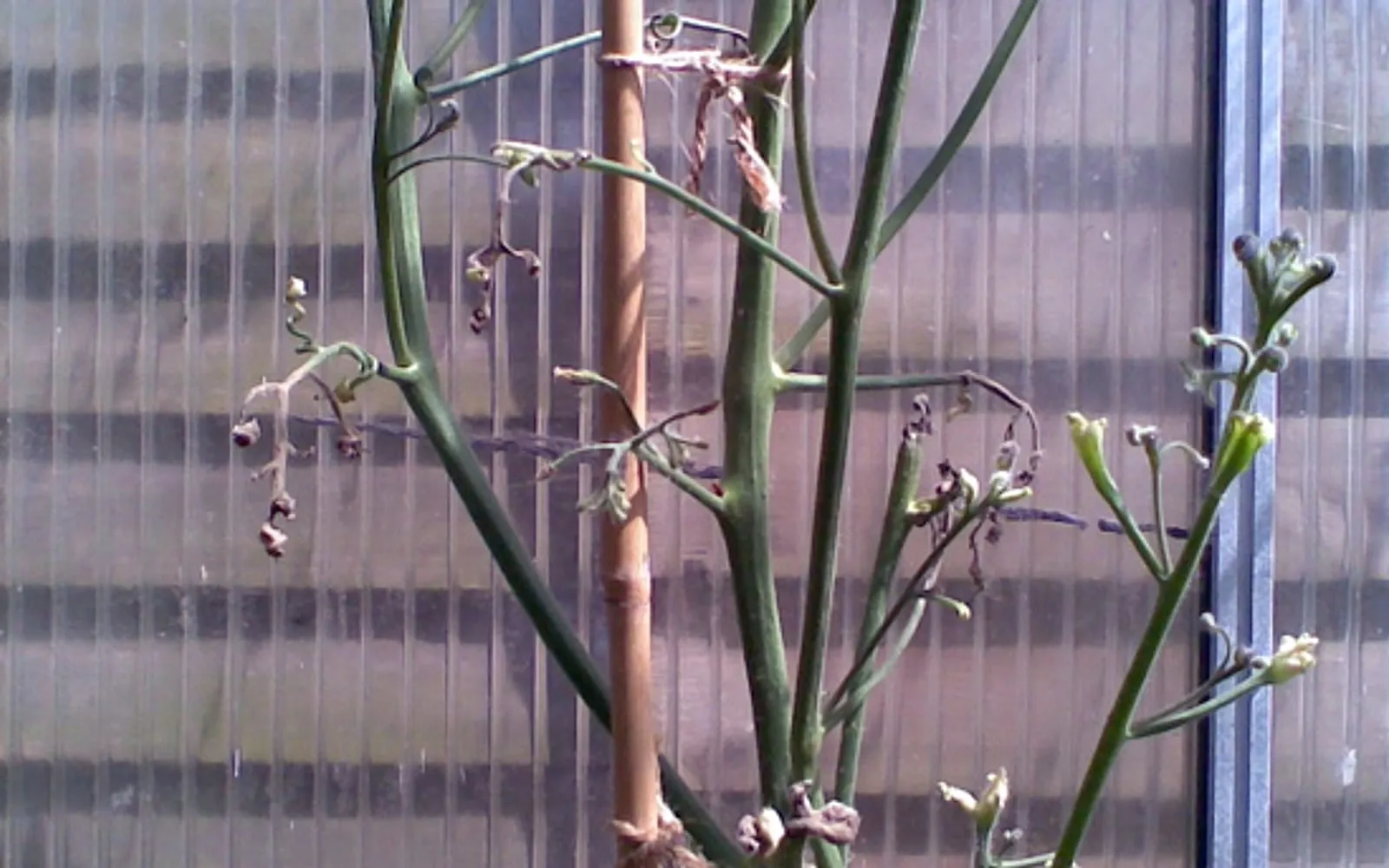
Herbicide damage twists tomato and bean leaves into fern-like growth and cups the shoot tips. Test manure or compost before spreading it, and keep contaminated material away from sensitive crops.
At a glance
- Type
- Disorder
- Cause
- Growing conditions
- Severity
- Destroys the crop or display
- Affects
- Herbs and edibles, Garden plants
- Active
- All year
What you are seeing
- New leaves narrowed, fern-like or thread-like, with the blade barely developed
- Shoot tips cupped, twisted or spiralling, and stems fluted or ribbed
- Growing points curling into a tight fist while older leaves stay normal
- Tomatoes, potatoes, beans, peas and dahlias affected while brassicas, onions and sweetcorn beside them look well
- Damage across a whole bed, in a pattern matching where manure or compost was spread
- A distinct edge to the damage on one side of the garden after a neighbour sprayed
- Fruit failing to set, or setting small and distorted
Before you treat anything
Do not eat crops from plants showing herbicide damage. Store weedkillers locked away from children and pets, in the original container, and never decant one into an unlabelled bottle. Keep a separate sprayer for weedkiller and label it, because residues in a sprayer used afterwards for a foliar feed will damage whatever you spray.
What you are looking at
New leaves come out wrong. They are narrowed, sometimes to a thread, with the blade barely developed, so a tomato leaf looks like a fern and a bean leaf looks like a strap. Shoot tips cup, twist or spiral, stems go fluted and ribbed, and the growing point curls into a tight fist.
The older leaves lower down are usually normal, because they were made before the plant met the chemical.
Then look at what is affected and what is not. Tomatoes, potatoes, peas, beans and dahlias show it badly while sweetcorn, onions, leeks and brassicas standing beside them look perfectly well. That split is close to diagnostic, because it follows the chemistry rather than any pattern a disease or a pest would produce.
Aminopyralid, and why it reaches a vegetable plot
The commonest cause of this in a British garden is not a weedkiller anyone applied. It arrives in manure.
Aminopyralid and its relatives are used to control broad-leaved weeds in grassland. They are effective at very low concentrations, they persist on the treated grass, and they pass through an animal that eats the hay or silage essentially unchanged. So they end up in the muck, and in the straw bedding, and then on somebody’s allotment.
Composting does not destroy them. Manure stacked for two years has damaged crops. The residue breaks down through microbial activity in soil rather than in a heap, and that takes time.
The effect is dramatic and it repeats every few years, usually as a wave of ruined allotment crops across a district that traces back to one supplier.
Test before you spread
Four to six weeks in the spring saves a whole season, and the test is straightforward.
Fill three pots with the manure or compost you are thinking of using, and three with ordinary bought compost as a control. Sow two or three broad beans or dwarf French beans in each. Stand them all on a windowsill, water them, and wait.
Beans are exquisitely sensitive to these chemicals. If the plants in the test pots come up with fern-like leaves, cupped tips or twisted stems while the controls look normal, the material is contaminated and should not go anywhere near the vegetable garden.
Do this with every load from a new source. It costs a packet of beans.
If it is already on the ground
The bed is not lost, though this year’s crop probably is.
Dig the material in thoroughly rather than leaving it on the surface, since breakdown happens in the soil. Keep the ground moist and warm and do not let it bake. Then grow the tolerant crops on it for a season or two, which means sweetcorn, brassicas, onions, leeks, garlic, beetroot, spinach and lettuce.
Pull and bin the damaged plants rather than composting them into the same garden.
Most beds recover within a season or two. Test again with beans before putting tomatoes or potatoes back.
The other routes in
Lawn weedkillers contain hormone-type chemicals that damage broad-leaved plants at tiny doses. Clippings from a treated lawn must not be composted or used as a mulch until several cuts have passed.
A sprayer that has held weedkiller keeps enough residue to damage anything sprayed from it afterwards, however well it was rinsed. Keep a separate sprayer, label it clearly, and never borrow one.
Spray drift from a neighbour, from a driveway treatment or from a farm boundary produces damage with a distinct edge along one side of a garden, worst on the plants nearest the source.
What to do about it
Test manure and compost with beans before spreading, every time, from a new source.
Ask the supplier about the forage history of the animals.
Dig contaminated material in and keep the ground warm and moist.
Grow sweetcorn, brassicas, onions and leeks on the bed for a season or two.
Pull and bin the damaged plants and do not eat anything from them.
Keep a separate labelled sprayer for weedkiller.
Keep treated lawn clippings out of the compost heap.
Tell the supplier, because they usually do not know.
What it gets mistaken for
Mosaic viruses distort new growth in a very similar way and mottle it light and dark green as well. They also take individual plants and leave the neighbours alone, where a herbicide hits everything susceptible in an area.
Capsid bugs tear small brown-rimmed holes in the newest leaves as they expand, and the leaf is perforated rather than merely misshapen.
Aphid feeding puckers and curls young growth, with the aphids underneath.
Hormone-like distortion also appears on tomatoes grown near a bonfire of treated timber, or watered from a butt that collected runoff from a treated surface, which is worth checking before blaming the manure.
Genetic sports and fasciation produce flattened or fused stems on an otherwise normal plant, and they affect one shoot rather than every susceptible plant in the bed.
What to do, in order
Start here
Prevention, and the changes that stop the problem returning. Most of these pages should end at this tier.
- Test any manure or compost before you spread it
- Fill three pots with the material, three with ordinary compost, and sow two or three broad beans or dwarf French beans in each. Grow them on a windowsill for four to six weeks and compare. Twisted, fern-like or cupped growth in the test pots means the material is contaminated. This takes a month and saves a season, and it is the only reliable way to know.
- Ask where the manure came from
- Aminopyralid is used on grassland and it passes through an animal unchanged, so it arrives in manure from stock fed treated hay or silage, and in the straw bedding. Buying from a supplier who knows their forage history is worth more than any label. Stable manure of unknown origin is the usual culprit.
- Do not compost your way out of it
- The residues survive composting, and they survive it for a long time. Manure that was stacked for two years can still damage a tomato crop. Time helps and a heap does not solve it.
- Keep weedkiller away from the vegetable garden entirely
- Lawn weedkillers contain hormone-type actives that damage broad-leaved plants at very low doses. Clippings from a treated lawn must not be composted or used as a mulch for months afterwards, and a sprayer that has held weedkiller should never be used for anything else. Keep a separate, labelled sprayer.
- Spray in still weather, if at all
- Drift carries at surprising distances, and a neighbour spraying a driveway on a breezy day can mark a whole vegetable bed. Damage with a sharp edge along one boundary is usually this.
Then reach for a barrier
Netting, hand removal and water. Nothing here harms anything except the target.
- Grow the crops that shrug it off
- Aminopyralid affects the legume, potato and tomato families hardest, along with dahlias, roses and many ornamentals. Sweetcorn, brassicas, onions, leeks, garlic, spinach, beetroot and lettuce are far more tolerant. On a contaminated bed, grow those for a season or two rather than losing the ground entirely.
- Dig it in and grow grass over it
- Residues break down through microbial action in the soil, and that happens fastest in warm, moist, well-aerated ground with plenty of organic matter. Dig the manure in thoroughly rather than leaving it on the surface, keep the bed moist, and grow grass or a tolerant crop on it. Most beds come back within a season or two.
- Pull the damaged plants and start again
- Affected plants rarely produce a usable crop and they will not grow out of it while the residue is present. Compost them separately or bin them, and do not use that compost on the vegetable garden.
- Report it to the supplier
- The manufacturers operate stewardship schemes and take reports seriously, and suppliers frequently do not know their material is contaminated until somebody tells them. Reporting stops the next gardener getting the same load.
Plants affected
Guides that name it among the problems to watch for. The list is the plants it is characteristic of rather than everything it will feed on.
A common rose problem
This is one of the pests, diseases and disorders that rose growers meet most often. See it alongside the others on the common rose problems guide.
Common rose problems