
Succession planting: what it is and how to do it
Sow fast crops in small repeated batches, then plant the next crop as soon as a space clears. The bed keeps producing across the season instead of ripening all in one week.
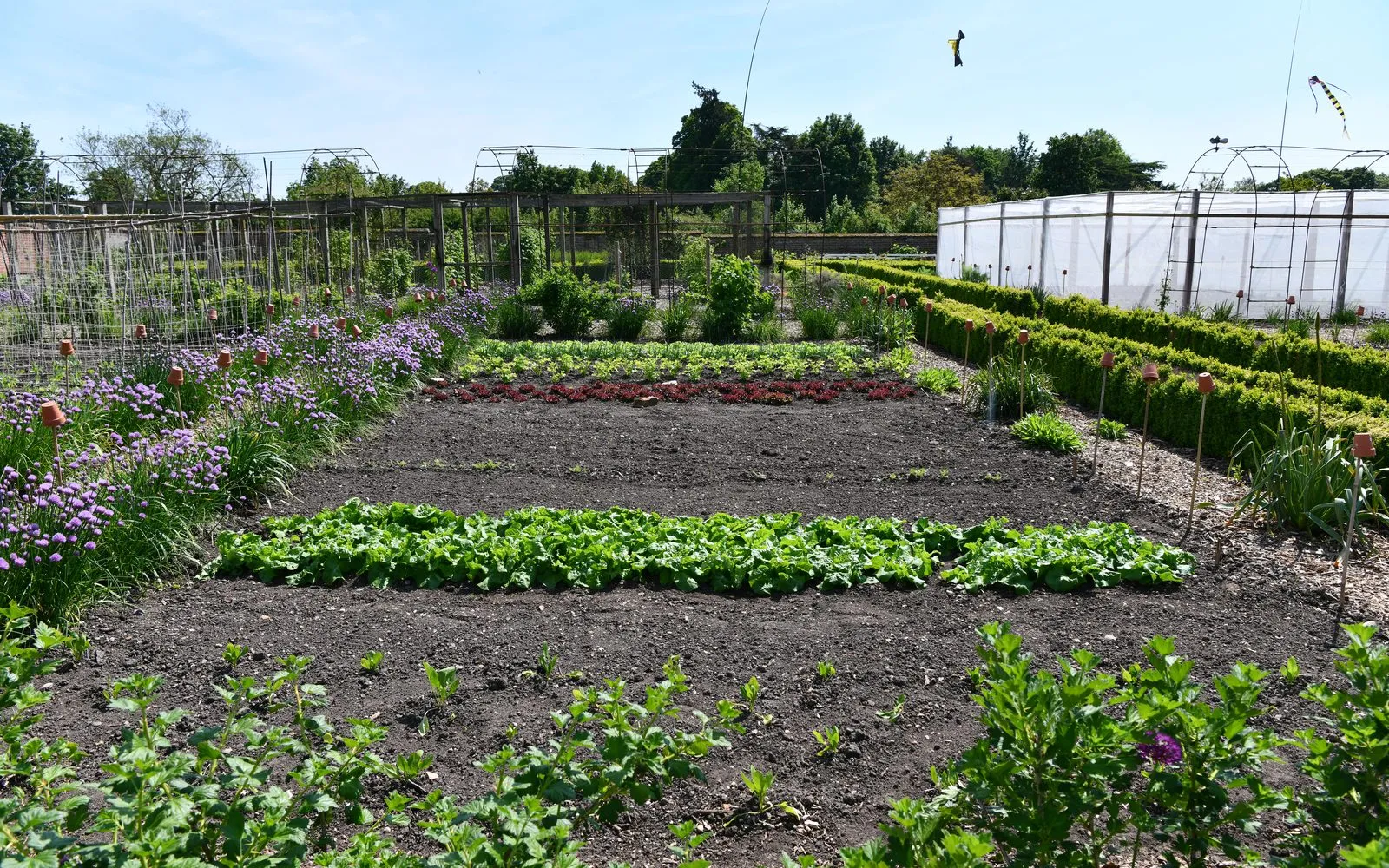
Sow a whole packet of lettuce in one afternoon and most of it hearts up in the same fortnight. You eat lettuce until you are sick of it, hand bags over the fence, and lose the rest to bolting. Six weeks later the row is bare and you are buying lettuce again.
Succession planting fixes both problems. Sow a little and often instead of all at once, and plant something else as soon as a crop clears. The bed then keeps producing from spring until growth stops in cold weather. In practice, succession planting means timing sowings and follow-on crops so harvests come in sequence and no useful ground sits empty while the weather can still grow something. Most kitchen gardeners use it in several forms at once.
Sowing the same crop in small batches
Instead of a full row of radish in one go, sow a short row every week or two. Each sowing matures a little after the one before, so you pull young roots across two months instead of pulling fifty in a single week. This is the form most people mean by succession sowing.
This works best on fast crops that are eaten fresh and do not store. Salad leaves, radish, rocket, spinach, dwarf beans, beetroot pulled young, spring onions and young turnips are all good candidates for little-and-often sowing. Crops that hold in the ground or store well need less staggering. One sowing of maincrop onions, winter squash, parsnips or leeks gives a harvest that keeps for months on its own, so a second sowing only crowds the plot.
Following one crop with another
A bed that grew early peas is empty by midsummer. Rather than leave it, follow the peas with a crop that still has time to mature before the cold, such as kale, leeks planted out as young plants, or a sowing of autumn salad. Growers call this relay or follow-on cropping.
Gardeners usually make two swaps through the year. When an overwintered crop clears in early summer, plant a summer crop. When a summer crop clears in autumn, plant a hardy winter vegetable or a green manure. Garlic and autumn-sown onions are lifted in early to midsummer, which frees good ground at the exact point when there is still time for beans, salad or late carrots.
Sowing varieties that ripen at different times
You can also spread a harvest without spreading the sowing. Potatoes are sold as first earlies, second earlies and maincrop, and the three planted on the same day are ready weeks apart because they take different numbers of days to bulk up. Peas, sweetcorn, cabbages and many other crops come in early, mid and late varieties that do the same. This helps most with a crop you want to sow once, such as sweetcorn, which needs a block for wind pollination and is awkward to grow in short staggered rows.
Slipping a fast crop between slow ones
Parsnips take two to three weeks to show and a full season to mature, so the ground between the rows sits bare for weeks. A quick catch crop of radish sown along the same drill is up, eaten and gone before the parsnips need the room. The radish does a second job here. Its seedlings mark the row before the parsnips show, so you can hoe between the drills without cutting into the slow crop.
Why the interval is not a fixed number of days
Crops respond to warmth more than to calendar days. A seedling adds little in a cold, dim week and a great deal in a warm, bright one. Two sowings of the same lettuce three weeks apart in early spring can end up maturing only a week or so apart, because the later one germinates and grows through warmer soil and longer days and gains on the first.
So a fixed fortnightly gap is the wrong habit at both ends of the season. Early on, when each sowing is catching the one before, sow more often to keep them from bunching. Through high summer a steady two-week gap works. As the days shorten and the soil cools in autumn, growth slows again and later sowings fall behind, so the gap has to widen or stop.
A better rule is to use the seedlings, not the calendar. Sow the next batch when the last one has come up and shows its first true leaves. Then each sowing follows the pace of the season instead of a fixed date, so the gap adjusts for a cold spring or a warm one.
Cold soil delays germination
Seeds only start growing once the soil is warm enough for that crop to germinate. That may be weeks after you sow them.
Some vegetables germinate in cold soil. Lettuce, peas, spinach, radish and the brassicas start from around 4 to 5 deg C, so they can be sown early in the year. Warm-season crops need much more. Dwarf and runner beans, sweetcorn, courgettes and squash sit and often rot in soil below about 10 to 12 deg C, and move only once it reaches the middle teens. There is little point sowing them too early, because a sowing made a fortnight later into warm soil catches up with and often overtakes one made into cold. A soil thermometer is worth more than a sowing date here. Push it in at seed depth in the morning for a few days, and sow the warm-season crops once the reading stays above their minimum.
Heat can stop seed too. Lettuce germinates poorly once the soil climbs past about 25 deg C, so high-summer sowings for an autumn crop do better started in a cool or shaded spot and moved out as seedlings.
Heat and long days push some crops to bolt
Once these crops start flowering, the edible part usually gets worse. The leaves turn bitter, the roots go woody, and the crop is over. Several crops that suit succession sowing bolt in long days and heat, or after a cold spell when they are young seedlings. You have to sow them at a time that lets you harvest before that happens.
Spinach, rocket and coriander bolt fastest of these. They are long-day plants, so a sowing made as the days stretch towards their longest runs up to flower quickly, whatever you do, while the same crops sown into the shortening days of late summer last much longer before bolting. Lettuce bolts in heat rather than in long days, so a summer sowing needs a bolt-resistant variety and steady moisture. Beetroot, onions and the brassicas can bolt after a cold spell as young plants, which is the risk in sowing them too early into cold ground.
Working out the last sowing date
Growth does not stop suddenly. It slows through autumn and then nearly halts once the day drops below about ten hours, even if the temperature is still mild. Below that length there is too little daylight for most temperate vegetables to add much growth, so a crop that is not nearly full-grown by then sits almost unchanged until the days lengthen again. The date depends on your latitude. Near the equator the day barely changes and it never comes; in the middle latitudes it falls somewhere in November, and the higher your latitude, the earlier it starts and the longer it lasts.
So the last useful sowing of a crop is not the last frost-free date. Count its days to maturity back from the point your days fall under ten hours, then add a margin because growth is already slowing before then. That gives you roughly the last sowing that will finish in time. Anything later is a crop for overwintering under cover. It will sit through the cold and start growing again in spring, rather than cropping this year.
Worked examples
Salad leaves and lettuce. Sow a short row of loose-leaf lettuce or a mixed salad-leaf blend every two weeks from mid-spring, and switch to a bolt-resistant variety through the hottest part of the year. Cut-and-come-again leaves extend a sowing, since they regrow two or three times before they tire, but a fresh sowing every fortnight still beats one long row that all bolts together. Hearting lettuce takes longer and needs the same treatment.
Radish. The fastest common crop, ready in three to four weeks in warm soil. Sow a metre of row at a time, a pinch every week or ten days, and stop in high summer when long days and heat turn the roots woody and fiery before they swell. Start again as the days shorten.
Beans. Dwarf French beans crop heavily for two or three weeks and then tail off, so two or three sowings from late spring to midsummer keep pods coming until the cold. Runner beans and climbing French beans pick over a much longer season from one sowing, so a single well-fed row is usually enough. Sow none of them until the soil is into the middle teens.
Peas, then a follow-on crop. Sow peas in short blocks a few weeks apart, since each block crops well for only a couple of weeks. When one finishes in mid to late summer, its roots have left nitrogen in the soil, so it is good ground for a leafy follow-on. Put in kale, purple sprouting broccoli for the following spring, or a sowing of autumn salad.
Carrots and beetroot. Both hold in the ground once mature, so they need fewer sowings than salad. Two or three sowings of carrots, from late spring to midsummer, give tender young roots over a long stretch, with a maincrop sowing to lift for storage. Beetroot pulled young is worth a sowing every three or four weeks; left to grow large, one or two sowings do.
Garlic and onions, then autumn leaves. Autumn-planted garlic and onions are lifted in early to midsummer and free a large, well-worked bed at the height of the season. That ground has months of warmth left, so a fast follow-on does well in it. Dwarf beans, late beetroot, pak choi and mustard leaves for autumn all have time to mature.
Sweetcorn. Sown once, in a block, so that wind carries pollen between plants and the cobs fill. Spread the harvest by variety rather than by date, since an early and a maincrop sown together ripen a couple of weeks apart. A second block sown two or three weeks after the first works only where the season is long enough for the late sowing to ripen before the cold.
Putting it into practice
None of this needs a plan on paper, though a note of what went in and when saves guessing next year. In practice, keep it simple. Sow a short row rather than a long one, drop a fresh pinch of seed in every week or two, and keep a follow-on crop ready to plant the day a bed clears. That gives you a longer, steadier harvest from the same ground, and far less of it stands bare in the meantime.
Common questions
- What is succession planting?
- Succession planting is timing your sowings and plantings so that harvests arrive in sequence rather than all at once. It works in two main ways. You sow a fast crop in small batches a week or two apart so it matures a little at a time, and you follow one crop with another in the same ground as soon as the first clears. Both keep a bed producing a steady amount and stop a plot sitting bare while the weather is still warm enough to grow something.
- How often should I sow to get a continuous supply?
- For fast salad and root crops, a short sowing every one to two weeks through the growing season is the usual advice. The interval is not fixed, because crops grow on warmth rather than on calendar days. In cold early-season soil, sow more often so successive batches do not bunch up once they speed away in warmer weather; in the cool of autumn, widen the gap or stop. A reliable habit is to sow the next batch when the last one has germinated and shows its first true leaves.
- Which vegetables are worth succession sowing?
- Fast crops that are eaten fresh and do not store well are the ones worth staggering, such as salad leaves, lettuce, radish, rocket, spinach, dwarf beans, beetroot, spring onions and young turnips. Crops that stand in the ground or store for months gain little, so maincrop onions, winter squash, parsnips, leeks and Brussels sprouts are usually sown once.
- When should I make my last sowing of the year?
- Growth nearly stops once the day drops below about ten hours of light, so a crop needs to be close to full size by then. Count its days to maturity back from the date your daylight falls under ten hours, and add a margin because growth is already slowing through autumn. Where you live sets that date. Near the equator it never comes; in the middle latitudes it falls around November, and earlier at higher latitudes. Later sowings are for overwintering under cover to crop the following spring.
- Why did my later sowing catch up with the earlier one?
- Because plants grow on accumulated warmth, not on the number of days since sowing. A batch sown into cold spring soil germinates slowly and grows slowly, while a batch sown two or three weeks later comes up in warmer soil and longer days and grows fast enough to close the gap. This is why early-season sowings should be closer together than a fixed fortnight, and why a sowing made too early often gains nothing over one made when the soil has warmed.
Sources and further reading
- Successional sowingRoyal Horticultural SocietyWhich crops are worth sowing in small repeated batches, and the one-to-four-week intervals, written for a temperate-climate reader.
- Soil temperature conditions for vegetable seed germinationOregon State University Extension ServiceThe minimum, optimum and maximum soil temperatures at which each vegetable germinates, the table behind the warm-season and cool-season split.
- The Period of PersephoneUC Master Gardener Program of Contra Costa CountyThe ten-hour-daylight threshold below which growth nearly halts, drawn from Eliot Coleman's winter-growing work.
- Vegetable seeds: sowing guideRoyal Horticultural SocietyGeneral sowing depths, soil conditions and timing for the crops named here.