
Disorder
Bolting
Also called Running to seed, Premature flowering
Crops shoot up a flower stem before they are ready to eat. Cold, long days, heat and drought can all trigger it. Once a plant has bolted, sowing time and steady growth matter more than rescue.
At a glance
- Type
- Disorder
- Cause
- Growing conditions
- Severity
- Destroys the crop or display
- Affects
- Herbs and edibles
- Active
- May to August
What you are seeing
- A flower stem shooting up from the centre of a plant that should be producing leaves
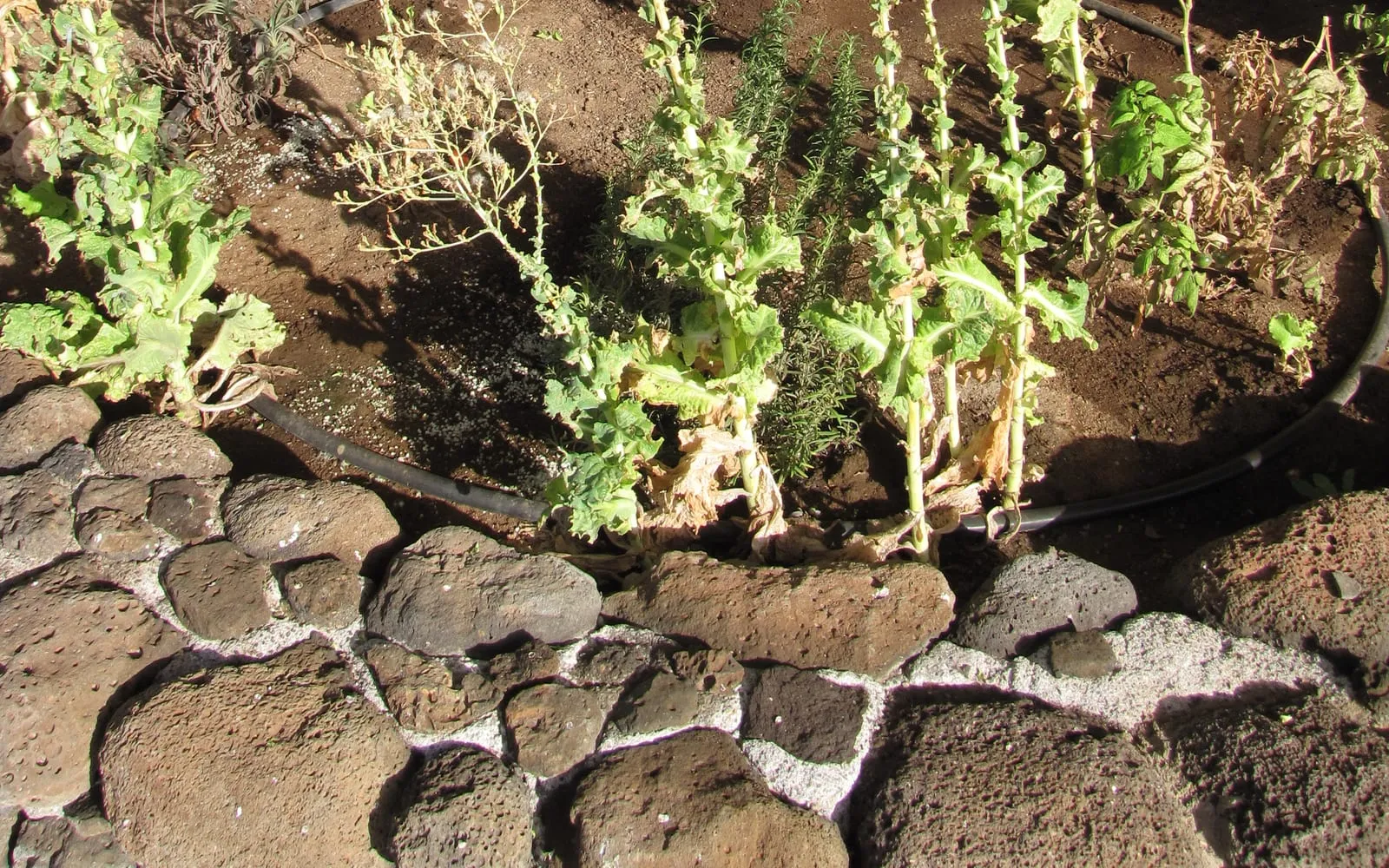
- Lettuce lengthening into a tower with a bare stem and small pointed leaves
- Leaves turning bitter, coarse or tough as the stem extends
- Spinach and rocket flowering within weeks of germinating
- Onions producing a hard round flower stalk through the middle of the bulb
- Beetroot and radish going woody with pale rings through the flesh
- A cauliflower or calabrese making a small loose head that opens into flower
Before you treat anything
Bolted crops are safe to eat. Bitter lettuce and woody beetroot are unpleasant rather than harmful.
What you are looking at
A crop you are growing for its leaves or its roots stops doing that and starts flowering. A lettuce lengthens out of its heart into a tower with a bare stem and small pointed leaves. Spinach and rocket send up a stalk within weeks of germinating. An onion pushes a hard round flower stem through the middle of the bulb. Beetroot and radish go woody with pale rings through the flesh.
The leaves turn bitter or coarse as it happens, because the plant is moving its resources into seed and, in lettuce, because the milky sap that carries the bitterness increases.
None of it can be reversed. A plant that has committed to flowering has changed what it is doing with the rest of its life.
Two triggers, and they need different answers
The first is cold. Beetroot, onions, chard, cauliflower and the other biennials are built to grow one year, sit through a winter, and flower the next. A cold spell after sowing is read as that winter, and the plant flowers months early. Beetroot sown in March and caught by a fortnight of frost does this reliably, and so do onion sets planted into cold ground.
The second is day length and heat. Lettuce, spinach and rocket measure how long the day is, and once it passes their threshold they flower whatever the weather. British days in late June are about sixteen and a half hours, which is well past what true spinach will tolerate. Heat pushes the same species in the same direction and a hot dry spell accelerates it further.
Stress sits behind both. Drying out, sitting pot-bound in a module, having the roots torn at transplanting or running short of water in a heatwave all make a plant more likely to flower, because a plant under threat sets seed.
The fixes differ accordingly. Sowing later fixes the cold trigger and makes the day-length one worse. Sowing earlier does the reverse. What crop you have decides which way to move.
What each crop needs
Sow beetroot after the middle of April outdoors, or protect earlier sowings with fleece. Use ‘Boltardy’ if you sow early.
Use heat-treated onion sets, plant them into ground that has warmed up, and keep them steadily watered through spring.
Sow lettuce little and often, keep it from drying out, and shade midsummer sowings. Soil above about 25 degrees stops the seed germinating in the first place.
Sow true spinach in early spring or August. Grow chard or perpetual spinach through midsummer instead.
Sow rocket, coriander and radish direct, in short rows, every few weeks. Cut them hard while they are young.
Keep cauliflower and calabrese growing without a check. Pot them on before they get pot-bound, plant into moist ground, and keep them watered.
What to do about it
Sow the right cultivar at the right time for the crop you are growing.
Water deeply and regularly, and mulch so the ground stays even.
Sow short rows every fortnight rather than one long row in May.
Sow the crops that resent disturbance direct into the ground.
Shade summer lettuce.
Pull a bolted crop and use it at once, and leave two or three plants to flower for the hoverflies and the bees.
What it gets mistaken for
Drought stress wilts a plant that stands up again after watering, and it is one of the triggers of bolting rather than a separate thing to rule out. The difference is the flower stem.
Nitrogen shortage yellows the older leaves and holds a plant small without producing a stalk, and a feed corrects it within a fortnight.
A cauliflower blowing open in hot weather without a flower stem is a heat response rather than bolting, though the causes overlap and the head is lost either way.
Onions that produce a thick soft neck and no flower are suffering from too much nitrogen or a wet late summer instead, and those will not store either.
What to do, in order
Start here
Prevention, and the changes that stop the problem returning. Most of these pages should end at this tier.
- Sow at the right moment for the crop
- Beetroot and onions sown or planted too early meet a cold spell that tells them they have been through a winter, and they flower instead of swelling. Wait until mid-April for beetroot outdoors, or start it under fleece. Spinach and lettuce sown into the lengthening days of late spring run up fast, so those go in early or from August onwards.
- Buy the cultivar bred for it
- 'Boltardy' beetroot exists for this reason and it works. Seed catalogues flag bolt resistance in lettuce, spinach, chard and rocket, and heat-treated onion sets are sold to stop them flowering. This is the cheapest single fix available.
- Never let the plant dry out
- Drought is the commonest trigger of the lot, even in a cool summer. A lettuce checked by a hot dry week runs to seed within days of it. Water deeply and regularly rather than lightly and often, and mulch to hold what you put on.
- Sow little and often
- A short row of lettuce every fortnight from March gives a steady supply and means one bolted batch costs a fortnight rather than the summer. Rocket and coriander want the same treatment, since both bolt within weeks in warm weather whatever you do.
- Avoid checking the roots
- A plant that dries out in a module, sits pot-bound waiting for a bed, or has its roots torn at transplanting is being stressed at exactly the wrong stage. Coriander, rocket and radish are best sown direct for that reason, and cauliflower and calabrese want to grow on without a pause.
- Give summer sowings some shade
- Lettuce sown in June and July does better under the light shade of a taller crop, a piece of shade netting, or on the north side of a row of beans. Soil temperature above about 25 degrees stops lettuce seed germinating at all and pushes established plants towards flowering.
- Grow chard instead of spinach through midsummer
- True spinach bolts once the days pass about fifteen hours, which is most of a British June and July. Perpetual spinach and chard stand through the whole of that and crop into the autumn.
Then reach for a barrier
Netting, hand removal and water. Nothing here harms anything except the target.
- Use a bolted crop straight away
- A plant that has begun to flower cannot be turned back. Lettuce goes bitter as the milky sap rises, beetroot and radish go woody, and onions with a flower stalk will not store. Pull them and use them at once rather than waiting for improvement.
- Pinch out the flower stem to buy days rather than weeks
- Removing the stalk on a bolting lettuce or a coriander plant delays things briefly and keeps the leaves usable a little longer. Treat it as a way to finish the row rather than a rescue.
- Let some of it flower on purpose
- Bolted coriander, rocket, radish and brassicas produce flowers that hoverflies, bees and parasitic wasps feed on heavily at a time of year when little else is out on a vegetable plot. Leaving two or three plants at the end of a row is worth doing deliberately, and seed to save follows.
Plants affected
Guides that name it among the problems to watch for. The list is the plants it is characteristic of rather than everything it will feed on.