
Disorder
Frost damage
Also called Frost burn, Cold damage, Spring frost
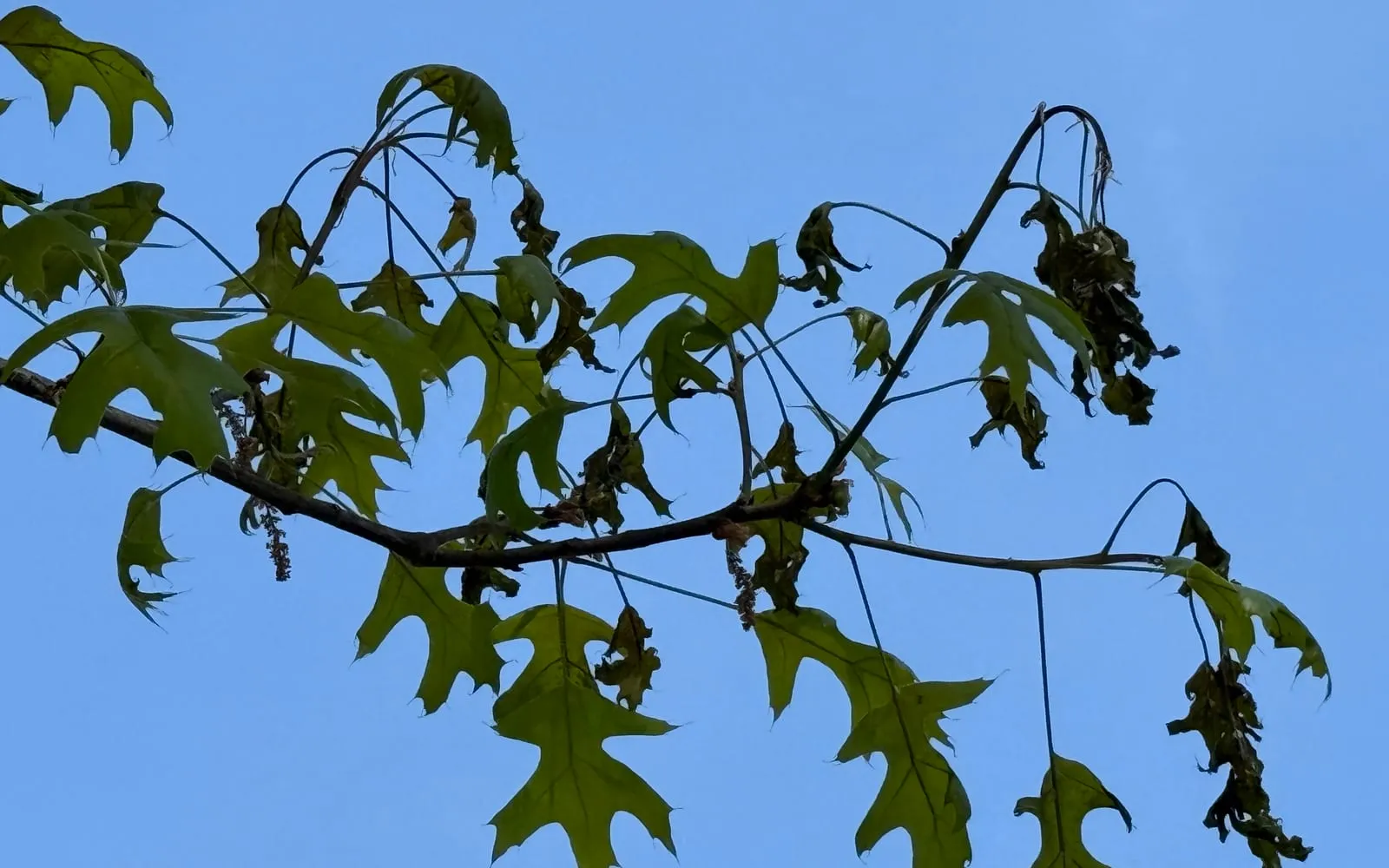
Frost damage blackens soft new growth in spring and browns exposed shrubs in winter wind. Wait before pruning, protect tender growth and harden plants gradually before cold nights.
At a glance
- Type
- Disorder
- Cause
- Growing conditions
- Severity
- Destroys the crop or display
- Affects
- Garden plants, Herbs and edibles
- Active
- All year
What you are seeing
- New shoots and leaves blackened, limp and hanging, appearing overnight
- Damage confined to the growth that was exposed, with sheltered parts untouched
- Camellia and magnolia flowers browning at the edges and going papery
- Blossom killed on fruit trees, followed by no fruit at all that year
- Potato foliage blackened to the ground after a May frost
- Bark split lengthways on a young trunk after a hard winter
- Damage worst at the bottom of a slope or in a dip, and worst on the side facing the morning sun
Before you treat anything
Frosted potato and tomato foliage is not safe to eat, and neither is a potato tuber that has been frosted in store, since frozen and thawed tissue rots quickly. Damaged fruit is fine once the marked parts are cut away.
What you are looking at
Growth that was fine yesterday is black, limp and hanging today. Magnolia and camellia flowers have gone brown at the edges and turned papery. Potato foliage that was 20 cm high is flat on the ground and blackened.
The damage is patchy in a particular way. Whatever was exposed on the night is hit and whatever was sheltered by a wall, a canopy or a neighbouring plant is untouched, sometimes on the same branch. That patchiness, and the fact that it arrived in a single night and has not spread since, is the diagnosis.
Frost damage does not progress. If the affected area is bigger a week later, something else is going on.
Late frosts do the harm, not deep ones
A hardy plant survives minus ten in January without noticing. The same plant loses a season’s growth to minus two in May.
The difference is what state the tissue is in. Dormant wood is full of sugars and largely empty of free water, and it tolerates cold that would destroy the same cells in spring. New growth is soft, full of water, and has no protection at all.
So the dangerous nights in a British garden are the clear still ones in April and May, after everything has broken into leaf, and again in early autumn before growth has hardened. A mild March that brings everything on early makes a subsequent frost far more damaging, which is why some of the worst years follow a warm spring.
Two other things follow from this. Cold air is dense and flows downhill, so it collects at the bottom of a slope, in a dip, and on the uphill side of a solid fence, which can be several degrees colder than ground twenty metres away. And frozen tissue is destroyed mainly during a rapid thaw, which is why an east-facing camellia catching the early sun loses its flowers while a west-facing one keeps them.
Leave the damage on
The instinct after a frost is to cut the blackened growth off, and it is the wrong one.
Dead material insulates the live buds behind it, and cutting back immediately exposes those buds and stimulates a fresh flush of soft growth into a season that usually has more frosts in it. The second hit is what kills plants that would have recovered from the first.
Wait until the danger has passed, which in most of Britain means the end of May, then cut back to a live bud and feed and water the plant so it can rebuild.
What to do about it
Leave the damaged growth in place until the last frosts have gone.
Cut back to live wood in late spring, then mulch, water and feed.
Learn where the cold sits in your garden and keep vulnerable plants out of it.
Move camellias and magnolias out of the early morning sun.
Fleece blossom, new growth and potato shoots on clear still nights and uncover them by day.
Earth potatoes up over emerging shoots when frost is forecast.
Plant tender annuals after your local last frost date rather than on the first warm weekend.
Stop feeding after midsummer so growth hardens before autumn.
Group pots against a wall and wrap them, since roots in a container freeze where roots in the ground do not.
What it gets mistaken for
Leaf scorch browns margins and tips through a hot dry spell, building over days rather than appearing overnight.
Wind damage browns the windward side of an evergreen over a cold dry period and looks very similar. The two commonly happen together.
Potato blight spreads through a crop day by day in warm humid weather. Frost takes the whole exposed canopy in one night and stops.
Blossom wilt browns flowers and the spur behind them and keeps spreading into the wood.
Waterlogging kills over the winter on wet ground, and the cold gets the blame. Look at the roots before deciding.
What to do, in order
Start here
Prevention, and the changes that stop the problem returning. Most of these pages should end at this tier.
- Wait before cutting anything off
- Blackened growth looks terrible and it is also insulating whatever is behind it. Leave it until the risk of further frost has passed, usually late May in most of Britain, and then cut back to a live bud. Plants cut back immediately after a frost frequently get caught again on the new growth, and that second hit is the one that kills.
- Know your garden's cold spots
- Cold air flows downhill and pools, so the bottom of a slope, a dip and the uphill side of a solid fence or hedge are all frost pockets and can be several degrees colder than the rest of the garden. Put the vulnerable plants elsewhere and let air drain away rather than damming it.
- Keep tender plants off the east side
- Frosted tissue is damaged most by thawing quickly, so a plant that catches the early morning sun after a frost suffers far worse than one that thaws slowly in shade. Camellias and magnolias are the classic case, and a west-facing or lightly shaded position saves the flowers most years.
- Do not feed late in the season
- Nitrogen applied after midsummer produces soft growth going into autumn that has not hardened by the first frosts. Feed for growth in spring and early summer and stop.
- Plant hardy things and time the tender ones
- Nothing protects a plant that is not hardy in your area through a normal winter. For the tender annuals, the answer is the calendar: plant out after the last local frost date rather than on the first warm weekend in April, which is when most losses happen.
Then reach for a barrier
Netting, hand removal and water. Nothing here harms anything except the target.
- Fleece on a clear still night
- Two layers of horticultural fleece over blossom, potato shoots or new growth on a frosty night, taken off the following morning so light and pollinators can get in. Clear still nights are the dangerous ones, and cloud or wind usually means no frost.
- Earth potatoes up over the shoots
- Drawing soil over emerging potato foliage before a frost is the oldest answer there is and it works. The plants push through again in a few days.
- Give a cold greenhouse or frame a layer of insulation
- Bubble polythene lining, a fleece thrown over the plants inside, and pots grouped together and lifted off cold paving all buy several degrees. Leave ventilation, since a sealed damp greenhouse trades frost damage for grey mould.
- Move containers against a wall
- A pot has its roots in the air, so it freezes where the same plant in the ground would not. Group pots against a house wall, wrap them in fleece or bubble wrap, and lift them onto feet so they drain.
Plants affected
Guides that name it among the problems to watch for. The list is the plants it is characteristic of rather than everything it will feed on.
A common rose problem
This is one of the pests, diseases and disorders that rose growers meet most often. See it alongside the others on the common rose problems guide.
Common rose problems