
Pest
Rabbits and deer
Also called Rabbit damage, Deer browsing, Muntjac
Rabbits cut shoots cleanly at an angle, while deer tear them off ragged. Damage height and the cut surface tell you which animal is feeding and what kind of fence will work.
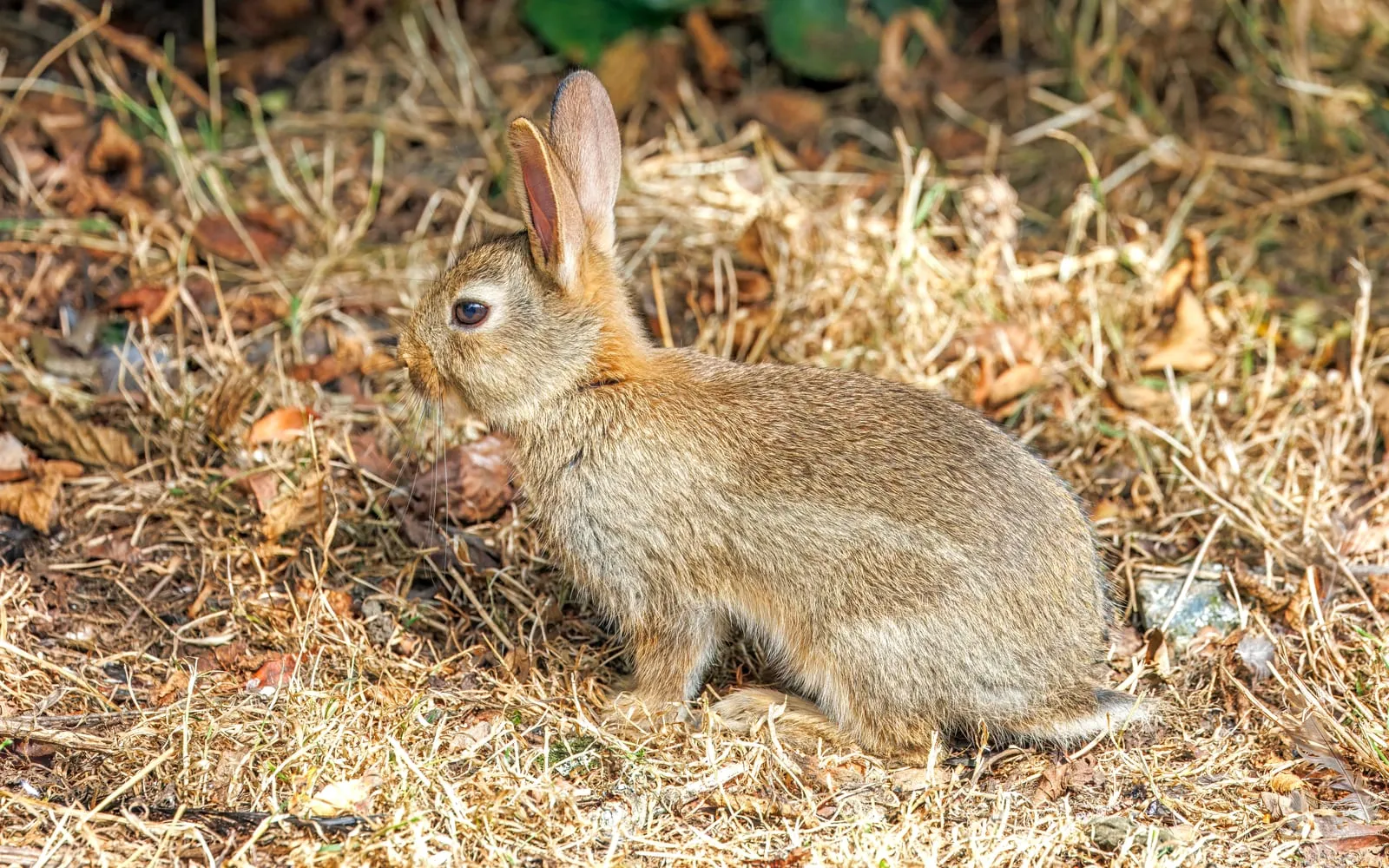
At a glance
- Type
- Pest
- Cause
- Mammal
- Severity
- Destroys the crop or display
- Affects
- Garden plants, Herbs and edibles
- Active
- All year
- Established in
- Europe, North America, Asia, Australia and New Zealand
What you are seeing
- Shoots cut through cleanly at a sharp angle, as though with secateurs
- Shoots torn off leaving a ragged, frayed end
- Damage stopping at a level line, around 50 cm up for rabbits and 1.2 m or more for deer
- Bark gnawed off the base of young trees over winter, sometimes right round
- Bark and stems shredded vertically on a young tree from antlers being rubbed, between spring and late summer
- Round droppings on the lawn or the beds, and hoof slots in soft ground
- Whole rows of vegetables or bedding gone overnight with nothing left behind
Before you treat anything
Fit netting taut and check it regularly so that birds, hedgehogs and deer cannot become entangled in it. Loose netting left over a bed is a genuine hazard to wildlife and causes more suffering than the pests it excludes.
Look at the cut, then at the height
Two questions settle which animal you have, and both can be answered from the plant without ever seeing the culprit.
Rabbits have sharp incisors in both jaws. They cut a shoot cleanly through at a sharp angle, and the cut face looks as though it was made with secateurs.
Deer have no incisors in the upper jaw. They grip a shoot between the lower teeth and a hard pad and pull, so the shoot tears off and the end is ragged and frayed. That difference is reliable and it takes two seconds to check.
Then look at how high the damage goes. Rabbits reach about 50 cm from the ground, and a little higher on snow. Roe and muntjac browse to around 1.2 m, fallow and red to well above head height. Damage that stops at a level line partway up a hedge is a browse line, and its height names the animal.
Two other signs help. Bark gnawed off the base of young trees in winter, sometimes right round the stem, is rabbits or voles. Bark and stems shredded vertically on a young tree between spring and late summer is a buck rubbing the velvet off his antlers, which is deer and has nothing to do with feeding.
Fences, and nothing else that works as well
There is no repellent, no scarer and no planting scheme that keeps a hungry rabbit or deer out of a garden. Fencing does, and everything else on this page is a way of avoiding fencing the whole boundary.
For rabbits, 31 mm mesh netting one metre high, with 15 cm buried and turned outwards at the bottom so a digging animal meets wire. Rabbits go under.
For deer, height rather than depth. A metre and a half for muntjac and roe, and 1.8 to 2 metres for fallow and red. Deer go over.
Those two specifications do not substitute for each other, which is why so many gardens have a fence that stops one and not the other.
Where fencing a boundary is impractical, protect what matters. A netting cage over the vegetable beds, spiral guards on young trees, and a low wire fence around one rose bed cost a fraction of the alternative and prevent most of the loss.
Repellent sprays are worth using over a critical fortnight after planting and should not be relied on beyond that. They wash off, they fade, and the animals learn.
What to do about it
Check the cut. Clean and angled is rabbits, ragged and torn is deer.
Check the height the damage stops at.
Put guards on every young tree in autumn, and check the fit each year.
Net the vegetable beds with a proper frame, sealed at ground level and pulled taut.
Fence to the right specification for the animal you have, rather than the one you assumed.
Plant lavender, rosemary, box, berberis, euphorbia, ferns and daffodils where you cannot protect the ground, and accept that a hard winter overrides all of it.
Keep netting tight and inspected, because slack netting traps hedgehogs, birds and deer.
What it gets mistaken for
Squirrels dig bulbs out of pots and beds and strip bark in patches partway up a trunk rather than at the base.
Voles and mice gnaw bark at ground level under mulch or long grass, leaving finer tooth marks than a rabbit.
Pigeons shred brassica leaves down to the ribs and leave droppings on the foliage, and they cannot sever a woody shoot.
Slugs rasp holes in soft tissue and leave slime trails.
Frost kills shoot tips without removing them, so the dead growth is still attached.
Badgers dig conical pits in a lawn for leatherjackets and chafer grubs and do not browse foliage at all.
What to do, in order
Start here
Prevention, and the changes that stop the problem returning. Most of these pages should end at this tier.
- Plant what they leave alone, and expect exceptions
- Aromatic, hairy, spiny and toxic plants are browsed least. Lavender, rosemary, box, berberis, euphorbia, ferns, daffodils and hellebores all survive in gardens where roses and hostas do not. Nothing is rabbit-proof or deer-proof in a hard winter, so treat these as odds rather than guarantees.
- Protect the plants that matter rather than the whole garden
- Fencing an acre is expensive and fencing a rose bed is not. Where a boundary fence is impractical, netting cages over the vegetable beds and guards on individual young trees deal with most of the actual loss.
- Treat repellents as a short-term measure
- Sprays and scent-based deterrents wash off, wear out within days to weeks and stop working once the animals get used to them. They have some value over a critical fortnight for new planting, and they are not a substitute for a fence. Anything sold as a permanent solution on this basis is overselling.
- Take the bark damage seriously in winter
- A young tree gnawed all the way round the base is dead, because everything above the ring loses its connection to the roots. Guards go on in autumn, before the first hard weather, rather than after the damage is found.
Then reach for a barrier
Netting, hand removal and water. Nothing here harms anything except the target.
- Fence for rabbits at one metre, with the bottom buried
- Wire netting of 31 mm mesh or finer, one metre high, with the bottom 15 cm buried and the buried section turned outwards at right angles so an animal digging at the base meets wire. Rabbits dig, so a fence standing on the surface is an obstacle rather than a barrier.
- Fence for deer by species
- Muntjac and roe need 1.5 m of netting, and fallow and red need 1.8 to 2 m. Deer jump rather than dig, so height matters and burying does not. A fence that stops rabbits will not slow a muntjac, and a fence built for deer lets rabbits under it.
- Guard individual trees
- Spiral guards for rabbits and a mesh sleeve on stakes for deer, fitted at planting and checked each year so they do not constrict the trunk as it thickens. This is the cheapest protection in the garden and the one most often left until too late.
- Net the vegetable beds
- A frame with netting over it, sealed at ground level, keeps rabbits off lettuce, beans and brassicas. It doubles as protection from pigeons and cabbage caterpillars, which is why a permanent cage over the vegetable bed earns its cost several times over.
Plants affected
Guides that name it among the problems to watch for. The list is the plants it is characteristic of rather than everything it will feed on.
A common rose problem
This is one of the pests, diseases and disorders that rose growers meet most often. See it alongside the others on the common rose problems guide.
Common rose problemsA common vegetable pest
This is one of the pests that vegetable growers meet most often. See it alongside the others on the vegetable pests guide, grouped by how they feed and with prevention that works against most of them.
Common vegetable pests