
Edible
Celery
Apium graveolens
Also known as Wild celery, Smallage
How to grow celery, Apium graveolens. Self-blanching against trench types, the water it demands, stopping it bolting, and why the sap burns in sunlight.
At a glance
- Difficulty
- Difficult
- Water
- Constantly. This is the thirstiest crop in the vegetable garden
- Light
- Full sun to light shade, in an open airy position
- Temperature
- 15-21 deg C. A fortnight below 10 deg C triggers bolting
- Hardiness
- USDA 2-10, RHS H4, hardy to -5 C
- Type
- Biennial grown as an annual
- Height
- 30-100 cm
- Native to
- Europe and the Mediterranean, on damp salty coastal ground
- Best month
- March in the Northern Hemisphere, September in the Southern Hemisphere
Ten to fourteen days below 10 deg C vernalises a young plant and sends it to seed, which is why celery planted out too early bolts and why it is raised under cover. It also came from marsh ground and never forgives drying out. Steady warmth and constant moisture are the whole of the technique.
Hardiness zones describe winter cold alone. Summer heat, humidity, rainfall and the length of the growing season decide as much, so treat the range as the outer limit rather than as a recommendation.
Every month named in this guide is for the temperate Northern Hemisphere. If you garden in the Southern Hemisphere, shift each one by six months, so March becomes September. Closer to the equator the wet and dry seasons matter more than the calendar, and the shift stops being a useful guide.
Skin irritant
- Safe to eat
- The leaf stalks, the leaves and the seed, all eaten
- Harm from
- Handling it
- Affects
- People
Celery is a food crop and the stalks, leaves and seed are all eaten. The caution concerns handling rather than eating. Celery belongs to the Apiaceae and its foliage and sap contain furanocoumarins, which react with sunlight on skin to cause phytophotodermatitis, a burn that appears a day or two after exposure and can blister and leave brown marks for months. Celery harvesters and packers are the group most affected, and the risk to a gardener cutting a few heads is small but real on a bright day. Wear long sleeves when cutting a lot of it in sunshine and wash your forearms afterwards. The concentration rises sharply in plants infected with pink rot, so handle diseased plants with more care rather than less. Celery is also a named allergen under UK food labelling law and one of the more common causes of food-related anaphylaxis in northern Europe, which is important before serving it to guests. The ASPCA does not list Apium graveolens as toxic to cats and dogs. The RHS records the phototoxic sap among its harmful garden plants.
Sources: RHS potentially harmful garden plants, ASPCA toxic and non-toxic plants
About
Celery is the hardest vegetable in this collection to grow well, and the reason is water. The wild plant grows in salt marshes and ditch edges, and the crop has inherited a root system that expects permanently wet ground. A week of neglect in July gives stringy, bitter, hollow stalks that no amount of later watering repairs.
The second difficulty is cold. A young plant that spends a fortnight below 10 deg C concludes it has been through a winter and flowers in its first summer instead of its second. Every spring, gardeners plant celery out in early May, meet a cold snap, and watch the crop bolt.
Get both right and the season runs five months from a March sowing to an October cut. Self-blanching varieties have removed most of the labour that made celery a Victorian speciality crop, and they are what a modern garden should grow.
Appearance and character
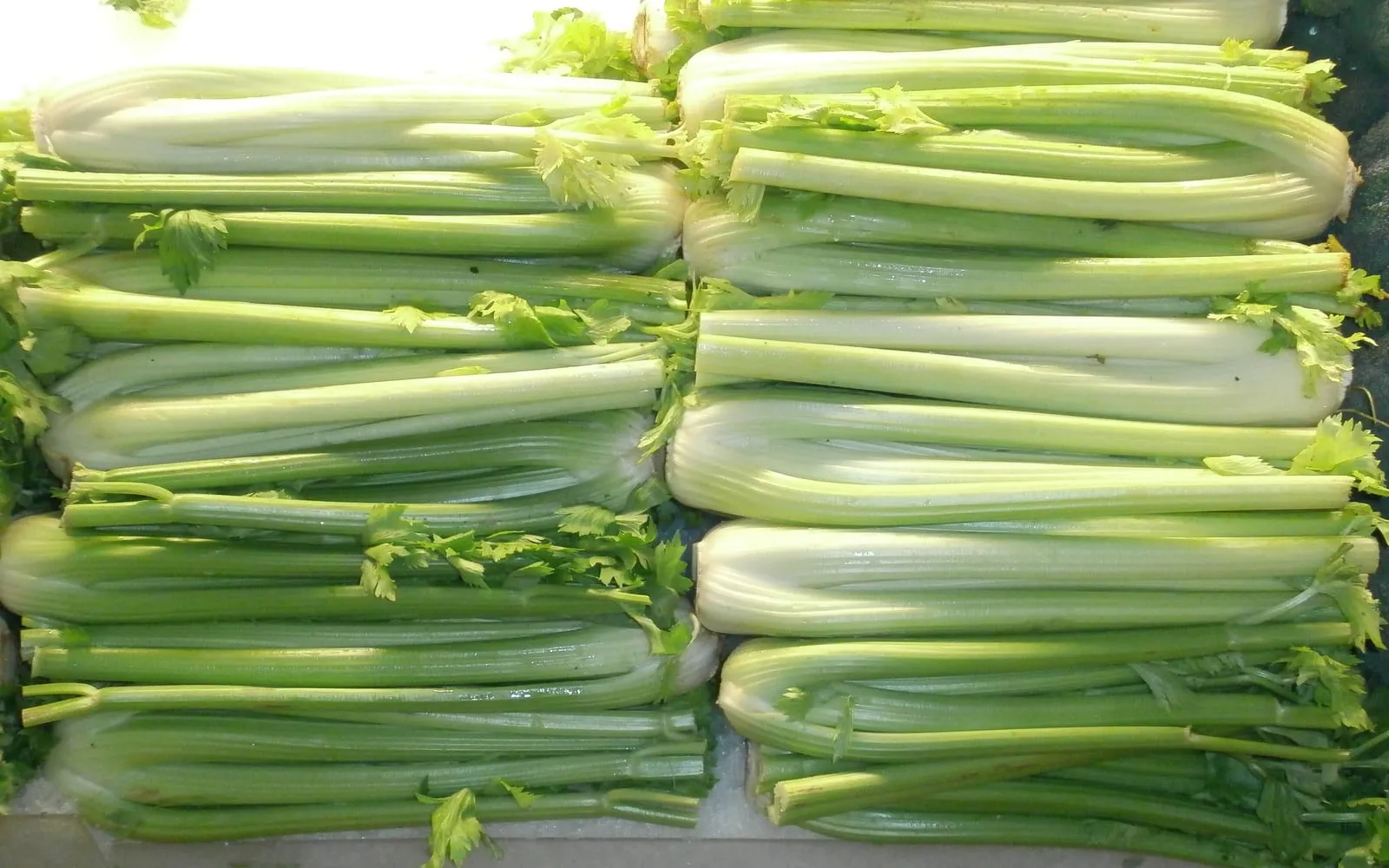
A tight upright cluster of ribbed leaf stalks rising from a short crown, 30 to 60 cm tall in self-blanching varieties and taller in trench types.
Stalks are deeply grooved on the outer face, crisp, and pale green to almost white depending on how much light has reached them. Blanched stalks are white and mild, and green ones are stronger and more bitter.
Leaves are divided into toothed leaflets, glossy mid-green, and intensely aromatic when crushed. They are worth using in stock even when the stalks are not good enough for the table.
Pink and red-stalked varieties such as ‘Giant Red’ hold their colour and are hardier than the green ones.
A bolting plant sends up a branched flowering stem to a metre or more with flat umbels of tiny greenish-white flowers, then ridged aromatic seeds that are the celery seed of the spice rack.
Where it is from
Wild celery grows around the coasts of Europe, including Britain, on damp brackish ground, ditch banks and salt marshes. It is a strong-smelling plant with thin bitter stalks, and it is nothing anyone would want to eat.
Selection for thick mild stalks happened in Italy in the sixteenth and seventeenth centuries, and it reached England by the late seventeenth century. Smallage, the older English name, refers to the wild or lightly improved form grown for leaf and seed rather than stalk.
Victorian kitchen gardens grew trench celery, planting into a deep trench and earthing up through the summer to exclude light. The result was excellent and the labour considerable.
Self-blanching varieties, developed in the twentieth century, blanch themselves by being grown in a tight block where the plants shade one another. They are less hardy and less flavoursome than trench celery, and they are what almost everybody now grows.
How it grows
Sow indoors in March at 15 to 20 deg C. Celery seed is tiny, needs light to germinate, and takes two to three weeks, so sow on the surface of moist compost and do not cover it.
Prick out into modules at the first true leaf and grow on at no less than 10 deg C. This is the point where a cold night sets up a bolting plant in July.
Harden off carefully and plant out in late May or early June, after the last frost and after the nights have warmed. Late planting beats early planting every time with this crop.
Plant self-blanching varieties in a block at 23 cm each way rather than in rows, so the plants shade each other’s stalks. A collar of cardboard around the outer plants blanches the edge of the block.
Plant trench varieties in a trench 30 cm deep, and earth up around the stalks in stages from August, wrapping the stalks in newspaper or cardboard first to keep soil out.
Cut whole heads from August for self-blanching types and from October for trench types.
Through the seasons
Early spring is for sowing indoors in March, on the surface of moist compost, at 15 to 20 deg C.
Late spring grows the plants on under cover at a steady temperature above 10 deg C. Harden off over a fortnight in late May.
Early summer is for planting out, in late May or June once the nights have warmed. Water in generously and mulch thickly.
Summer is watering and feeding, and this is the season the crop is won or lost. Water daily in hot weather and feed fortnightly. Start earthing up trench varieties in August.
Autumn is the harvest. Self-blanching types are cut from August to the first frost, which kills them. Trench types are cut from October and stand hard frost, improving after it, and are lifted through to Christmas.
Care difficulty
Difficult, and honestly so. Celery asks for more attention than anything else in this wave.
Water is the first and largest demand. The crop needs the soil wet, not damp, for its entire five months, and the commonest reason for stringy bitter stalks is a dry fortnight in July.
Bolting is the second. Keep young plants above 10 deg C, harden off slowly, and plant out late. A bolt-resistant variety such as ‘Victoria’ reduces the risk without removing it.
Leaf spot is the third. The fungus is carried on the seed, so buy treated seed from a reputable supplier and do not save your own.
Hollow, pithy stalks come from irregular watering or from boron deficiency, and the two look identical.
Slugs live between the stalks in a way that makes them hard to find and harder to remove before the head reaches the kitchen.
Watering
Water more than feels reasonable. Celery is the thirstiest crop in the vegetable garden and the wild plant grows in a ditch.
Aim for 20 to 25 litres per square metre a week as a minimum, and water daily in hot weather. The soil should never dry at the surface.
Mulch thickly after planting, with 8 cm of compost or well-rotted manure. This does more to hold moisture around the shallow roots than any watering regime.
Water at the base rather than over the plant. Water sitting in the crown overnight invites rot and leaf spot.
Never let the plants wilt. A celery plant that has wilted once has already formed the strings that will spoil the crop.
Container growing is possible in a large pot with a saucer kept full of water, which is one of the few crops where standing in water is correct.
Warning signs, diseases and pests
Celery leaf spot shows as small brown spots that spread across the leaves and stalks, worst in a wet summer, and it disfigures the crop rather than killing it. The fungus is seed-borne, so use treated seed, space the plants for airflow, remove affected leaves, and do not save seed from an infected crop.
Celery leaf miner tunnels white blotches through the leaves. Squeeze the tunnels between finger and thumb to crush the larvae, and cover with fine mesh from May.
Slugs and snails shelter between the stalks and are hard to dislodge. Keep the ground around the block clear, water in the morning, and check heads carefully before they go indoors.
Bolting sends up a flower stem and turns the stalks woody. It follows a cold check on a young plant and cannot be reversed.
Hollow, pithy stalks follow irregular watering or a boron shortage on light or over-limed soil. Even watering first, then borax at 3 g per square metre if the problem persists.
Carrot fly attacks celery as well as carrots, tunnelling the base. Fine mesh covers help both crops.
Pink rot turns the base of the stalks brown and soft in wet autumns. Remove and destroy affected plants, and handle them carefully, since the furanocoumarin concentration rises sharply in infected tissue.
Growing environment
Full sun to light shade. Celery tolerates a few hours of shade better than most vegetables, and stalks are thinner for it. An open airy position reduces leaf spot.
Rich, deep, moisture-retentive soil is a requirement. Dig in a bucket of well-rotted manure per square metre the autumn before, and add more at planting.
Ground that stays wet naturally, which would rot most crops, suits celery better than free-draining soil.
Lime to pH 6.5 or 7 if the soil is acid, and test rather than guess, since over-liming locks up the boron that prevents hollow stalks.
Plant self-blanching varieties in a block rather than rows so they shade each other.
Shelter from wind, which breaks the stalks and dries the plants.
Rotate with the other umbellifers, counting carrot, parsnip, celeriac, parsley and fennel as the same crop.
Feeding
Celery is a heavy feeder as well as a heavy drinker.
Dig in well-rotted manure or compost before planting, generously. The traditional trench filled with manure the previous autumn is doing exactly the right thing.
Feed fortnightly with a balanced liquid feed from four weeks after planting out. Liquid seaweed suits it.
A nitrogen side-dressing in midsummer thickens the stalks. This is one of the few crops in the wave where extra nitrogen is right, because the leaf stalk is what you are growing.
Add boron only where hollow stalks have appeared before, at 3 g of borax per square metre dissolved in water and spread evenly. Overdosing damages the crop.
Troubleshooting
Stringy, bitter, hollow stalks. Irregular watering, almost always. Water to keep the soil wet, mulch thickly, and never let the plants wilt.
The plants flowered in their first summer. Bolting, from a cold check as young plants. Keep seedlings above 10 deg C, harden off slowly, and plant out in June rather than May.
Brown spots spreading over leaves and stalks. Celery leaf spot. Use treated seed, space for airflow, remove affected leaves, and do not save seed.
White tunnels in the leaves. Celery leaf miner. Crush the larvae in the tunnel and cover with fine mesh from May.
Hollow stalks with brown streaks inside. Boron deficiency or drought. Water evenly first, then apply borax at 3 g per square metre.
Green, strong-tasting stalks. Not blanched. Grow self-blanching varieties in a tight block, or wrap and earth up a trench variety from August.
Slugs in the heart. Keep the surrounding ground clear, water in the morning, and check heads before they come indoors.
Do I have to earth it up? Only for trench varieties. Self-blanching types blanch each other when grown in a block, and are what most gardens should grow.
Why did my forearms come up in a rash? Phytophotodermatitis from the sap in sunlight. Wear long sleeves when cutting on a bright day and wash your arms afterwards.
Celery problem guides
Not sure what is wrong? See the common vegetable pests guide.