
Edible
Onion
Allium cepa
Also known as Bulb onion, Common onion
How to grow onions, Allium cepa. Sets against seed, why bolting happens, ripening and curing for storage, and why onions are toxic to cats and dogs.
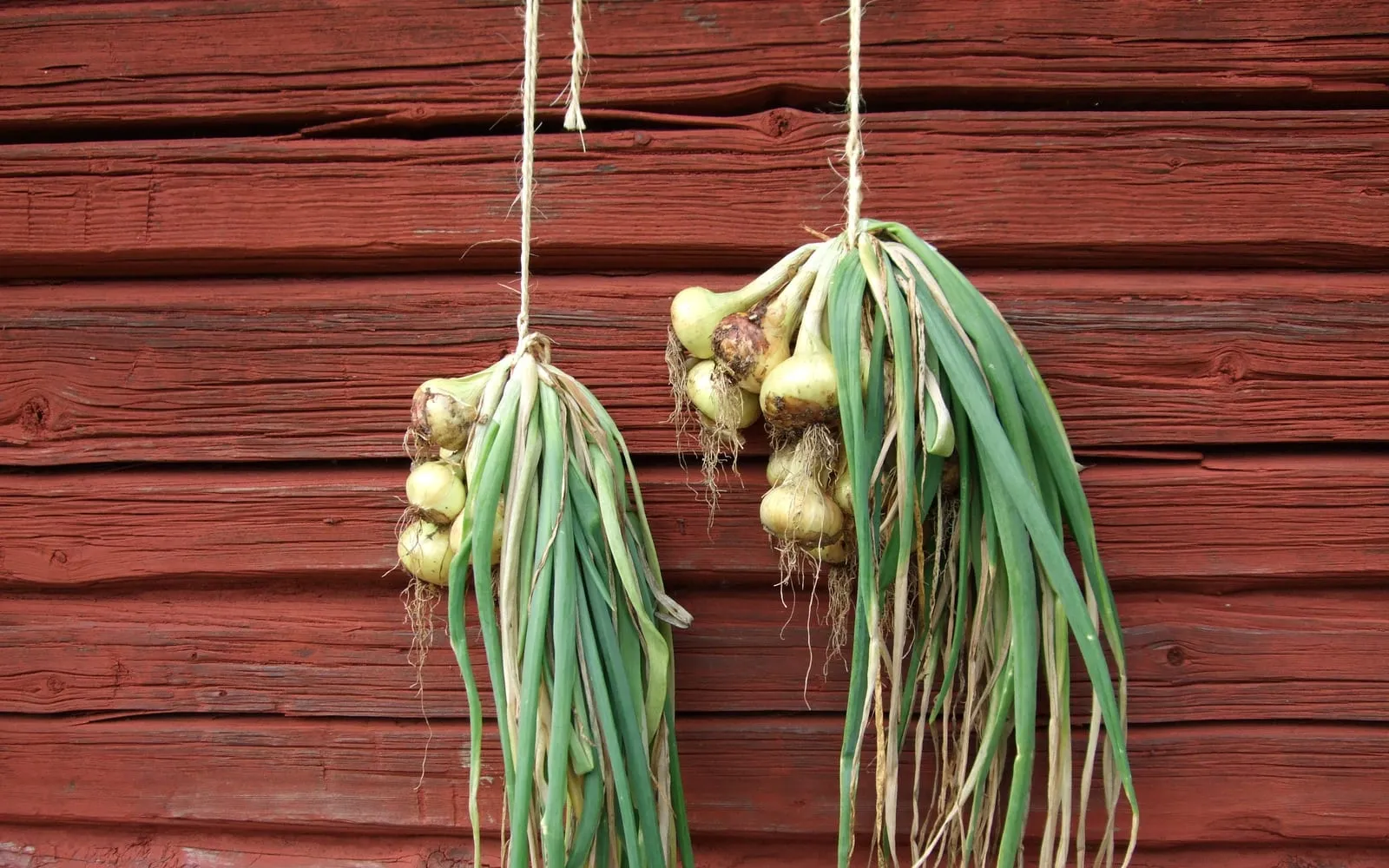
At a glance
- Difficulty
- Easy
- Water
- Only in dry spells while the bulbs swell. Stop in midsummer
- Light
- Full sun. Onions will not bulb properly in shade
- Temperature
- Hardy. Autumn sets survive a temperate winter
- Hardiness
- USDA 3-9, RHS H5, hardy to -10 C
- Type
- Biennial grown as an annual
- Height
- 45-60 cm of leaf
- Native to
- Central Asia, with no wild population known
- Best month
- March in the Northern Hemisphere, September in the Southern Hemisphere
Bulbing is triggered by daylength and by nothing else, so the cultivar has to match the latitude. Long-day sorts start bulbing at 14 to 16 hours and suit anywhere above about 35 degrees. Short-day sorts bulb at 10 to 12 hours and suit the subtropics. Plant a long-day onion near the equator and it makes leaves indefinitely without ever bulbing, and plant a short-day onion in the far north and it bulbs before it has built a plant, giving something the size of a marble.
Hardiness zones describe winter cold alone. Summer heat, humidity, rainfall and the length of the growing season decide as much, so treat the range as the outer limit rather than as a recommendation.
Every month named in this guide is for the temperate Northern Hemisphere. If you garden in the Southern Hemisphere, shift each one by six months, so March becomes September. Closer to the equator the wet and dry seasons matter more than the calendar, and the shift stops being a useful guide.
Toxic to pets if eaten
- Safe to eat
- The bulb and the green leaves
- Harm from
- Eating it
- Affects
- Cats, dogs and horses
Onions are food for people and toxic to cats, dogs and horses. The ASPCA lists Allium cepa as toxic to all three. The organosulfur compounds in the bulb damage red blood cells in these animals, producing oxidative haemolysis and the anaemia that follows, with vomiting, lethargy, pale gums, rapid breathing and discoloured urine. Cats are more sensitive than dogs, and horses are affected too. Cooking makes no difference, and dried or powdered onion is more concentrated and therefore more dangerous by volume, which is why stock cubes, gravy, onion bhajis and leftover casserole are common culprits. Signs often appear several days after the meal rather than immediately, so the connection is easily missed. Keep bulbs, peelings and prepared food away from pets, and do not feed table scraps that contain onion. Every other cultivated Allium, including garlic, leeks, shallots and chives, carries the same hazard.
Sources: ASPCA (Onion, Allium cepa), RHS potentially harmful garden plants
About
Onions are grown from sets rather than seed by most gardeners, and a set is a small immature bulb raised the previous year. Push them into the soil in March, keep the bed weeded, and lift a crop in August.
The reason sets dominate is speed and reliability. They start with a food store already built, they beat the weeds, and they dodge the slow uncertain germination that seed brings in cold spring soil.
The part people get wrong is the end of the season. An onion crop is made in the lifting and curing rather than the growing, and a bulb put into store damp will rot by October.
Appearance and character
A fan of hollow blue-green tubular leaves rising from a single growing point, reaching 45 to 60 cm.
The bulb is a compressed stem wrapped in swollen leaf bases, covered by dry papery skins in brown, red or white depending on the variety.
Roots are shallow, fine and white, which is why onions compete so badly with weeds and dislike being hoed too close.
In a second year the plant sends up a hollow stem topped with a spherical head of small white flowers. A bulb that flowers in its first year has bolted, and it will not store.
Japanese overwintering varieties look identical and run to a different timetable, planted in autumn and lifted in June.
Where it is from
Central Asia, probably the mountains of Iran, Afghanistan and Pakistan, though no certainly wild population of Allium cepa has ever been found. It has been cultivated for at least five thousand years and appears in Egyptian tomb paintings and Sumerian texts.
Bulbing is triggered by day length rather than by season, which is the single most useful fact about growing them. Long-day varieties bulb when the days pass about fifteen hours and are the ones to grow above roughly 35 degrees of latitude. Short-day varieties bred for the subtropics bulb far too early that far north and give tiny onions.
The native climate is continental, with cold winters and hot dry summers. That last part explains the ripening period, when the crop wants heat and dryness rather than water.
Onions tolerate frost well. The winter problem in a wet climate is waterlogging rather than cold.
How it grows
Plant sets in March and April, pushing them in so the tip just shows, 10 cm apart in rows 30 cm apart. Firm the soil around them.
Birds pull newly planted sets out by the dry leaf tip. Trimming the tip off, or netting the bed for a fortnight, prevents it.
From seed, sow indoors in January and February for planting out in April, or direct in March. Seed gives a wider choice of variety and better storage, and it needs more attention.
Leaf growth comes first and the bulb swells later, driven by lengthening days from about June.
Ripening starts in late July as the leaves yellow and the necks soften and fold over. Stop watering and let the plant finish.
Lift when about two thirds of the tops have gone over, easing the bulbs up with a fork. Do not bend the tops over by hand, which used to be standard advice and damages the neck, letting rot in.
Cure for two to three weeks in a dry airy place, outdoors in the sun if the weather allows, until the skins rustle and the necks are papery.
Through the seasons
Late winter is for sowing seed indoors and ordering sets.
Spring is planting, from March into April. Keep the bed weeded from the start and protect newly planted sets from birds.
Summer grows the bulb. Water only in dry spells, weed constantly, and stop watering entirely once the leaves begin to yellow in late July.
Late summer is lifting and curing. Ease the bulbs out in August, cure them until the necks are dry, and store them somewhere cool, dark and airy in nets or plaits.
Care difficulty
Easy, with two habits that decide the outcome.
Weeding is the first. Onions have fine shallow roots and upright leaves that cast almost no shade, so they lose to weeds faster than any other vegetable. Hoe carefully and often.
Curing is the second. A properly cured onion keeps until spring and a damp one rots in weeks.
White rot is the disease that ends onion growing on a plot, and it arrives on infected sets or garlic.
Bolting is common after a cold spell in spring and is largely outside your control, though heat-treated sets reduce it.
Watering
Onions need less water than most crops. Water only during dry spells while the bulbs are swelling, from May to early July.
Water thoroughly and infrequently rather than little and often.
Stop watering completely once the leaves start yellowing in late July. Late water delays ripening and produces bulbs that will not store.
Never plant into waterlogged ground.
Containers dry out fast and need more attention, though onions are a poor use of container space.
Warning signs, diseases and pests
White rot is the serious disease. Leaves yellow and wilt, and the base of the bulb carries a dense white fluffy mould dotted with tiny black resting bodies that survive in the soil for fifteen years or more. There is no treatment. Buy certified sets, never plant supermarket onions or garlic, and if it appears, grow no alliums on that ground.
Downy mildew shows as pale patches on the leaves with a grey-purple furry growth in damp weather, collapsing the foliage and stunting the bulbs. Space plants well, rotate, and avoid overhead watering.
Onion fly maggots tunnel into the base of the bulb, wilting and killing young plants. Fine mesh over the bed from planting prevents it.
Allium leaf miner leaves rows of small white dots down the leaves and larvae in the bulb. Mesh is again the answer.
Bolting, where a flower stem shoots up in the first year, follows a cold spell after planting. The bulb will not keep, so use those onions first. Heat-treated sets are less prone.
Thick soft necks at lifting mean too much nitrogen or too much late water. Those bulbs will not store.
Rotting in store means they were lifted damp or cured too briefly.
Growing environment
Full sun. This is not negotiable, since bulbing depends on light.
Firm, fertile, free-draining soil with a neutral pH. Prepare the bed the previous autumn with compost, and never plant into freshly manured ground.
Firmness matters. Onions do better in soil trodden and raked to a fine tilth than in loose fluffy ground.
Choose long-day varieties above about 35 degrees of latitude. Short-day types bred for the subtropics bulb far too early there.
Rotate on a four-year cycle with all other alliums.
Autumn-planted Japanese varieties such as ‘Radar’ or ‘Senshyu’ go in during September and October and crop in June, filling the gap before spring-planted onions are ready.
Feeding
Work a general-purpose fertiliser into the bed before planting.
A nitrogen top-dressing in April and May supports leaf growth, which is what builds a large bulb.
Stop feeding by the end of June. Late nitrogen produces thick soft necks and bulbs that rot in store.
Sulphate of potash in spring improves keeping quality.
Avoid fresh manure entirely. It encourages soft growth and rot.
Troubleshooting
A flower stem shot up in the first year. Bolting, usually after a cold spell following planting. Those bulbs will not store, so eat them first. Try heat-treated sets.
Birds keep pulling the sets out. They grab the dry leaf tip. Trim the tips off at planting or net the bed for a fortnight.
The onions are small. Too much competition from weeds, too little sun, or a variety whose daylength requirement does not match your latitude.
Yellowing plants with white fluffy mould at the base. White rot. Lift and bin everything, and grow no alliums there for many years.
They rotted in store. Lifted damp, cured too briefly, or fed nitrogen too late. Cure until the necks rustle.
Thick soft necks that never dried. Too much nitrogen or late watering. Use those bulbs straight away.
Should I bend the tops over? No. That old practice damages the neck and lets rot in. Wait until the tops fall of their own accord.
Sets or seed? Sets are quicker, easier and more reliable. Seed gives a wider choice and better keepers, and needs a January sowing under cover.
Onion problem guides
Not sure what is wrong? See the common vegetable pests guide.